
11kV Substations for Hospitals and Healthcare Facilities: Safety Standards, Equipment Selection, and Reliable Power Supply Design Guide
Modern hospitals are not only responsible for routine medical services but also support emergency care, intensive care, medical imaging, laboratory testing, and life-support systems. A reliable electrical infrastructure is therefore one of the most critical foundations of healthcare operations. As the core of the medium-voltage distribution network, the 11kV substation plays a decisive role in ensuring continuous and safe power delivery throughout the hospital.
Compared with commercial or industrial buildings, hospitals demand significantly higher power reliability. Even a brief interruption can halt surgical procedures, disable ICU life-support equipment, interrupt CT or MRI systems, and lead to the loss of critical medical data. Consequently, hospital 11kV substations must comply with international standards while achieving superior performance in equipment selection, redundancy, fire protection, and intelligent operation.
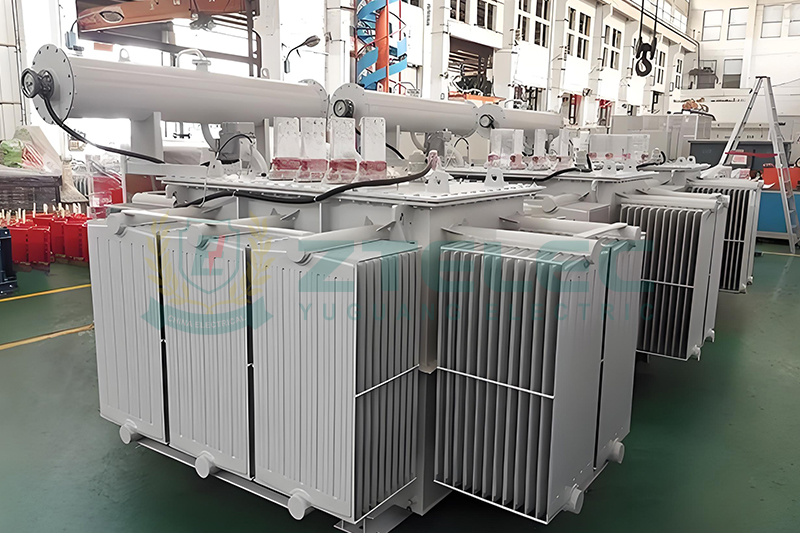
Why Do Hospital 11kV Substations Require Higher Design Standards?
Hospitals are classified as Category I power consumers, where critical medical areas cannot tolerate power outages. Compared with office buildings or manufacturing plants, hospital electrical systems require much higher levels of reliability, operational safety, and continuous power availability.
Hospitals operate numerous high-value medical devices such as CT scanners, MRI systems, PET-CT equipment, linear accelerators, and various life-support systems. These loads not only consume significant power but are also highly sensitive to voltage fluctuations, power quality, and grounding performance. Therefore, the 11kV substation must provide stable power, rapid transfer capability, and comprehensive protection.
In addition, most hospital substations are located inside buildings or in underground utility rooms, requiring equipment with low noise, low temperature rise, fire resistance, smoke control, explosion protection, and environmentally friendly characteristics.
Which International Standards Apply to Hospital 11kV Substations?
Hospital electrical distribution systems are generally designed according to both international standards and local electrical codes.
IEC 61936-1 specifies the design principles for AC power installations above 1kV, including substation layout, safety clearances, grounding systems, protection ratings, and operational safety requirements. It serves as one of the primary standards for medium-voltage substations.
IEC 60364-7-710 specifically addresses electrical installations in medical locations, establishing stringent requirements for operating rooms, intensive care units, emergency departments, and other critical healthcare areas.
In China, GB 50052 "Code for Design of Electric Power Supply Systems" classifies hospitals as Category I power users and requires dual or multiple power sources. GB 51039 "Code for Design of General Hospitals" further defines requirements for standby power systems, emergency power capacity, and redundancy.
For international EPC projects, additional standards such as IEC 60076, IEC 62271, NFPA, and IEEE standards are commonly referenced to satisfy regional utility and project specifications.
How Can Fire Safety Be Enhanced in Hospital Substations?
Fire protection is one of the most important aspects of hospital substation design. Since hospitals accommodate large numbers of patients and medical staff, any electrical fire may seriously affect emergency response and patient evacuation.
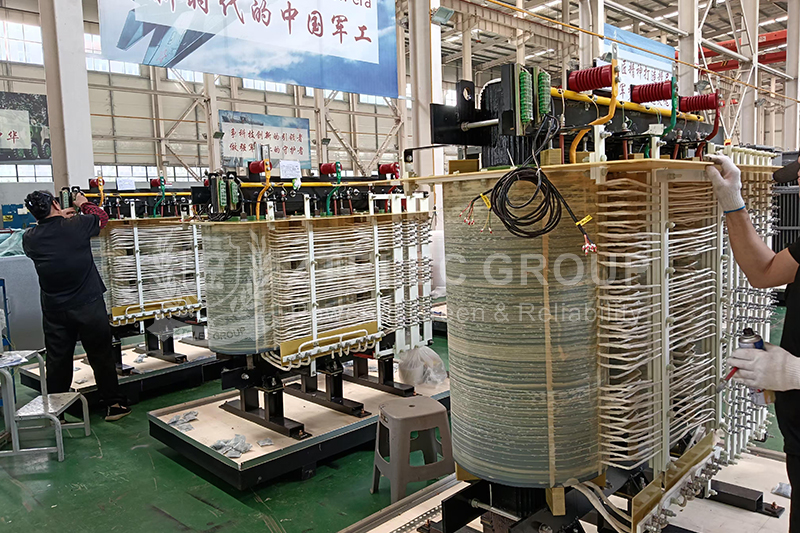
For this reason, modern hospital projects increasingly specify cast resin dry-type transformers. Compared with oil-immersed transformers, dry-type transformers contain no flammable insulating oil, eliminating oil leakage and fire hazards while offering flame-retardant performance, self-extinguishing characteristics, and simplified maintenance. They are ideal for indoor installations such as hospitals, airports, metro stations, and data centers.
Substations are typically equipped with clean-agent fire suppression systems or water mist extinguishing systems, along with smoke detectors, temperature monitoring devices, and automatic fire alarm systems for early detection and rapid response.
Underground substations should also incorporate smoke extraction systems, fire compartments, fire-rated doors, and fire-resistant walls to improve overall building safety.
Why Is the Grounding System Critical for Medical Safety?
Medical equipment is highly sensitive to grounding performance. Electronic systems in operating rooms, ICUs, and laboratories require a stable reference potential to prevent equipment malfunction, inaccurate measurements, or hazards to patients.
Hospitals therefore employ equipotential bonding systems that interconnect equipment enclosures, structural steel, metallic piping, and grounding networks to minimize touch voltage and potential differences.
Critical medical areas often require lower grounding resistance values and dedicated medical IT power systems with continuous insulation monitoring to enhance personnel and equipment safety.
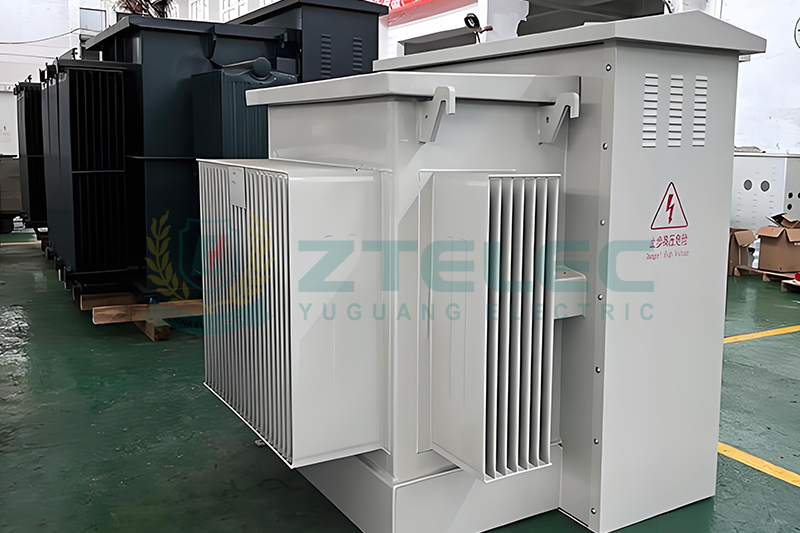
How Should Medium-Voltage Switchgear Be Selected?
Medium-voltage switchgear is the core distribution equipment within an 11kV hospital substation. Vacuum circuit breaker switchgear and GIS (Gas-Insulated Switchgear) are the most common choices.
GIS switchgear offers a compact footprint, excellent reliability, and minimal maintenance requirements, making it particularly suitable for hospitals with limited installation space or underground substations.
Vacuum switchgear provides environmentally friendly operation, long service life, low maintenance costs, and outstanding switching performance, making it the preferred solution for most modern hospital electrical systems.
Protection systems should integrate overcurrent, short-circuit, earth fault, busbar protection, communication functions, and seamless integration with the hospital SCADA platform for centralized monitoring and remote operation.
How Should Hospital Transformers Be Configured?
Transformer capacity should accommodate both current electrical loads and future expansion, with a recommended design margin of approximately 20% to 30% to support additional medical equipment and building extensions.
F-Class or H-Class insulation systems are generally recommended to ensure reliable long-term operation under heavy loading conditions.
Since hospitals require quiet environments, low-noise transformer designs incorporating optimized magnetic cores and vibration isolation should be selected. Additional acoustic enclosures may be installed where necessary.
Large tertiary hospitals typically operate two or more dry-type transformers in parallel to improve system reliability and maintenance flexibility.
How Does the Emergency Power System Ensure Continuous Operation?
A comprehensive backup power system is essential for maintaining uninterrupted hospital operations.
Diesel generator sets serve as the primary standby power source and should be capable of supplying all critical loads. Automatic startup is generally required within approximately 10 seconds after utility power failure.
UPS systems provide seamless, millisecond-level backup power for operating rooms, ICUs, data centers, communication equipment, and other zero-interruption loads until generator power becomes available.
Automatic Transfer Switches (ATS) perform rapid and reliable switching between the utility supply and backup sources, minimizing manual intervention and reducing transfer delays.
How Does Intelligent Monitoring Improve Hospital Power Reliability?
With the rapid development of smart hospitals, digital substations have become increasingly common.
SCADA platforms continuously monitor medium-voltage switchgear, transformers, UPS systems, diesel generators, and distribution networks by collecting real-time data including voltage, current, power factor, temperature, partial discharge, and insulation condition.
Combined with intelligent sensors, online thermal monitoring, fault diagnostics, and predictive maintenance technologies, hospitals can detect abnormalities before failures occur, improving power reliability while reducing maintenance costs.
Which Redundancy Strategies Are Recommended for Hospital 11kV Substations?
Hospital power systems typically adopt dual incoming utility feeders supplied from separate substations or independent bus sections. If one feeder fails, the other can continue supplying all critical loads without interruption.
Medium-voltage distribution networks commonly utilize ring main units or double-bus configurations, providing operational flexibility and allowing maintenance activities without disrupting power supply.
Critical equipment such as transformers, UPS systems, battery banks, and major distribution components should be designed with N+1 or even 2N redundancy to eliminate single points of failure.
How Can Long-Term Reliable Operation Be Achieved?
Reliable hospital power systems depend not only on advanced equipment but also on comprehensive maintenance programs.
Hospitals should implement preventive maintenance procedures including infrared thermal imaging, insulation resistance testing, partial discharge measurement, protective relay verification, and grounding system inspections to identify potential issues before they develop into failures.
Comprehensive emergency response plans should also include periodic diesel generator load tests, UPS battery discharge tests, and dual-power transfer drills to ensure both maintenance personnel and healthcare staff can respond effectively during power emergencies.
An 11kV substation for hospitals and healthcare facilities is far more than a conventional electrical installation—it is a mission-critical infrastructure that safeguards patient safety and ensures uninterrupted medical services. From compliance with IEC and national standards to the proper selection of medium-voltage switchgear, dry-type transformers, UPS systems, ATS units, diesel generators, intelligent SCADA monitoring, dual power supplies, and N+1 redundancy, every design decision directly impacts the reliability of hospital operations.
For new hospitals, medical centers, specialty healthcare facilities, and international EPC healthcare projects, selecting an experienced supplier capable of delivering IEC-compliant 11kV substation solutions can significantly enhance power reliability, reduce lifecycle operating costs, and provide a dependable electrical foundation for modern smart healthcare facilities.
hospital substation
hospital power supply system
11kV distribution system
11kV substation
healthcare facility substation
- more+releated article
- 2026-06-3011kV Substations for Hospitals and Healthcare
- 2026-06-29500 kVA Oil Immersed Transformer: EXW vs CIF P
- 2026-06-26315 kVA Transformers for Commercial Buildings:
- 2026-06-25China Transformer OEM Manufacturing Services a
- 2026-06-241500 kVA Oil Immersed Transformer for Substati
- 2026-06-24Successful Opening Day at CWIEME Shanghai 2026
- 2026-06-23Mineral Oil vs Biodegradable Ester Fluids in T
- 2026-06-22How to Write a 1250 kVA Cast Resin Transformer
- 2026-06-18ZTELECGROUP Mid-Year Sale 2026: Full Range Dis
- 2026-06-1811kV Compact Substations for Commercial Buildi
- ELECTRICAL INSULATION BOARD MATERIALS
- ELECTRICAL INSULATION MATERIALS
- POWER TRANSFORMER
- ENAMELED WIRE
- SWITCHGEAR



11kV substation
hospital substation
healthcare facility substation
11kV distribution system
hospital power supply system
500 kVA Oil Immersed Transformer
EXW transformer price
500 kVA transformer price
CIF transformer price
315kVA dry type transformer
315kVA oil immersed transformer
315 kVA transformer
Cast resin transformer
China transformer OEM
transformer private label manufacturing
transformer OEM supplier China
OEM transformer manufacturer
ZTELEC GROUP Xujue Electrical Debuts at Booth 1N21
CWIEME Shanghai 2026
transformer specification checklist
1500 kVA oil immersed transformer
substation transformer
mineral oil transformer
synthetic ester transformer
FR3 insulating fluid