
33kV Compact Substations for Industrial Parks: Layout Design, Protection Systems and Commissioning Guide
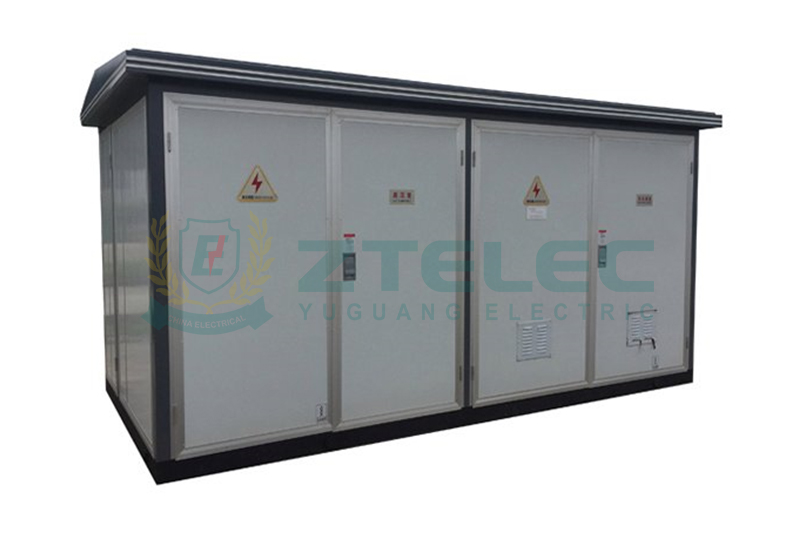
As industrial parks continue expanding in manufacturing capacity, automation, and electrification, conventional substations often struggle to meet modern project requirements due to their large footprint, lengthy construction schedules, and complex civil works. A 33kV compact substation provides an efficient alternative by integrating high-voltage switchgear, power transformers, low-voltage distribution equipment, protection devices, and auxiliary systems into a compact, factory-assembled solution.
Compared with traditional substations, modular compact substations significantly reduce land requirements, shorten installation time, simplify maintenance, and improve operational reliability. They are widely deployed in industrial manufacturing parks, mining facilities, logistics centers, steel plants, petrochemical complexes, renewable energy projects, and large commercial developments.
This guide explains the essential considerations for designing, protecting, and commissioning a 33kV compact substation to achieve reliable, safe, and cost-effective power distribution.
Why Industrial Parks Choose 33kV Compact Substations
Industrial parks typically serve a combination of continuous production lines, heavy machinery, precision manufacturing equipment, data processing facilities, and utility infrastructure. These mixed loads require a power distribution system capable of delivering:
High supply reliability with minimal outage duration.
Excellent power quality for sensitive equipment.
Fast fault isolation and service restoration.
Future expansion without major reconstruction.
Lower lifecycle operating costs.
The 33kV voltage level is widely adopted as the primary distribution voltage because it balances transmission efficiency with equipment investment. It supports large-capacity transformers while reducing feeder current and transmission losses over medium-distance distribution networks.
Factory-built compact substations further improve project delivery by minimizing onsite construction activities. Most equipment is pre-installed, factory-tested, and transported as integrated modules, reducing installation risks and improving commissioning efficiency.
Advantages of Modular 33kV Compact Substations
Compared with conventional outdoor substations, compact substations offer several engineering advantages.
Construction land can typically be reduced by more than 30%, making them particularly suitable for industrial parks where land resources are limited.
Factory integration shortens project schedules because most electrical assembly and testing are completed before shipment.
Standardized modular designs simplify future expansion by allowing additional transformer or switchgear modules to be installed with minimal interruption.
Integrated protection and automation systems improve operational safety while supporting remote monitoring and predictive maintenance.
Lower civil engineering requirements reduce overall project costs and accelerate return on investment.
Layout Design Considerations
Overall Site Planning
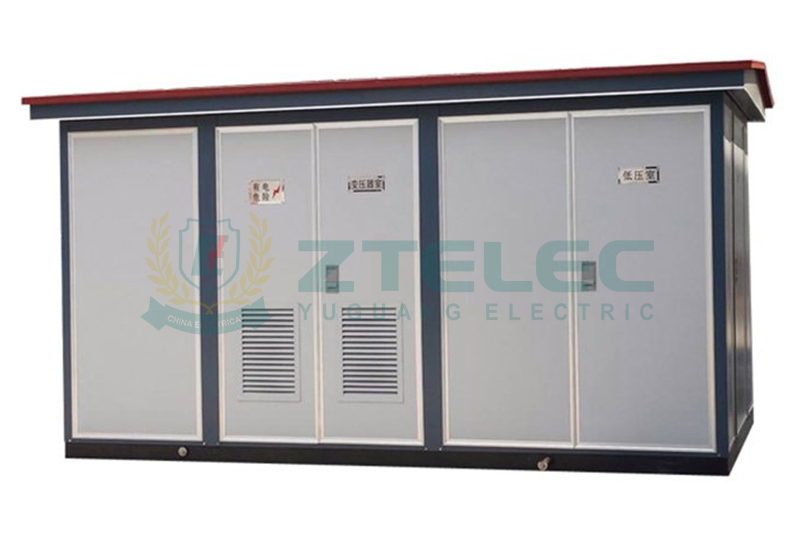
The overall layout should prioritize operational safety, maintenance accessibility, efficient cable routing, and adequate ventilation. A typical compact substation is divided into several functional zones:
High-voltage switchgear compartment.
Power transformer compartment.
Low-voltage switchboard section.
Protection, control, and communication room.
Auxiliary systems including battery, HVAC, fire protection, and monitoring equipment.
Proper separation between these areas minimizes fire risks while ensuring sufficient working space for inspection and maintenance personnel.
Main Electrical Configuration
The 33kV system commonly adopts a single busbar with sectionalizer or bridge connection arrangement. For industrial parks with high reliability requirements, a sectionalized single bus equipped with bus-tie circuit breakers provides excellent operational flexibility.
This configuration allows one bus section to remain energized while isolating faults on the affected section, minimizing production interruptions.
Equipment Selection
Modern compact substations generally utilize Gas-Insulated Switchgear (GIS) or Ring Main Units (RMU) because of their compact dimensions, high reliability, and superior environmental protection.
Power transformers may be selected according to installation conditions:
Dry-type transformers are preferred for indoor installations, commercial buildings, and facilities requiring enhanced fire safety.
Oil-immersed transformers are generally selected for outdoor industrial applications where higher efficiency and larger capacities are required.
Equipment spacing should comply with IEC standards and local electrical safety regulations to ensure adequate insulation clearances and maintenance access.
Protection System Design
Primary Protection
An effective protection scheme minimizes equipment damage while maintaining maximum power continuity.
Typical primary protection includes:
Transformer differential protection.
Busbar protection.
Distance or overcurrent protection for outgoing feeders.
Restricted earth fault protection.
Temperature monitoring.
Buchholz relay protection for oil-filled transformers.
Pressure relief and gas accumulation protection.
Combining electrical and mechanical protection significantly enhances transformer reliability during abnormal operating conditions.
Backup Protection
Backup protection should coordinate with primary protection using selective time grading.
Common functions include:
Overcurrent protection.
Earth fault protection.
Zero-sequence current protection.
Overload protection.
Breaker failure protection.
Proper coordination prevents unnecessary outages and limits fault propagation throughout the industrial distribution network.
Intelligent Relay Protection
Digital protection relays have become standard in modern compact substations. Microprocessor-based Intelligent Electronic Devices (IEDs) integrate protection, measurement, event recording, control, diagnostics, and communication within a single platform.
Most modern systems support IEC 61850 communication, enabling seamless integration with SCADA systems, Energy Management Systems (EMS), and Industrial Internet of Things (IIoT) platforms.
Remote monitoring allows operators to perform condition monitoring, fault analysis, alarm management, and predictive maintenance without frequent onsite inspections.
Commissioning Procedures
Pre-Commissioning Inspection
Before energization, engineers should complete comprehensive inspections including:
Mechanical installation verification.
Insulation resistance testing.
Cable continuity testing.
Protection setting verification.
Transformer ratio and polarity testing.
Current transformer (CT) and voltage transformer (VT/PT) wiring verification.
Grounding system inspection.
Early identification of wiring errors prevents protection malfunctions during commissioning.
Primary Equipment Testing
Primary equipment testing typically includes:
Circuit breaker mechanical operation tests.
Contact resistance measurement.
Transformer no-load and load-loss verification.
High-voltage withstand testing.
Lightning arrester inspection.
Insulation coordination verification.
Measured values should comply with factory acceptance test reports and project specifications.
Secondary System Testing
Secondary commissioning verifies the performance of protection and automation systems through:
Protection logic validation.
Relay setting verification.
Trip circuit testing.
Interlocking verification.
Communication testing.
SCADA integration testing.
Complete secondary injection testing using professional relay test equipment is recommended to simulate various fault scenarios and confirm correct relay response times.
Load Trial Operation
Following successful commissioning, the substation should undergo staged energization and progressive loading.
Engineers should continuously monitor transformer temperature, breaker performance, protection events, communication status, voltage stability, harmonic levels, and equipment vibration. Only after stable operation under design load conditions should the substation be formally handed over for commercial service.
Best Practices for Long-Term Operation
Routine preventive maintenance is essential for maximizing equipment life and reducing unexpected outages. Periodic infrared thermal inspections, dissolved gas analysis for oil-filled transformers, relay function testing, battery maintenance, and communication diagnostics should be incorporated into the maintenance program.
Many industrial operators are also implementing digital monitoring systems that continuously collect operational data to support predictive maintenance and improve asset management efficiency.
A 33kV compact substation combines space efficiency, modular construction, high reliability, and intelligent automation, making it an ideal power distribution solution for modern industrial parks. By carefully optimizing equipment layout, selecting appropriate protection schemes, following standardized commissioning procedures, and adopting intelligent monitoring technologies, owners can significantly improve system reliability while reducing construction costs and long-term operating expenses.
For EPC contractors, utilities, industrial developers, and international buyers, choosing an experienced manufacturer capable of delivering fully tested IEC-compliant compact substations ensures faster project execution, enhanced operational safety, and reliable long-term performance.
33kV compact substation
33kV prefabricated substation
industrial park substation
compact transformer substation
power transformer manufacturer
- more+releated article
- 2026-07-1133kV Compact Substations for Industrial Parks:
- 2026-07-10China Oil-Immersed Transformer Manufacturers:
- 2026-07-09Prefabricated Substations for Africa & Eme
- 2026-07-08How to Order Dry-Type Transformer Samples from
- 2026-07-07500kVA Oil-Immersed Transformer Buying Guide:
- 2026-07-061 MVA Compact Substation Installation Guide: C
- 2026-07-04Reliability of Copper Winding Oil-Immersed Tra
- 2026-07-03China Dry Type Transformer Pricing Guide: Mate
- 2026-07-02500 kVA Prefabricated Substation: Indoor vs Ou
- 2026-07-011250 kVA Dry Type Transformer for Renewable En
- ELECTRICAL INSULATION BOARD MATERIALS
- ELECTRICAL INSULATION MATERIALS
- POWER TRANSFORMER
- ENAMELED WIRE
- SWITCHGEAR



33kV prefabricated substation
industrial park substation
compact transformer substation
33kV compact substation
oil immersed transformer supplier China
China oil immersed transformer manufacturer
power transformer manufacturer
Africa Power Infrastructure
compact substation
box type substation
prefabricated substation
Package Substation
dry-type transformer sample
transformer sample order
order transformer from China
dry type transformer supplier
transformer supplier
transformer buying guide
oil filled transformer
500kVA oil immersed transformer
500kVA transformer
1 MVA compact substation
1000kVA compact substation
Compact Substation Installation
copper winding transformer