
What Is IEC 60076-11? A Complete Guide to Dry Type Transformer Standards
IEC 60076-11 is the international standard specifically addressing dry type power transformers. It forms part of the IEC 60076 series of power transformer standards and establishes requirements related to the design, construction, testing, service conditions, and performance of applicable dry type transformers.
For transformer manufacturers, EPC contractors, electrical engineers, utilities, and industrial users, understanding IEC 60076-11:2018 is important when specifying and purchasing dry type transformers for international projects.
The current major edition is IEC 60076-11:2018, which replaced the 2004 edition. According to the International Electrotechnical Commission (IEC), the 2018 edition expanded the scope to transformers with a highest voltage for equipment up to and including 72.5 kV and introduced or revised requirements related to enclosure performance, altitude, climatic classes, environmental classes, fire behavior, seismic classification, and amorphous transformers.
This guide explains what IEC 60076-11 covers, which transformers fall within its scope, the major design and testing requirements, and how buyers can use the standard when evaluating a dry type transformer manufacturer.
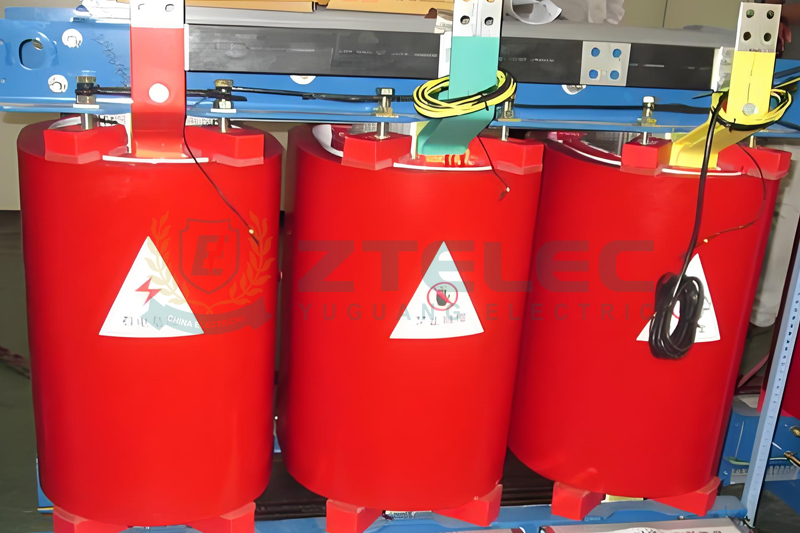
What Is IEC 60076-11?
IEC 60076-11:2018, titled Power Transformers – Part 11: Dry-type transformers, is an International Standard developed by IEC Technical Committee 14 for power transformers.
The standard applies to specified dry type power transformers, including autotransformers, within defined voltage and rating conditions. The 2018 edition applies to dry type power transformers with a highest voltage for equipment up to and including 72.5 kV, with at least one winding operating above 1.1 kV.
The standard is intended to establish a consistent technical framework so that manufacturers and purchasers can define transformer performance, service conditions, testing, and construction requirements using a recognized international reference.
IEC 60076-11:2018 Scope
The scope of IEC 60076-11 is important because not every transformer that uses dry insulation automatically falls under this standard.
According to the IEC official publication, IEC 60076-11:2018 applies to dry type power transformers, including autotransformers, having a highest voltage for equipment up to and including 72.5 kV and at least one winding operating above 1.1 kV.
Transformers Covered by IEC 60076-11
The standard covers applicable dry type power transformers and autotransformers within its specified voltage and rating conditions.
This includes many commonly used dry transformer technologies, such as cast resin and other dry insulation constructions, provided that the transformer falls within the standard's defined scope.
Transformers Excluded From the Standard's General Scope
IEC 60076-11:2018 specifically excludes several transformer categories. These include gas-filled dry type transformers where the gas is not air, certain small single-phase and polyphase transformers, instrument transformers, starting transformers, testing transformers, traction transformers mounted on rolling stock, flameproof and mining transformers, welding transformers, voltage regulating transformers, and certain small power transformers where safety is a special consideration.
This distinction is important when writing technical specifications. A transformer should not be described as “IEC 60076-11 compliant” simply because it is a dry type transformer. Its design and application must fall within the standard's scope.
IEC 60076-11:2004 vs IEC 60076-11:2018
The 2018 edition replaced the first edition published in 2004. IEC identifies the 2018 document as the second edition and describes it as a technical revision.
| Item | IEC 60076-11:2004 | IEC 60076-11:2018 |
|---|---|---|
| Edition | First edition | Second edition |
| Maximum highest voltage for equipment | Up to 36 kV | Up to 72.5 kV |
| Environmental classification | Earlier framework | Expanded climatic and environmental classification |
| Altitude considerations | Earlier requirements | Expanded dielectric and thermal considerations for altitude |
| Fire behavior | Earlier requirements | Updated fire behavior classification and testing provisions |
| Seismic classification | Not developed in the same way | Seismic class introduced |
| Amorphous transformers | Earlier edition | Recommendations introduced |
The 2018 revision therefore matters for manufacturers and purchasers working on modern international dry type transformer projects, particularly where environmental conditions, higher voltage classes, fire behavior, altitude, or seismic requirements must be addressed.
Why Is IEC 60076-11 Important?
1. International Technical Reference
IEC standards provide a common technical language for manufacturers, consultants, EPC contractors, utilities, and end users in international projects.
When a project specification requires IEC 60076-11, manufacturers can use the standard as a reference for design, testing, technical documentation, and product acceptance.
2. Consistent Transformer Testing
Testing is a fundamental part of transformer quality assurance. IEC 60076-11 establishes requirements and procedures that help verify whether a dry type transformer meets its specified electrical, thermal, and mechanical characteristics.
This allows buyers to compare technical offers more effectively than relying only on product brochures or nominal kVA ratings.
3. Better Definition of Service Conditions
Dry type transformers can operate in very different environments. Temperature, humidity, altitude, pollution, enclosure conditions, seismic activity, and installation location can all influence transformer performance.
IEC 60076-11:2018 introduced or expanded several provisions related to environmental and climatic classification, altitude, enclosure performance, and seismic classification.
4. Improved Specification Accuracy
For an EPC project or industrial facility, specifying only “1000 kVA dry type transformer” is usually insufficient.
A complete technical specification may need to define rated power, primary and secondary voltage, frequency, insulation level, impedance, cooling method, environmental conditions, altitude, enclosure requirements, temperature rise, sound level, fire behavior, seismic requirements, and required tests.
IEC 60076-11 provides an important framework for establishing these requirements.
Key Technical Requirements of IEC 60076-11
1. Electrical Design and Insulation
Electrical insulation is one of the most important aspects of dry type transformer design.
The transformer insulation system must provide adequate dielectric strength under the specified operating and test conditions. The detailed insulation requirements should be evaluated together with the applicable IEC transformer standards and the purchaser's specified insulation levels.
For cast resin transformers, epoxy resin and other solid insulation materials can form an important part of the winding insulation system. However, IEC 60076-11 should not be interpreted as simply approving one specific insulation material. Compliance depends on the complete transformer design and applicable requirements.
2. Temperature Rise and Thermal Performance
Transformer losses generate heat during operation. If the transformer operates above its intended thermal limits for extended periods, insulation ageing can accelerate and service life can be reduced.
IEC 60076-11 therefore addresses thermal characteristics and temperature-rise requirements for applicable dry type transformers.
When purchasing a transformer, buyers should review the specified temperature rise, ambient temperature, altitude, cooling method, load profile, and enclosure configuration rather than relying only on the insulation class designation.
For example, a transformer designed for a standard indoor environment may require different thermal considerations when installed at high altitude or inside an enclosure with restricted ventilation.
3. Short-Circuit Mechanical Strength
A transformer must withstand mechanical and thermal stresses that can occur during short-circuit events.
Short-circuit forces can place significant mechanical stress on windings, supports, conductors, and insulation structures. Transformer manufacturers therefore need to consider mechanical strength during electromagnetic and structural design and verify performance through the applicable testing requirements.
4. Environmental Conditions
Environmental conditions can have a major effect on dry type transformer performance.
IEC 60076-11:2018 includes provisions addressing environmental and climatic conditions, including the relationship between location and environmental classes. The 2018 revision also introduced updated climatic classes and additional considerations for altitude.
When specifying a transformer, buyers should provide information about ambient temperature, humidity, altitude, pollution, installation environment, and other relevant site conditions.
5. Enclosure Requirements
For many dry type transformers, especially those installed in industrial or commercial environments, the enclosure is an important part of the overall installation design.
Enclosure selection can affect cooling, protection against dust and moisture, access to energized components, ventilation, and mechanical protection.
The 2018 revision specifically introduced changes related to enclosure management and performance.
6. Fire Behavior
Fire behavior is an important consideration for dry type transformers used in buildings, tunnels, hospitals, data centers, transportation facilities, and other critical infrastructure.
IEC 60076-11:2018 includes provisions concerning fire behavior classes and introduces a more robust test process. The IEC publication also notes limitations related to the fire behavior classification provisions, including a 1000 kVA limitation in the relevant context.
Therefore, buyers should avoid simply stating that every dry type transformer is “fireproof.” Fire performance should be specified and verified according to the applicable transformer design, classification, test requirements, and project regulations.
IEC 60076-11 Transformer Testing
Testing is essential for verifying transformer quality and compliance. IEC 60076-11 includes requirements for different categories of tests.
Routine Tests
Routine tests are performed on individual transformers as required by the applicable standard and technical specification.
Typical transformer routine testing can include winding resistance measurement, voltage ratio and phase displacement verification, impedance and load-loss measurement, no-load loss and current measurement, and dielectric tests as applicable.
The exact test program should always be checked against the current edition of the standard and the agreed purchaser specification rather than copied from a generic checklist.
Type Tests
Type tests are used to demonstrate that a transformer design meets specified performance requirements.
Depending on the transformer design and applicable requirements, type testing can include temperature-rise testing, dielectric testing, lightning impulse testing, and short-circuit-related verification.
For project procurement, buyers should request the manufacturer's relevant type-test reports and confirm that the tested design is representative of the offered transformer.
Special Tests
Special tests are additional tests specified by the purchaser or applicable technical requirements.
Examples can include sound-level measurements, partial discharge measurements, additional environmental verification, seismic testing, or other project-specific tests.
Not every test applies to every dry type transformer. The required test program should be established according to the standard, transformer design, voltage class, application, and purchaser specification.
IEC 60076-11 and Partial Discharge Testing
Partial discharge (PD) is an important consideration for many medium-voltage and high-voltage dry type transformers, particularly cast resin transformers.
Partial discharge can indicate localized electrical activity within an insulation system. Excessive or abnormal partial discharge may contribute to insulation deterioration over time.
For critical dry type transformer applications, purchasers may specify partial discharge testing as part of the transformer quality and acceptance program.
However, the exact PD test requirements, test voltage, acceptance criteria, and applicability should be determined from the applicable edition of the standard and project specification.
IEC 60076-11 and Cast Resin Transformers
Cast resin transformers are among the most common dry type transformer technologies used in commercial, industrial, infrastructure, and renewable energy projects.
In a cast resin transformer, windings are encapsulated or insulated using resin-based systems. This can provide strong mechanical support and protection against environmental contaminants when the transformer is properly designed and manufactured.
However, “cast resin” and “IEC 60076-11 compliant” describe different things. Cast resin refers to a transformer construction or insulation technology, while IEC 60076-11 is a technical standard that establishes requirements for applicable dry type power transformers.
A cast resin transformer should therefore be evaluated according to its complete design, applicable IEC requirements, test reports, environmental class, thermal performance, and project specifications.
IEC 60076-11 vs Other Transformer Standards
IEC 60076-11 is not a standalone document that replaces every other transformer standard. It forms part of the broader IEC 60076 family, and other parts address additional aspects of transformer design, insulation, testing, loading, and specific applications.
| Standard | Main Scope | Relationship to Dry Type Transformers |
|---|---|---|
| IEC 60076-1 | General power transformer requirements | Provides general requirements and terminology for power transformers |
| IEC 60076-3 | Insulation levels, dielectric tests and external clearances in air | Provides relevant insulation and dielectric test provisions where applicable |
| IEC 60076-11 | Dry type transformers | Primary IEC standard specifically dedicated to applicable dry type power transformers |
| IEC 60076-16 | Transformers for wind turbine applications | Addresses wind turbine step-up transformers and can apply to dry type and liquid-immersed designs |
IEC 60076-16:2018, for example, applies to both dry type and liquid-immersed transformers used for wind turbine step-up applications within its defined scope.
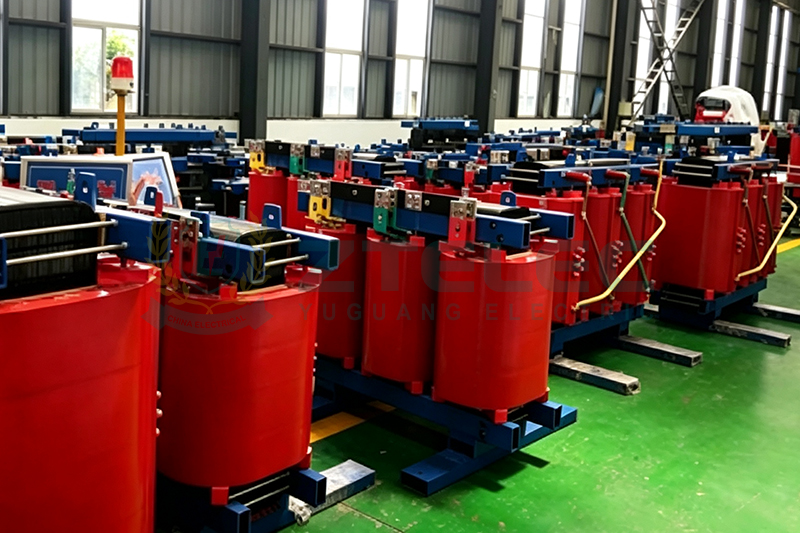
What About IEC 60076-12?
The original article described IEC 60076-12 as a general “loading guide for dry type transformers.” This should be corrected before publication.
The IEC 60076 series has separate loading guides for different transformer technologies. IEC 60076-7:2018 specifically addresses loading of mineral-oil-immersed transformers.
For SEO content about dry type transformer loading, it is therefore better to avoid making a blanket statement that IEC 60076-12 is the general dry type transformer loading guide unless the exact current IEC publication and scope have been verified.
IEC 60076-11 Compliance: What Should Buyers Check?
When purchasing a dry type transformer, simply seeing “IEC 60076-11” written on a quotation is not enough. Buyers should request technical evidence supporting the manufacturer's compliance claim.
1. Confirm the Applicable Edition
For current international projects, confirm whether the specification requires IEC 60076-11:2018 or another edition. The IEC official publication identifies the 2018 edition as the current major edition, with a 2019 corrigendum and a 2020 interpretation sheet.
2. Check the Transformer Scope
Confirm that the transformer's voltage, power rating, construction, and application fall within the scope of IEC 60076-11.
3. Review the Technical Datasheet
The datasheet should clearly identify rated power, voltage ratio, frequency, impedance, insulation levels, cooling method, temperature rise, losses, environmental conditions, enclosure requirements, and other relevant parameters.
4. Request Test Reports
Ask for relevant routine and type-test documentation. For critical projects, purchasers may also require special tests or third-party laboratory verification.
5. Check Environmental Conditions
Provide the manufacturer with accurate information about altitude, ambient temperature, humidity, pollution, indoor or outdoor installation, enclosure requirements, and seismic conditions where applicable.
6. Verify Fire Performance When Required
For hospitals, data centers, tunnels, public buildings, rail infrastructure, and other fire-sensitive projects, fire behavior requirements should be explicitly included in the technical specification.
How Manufacturers Can Demonstrate IEC 60076-11 Compliance
Design Engineering
The manufacturer should establish a transformer design that satisfies the required electrical, thermal, mechanical, environmental, and safety characteristics.
Material Control
Core steel, copper or aluminum conductors, insulation materials, resin systems, structural components, and other critical materials should be controlled through an appropriate quality management process.
Manufacturing Quality Control
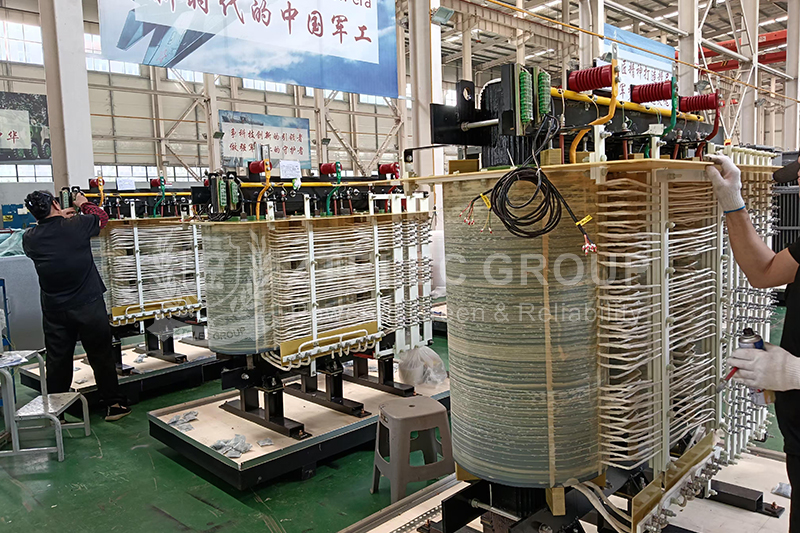
Manufacturing processes should be controlled to ensure winding quality, insulation integrity, dimensional accuracy, mechanical strength, resin processing, connections, and assembly quality.
Routine Testing
Each applicable transformer should undergo the required routine tests before shipment. Test results should be documented and traceable to the individual transformer serial number.
Type Testing
Manufacturers supplying large projects should be able to provide relevant type-test evidence for the offered design. Buyers should check whether the tested transformer is technically representative of the proposed production model.
Third-Party Verification
For major infrastructure projects, the purchaser may require independent inspection or testing by an accredited laboratory or designated inspection organization.
Common IEC 60076-11 Compliance Mistakes
Mistake 1: Treating IEC 60076-11 as a Product Certification
IEC 60076-11 is a technical standard. A manufacturer stating that a transformer is designed or tested according to the standard does not automatically mean that the product carries a universal third-party “IEC certificate.” Buyers should examine the actual conformity evidence, test reports, and project requirements.
Mistake 2: Using an Outdated Edition
The 2004 edition was withdrawn when the 2018 edition was published. IEC identifies IEC 60076-11:2018 as the newer second edition.
Mistake 3: Ignoring Site Conditions
A transformer designed for standard environmental conditions may not be suitable for high-altitude, high-humidity, heavily polluted, or seismic locations without appropriate design adjustments.
Mistake 4: Assuming Every Dry Transformer Has the Same Fire Performance
Dry type transformer technology can offer advantages compared with conventional oil-filled transformers, but fire behavior depends on the transformer construction, insulation materials, enclosure, and applicable test classification.
Mistake 5: Checking Only the Nameplate
Transformer nameplate information is important, but it does not provide enough information to evaluate complete IEC compliance. Buyers should also review technical datasheets, test reports, environmental classifications, drawings, and quality documentation.
IEC 60076-11 for Different Applications
Commercial Buildings
Dry type transformers are frequently used in commercial buildings because they can be installed in dedicated electrical rooms without conventional insulating oil. Fire protection, enclosure, ventilation, noise, and accessibility should still be evaluated during project design.
Data Centers
Data centers require highly reliable power distribution and carefully controlled electrical environments. Dry type transformers can be considered where indoor installation, fire-risk management, maintenance strategy, and electrical performance are important selection factors.
Industrial Facilities
Industrial applications may involve dust, humidity, temperature variations, vibration, chemical pollutants, and high load cycles. Transformer environmental classification and enclosure design should therefore be carefully matched to the actual installation environment.
Renewable Energy Projects
Solar and wind projects often require transformers to operate under demanding outdoor or semi-outdoor conditions. Altitude, ambient temperature, humidity, enclosure protection, loading, and environmental conditions should be incorporated into the transformer specification.
Transportation and Infrastructure
Transportation infrastructure can impose additional requirements related to fire behavior, vibration, seismic performance, space limitations, and environmental conditions. Application-specific standards may also apply in addition to the IEC 60076 series.
How to Specify an IEC 60076-11 Dry Type Transformer
A professional transformer specification should contain more information than simply the required kVA rating.
| Specification Item | Typical Information to Define |
|---|---|
| Transformer Type | Dry type, cast resin, or other applicable construction |
| Rated Power | kVA or MVA |
| Primary Voltage | Specified system and winding voltage |
| Secondary Voltage | Required output voltage |
| Frequency | 50 Hz or 60 Hz |
| Vector Group | Required connection and phase displacement |
| Impedance | Specified percentage impedance |
| Cooling | Natural or forced-air cooling as applicable |
| Insulation Level | Required dielectric and insulation parameters |
| Temperature Rise | Specified according to project requirements |
| Installation | Indoor or outdoor |
| Altitude | Actual installation elevation |
| Ambient Conditions | Temperature, humidity, pollution, and other site conditions |
| Enclosure | Required protection and ventilation characteristics |
| Fire Performance | Required fire behavior classification where applicable |
| Testing | Routine, type, and special tests required by the project |
IEC 60076-11 and Energy Efficiency
IEC 60076-11 should not be treated as an energy-efficiency label by itself. Transformer efficiency depends on the complete design and the specified operating conditions.
When evaluating dry type transformers, buyers should compare no-load losses, load losses, total losses, efficiency, temperature rise, and expected load profile.
For transformers that remain energized continuously, no-load losses can have a significant impact on lifetime energy consumption. For heavily loaded transformers, load losses become increasingly important.
Advanced core materials, optimized winding designs, improved manufacturing processes, and amorphous core technology can all contribute to lower transformer losses when properly engineered.
Future Trends in Dry Type Transformer Standards
Higher Energy Efficiency
Global demand for lower electrical losses is encouraging transformer manufacturers to optimize magnetic materials, winding configurations, cooling systems, and manufacturing processes.
Smart Monitoring
Temperature sensors, partial discharge monitoring, digital data acquisition, and condition-monitoring systems are increasingly being integrated into modern transformer installations.
These technologies can help operators identify abnormal temperature, insulation, loading, or environmental conditions at an earlier stage.
Advanced Insulation Materials
New resin systems, insulation materials, and manufacturing technologies continue to improve the thermal, electrical, mechanical, and environmental performance of dry type transformers.
Seismic and Environmental Performance
Modern infrastructure projects increasingly require transformers to withstand challenging environmental conditions. IEC 60076-11:2018 already includes seismic classification and expanded environmental considerations, reflecting the increasing importance of site-specific transformer design.
Frequently Asked Questions About IEC 60076-11
What is IEC 60076-11?
IEC 60076-11 is the IEC standard titled Power Transformers – Part 11: Dry-type transformers. The 2018 edition specifies requirements for applicable dry type power transformers within its defined scope.
What is the latest major edition of IEC 60076-11?
The current major edition is IEC 60076-11:2018. IEC also published a corrigendum in 2019 and an interpretation sheet in 2020 associated with the 2018 edition.
What voltage range does IEC 60076-11:2018 cover?
IEC 60076-11:2018 applies to applicable dry type power transformers with a highest voltage for equipment up to and including 72.5 kV and at least one winding operating above 1.1 kV.
Does IEC 60076-11 apply to instrument transformers?
No. Instrument transformers are specifically excluded from the general scope of IEC 60076-11:2018.
Does IEC 60076-11 apply to oil filled transformers?
No. IEC 60076-11 specifically addresses applicable dry type power transformers. Oil-immersed transformers are covered by other parts of the IEC 60076 series and related standards.
Is IEC 60076-11 the same as a certification?
No. IEC 60076-11 is an international technical standard. A manufacturer's claim of compliance should be supported by appropriate design information, test reports, quality documentation, and conformity evidence required by the purchaser or project.
Are cast resin transformers covered by IEC 60076-11?
Applicable cast resin power transformers can fall within the scope of IEC 60076-11 when they meet the standard's defined scope and requirements. “Cast resin” describes the transformer construction, while IEC 60076-11 establishes technical requirements for applicable dry type power transformers.
What documents should I request from a dry type transformer manufacturer?
For an international project, buyers should normally request a detailed technical datasheet, general arrangement drawing, nameplate information, loss data, impedance data, applicable routine-test reports, relevant type-test reports, installation and maintenance documentation, and any additional conformity or inspection documents required by the project.
IEC 60076-11:2018 is one of the most important international standards for applicable dry type power transformers. It provides a structured technical framework covering transformer design, construction, testing, environmental conditions, fire behavior, and other performance-related requirements.
For manufacturers, compliance requires more than placing “IEC 60076-11” on a product datasheet. The transformer design, manufacturing process, testing program, technical documentation, and environmental characteristics should all be evaluated against the applicable requirements.
For buyers, EPC contractors, and electrical engineers, understanding the standard makes it easier to prepare accurate transformer specifications and compare manufacturers on a technical basis.
When purchasing a cast resin dry type transformer, SCB transformer, or other applicable dry type power transformer, it is recommended to evaluate the complete technical package rather than focusing only on rated capacity or price. Important factors include voltage level, kVA rating, losses, impedance, insulation level, temperature rise, cooling method, altitude, environmental class, enclosure, fire behavior, testing, and long-term operating requirements.
By using IEC 60076-11:2018 as part of a comprehensive transformer specification and quality-control process, project owners can establish clearer technical requirements and improve the consistency and reliability of dry type transformer procurement for international electrical projects.
Reference: International Electrotechnical Commission, IEC 60076-11:2018, Power transformers – Part 11: Dry-type transformers.
Enlit Asia 2026
MKI Electricity Connect 2026
transformer manufacturer Indonesia
Indonesia electrical exhibition
CEM-3 laminate
- more+releated article
- 2026-08-17What Is IEC 60076-11? A Complete Guide to Dry
- 2026-08-175000kVA Oil-Filled Transformer in Wind and Sol
- 2026-08-17China 3500kVA Dry-Type Transformer Source Fact
- 2026-08-17ZTELEC to Exhibit at Enlit Asia & MKI Elec
- 2026-08-14Noise Control in 11kV Prefabricated Substation
- 2026-08-122000 kVA Oil-Filled Transformer Price 2026: Ma
- 2026-08-11Prefabricated Substations: Flexible, Scalable
- 2026-08-10Oil Filled Transformer Series Overview: 500–
- 2026-07-31Cast Resin Dry Type Transformer: Fire-Safe Ind
- 2026-07-30750 KVA Oil Filled Transformer Manufacturer |
- ELECTRICAL INSULATION BOARD MATERIALS
- ELECTRICAL INSULATION MATERIALS
- POWER TRANSFORMER
- ENAMELED WIRE
- SWITCHGEAR
FR-4 Copper-Free Laminate | High-Performance Insulation Material

FR-4 Copper Clad Laminate Manufacturer & Supplier
Enlit Asia 2026
transformer manufacturer Indonesia
Indonesia electrical exhibition
MKI Electricity Connect 2026
CEM-3 copper clad laminate
CEM-3 PCB material
CEM-3 laminate
copper clad glass mat composite laminate
IEC dry type transformer standard
dry type transformer IEC standard
dry type transformer standard
2000 kVA oil immersed transformer
2000 kVA oil filled transformer price
2000 kVA transformer price 2026
prefabricated substations
prefabricated electrical substation
compact substation
prefabricated substation
modular substation
Indoor Transformer
dry type transformer
Cast resin transformer
cast resin dry type transformer
750 kVA transformer
Oil immersed transformer