
Prefabricated Substations: Flexible, Scalable Power Solutions for Modern Grids
As electricity demand continues to increase across industrial facilities, commercial buildings, data centers, renewable energy projects, and urban infrastructure, power distribution systems must become faster, more flexible, and easier to deploy. Prefabricated substations have emerged as an efficient alternative to conventional site-built substations, combining factory-controlled manufacturing with modular construction and simplified on-site installation.
A prefabricated substation integrates major electrical equipment such as medium-voltage switchgear, transformers, low-voltage switchgear, protection systems, control equipment, and auxiliary systems into a pre-engineered enclosure or modular structure. Depending on project requirements, the system can be designed for indoor or outdoor installation and customized for different voltage levels, transformer capacities, environmental conditions, and grid configurations.
This article explains what prefabricated substations are, how they work, their major advantages and applications, important selection criteria, and the technology trends shaping the future of modular power distribution.
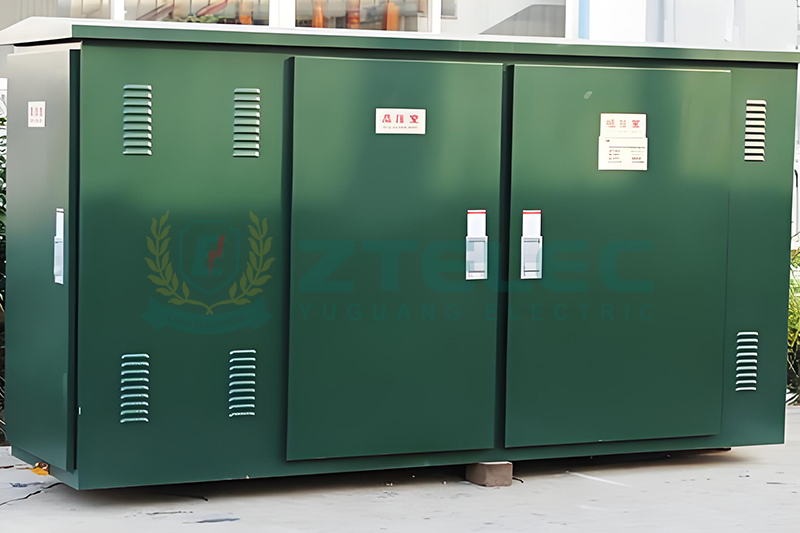
What Is a Prefabricated Substation?
A prefabricated substation is a factory-engineered and pre-assembled electrical substation designed to simplify transportation, installation, testing, and commissioning at the project site. Unlike a conventional substation that requires a large amount of civil construction and equipment installation on-site, many components of a prefabricated substation are integrated and tested before delivery.
Prefabricated substations are also commonly described as modular substations, compact substations, packaged substations, or turnkey substations, depending on their design and application. The exact configuration varies according to voltage level, transformer capacity, protection requirements, site conditions, and local electrical standards.
The modular approach can significantly reduce on-site construction work while improving manufacturing consistency. It is particularly attractive for projects where installation space is limited, construction schedules are tight, or electrical infrastructure needs to be deployed in remote locations.
Typical Components of a Prefabricated Substation
Medium-Voltage Switchgear: The medium-voltage switchgear controls, isolates, and protects incoming and outgoing electrical circuits. Depending on the application, the system may use air-insulated switchgear, gas-insulated switchgear, or other medium-voltage technologies.
Power Transformer: The transformer reduces the incoming medium voltage to a lower voltage suitable for downstream distribution equipment and electrical loads. Oil-immersed transformers and dry-type transformers can both be incorporated into prefabricated substation designs.
Low-Voltage Switchgear: Low-voltage switchgear distributes electrical power to downstream loads while providing protection, isolation, measurement, and control functions.
Protection and Control Systems: Relays, meters, monitoring devices, communication equipment, and automation systems can be integrated into the substation to improve operational safety and grid management.
Auxiliary Systems: Depending on the project, auxiliary equipment may include lighting, ventilation, heating, cooling, fire protection, environmental monitoring, battery systems, and communication interfaces.
How Do Prefabricated Substations Work?
The operating principle of a prefabricated substation is similar to that of a conventional substation. Medium-voltage electrical power enters the substation through the incoming switchgear. The power transformer then reduces the voltage to the required low-voltage level. The low-voltage switchgear distributes the electricity to buildings, industrial equipment, renewable energy systems, or other downstream loads.
The primary difference is the way the equipment is engineered, manufactured, assembled, and installed. A significant portion of the electrical and mechanical integration can be completed under controlled factory conditions before the substation is transported to the project site.
This approach can simplify site installation because the project team may only need to complete foundation preparation, positioning, cable connections, grounding, external interfaces, and final commissioning rather than constructing the entire electrical facility from the ground up.
Key Advantages of Prefabricated Substations
1. Faster Installation and Project Deployment
One of the most important advantages of a prefabricated electrical substation is its ability to shorten on-site construction and installation activities. Equipment can be assembled and tested in the factory while civil works are being prepared at the project location.
This parallel workflow can help reduce overall project schedules compared with projects that rely heavily on site-based equipment assembly. Faster deployment is particularly valuable for data centers, renewable energy projects, temporary power systems, industrial expansions, and emergency infrastructure restoration.
2. Reduced On-Site Construction Requirements
Traditional substations often require extensive civil works, equipment foundations, cable trenches, buildings, structural installations, and on-site electrical assembly. A modular substation can integrate many of these functions into a factory-built enclosure or skid-mounted system.
Reducing the amount of site work can simplify project coordination and lower exposure to weather, labor availability, and site access issues.
3. Factory-Controlled Quality
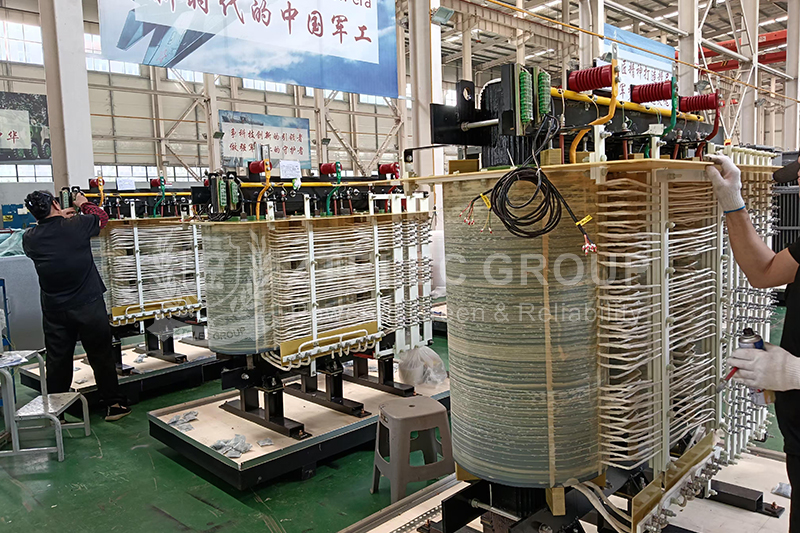
Prefabricated substations are manufactured and assembled in controlled factory environments. This allows manufacturers to standardize production processes, inspect equipment before shipment, and perform electrical and functional checks before installation.
Factory integration can also improve coordination between major components because switchgear, transformers, control systems, protection equipment, and auxiliary systems are engineered as part of an integrated solution.
4. Flexible and Scalable Design
Modern electrical infrastructure must accommodate changing power requirements. Prefabricated substations can be engineered for different transformer capacities, voltage levels, switchgear configurations, enclosure designs, and protection systems.
Modular construction also makes it easier to design systems for future expansion. Additional equipment or modules can be incorporated when the project's electricity demand increases, subject to the original site design and available capacity.
5. Efficient Use of Space
Space can be a major constraint in urban developments, commercial facilities, industrial plants, and renewable energy projects. A compact substation can integrate multiple electrical functions into a relatively small footprint.
This makes prefabricated substations suitable for locations where conventional substation buildings would require excessive land or additional civil construction.
6. Improved Safety and Maintenance
A well-designed prefabricated substation can incorporate equipment segregation, electrical protection, controlled access, grounding systems, ventilation, fire protection, and monitoring systems into the overall design.
Because major equipment is integrated into a defined modular structure, inspection and maintenance procedures can also be standardized. Depending on the design, remote monitoring and digital protection systems can provide operators with real-time information about equipment operating conditions.
7. Lower Total Project Costs
The total cost of a prefabricated substation should not be evaluated only by comparing equipment purchase prices. Project economics also depend on transportation, civil construction, installation labor, commissioning, project management, schedule, and long-term maintenance.
By moving a significant portion of assembly and integration to the factory, modular substations may reduce certain on-site labor and construction costs. Faster commissioning can also provide economic benefits when early power availability is important to the project.
Applications of Prefabricated Substations
Urban and Residential Power Distribution
Urban areas often face limited land availability and increasingly complex power distribution requirements. Prefabricated substations can be used for residential developments, commercial buildings, infrastructure projects, and urban distribution networks.
Their compact structure can make them suitable for locations where conventional substations are difficult to construct because of space limitations or strict construction requirements.
Industrial Facilities
Manufacturing plants, mining operations, steel facilities, chemical plants, and other industrial users often require reliable medium-voltage and low-voltage power distribution.
A prefabricated industrial substation can integrate transformers, medium-voltage switchgear, low-voltage distribution equipment, protection systems, and monitoring equipment into a coordinated power distribution solution.
Data Centers
Data centers require reliable electrical infrastructure to support high-density loads and continuous operation. Prefabricated substations can be integrated into modular data center power architectures and may help accelerate electrical infrastructure deployment.
Depending on the project, the substation can be designed with redundant power paths, advanced protection, monitoring, automatic transfer systems, and communication interfaces to support high-availability electrical systems.
Solar and Wind Power Projects
Renewable energy projects frequently require standardized electrical infrastructure that can be deployed across large or remote sites. Prefabricated substations are widely suited to solar farms, wind farms, battery energy storage systems, and hybrid renewable energy projects.
In a solar power plant, for example, the electrical system may include inverter transformers, medium-voltage switchgear, protection equipment, collection systems, and step-up transformers. A modular approach can simplify equipment integration and project deployment.
Microgrids and Distributed Energy Systems
The growth of distributed generation is increasing demand for flexible electrical infrastructure. Prefabricated substations can be configured for microgrids that combine utility power, solar generation, wind power, battery energy storage, and local loads.
Advanced control and monitoring systems can coordinate power flows between different energy sources while improving operational visibility.
Remote and Temporary Power Systems
Remote industrial facilities, infrastructure construction projects, mining sites, temporary facilities, and emergency power restoration projects can benefit from modular substations because they can be transported and installed with comparatively limited site construction.
Prefabricated Substation vs. Conventional Substation
The main difference between a prefabricated substation and a conventional substation is the degree of factory integration.
| Factor | Prefabricated Substation | Conventional Substation |
|---|---|---|
| Manufacturing | High level of factory assembly | More site-based construction and assembly |
| Installation | Generally faster on-site installation | Typically requires more construction activities |
| Site Work | Reduced civil and installation work | Greater dependence on site construction |
| Customization | Configurable modular design | Highly customizable site-built design |
| Space Requirement | Compact and optimized footprint | Potentially larger site footprint |
| Project Schedule | Suitable for accelerated deployment | May require longer construction periods |
| Typical Applications | Industrial, renewable energy, data centers, urban infrastructure | Large utility and complex transmission projects |
The right solution depends on project size, voltage level, site conditions, required capacity, local regulations, future expansion requirements, and the degree of customization required.
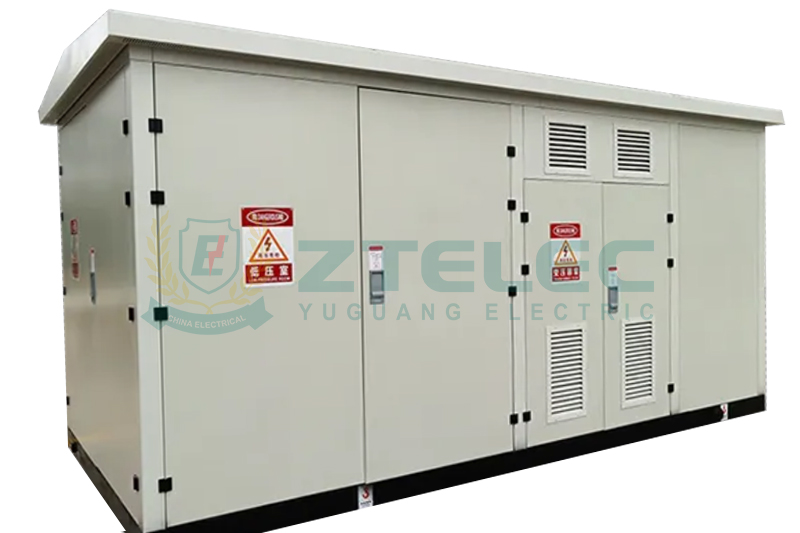
Important Factors When Selecting a Prefabricated Substation
1. Rated Voltage
The incoming and outgoing voltage levels are fundamental design parameters. Common medium-voltage configurations include 10kV, 11kV, 20kV, 22kV, 33kV, and 35kV, although available configurations depend on regional grid standards and project requirements.
2. Transformer Capacity
Transformer capacity should be selected according to the project's current load, expected future demand, load characteristics, and required redundancy. Common distribution transformer capacities can range from several hundred kVA to several MVA, while larger industrial and renewable energy substations may require significantly higher capacities.
3. Transformer Type
Both oil-filled transformers and dry-type transformers can be used in prefabricated substation solutions. Oil-immersed transformers are often selected for outdoor applications and high-capacity distribution, while cast resin dry-type transformers can be attractive for buildings, indoor installations, and applications where fire safety and environmental considerations are important.
4. Environmental Conditions
Environmental conditions should be evaluated during the design stage. Temperature, humidity, altitude, dust, salt spray, corrosive gases, wind, rain, snow, and seismic conditions may affect enclosure design, insulation selection, cooling systems, and protection levels.
5. Protection and Automation
Protection and control requirements depend on the grid architecture and load characteristics. The system may include overcurrent protection, earth-fault protection, transformer protection, differential protection, metering, communication interfaces, and remote monitoring.
6. Enclosure and IP Protection
The enclosure should provide suitable mechanical and environmental protection for the installed equipment. The required IP rating, ventilation arrangement, thermal management, fire protection, and access configuration should be determined according to the installation environment and applicable standards.
7. Local Standards and Certifications
Electrical equipment must comply with the applicable standards and regulations in the target market. Depending on the project location, relevant IEC, IEEE, national, or regional standards may apply to transformers, switchgear, protection systems, enclosures, and overall substation design.
Smart Technology in Prefabricated Substations
The development of digital power systems is transforming conventional electrical infrastructure into intelligent and connected systems. Modern prefabricated substations can integrate digital protection relays, intelligent meters, communication gateways, sensors, and remote monitoring platforms.
Real-Time Monitoring
Sensors can monitor transformer temperature, load current, voltage, power quality, enclosure conditions, and other operating parameters. This information can help operators identify abnormal conditions before they develop into major equipment failures.
Predictive Maintenance
Data collected from intelligent monitoring systems can be analyzed to identify trends and potential equipment problems. Predictive maintenance can help maintenance teams move from fixed schedules toward condition-based maintenance strategies.
Remote Operation
When communication systems are properly configured, operators can remotely monitor and control selected substation functions. This is particularly valuable for renewable energy plants, remote industrial facilities, and distributed power networks where frequent on-site inspection may be difficult.
Future Trends in Prefabricated Substations
More Modular and Standardized Designs
As demand for rapid infrastructure deployment increases, manufacturers are developing more standardized modular platforms. Standardized designs can shorten engineering cycles while still allowing customization of transformer capacity, switchgear, protection systems, and auxiliary equipment.
Integration with Renewable Energy and Battery Storage
The continued growth of solar photovoltaic systems, wind power, and battery energy storage is creating demand for flexible electrical infrastructure. Prefabricated substations can provide an integrated platform for connecting these distributed energy resources to medium-voltage and high-voltage networks.
Digitalization and Intelligent Monitoring
Digital substations are expected to use more sensors, communication systems, advanced protection devices, and data analytics. These technologies can improve operational visibility, maintenance planning, fault diagnosis, and energy management.
Lower-Carbon Electrical Infrastructure
Environmental considerations are becoming increasingly important in substation design. Manufacturers are focusing on energy-efficient transformers, recyclable materials, improved thermal management, and alternative technologies that can reduce the environmental impact of electrical infrastructure.
Factory Acceptance Testing and Digital Engineering
As prefabricated substations become more complex, factory acceptance testing is becoming increasingly important. Digital engineering, 3D design, simulation, and virtual commissioning can help identify design conflicts before equipment reaches the project site.
Challenges of Prefabricated Substations
Transportation and Logistics
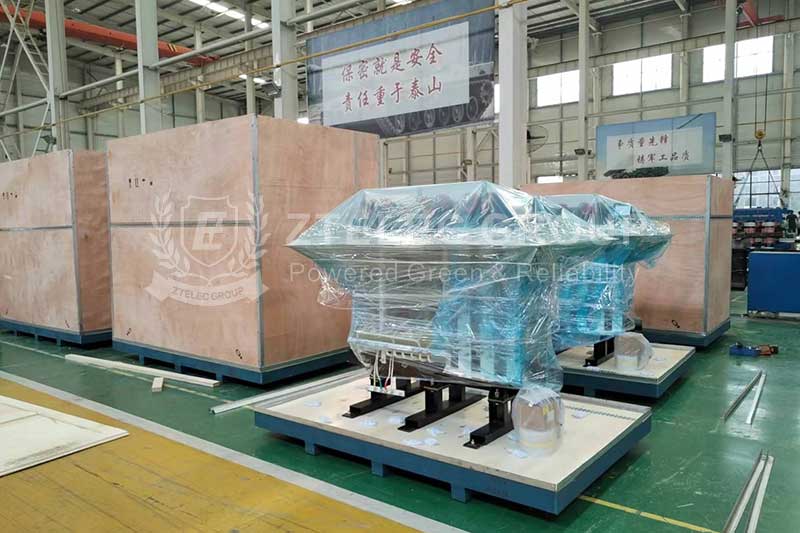
Although prefabricated substations reduce on-site construction, their integrated structure can create transportation challenges. The overall dimensions, weight, lifting points, road conditions, shipping restrictions, and site access should be evaluated before finalizing the design.
Project-Specific Customization
Modular substations offer considerable flexibility, but highly specialized projects may require extensive customization. Early coordination between the manufacturer, EPC contractor, utility, and end user is important to ensure that the final configuration meets electrical, mechanical, civil, and operational requirements.
Site and Foundation Requirements
Prefabricated does not mean that no site preparation is required. The project may still require foundations, grounding systems, cable connections, drainage, access roads, lifting equipment, and other supporting infrastructure.
Compliance and Grid Connection
Substation design must comply with the technical requirements of the local utility and applicable electrical standards. Protection coordination, grounding, short-circuit levels, insulation coordination, transformer specifications, and grid connection requirements should be confirmed before manufacturing.
Why Prefabricated Substations Are Important for Modern Power Grids
Modern power networks are becoming more distributed, digitalized, and dynamic. Electricity demand is increasing because of data centers, electrification, industrial automation, electric vehicles, renewable energy, and energy storage systems.
These changes require power infrastructure that can be deployed quickly and adapted to changing load requirements. Prefabricated substations address this need by combining modular construction, factory integration, flexible engineering, and intelligent monitoring.
For EPC contractors, utilities, renewable energy developers, industrial companies, and commercial infrastructure owners, modular substations can provide an efficient way to accelerate electrical infrastructure deployment without sacrificing the essential functions of a conventional substation.
How to Choose a Prefabricated Substation Manufacturer
Choosing the right manufacturer is just as important as selecting the electrical configuration. Buyers should evaluate the manufacturer's experience with similar projects, transformer and switchgear manufacturing capabilities, quality control procedures, testing facilities, engineering resources, certifications, and after-sales support.
A qualified prefabricated substation manufacturer should be able to provide a complete technical solution rather than simply supplying individual electrical components. The manufacturer should understand transformer selection, medium-voltage switchgear, low-voltage distribution, protection and control, enclosure design, thermal management, grounding, transportation, installation, and commissioning.
For international projects, buyers should also confirm whether the manufacturer can provide documentation and equipment that meet the electrical standards and certification requirements of the destination market.
Prefabricated substations are becoming an important solution for modern power distribution because they combine rapid deployment, modular construction, flexible configuration, factory-controlled quality, efficient space utilization, and reduced on-site installation requirements.
From urban distribution networks and industrial plants to data centers, solar farms, wind farms, battery energy storage projects, and remote infrastructure, prefabricated substations can be adapted to a wide range of electrical applications.
As power grids continue to evolve toward renewable energy integration, digital monitoring, distributed generation, and intelligent automation, the role of modular and prefabricated substations is expected to become increasingly important.
When selecting a solution, project owners should consider voltage level, transformer capacity, load characteristics, environmental conditions, protection requirements, enclosure design, applicable standards, transportation constraints, future expansion, and after-sales support. Working with an experienced manufacturer can help ensure that the prefabricated substation is properly engineered, tested, delivered, and commissioned for long-term reliable operation.
compact substation
prefabricated substation
modular substation
prefabricated substations
prefabricated electrical substation
- more+releated article
- 2026-08-11Prefabricated Substations: Flexible, Scalable
- 2026-08-10Oil Filled Transformer Series Overview: 500–
- 2026-07-31Cast Resin Dry Type Transformer: Fire-Safe Ind
- 2026-07-30750 KVA Oil Filled Transformer Manufacturer |
- 2026-07-2911kV Dry Type Transformer – Ultimate Specifi
- 2026-07-287.2KV Switchgear: Complete Guide to Technical
- 2026-07-27Prefabricated Substation Price Guide 2026: 200
- 2026-07-25Oil Immersed Transformers Explained: Cooling S
- 2026-07-24Gas Insulated Switchgear (GIS) vs Air Insulate
- 2026-07-23315 KVA Cast Resin Dry Type Transformer – Co
- ELECTRICAL INSULATION BOARD MATERIALS
- ELECTRICAL INSULATION MATERIALS
- POWER TRANSFORMER
- ENAMELED WIRE
- SWITCHGEAR



prefabricated electrical substation
compact substation
prefabricated substations
modular substation
prefabricated substation
Cast resin transformer
cast resin dry type transformer
dry type transformer
Indoor Transformer
750 kVA transformer
Oil immersed transformer
750 kVA transformer manufacturer
750 KVA oil filled transformer
11kV Transformer Manufacturer
Dry Type Transformer China
11kV dry type transformer
11kV cast resin transformer
7.2kV Medium Voltage Switchgear
7.2KV Switchgear
7.2KV Metal Clad Switchgear
compact substation price
prefabricated substation price
package substation price
prefabricated substation cost
ONAN transformer