
Noise Control in 11kV Prefabricated Substations: Techniques, Standards & Best Practices
Noise control is an increasingly important consideration when designing and installing an 11kV prefabricated substation. Although prefabricated substations provide a compact, reliable, and fast-to-install solution for medium-voltage power distribution, equipment such as transformers, switchgear, cooling fans, and ventilation systems can generate continuous or intermittent noise.
For industrial facilities, commercial buildings, data centers, renewable energy projects, residential developments, and urban infrastructure, excessive substation noise can create operational concerns and community complaints. Effective acoustic design therefore needs to be considered together with electrical performance, thermal management, safety, and site planning.
This guide explains the main sources of noise in 11kV prefabricated substations, the difference between airborne and structure-borne noise, practical noise reduction techniques, relevant international standards, and design strategies for achieving reliable and environmentally responsible substation operation.
Why Noise Control Matters in 11kV Prefabricated Substations
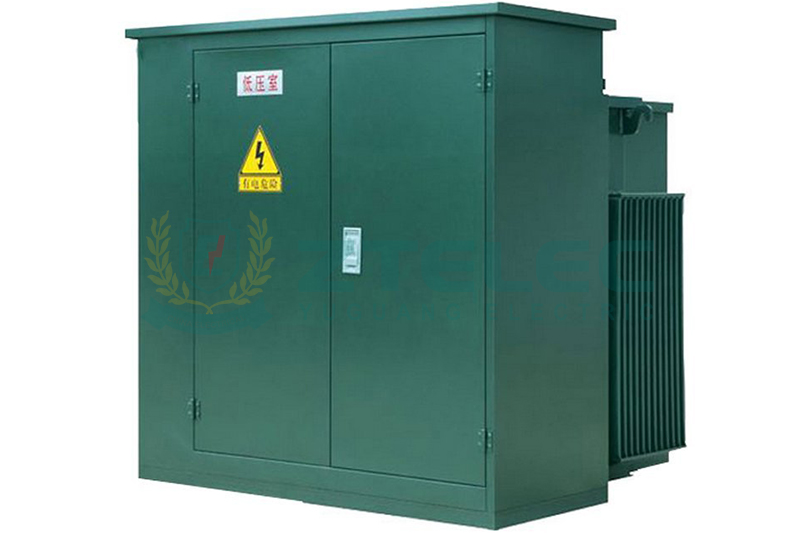
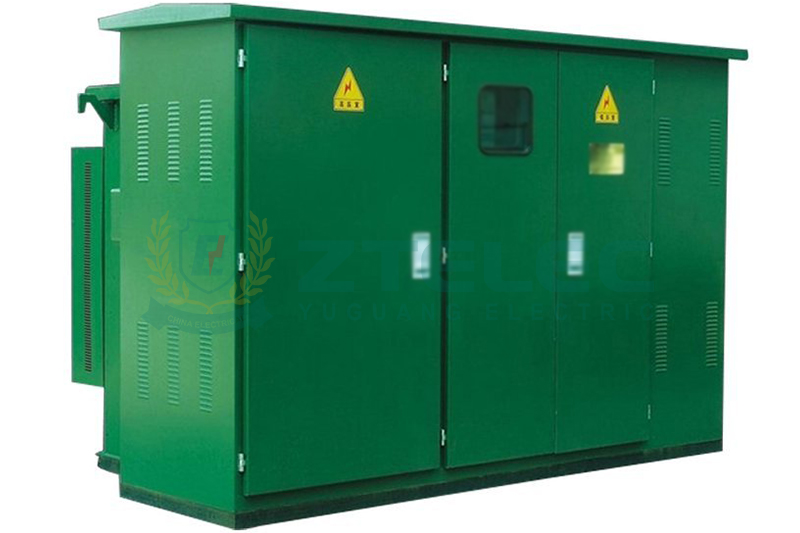
An 11kV prefabricated substation typically integrates a medium-voltage switchgear system, distribution transformer, low-voltage equipment, protection devices, auxiliary systems, and an enclosure within a compact structure. Because several noise-producing components operate within a relatively confined space, acoustic energy can accumulate and propagate through enclosure walls, doors, ventilation openings, and foundations.
Noise control becomes particularly important when the substation is installed close to residential buildings, offices, hospitals, schools, hotels, commercial facilities, or other noise-sensitive locations. In these applications, simply selecting electrical equipment based on rated voltage and capacity is not sufficient. The acoustic performance of the complete substation should also be evaluated.
A well-designed noise control strategy can help reduce complaints, improve compliance with local environmental requirements, minimize vibration transmission, and reduce the risk of expensive modifications after installation.
Major Sources of Noise in an 11kV Prefabricated Substation
1. Transformer Noise
The transformer is normally the most significant continuous noise source in a prefabricated substation. Transformer noise is primarily associated with magnetostriction in the transformer core, electromagnetic forces in windings and structural components, and mechanical vibration.
Oil-immersed transformers and dry-type transformers can both generate audible noise. The actual sound level depends on transformer design, core construction, magnetic flux density, winding configuration, load conditions, enclosure design, and manufacturing quality.
For projects located near noise-sensitive areas, specifying a low-noise transformer at the procurement stage can be more effective than attempting to reduce transformer noise after installation.
2. Switchgear and Circuit Breakers
11kV switchgear generally produces less continuous noise than a transformer, but switching operations can create short-duration mechanical and electrical sounds. Circuit breakers, disconnectors, contactors, and other moving components can generate impact or operating noise during switching.
Routine maintenance is important because worn mechanical components, loose connections, or abnormal operating conditions may increase vibration and audible noise.
3. Cooling Fans
Forced-air cooling systems can become an important noise source, particularly for high-capacity transformers and compact substations. Fan noise is influenced by fan speed, blade design, airflow resistance, motor vibration, and the acoustic characteristics of ventilation openings.
When a prefabricated substation requires forced ventilation, engineers should evaluate both airflow capacity and acoustic performance. Oversized or unnecessarily high-speed fans may increase noise without providing meaningful thermal benefits.
4. Ventilation Openings
Ventilation is essential for maintaining acceptable internal temperatures, but conventional louvers and openings can provide a direct acoustic path from internal equipment to the surrounding environment.
Acoustic louvers, labyrinth ventilation structures, and properly designed ventilation ducts can help maintain airflow while reducing direct sound transmission.
5. Structural Vibration
Equipment vibration can be transmitted through transformer bases, steel frames, concrete foundations, and enclosure structures. This structure-borne noise can cause the enclosure itself to radiate sound.
Vibration isolation pads, resilient mounts, flexible connections, damping materials, and appropriate foundation design can reduce the transmission of mechanical vibration from equipment into the substation structure.
Types of Noise in Prefabricated Substations
Airborne Noise
Airborne noise travels through the surrounding air from transformers, cooling fans, ventilation openings, and other equipment. In a prefabricated substation, enclosure walls, doors, windows, cable openings, and ventilation systems all influence how much airborne noise reaches the outside environment.
Structure-Borne Noise
Structure-borne noise is generated when equipment vibration is transferred through structural components. Transformer vibration is a common source. If equipment is rigidly connected to the enclosure structure, vibration can propagate through the foundation and walls and increase external noise levels.
Electromagnetic and Switching Noise
Electrical equipment can generate electromagnetic forces and switching-related sounds. These effects are normally intermittent for switchgear but may contribute to overall acoustic conditions during operation.
Effective Noise Control Techniques for 11kV Prefabricated Substations
1. Select Low-Noise Transformers
Noise reduction should begin with equipment selection. A transformer with a lower specified sound level can significantly reduce the acoustic burden of the complete substation.
During procurement, project engineers should request transformer sound-level data and confirm the applicable measurement method. Transformer acoustic performance should be evaluated together with rated power, voltage ratio, impedance, temperature rise, efficiency, and cooling method.
For urban and commercial projects, low-noise dry-type transformers or specially designed low-noise oil-immersed transformers may be considered depending on the electrical and environmental requirements.
2. Use Acoustic Enclosures
An acoustic enclosure can reduce airborne noise by adding sound-absorbing and sound-blocking layers around the major noise source. For prefabricated substations, acoustic treatment can be integrated into the enclosure walls rather than added as a separate structure.
Effective acoustic enclosure design should consider sound insulation, internal sound absorption, fire safety, heat dissipation, equipment access, cable routing, maintenance requirements, and environmental durability.
3. Install Sound Barriers
Sound barriers can be installed between the substation and nearby noise-sensitive areas. Depending on the project environment, barriers may use concrete, masonry, metal acoustic panels, composite acoustic materials, or other engineered systems.
The barrier should be sufficiently high and positioned appropriately to interrupt the direct line of sight between the main noise source and the receiving location. However, barriers should not obstruct required ventilation or access routes.
4. Apply Vibration Isolation
Vibration isolation is particularly effective when transformer vibration is transmitted through the substation foundation. Resilient pads, vibration isolators, spring mounts, and damping systems can reduce mechanical energy transferred into the supporting structure.
For heavy transformers, the isolation system should be designed according to equipment weight, operating conditions, foundation characteristics, vibration frequency, and required maintenance access.
5. Optimize Ventilation and Cooling
Cooling design should balance thermal performance with acoustic performance. Low-noise fans, variable-speed control, optimized airflow paths, acoustic louvers, and properly sized ventilation openings can reduce unnecessary fan noise.
In naturally ventilated substations, engineers should maximize passive airflow where practical. This can reduce dependence on mechanical fans and potentially lower both operating noise and auxiliary energy consumption.
6. Improve Substation Layout
Physical layout has a major influence on noise propagation. The transformer should be positioned as far as reasonably practical from residential buildings, property boundaries, offices, and other noise-sensitive locations.
Where multiple pieces of equipment are installed inside the prefabricated substation, the internal layout should also consider vibration transmission, ventilation airflow, maintenance access, and the acoustic path between equipment and enclosure openings.
7. Use Acoustic Treatment on Ventilation Openings
Ventilation openings are often one of the weakest points in an acoustic enclosure. Acoustic louvers and sound attenuators can reduce direct noise transmission while maintaining the required airflow.
Because acoustic treatment can increase airflow resistance, the pressure drop and thermal performance should be checked during the design process. An acoustic solution that restricts cooling airflow could create an electrical reliability problem.
8. Maintain Equipment Regularly
Preventive maintenance can help prevent abnormal noise caused by mechanical deterioration, loose components, worn bearings, fan imbalance, or other equipment defects.
Regular inspection should include transformer condition, cooling fans, enclosure fasteners, switchgear mechanisms, vibration levels, and ventilation systems. Unexpected changes in the normal noise signature can also be useful as an early indication of equipment problems.
Noise Control at the Design Stage
The most cost-effective approach is to address noise before manufacturing and installation. Retrofitting acoustic barriers, enclosures, ventilation attenuators, or vibration isolation systems after commissioning can increase project cost and may require modifications to the original substation design.
A comprehensive acoustic design should therefore consider the transformer sound power or sound pressure level, equipment layout, enclosure construction, ventilation paths, foundation design, site boundaries, nearby buildings, and applicable environmental noise limits.
Computer-based acoustic modeling can also be used for larger projects to estimate sound propagation before equipment is installed. This approach is especially useful for urban substations and projects with strict boundary noise requirements.
Noise Standards for 11kV Prefabricated Substations
There is no single global noise limit that applies to every 11kV prefabricated substation. Applicable requirements depend on the country, local authority, land-use classification, time of day, receiving location, and project-specific environmental requirements.
IEC 60076-10
IEC 60076-10 is an important international standard for transformer acoustic performance. It establishes methods for determining sound levels from transformers, reactors, and similar equipment under specified conditions.
For projects where transformer noise is a major concern, IEC 60076-10 can provide an important basis for factory testing, equipment comparison, and acoustic specifications.
IEEE C57.12.90
IEEE C57.12.90 provides test code requirements for liquid-immersed distribution, power, and regulating transformers. It includes relevant testing procedures and is commonly referenced in North American transformer specifications.
When procuring transformers for international projects, engineers should confirm which IEEE and IEC requirements are included in the project technical specification rather than assuming that one standard applies to every application.
ISO 9614
The ISO 9614 series provides methods for determining sound power levels using sound intensity measurements. It can be useful for identifying and quantifying acoustic emissions from equipment under controlled measurement conditions.
It is important to distinguish sound power measurement standards from environmental noise regulations. A measurement method determines how acoustic emissions are quantified, while local environmental regulations determine the allowable noise at specified receiving locations.
Local Environmental Noise Regulations
International standards provide measurement and testing methodologies, but actual project compliance normally depends on applicable national and local environmental noise regulations.
In the United States, project requirements can include federal workplace requirements as well as state, county, or municipal environmental noise ordinances. In Europe, environmental noise assessment is influenced by national legislation and the Environmental Noise Directive, while specific project limits may be established by local authorities.
In China, substation projects need to consider applicable national and local environmental noise requirements, including requirements for industrial and infrastructure facilities. Similar location-specific requirements exist in India and other major power markets.
Noise Measurement and Compliance Testing
A noise control program should define the measurement location, operating condition, background noise, measurement equipment, weather conditions, and applicable evaluation criteria.
For a new 11kV prefabricated substation, noise testing may be performed during factory acceptance, commissioning, or post-installation verification. Measurements should represent realistic operating conditions, particularly when transformer cooling fans or other auxiliary equipment are running.
Factory Testing
Factory acoustic testing can help verify transformer noise performance before shipment. This is particularly valuable for large projects where replacing or modifying equipment after installation would be difficult.
Site Noise Testing
Site testing evaluates actual environmental noise at the substation boundary and nearby sensitive receptors. The assessment should distinguish substation-generated noise from existing background noise.
Continuous Noise Monitoring
For substations located in sensitive urban environments, continuous monitoring can provide useful information about changes in acoustic performance. Modern monitoring systems can record noise levels and operating conditions and can support long-term maintenance and compliance programs.
Practical Noise Control Strategy for an 11kV Prefabricated Substation
A practical project strategy can be divided into several stages. First, identify all potential noise sources and establish the required noise criteria. Second, select low-noise transformers and cooling equipment. Third, optimize the equipment layout and enclosure structure. Fourth, evaluate vibration isolation and acoustic barriers. Fifth, verify ventilation and thermal performance after acoustic treatment. Finally, conduct commissioning measurements to confirm actual site performance.
This integrated approach is more effective than relying on a single noise reduction measure. For example, installing a thick acoustic wall may reduce airborne noise but can create ventilation problems if the airflow path is not properly designed. Similarly, selecting a low-noise transformer may not be sufficient if vibration is transmitted through the foundation.
Noise Control for Urban and Residential Applications
Urban substations require particular attention because the distance between electrical infrastructure and sensitive buildings can be limited. In these applications, the acoustic design should be integrated into the architectural and electrical design from the beginning.
Possible measures include low-noise transformers, high-performance acoustic enclosure panels, vibration isolation, acoustic ventilation systems, strategically positioned barriers, and optimized equipment orientation.
The substation should also be evaluated under the most demanding operating condition. For example, cooling fans may operate at higher speeds during periods of high transformer loading, potentially increasing the overall sound level.
Noise Control for Industrial and Renewable Energy Projects
Industrial facilities, solar power plants, wind power projects, battery energy storage facilities, and other renewable energy installations may use multiple prefabricated substations. When several units operate within the same site, the combined acoustic impact should be evaluated rather than assessing each substation independently.
For large renewable energy projects, equipment spacing, terrain, site boundaries, vegetation, acoustic barriers, transformer specifications, and cumulative sound propagation can all affect the final noise level.
Common Noise Control Design Mistakes
Ignoring Noise During Equipment Procurement
One of the most common mistakes is purchasing a transformer based only on electrical specifications. Sound level should be included in the technical procurement specification when the project has acoustic constraints.
Blocking Ventilation Without Thermal Analysis
Adding acoustic barriers without checking airflow can increase internal temperature. Acoustic design must therefore be coordinated with transformer thermal calculations and ventilation requirements.
Focusing Only on Airborne Noise
Some projects focus on enclosure walls while overlooking vibration transmission. If structure-borne vibration is significant, acoustic barriers alone may provide limited improvement.
Using Generic Noise Limits
Noise limits differ by country, municipality, land-use category, measurement position, and time period. Project engineers should always verify the specific requirements applicable to the installation site.
Future Trends in Substation Noise Control
Smart Acoustic Monitoring
IoT-enabled acoustic sensors are increasingly capable of monitoring sound levels continuously. Data can be integrated with transformer monitoring and substation automation systems to identify abnormal acoustic changes.
AI-Based Predictive Maintenance
Artificial intelligence and machine learning can analyze changes in vibration and acoustic signatures to help identify developing equipment problems. Abnormal noise patterns may indicate fan imbalance, mechanical looseness, bearing deterioration, or transformer operating abnormalities.
Advanced Acoustic Materials
New acoustic panels, composite materials, vibration damping systems, and low-noise ventilation technologies are creating additional opportunities for compact substations that require high acoustic performance without sacrificing thermal efficiency.
More Integrated Prefabricated Substation Design
Future prefabricated substations are expected to integrate electrical, thermal, acoustic, fire protection, and monitoring functions more closely. This integrated approach can improve installation efficiency while making the substation more suitable for urban and environmentally sensitive applications.
How to Specify Noise Performance When Buying an 11kV Prefabricated Substation
When requesting quotations from an 11kV prefabricated substation manufacturer, buyers should provide clear acoustic requirements rather than simply requesting a "low-noise substation."
The technical specification should identify the transformer type and capacity, rated voltage, cooling method, required sound measurement standard, maximum permitted sound level, measurement conditions, site boundary requirements, nearby sensitive receptors, ventilation requirements, and applicable local regulations.
Manufacturers should also be asked to provide transformer noise data, enclosure construction details, acoustic treatment information, ventilation calculations, and testing documentation when required by the project.
Noise control in 11kV prefabricated substations requires a combination of equipment selection, acoustic enclosure design, vibration isolation, ventilation optimization, site planning, maintenance, and regulatory compliance.
The transformer is usually the primary continuous noise source, but fans, switchgear, ventilation openings, and structural vibration can also contribute significantly to the overall acoustic environment. The most effective strategy is to address these factors during the early design and procurement stages rather than relying on expensive retrofits after installation.
For projects near residential areas, commercial buildings, hospitals, data centers, and other noise-sensitive locations, selecting low-noise transformers and designing the prefabricated substation enclosure around both electrical and acoustic requirements can provide significant long-term benefits.
By combining IEC and IEEE-based equipment testing with applicable national and local environmental noise regulations, project developers and electrical engineers can achieve a practical balance between reliable power distribution, thermal performance, safety, and environmental compatibility.
dry type transformer IEC standard
IEC dry type transformer standard
dry type transformer standard
2000 kVA oil filled transformer price
2000 kVA transformer price 2026
- more+releated article
- 2026-08-14Noise Control in 11kV Prefabricated Substation
- 2026-08-13What Is IEC 60076-11? A Complete Guide to Dry
- 2026-08-122000 kVA Oil-Filled Transformer Price 2026: Ma
- 2026-08-11Prefabricated Substations: Flexible, Scalable
- 2026-08-10Oil Filled Transformer Series Overview: 500–
- 2026-07-31Cast Resin Dry Type Transformer: Fire-Safe Ind
- 2026-07-30750 KVA Oil Filled Transformer Manufacturer |
- 2026-07-2911kV Dry Type Transformer – Ultimate Specifi
- 2026-07-287.2KV Switchgear: Complete Guide to Technical
- 2026-07-27Prefabricated Substation Price Guide 2026: 200
- ELECTRICAL INSULATION BOARD MATERIALS
- ELECTRICAL INSULATION MATERIALS
- POWER TRANSFORMER
- ENAMELED WIRE
- SWITCHGEAR



IEC dry type transformer standard
dry type transformer IEC standard
dry type transformer standard
2000 kVA transformer price 2026
2000 kVA oil immersed transformer
2000 kVA oil filled transformer price
prefabricated substations
prefabricated electrical substation
compact substation
prefabricated substation
modular substation
cast resin dry type transformer
dry type transformer
Indoor Transformer
Cast resin transformer
750 kVA transformer
750 KVA oil filled transformer
750 kVA transformer manufacturer
Oil immersed transformer
Dry Type Transformer China
11kV Transformer Manufacturer
11kV dry type transformer
11kV cast resin transformer
7.2KV Switchgear
7.2kV Medium Voltage Switchgear