
Cast Resin Dry Type Transformer: Fire-Safe Indoor Power Distribution Solution
As electrical infrastructure becomes increasingly important in commercial buildings, industrial plants, hospitals, data centers, and renewable energy projects, safety and reliability have become essential selection criteria when choosing a transformer. Among today's available transformer technologies, the Cast Resin Dry Type Transformer has become the preferred solution for indoor power distribution because it combines outstanding fire resistance, minimal maintenance, environmental protection, and high operating efficiency.
Unlike conventional oil-filled transformers that rely on insulating oil, cast resin transformers encapsulate their windings with high-quality epoxy resin. This solid insulation technology eliminates oil leakage, significantly reduces fire risks, and provides excellent protection against moisture, dust, and industrial contaminants.
In this comprehensive guide, you'll learn how cast resin dry type transformers work, their technical advantages, major applications, specifications, selection considerations, installation recommendations, and why they continue to replace oil-filled transformers in modern electrical systems.
What Is a Cast Resin Dry Type Transformer?
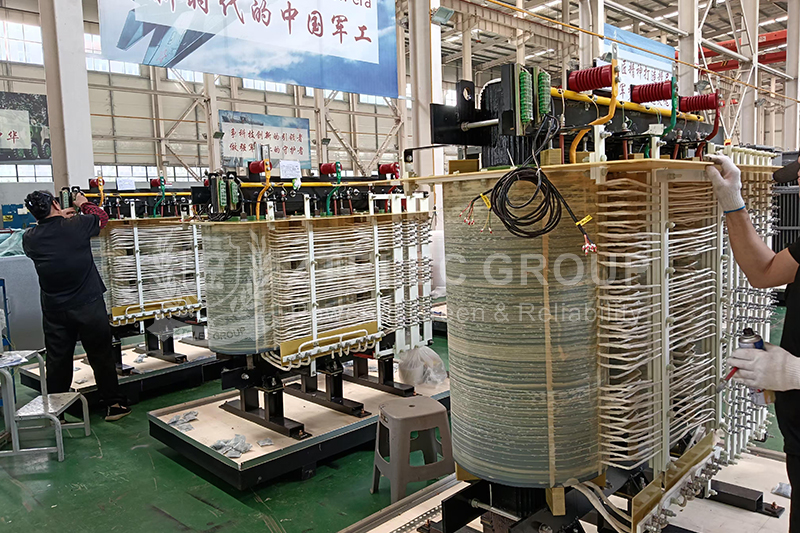
A Cast Resin Dry Type Transformer is a medium-voltage or low-voltage power transformer that uses vacuum-cast epoxy resin to completely encapsulate its high-voltage windings. Instead of liquid insulation, the transformer relies on solid resin insulation combined with natural air cooling (AN) or forced air cooling (AF).
The encapsulated winding structure provides exceptional mechanical strength while protecting the transformer from humidity, corrosion, condensation, chemical exposure, and airborne pollutants. This makes cast resin transformers especially suitable for indoor environments where safety, cleanliness, and long-term reliability are critical.
Most cast resin transformers comply with international standards including IEC 60076-11, IEEE C57.12.01, and various national energy efficiency regulations.
Main Components of a Cast Resin Transformer
Epoxy Resin Encapsulated Windings
The primary insulation system consists of flame-retardant epoxy resin cast under vacuum pressure. The resin provides outstanding dielectric strength while preventing moisture penetration and partial discharge.
Copper or Aluminum Windings
Manufacturers typically offer both copper and aluminum conductor options. Copper windings provide higher conductivity, greater overload capability, and longer service life, while aluminum windings offer a more economical solution with reduced weight.
High-Grade Silicon Steel Core
Cold-rolled grain-oriented silicon steel minimizes no-load losses, reduces operating noise, and improves overall transformer efficiency.
Cooling System
Standard models operate using natural air cooling. Optional forced-air cooling fans can increase transformer capacity by approximately 30% to 40% when additional load capacity is required.
Protective Enclosure
Indoor enclosures are available in IP20, IP23, IP31, IP44, and higher protection levels depending on environmental conditions and installation requirements.
Advantages of Cast Resin Dry Type Transformers
Superior Fire Safety
The biggest advantage of cast resin transformers is their outstanding fire performance. Since no combustible insulating oil is used, there is no risk of oil fires or explosions. The epoxy resin is self-extinguishing and generates very little toxic gas during extreme conditions, making these transformers ideal for buildings with strict fire protection requirements.
Environmentally Friendly Operation
Cast resin transformers contain no insulating oil, eliminating the possibility of oil leakage, groundwater contamination, or expensive oil containment systems. This makes them an environmentally sustainable solution for modern infrastructure projects.
Minimal Maintenance
Unlike oil-filled transformers that require regular oil sampling, filtration, and leak inspections, cast resin transformers require only routine visual inspections and occasional cleaning. Their maintenance costs throughout the equipment lifecycle are significantly lower.
High Reliability in Harsh Environments
The sealed resin insulation protects internal windings against dust, humidity, salt spray, condensation, and industrial pollution, allowing reliable operation in challenging environments.
Excellent Energy Efficiency
Modern cast resin transformers are designed with low-loss magnetic cores and optimized winding structures that achieve efficiencies above 98%, reducing operating costs over decades of service.
Quiet Operation
Low operating noise makes these transformers particularly suitable for hospitals, schools, office buildings, hotels, shopping centers, and residential developments where acoustic performance is important.
Typical Applications
Commercial Buildings
Shopping malls, office towers, airports, convention centers, hotels, universities, and high-rise buildings frequently install cast resin transformers because they satisfy stringent indoor fire safety regulations while occupying relatively little installation space.
Healthcare Facilities
Hospitals require uninterrupted electrical power and maximum operational safety. Cast resin transformers provide dependable power for operating rooms, intensive care units, imaging equipment, and emergency systems without the hazards associated with insulating oil.
Industrial Manufacturing
Factories, mining facilities, steel mills, chemical plants, automotive production lines, and electronics manufacturers benefit from the transformers' durability, low maintenance requirements, and resistance to contaminated environments.
Data Centers
Mission-critical facilities depend on highly reliable electrical infrastructure. Cast resin transformers reduce maintenance downtime while supporting continuous operation of servers, UPS systems, and cooling equipment.
Renewable Energy Projects
Wind farms, photovoltaic power stations, battery energy storage systems, and microgrids commonly use cast resin transformers because of their reliability, compact size, and environmental advantages.
Public Infrastructure
Rail transit systems, subway stations, tunnels, airports, government buildings, and utility substations often specify cast resin transformers to maximize operational safety in densely populated environments.
Technical Specifications
Rated Capacity
Standard capacities typically range from 100 kVA to 3150 kVA, while custom designs can exceed 20 MVA for specialized industrial and utility applications.
Voltage Ratings
Primary voltages generally range from 3.3 kV to 35 kV, with secondary voltages including 400V, 415V, 480V, 690V, and other custom voltage combinations.
Frequency
Available for both 50 Hz and 60 Hz electrical systems worldwide.
Cooling Methods
Natural Air (AN) is standard, while Air Forced (AF) cooling is available for increased output capacity.
Insulation Class
Class F and Class H insulation systems provide excellent thermal stability and long service life under demanding operating conditions.
Protection Class
Enclosure protection ratings can be customized from IP20 to IP54 depending on installation conditions.
Cast Resin Transformer vs Oil-Filled Transformer
| Comparison Item | Cast Resin Dry Type Transformer | Oil Filled Transformer |
|---|---|---|
| Fire Safety | Excellent, self-extinguishing | Lower, contains flammable insulating oil |
| Maintenance | Very low | Regular oil inspection required |
| Environmental Protection | No oil leakage risk | Potential oil contamination |
| Indoor Installation | Highly recommended | Usually requires additional fire protection |
| Noise Level | Low | Moderate |
| Moisture Resistance | Excellent | Moderate |
| Initial Investment | Higher | Lower |
| Lifecycle Cost | Lower | Higher due to maintenance |
Installation Best Practices
Proper installation directly influences transformer performance and service life. Select a location with sufficient ventilation to ensure effective cooling while maintaining adequate clearances for inspection and maintenance. Install the transformer on a level concrete foundation capable of supporting its operating weight.
For installations in public buildings or industrial facilities, ensure compliance with local electrical codes, grounding requirements, ventilation standards, and fire protection regulations. Temperature monitoring systems and thermal protection relays are also recommended for enhanced operational safety.
Routine Maintenance Recommendations
Although cast resin transformers require significantly less maintenance than oil-filled units, periodic inspections remain essential. Operators should inspect electrical connections, monitor operating temperatures, remove accumulated dust from cooling channels, verify cooling fan operation where applicable, and conduct insulation resistance testing during scheduled maintenance intervals.
Implementing predictive maintenance technologies such as infrared thermal imaging and online condition monitoring further improves equipment reliability while minimizing unexpected downtime.
Emerging Technology Trends
Smart Digital Monitoring
Modern cast resin transformers increasingly incorporate IoT-enabled sensors for continuous monitoring of winding temperature, load current, humidity, and insulation condition. Remote diagnostics help utilities and facility managers schedule maintenance proactively.
Higher Energy Efficiency
Manufacturers continue to optimize magnetic core materials and winding designs to reduce no-load and load losses, supporting increasingly stringent global energy efficiency standards.
Compact Modular Designs
New transformer designs reduce footprint and installation weight while maintaining high power density, making them suitable for compact electrical rooms and modular substations.
Advanced Insulation Materials
Ongoing research into improved epoxy resin formulations provides better thermal conductivity, stronger mechanical performance, enhanced crack resistance, and longer operating life.
How to Select the Right Cast Resin Transformer
Choosing the correct transformer involves evaluating multiple factors, including required capacity, system voltage, load characteristics, installation environment, cooling method, efficiency requirements, protection level, short-circuit impedance, and applicable international standards.
Working with an experienced transformer manufacturer ensures proper transformer sizing, customized voltage configurations, and compliance with IEC, ANSI, IEEE, or local utility specifications.
The Cast Resin Dry Type Transformer has become the preferred indoor transformer solution for modern electrical infrastructure thanks to its exceptional fire safety, environmental sustainability, energy efficiency, and operational reliability. Although the initial investment may be higher than traditional oil-filled transformers, significantly lower maintenance costs, longer service life, and superior safety performance deliver substantial long-term value.
Whether for hospitals, commercial complexes, industrial plants, renewable energy facilities, transportation infrastructure, or mission-critical data centers, cast resin transformers provide dependable power distribution while meeting increasingly demanding safety and environmental requirements.
Request a Professional Solution
If you are planning an indoor power distribution project or upgrading an existing electrical system, selecting a high-quality cast resin dry type transformer is an investment in long-term safety and efficiency. Our engineering team provides customized transformer solutions ranging from 100 kVA to 35 kV, manufactured to international standards with OEM and project-specific design support.
Contact us today for technical consultation, product specifications, pricing, and customized transformer recommendations tailored to your application.
Cast resin transformer
dry type transformer
Indoor Transformer
cast resin dry type transformer
750 KVA oil filled transformer
- more+releated article
- 2026-07-31Cast Resin Dry Type Transformer: Fire-Safe Ind
- 2026-07-30750 KVA Oil Filled Transformer Manufacturer |
- 2026-07-2911kV Dry Type Transformer – Ultimate Specifi
- 2026-07-287.2KV Switchgear: Complete Guide to Technical
- 2026-07-27Prefabricated Substation Price Guide 2026: 200
- 2026-07-25Oil Immersed Transformers Explained: Cooling S
- 2026-07-24Gas Insulated Switchgear (GIS) vs Air Insulate
- 2026-07-23315 KVA Cast Resin Dry Type Transformer – Co
- 2026-07-2233KV GIS Switchgear Installation & Mainten
- 2026-07-21China Dry Type Transformer Export Standards: G
- ELECTRICAL INSULATION BOARD MATERIALS
- ELECTRICAL INSULATION MATERIALS
- POWER TRANSFORMER
- ENAMELED WIRE
- SWITCHGEAR


cast resin dry type transformer
dry type transformer
Indoor Transformer
Cast resin transformer
750 kVA transformer
750 KVA oil filled transformer
750 kVA transformer manufacturer
Oil immersed transformer
Dry Type Transformer China
11kV Transformer Manufacturer
11kV dry type transformer
11kV cast resin transformer
7.2kV Medium Voltage Switchgear
7.2KV Metal Clad Switchgear
7.2KV Switchgear
prefabricated substation price
package substation price
prefabricated substation cost
compact substation price
ONAF transformer
il immersed transformer
transformer cooling
oil filled transformer
ONAN transformer
Air Insulated Switchgear