
How to Get the Best Transformer Factory Price: Negotiation Tips
Anyone who has bought transformers directly from a factory knows the first quote is rarely the final price. Manufacturers build in room to negotiate, and buyers who understand how the pricing actually works walk away with better deals than those who simply accept the number on the quotation sheet. Whether you're purchasing a single distribution transformer for a local project or placing a bulk order for a utility contract, the way you approach the conversation with a factory can shift the price by a meaningful margin. Here's what actually works when you're trying to get the best possible price without sacrificing quality or reliability.
Understand What Actually Drives the Price
Before you can negotiate effectively, you need to know what you're negotiating against. Transformer pricing isn't arbitrary. It's built from a handful of core cost components: raw materials such as copper or aluminum windings and silicon steel cores, labor, factory overhead, testing and certification costs, and logistics. Copper prices in particular fluctuate on global commodity markets, and a factory quoting you today may price differently next month simply because copper moved. Knowing this helps you read a quotation intelligently. If a price seems unusually high, ask whether it reflects current material costs or if there's padding built in. If it seems unusually low, be cautious — corners may be cut somewhere, often in core quality or insulation materials that won't show up until years later when the unit is already installed.
It also helps to understand that transformer factories operate on different margin structures depending on order size, customization level, and how busy their production line is at the time. A factory running below capacity is often far more willing to negotiate than one that's booked out for months. Timing your purchase, when possible, around a factory's slower production periods can work in your favor.
Get Multiple Quotes, and Make the Factories Aware of It
This sounds obvious, but many buyers skip it or don't do it properly. Getting three to five quotes from different manufacturers isn't just about comparing final numbers — it gives you leverage and market context. When you request quotes, be specific about your specifications: capacity (kVA), voltage class, cooling type, insulation level, and any regional certification requirements such as IEC, ANSI, or GB standards. Vague requests produce vague quotes that are hard to compare fairly.
Once you have quotes in hand, it's fair — and expected in this industry — to let each factory know you're comparing offers. You don't need to reveal exact competitor prices, but simply saying "we're evaluating a few suppliers for this order" signals that you're a serious buyer doing due diligence, not someone who will accept the first number handed to you. Factories respond differently to buyers who clearly understand the market versus those who seem unfamiliar with it.
Order Volume and Long-Term Commitment Change Everything
Transformer manufacturing has significant fixed costs tied to tooling, testing setup, and production scheduling. A factory would much rather run a larger batch of similar units than switch configurations repeatedly for small one-off orders. This is why volume matters so much in negotiation. If you have a project that will require multiple units over the coming year, say so upfront, even if you're only ordering one unit now. Framing the conversation around a potential ongoing relationship, rather than a single transaction, often unlocks pricing that wouldn't be available otherwise.
If your volume genuinely is small, another option is to combine your order with a group purchase, sometimes through a trading company or a local distributor who aggregates smaller buyers into a single production run. You give up a bit of direct control, but you gain access to volume pricing you wouldn't get on your own.
Don't Negotiate Price in Isolation
One of the most common mistakes buyers make is treating price as the only negotiable line item. In reality, a transformer purchase involves several variables that all affect the final cost: payment terms, delivery lead time, warranty length, spare parts inclusion, and after-sales support. A factory that won't budge on unit price might be willing to extend payment terms from 30% deposit and 70% before shipment to a more favorable split, or throw in an extended warranty, free spare bushings, or waived inspection fees.
It's worth approaching negotiations holistically. Ask what flexibility exists across the whole package rather than fixating only on the per-unit number. Sometimes a slightly higher unit price with better payment terms and a longer warranty actually works out to lower total cost of ownership than the cheapest quote on paper.
Ask for a Cost Breakdown
Reputable manufacturers, especially ones used to working with international or industrial buyers, are usually willing to provide a rough breakdown of what makes up the price: materials, labor, testing, packaging, and logistics. If a factory refuses outright to explain their pricing at all, that's worth noting. It doesn't necessarily mean they're overcharging, but transparency is generally a good sign of a supplier who's confident in their pricing and used to professional buyers who ask questions.
Once you have a breakdown, you can identify where there's actual room to negotiate. Material costs are usually fixed and tied to market rates, so pushing hard there rarely works and can come across as unreasonable. Labor, overhead allocation, and margin, on the other hand, are areas where a factory has more discretion, particularly if they want your business.
Factor In Quality and Certification, Not Just the Bottom Line
The cheapest transformer factory price isn't always the best deal. Transformers are long-life assets, often expected to run reliably for twenty to thirty years, and failures are expensive both in replacement cost and downtime. Before locking in a price, confirm what certifications and testing the unit will go through — routine tests like insulation resistance and winding resistance should be standard, but for larger or critical installations, you may want type test reports and third-party inspection as well.
When comparing quotes, make sure you're comparing equivalent specifications. A lower price sometimes reflects a lower grade of core steel, thinner insulation, or the absence of testing that a competing factory includes as standard. Ask each factory to itemize exactly what's included, so you're negotiating on a like-for-like basis rather than comparing a stripped-down unit against a fully speced one.
Build the Relationship, Not Just the Deal
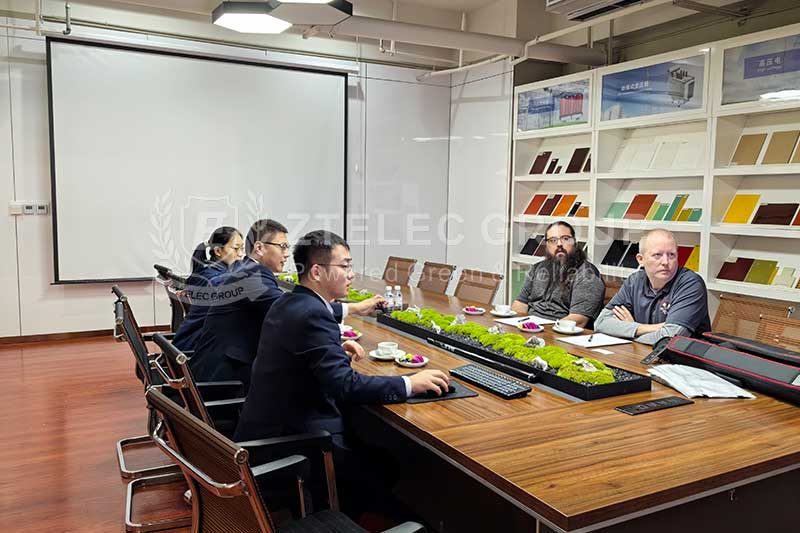
Factories remember buyers who are difficult to work with, and they also remember buyers who are fair, clear in their requirements, and reliable with payments. If you're planning to source transformers repeatedly, it's worth investing time in the relationship beyond a single negotiation. Visiting the factory if possible, or at least having a video call with the sales and engineering team, builds trust that pays off in future orders, priority production slots during busy seasons, and more flexibility when unexpected issues come up.
Many experienced buyers find that after the first one or two transactions, once trust is established, subsequent negotiations become faster and more favorable simply because the factory now views them as a known, low-risk customer rather than a one-time inquiry to be quoted cautiously.
Watch Out for Red Flags During Negotiation
Be cautious of factories that drop their price dramatically without any clear justification, especially if the reduction happens the moment you mention a competing quote. This can sometimes indicate the original quote was inflated to begin with, or that corners will be cut to hit the new number. Similarly, be wary of vague answers about specifications, unwillingness to provide test reports, or pressure to pay a large deposit before you've verified the factory's production capability and reputation through references or site visits.
A good negotiation should feel collaborative, not adversarial. Both sides are trying to reach a price that works for a long-term working relationship, not just a single transaction squeezed as low as possible.
Getting the best transformer factory price isn't about aggressive haggling or simply asking for a discount. It's about understanding the cost structure, gathering real market data through multiple quotes, negotiating the full package rather than just the unit price, and building a relationship that gives you leverage over time. Buyers who do their homework and approach the process with clear, specific requirements consistently end up with better pricing and better outcomes than those who treat it as a quick, transactional purchase. Take the time upfront, and the savings — both immediate and over the life of the transformer — tend to follow.
transformer negotiation tips
buy transformer from factory
transformer factory price
33kV to 415V transformer
commercial transformer case study
- more+releated article
- 2026-09-09How to Get the Best Transformer Factory Price:
- 2026-09-08Case Study: 500 kVA 33/0.415 kV Transformer fo
- 2026-09-07Medium Voltage Dry Type Transformers: 3.3kV–
- 2026-09-02Oil Immersed Transformers Explained: Construct
- 2026-09-011250 kVA Dry Type Transformer Price 2026: Cast
- 2026-08-31ZTELEC GROUP to Exhibit High-Performance Elect
- 2026-08-29Summer in the Mountains, Stronger Together | Z
- 2026-08-26Dry Type Transformer Supply Chain in 2026: Lea
- 2026-08-2633kV Prefabricated Substation for Utility Grid
- 2026-08-2433kV Gas Insulated Switchgear (GIS): Compact S
- ELECTRICAL INSULATION BOARD MATERIALS
- ELECTRICAL INSULATION MATERIALS
- POWER TRANSFORMER
- ENAMELED WIRE
- SWITCHGEAR

FR-4 Copper-Free Laminate | High-Performance Insulation Material

FR-4 Copper Clad Laminate Manufacturer & Supplier
transformer negotiation tips
buy transformer from factory
transformer factory price
33kV to 415V transformer
500 kVA transformer
commercial transformer case study
3.3kV transformer
6.6kV transformer
10kV transformer
medium voltage dry type transformer
oil transformer cooling system
Oil immersed transformer
oil immersed transformer construction
oil filled transformer
1250 kVA transformer price 2026
1250 kVA dry type transformer price
1250 kVA VPI transformer price
1250 kVA cast resin transformer price
ZTelec Group
electrical insulation materials
epoxy glass cloth laminat
Data Centre World Singapore 2026
employee team building activity
ZTELEC team building
company team building