
Transformer Voltage Conversion: 11kV vs 33kV Systems Explained
Power distribution networks rarely move electricity at a single voltage from the generating station all the way to the end user. Instead, voltage is stepped down in stages through a series of transformers, each stage optimized for a specific role in the network. Two of the most common voltage levels encountered in medium voltage distribution, particularly across Asia, the Middle East, and Africa, are 11kV and 33kV. Understanding how transformers convert between these levels, and why both exist as separate tiers rather than a single voltage, is essential for engineers, contractors, and facility planners working on substation or industrial power projects. This article explains the working principle of voltage conversion and breaks down the practical differences between 11kV and 33kV systems.
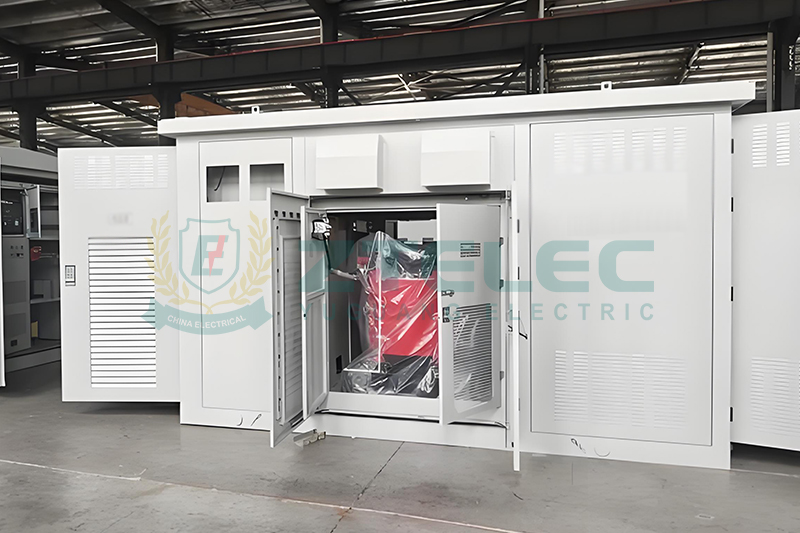
The Basic Principle of Transformer Voltage Conversion
A transformer changes voltage using electromagnetic induction between two or more windings wound around a common magnetic core. When alternating current flows through the primary winding, it generates a changing magnetic flux in the core. This flux induces a voltage in the secondary winding, and the ratio between the primary and secondary voltages is directly proportional to the ratio of the number of turns in each winding. A transformer converting 33kV to 11kV, for example, has a primary-to-secondary turns ratio of approximately 3:1, stepping the voltage down by roughly that same factor while stepping the current up proportionally, since power (ignoring losses) remains constant across the transformation.
This turns-ratio relationship is what allows network designers to move large amounts of power efficiently at high voltage over long distances, then progressively reduce voltage closer to the point of consumption, where lower voltages are safer and more practical to handle.
Where 33kV Fits in the Network
33kV is generally classified as a sub-transmission or primary distribution voltage. It sits between the higher transmission voltages used for bulk power transfer (66kV, 132kV, 220kV, and above) and the lower voltages used for local distribution. In a typical network hierarchy, power generated at the power station is stepped up to a high transmission voltage for efficient long-distance transfer, then stepped down at a grid substation to 33kV for regional distribution across a city, industrial zone, or rural feeder network.
33kV lines and cables carry relatively large blocks of power over medium distances, typically feeding bulk substations, large industrial plants, and 33/11kV distribution substations that further reduce voltage before it reaches individual consumers. Because the current at this voltage level is comparatively low for a given amount of power, 33kV allows utilities to transmit significant loads through smaller, more economical conductors than would be needed at 11kV for the same power.
Where 11kV Fits in the Network
11kV is one of the most widely used secondary distribution voltages worldwide. After power arrives at a 33/11kV substation, transformers there step the voltage down to 11kV for distribution to local feeders. From this point, the 11kV network branches out through overhead lines or underground cables to supply distribution transformers located near clusters of consumers, such as residential neighborhoods, commercial complexes, and smaller industrial units. Those local transformers then perform the final step-down, typically from 11kV to 415V three-phase or 230V single-phase, which is the voltage actually delivered to most end-use equipment and household appliances.
11kV is chosen at this stage because it strikes a practical balance: it is high enough to distribute meaningful power efficiently over a few kilometers, yet low enough that switchgear, cables, and transformers at this level remain relatively compact, affordable, and easier to maintain compared to higher voltage equipment.
Key Technical Differences Between 11kV and 33kV Systems
1. Insulation and Clearance Requirements
Higher voltage systems demand greater insulation thickness and larger physical clearances between live parts and earth to prevent flashover. A 33kV transformer requires substantially more insulation material, larger bushings, and wider clearances inside switchgear compared to an 11kV unit of similar power rating. This directly affects the physical size, weight, and cost of transformers, cables, and switchgear at each voltage level.
2. Current Carrying and Conductor Size
For the same amount of power, a 33kV system carries roughly one-third the current of an 11kV system, since current is inversely proportional to voltage when power is held constant. Lower current at 33kV allows the use of smaller cross-section conductors and cables, reducing material costs and resistive losses over long feeder runs, which is one of the main reasons 33kV is preferred for the intermediate distribution tier rather than running 11kV over the same distances.
3. Transformer Winding Design
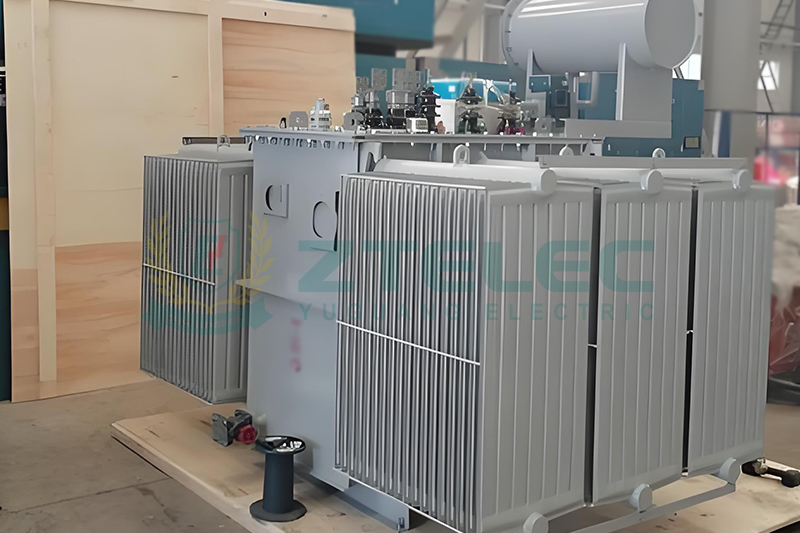
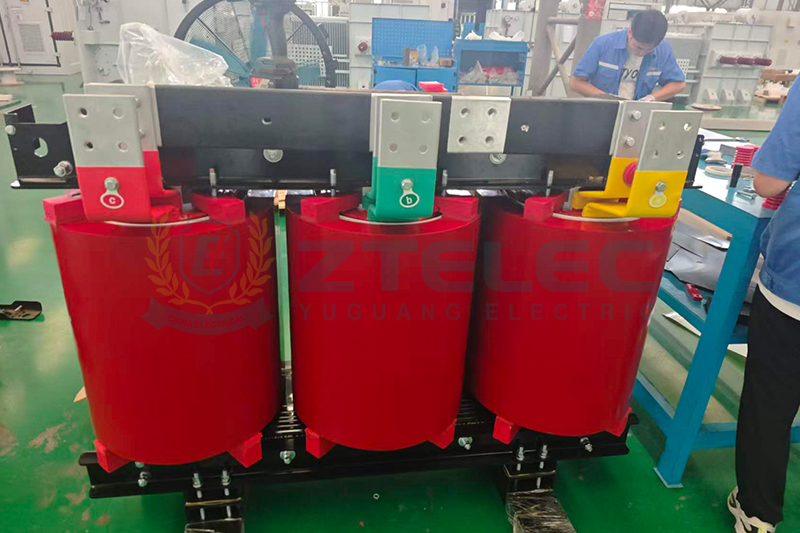
A 33/11kV transformer must accommodate a much higher voltage on its primary winding, requiring more turns of finer wire with heavier insulation between layers compared to a simple 11kV/415V distribution transformer. The core design, tap changer range, and cooling arrangement also differ, since 33/11kV units are typically larger power transformers, often oil-immersed with radiators or fans, while 11kV/415V units are frequently smaller distribution transformers, sometimes cast resin dry type for indoor or fire-sensitive installations.
4. Switchgear and Protection Complexity
33kV switchgear generally requires more sophisticated protection schemes, larger circuit breakers, and stricter arc-flash mitigation measures than 11kV switchgear, reflecting the higher fault energy present at this voltage level. Protection relays at 33kV are typically coordinated with upstream transmission-level protection as well as downstream 11kV feeder protection, adding complexity to system design and commissioning.
5. Cost and Land Footprint
Equipment rated for 33kV is generally more expensive per unit than equivalent 11kV equipment due to the insulation, clearance, and switchgear requirements described above. However, because 33kV systems can transmit the same power with less current and thinner cables over longer distances, the overall network cost can still be lower than extending an 11kV network across an equivalent distance, particularly for large industrial parks or growing urban areas where future load growth is expected.
How Utilities Decide Between 11kV and 33kV for a Given Project
The choice of voltage level for a new substation or feeder is rarely arbitrary; it depends on several practical factors. Load size and growth projections play a major role, since larger current or expected future expansion often justifies the higher initial cost of 33kV infrastructure to avoid costly upgrades later. Distance from the source substation matters as well, because 33kV becomes more economical as feeder length increases due to lower line losses and smaller conductor requirements. Existing network infrastructure in the area also influences the decision, since it is often more practical to extend from whichever voltage level already exists nearby rather than introduce a new voltage class. Finally, national or utility-specific standards frequently dictate which voltage tiers are used at each stage of the distribution hierarchy, meaning engineers must design new installations to match the surrounding grid rather than choosing voltages independently.
Practical Example: A 33/11kV Substation
A typical 33/11kV substation receives power from the regional 33kV sub-transmission network and uses one or more power transformers to step the voltage down to 11kV. These transformers are commonly rated between 5MVA and 20MVA depending on the load served, and are equipped with on-load tap changers that allow voltage adjustment under load to compensate for variations in upstream supply voltage or downstream demand. From the 11kV busbar, multiple outgoing feeders distribute power to surrounding distribution transformers, each of which performs the final conversion to low voltage for consumer use. This layered approach, high voltage for bulk transfer, medium voltage for regional distribution, low voltage for final delivery, is the backbone of virtually every modern power distribution network.
11kV and 33kV systems serve distinctly different roles within the electrical distribution hierarchy rather than competing as interchangeable options. 33kV excels at moving larger blocks of power efficiently over medium to long distances with lower current and smaller conductors, making it the natural choice for sub-transmission and regional distribution. 11kV, by contrast, is optimized for the final stage of medium voltage distribution, offering a practical balance of power capacity, equipment size, and cost that makes it ideal for feeding local transformers close to end users. Understanding the transformer voltage conversion principles and the technical trade-offs between these two voltage classes allows engineers and planners to design distribution networks that are efficient, reliable, and cost-effective at every stage from generation to consumption.
11kV transformer
33kV transformer
medium voltage transformer
transformer voltage conversion
transformer factory price
- more+releated article
- 2026-09-10Transformer Voltage Conversion: 11kV vs 33kV S
- 2026-09-09How to Get the Best Transformer Factory Price:
- 2026-09-08Case Study: 500 kVA 33/0.415 kV Transformer fo
- 2026-09-07Medium Voltage Dry Type Transformers: 3.3kV–
- 2026-09-02Oil Immersed Transformers Explained: Construct
- 2026-09-011250 kVA Dry Type Transformer Price 2026: Cast
- 2026-08-31ZTELEC GROUP to Exhibit High-Performance Elect
- 2026-08-29Summer in the Mountains, Stronger Together | Z
- 2026-08-26Dry Type Transformer Supply Chain in 2026: Lea
- 2026-08-2633kV Prefabricated Substation for Utility Grid
- ELECTRICAL INSULATION BOARD MATERIALS
- ELECTRICAL INSULATION MATERIALS
- POWER TRANSFORMER
- ENAMELED WIRE
- SWITCHGEAR

FR-4 Copper-Free Laminate | High-Performance Insulation Material

FR-4 Copper Clad Laminate Manufacturer & Supplier
transformer voltage conversion
33kV transformer
medium voltage transformer
11kV transformer
transformer factory price
buy transformer from factory
transformer negotiation tips
500 kVA transformer
33kV to 415V transformer
commercial transformer case study
3.3kV transformer
medium voltage dry type transformer
10kV transformer
6.6kV transformer
oil immersed transformer construction
Oil immersed transformer
oil filled transformer
oil transformer cooling system
1250 kVA dry type transformer price
1250 kVA VPI transformer price
1250 kVA transformer price 2026
1250 kVA cast resin transformer price
Data Centre World Singapore 2026
ZTelec Group
electrical insulation materials