
Dry Type Transformer Manufacturers: 10-Point Supplier Checklist
Choosing the right dry type transformer manufacturer affects a project for decades, not just at the moment of purchase. A unit that fails prematurely, arrives with incomplete documentation, or comes from a supplier with no real after-sales support can turn a good-looking deal into a costly problem years later.
Because dry type transformers are used heavily in fire-sensitive locations — hospitals, high-rise buildings, data centers — supplier reliability matters even more here than for most other electrical equipment. Below are ten practical points to check before committing to a supplier, whether sourcing locally or importing overseas.
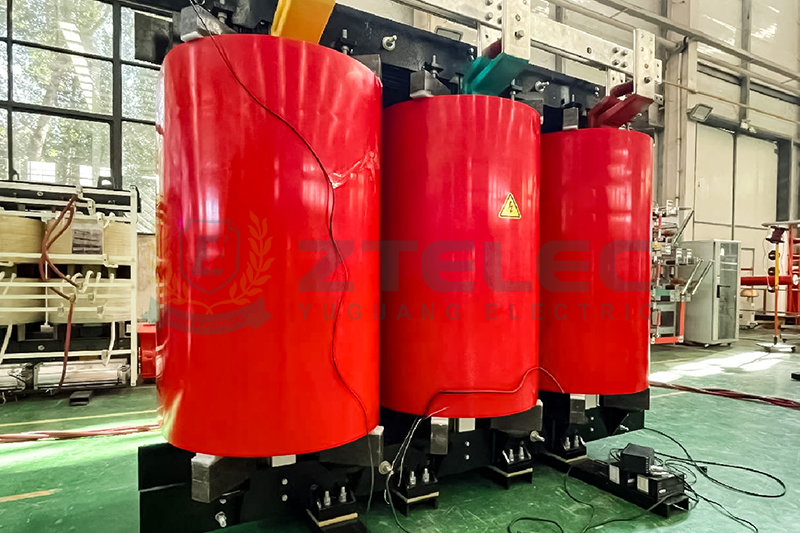
The Checklist at a Glance
| # | Check | Why It Matters |
|---|---|---|
| 1 | Real manufacturing capability | Confirms you're dealing with a factory, not just a trading office |
| 2 | International standards & certifications | Ensures baseline design and test compliance |
| 3 | Fire behavior test reports | Verifies "fireproof" claims with real F1 data |
| 4 | Core & winding material sourcing | Directly affects losses, lifespan, and reliability |
| 5 | Factory testing equipment & reports | Confirms every unit is actually verified before shipping |
| 6 | Production capacity & realistic lead time | Avoids delivery delays on your project schedule |
| 7 | Verifiable customer references | Reveals real-world performance, not marketing claims |
| 8 | Warranty terms in detail | Coverage detail matters more than the headline number |
| 9 | After-sales technical support | Protects you years after installation, not just at delivery |
| 10 | Total value vs. unit price | Lowest quote is rarely the lowest total cost |
1. Verify Manufacturing Capability, Not Just a Sales Office
Many companies marketing themselves as transformer manufacturers are actually trading companies sourcing from third-party factories. That's not inherently a problem — but you need to know which situation you're in, since it affects quality control, lead time reliability, and how directly you can resolve technical issues.
What to ask for: factory address, photos or video of the winding, casting, and testing areas, and where possible a third-party or virtual factory audit before a large order. Genuine manufacturers provide this readily; vague or deflective answers are a warning sign.
2. Confirm Relevant International Standards and Certifications
Dry type transformers should be manufactured and tested to recognized standards — most commonly the IEC 60076 series, with IEC 60076-11 covering dry type units specifically, including fire behavior classification. Depending on your market, CE marking, UL listing, or national equivalents like GB or ANSI/IEEE may also apply.
What to ask for: current, project-relevant certificates rather than marketing claims. For large orders, verify certificate authenticity directly with the issuing body.
3. Review Fire Behavior Classification Documentation
Fire safety is often the whole reason buyers choose dry type over oil immersed. Confirm the specific fire class achieved under IEC 60076-11 — most commonly F1, the highest self-extinguishing performance level.
What to ask for: the actual test report from an accredited lab, not a general "fireproof" or "flame retardant" claim in marketing copy. These terms are not standardized and are used loosely by less rigorous suppliers.
4. Ask About Core and Winding Material Sourcing
Transformer quality depends heavily on silicon steel grade and copper or aluminum purity. Reputable manufacturers can identify their material suppliers and provide test certificates confirming grade and purity.
Watch for: suppliers who can't answer basic material sourcing questions. Inferior core steel and impure conductor material are common, hard-to-spot ways lower-quality manufacturers cut costs on a finished, painted unit.
5. Evaluate Factory Testing Equipment and Routine Test Reports
Every transformer should undergo routine testing before shipment: winding resistance, ratio and polarity, insulation resistance, and applied and induced voltage withstand tests, at minimum.
What to ask for: what equipment the factory operates, and whether test reports are generated per unit or only per batch. For critical projects, consider a witnessed factory acceptance test with your own engineer or a third-party inspector present.
6. Check Production Capacity and Realistic Lead Times
Manufacturers under heavy order backlogs sometimes quote lead times that don't survive contact with an actual order.
What to ask for: current factory utilization, typical lead time for your specific rating, and what happens contractually if delivery slips. Cross-check any quoted schedule against other customers' real experience — see point 7.
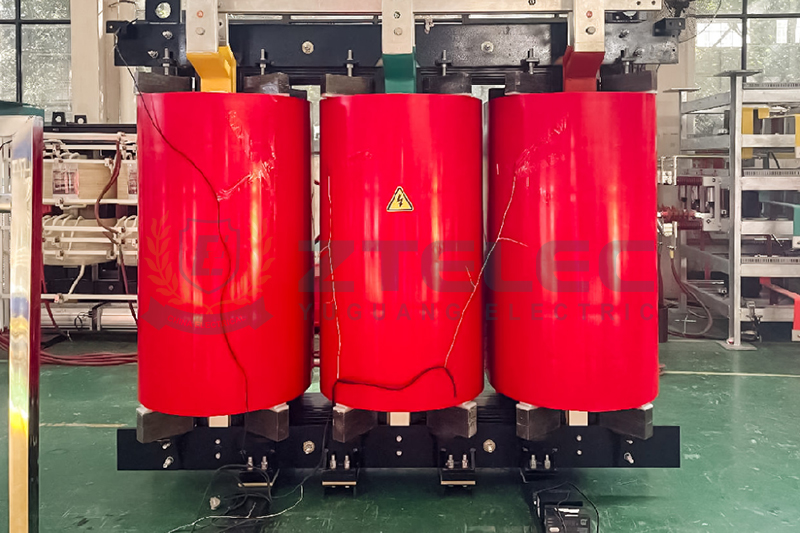
7. Request Customer References From Similar Projects
A manufacturer with a genuine track record should readily provide references, ideally from projects of similar scale, voltage class, and application to yours.
Why it matters: a direct conversation with a past customer about quality, on-time delivery, and how issues were handled often reveals more than any factory presentation. Treat an inability to provide any verifiable reference as a red flag on a significant order.
8. Understand the Warranty Terms in Detail
Warranty length is an easy comparison point, but the actual terms matter more than the headline number.
What to clarify: what's covered, whether it includes parts and labor or parts only, whether it covers on-site diagnostic visits or requires factory return, and what exclusions apply. A shorter warranty with clear, generous terms often beats a longer one full of exclusions.
9. Assess After-Sales Technical Support Structure
Transformers sometimes need support long after installation — troubleshooting, spare parts, or guidance during an expansion.
What to ask: whether a dedicated after-sales team exists, what languages and time zones it covers, typical response times, and whether local service partners exist in your region. For international purchases, confirm how spare parts will be sourced years down the line.
10. Compare Total Value, Not Just Unit Price
The lowest quote isn't automatically the best value once quality, documentation, and after-sales support are weighed in.
The trade-off: a slightly pricier unit from a verified, responsive manufacturer often costs less overall than a cheaper unit that later needs costly troubleshooting, replacement parts, or early replacement. Score price alongside every other point on this list, not in isolation.
Putting the Checklist to Work
Score each candidate supplier against these ten points, noting which claims were independently verified versus taken on trust. Suppliers who welcome scrutiny, share documentation readily, and connect you with real references are usually worth prioritizing — even at a higher initial quote.
Reluctance to answer specific questions, vague answers about factory location or testing, and no verifiable references should all be treated as red flags, regardless of how attractive the price looks.
For larger projects, involve a qualified electrical engineer or independent inspection agency in the evaluation, particularly for factory audits and witnessed testing. This due diligence typically costs far less than a transformer failure or project delay caused by an unreliable supplier.
Selecting a dry type transformer manufacturer deserves the same rigor as any other piece of critical, long-life infrastructure. Working through these ten points — manufacturing capability, certifications, fire performance documentation, material sourcing, testing practices, lead time realism, customer references, warranty terms, after-sales support, and total value — gives buyers a structured way to separate genuinely reliable manufacturers from suppliers who simply sound reliable on paper.
transformer supplier checklist
how to choose a transformer manufacturer
dry type transformer manufacturers
630 kVA transformer price
dry type transformer
- more+releated article
- 2026-09-14Dry Type Transformer Manufacturers: 10-Point S
- 2026-09-12630 kVA Transformer Price – Oil Immersed vs
- 2026-09-11Dry Type Transformer Price in 2026: Cast Resin
- 2026-09-10Transformer Voltage Conversion: 11kV vs 33kV S
- 2026-09-09How to Get the Best Transformer Factory Price:
- 2026-09-08Case Study: 500 kVA 33/0.415 kV Transformer fo
- 2026-09-07Medium Voltage Dry Type Transformers: 3.3kV–
- 2026-09-02Oil Immersed Transformers Explained: Construct
- 2026-09-011250 kVA Dry Type Transformer Price 2026: Cast
- 2026-08-31ZTELEC GROUP to Exhibit High-Performance Elect
- ELECTRICAL INSULATION BOARD MATERIALS
- ELECTRICAL INSULATION MATERIALS
- POWER TRANSFORMER
- ENAMELED WIRE
- SWITCHGEAR

FR-4 Copper-Free Laminate | High-Performance Insulation Material

FR-4 Copper Clad Laminate Manufacturer & Supplier
transformer supplier checklist
how to choose a transformer manufacturer
dry type transformer manufacturers
dry type transformer
630 kVA transformer price
Oil immersed transformer
dry type transformer 2026
dry type transformer price
cast resin transformer cost
VPI transformer price
transformer voltage conversion
11kV transformer
33kV transformer
medium voltage transformer
transformer factory price
transformer negotiation tips
buy transformer from factory
500 kVA transformer
33kV to 415V transformer
commercial transformer case study
3.3kV transformer
10kV transformer
6.6kV transformer
medium voltage dry type transformer
oil immersed transformer construction