
Application of Epoxy Pultruded Rods in Insulators
In power transmission and transformation systems, insulators are crucial components ensuring the safe operation of lines. Epoxy pultruded rods, as the main load-bearing and insulating elements of composite insulators, play a vital role. With the increasing demands of high-voltage and ultra-high-voltage power projects and applications in harsh environments, epoxy pultruded rods, due to their excellent electrical and mechanical properties, have become a key material for modern composite insulators. This article will analyze the application and technical characteristics of epoxy pultruded rods in insulators.
Overview of Epoxy Pultruded Rods
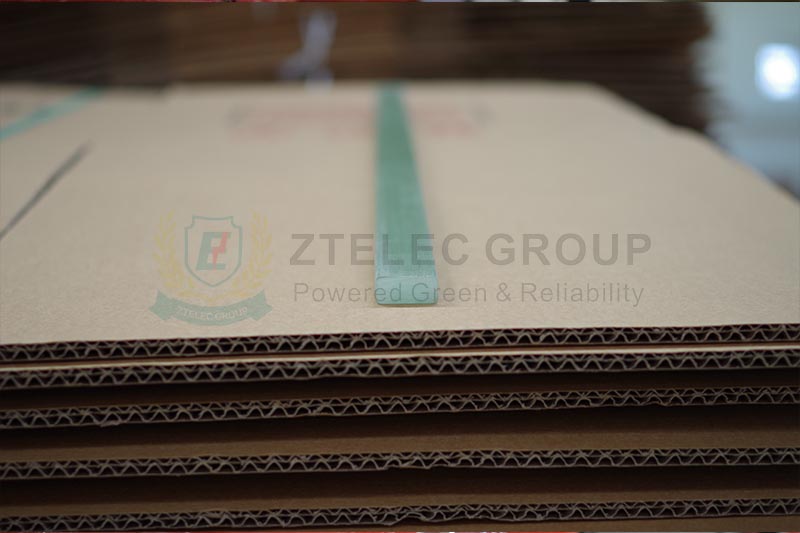
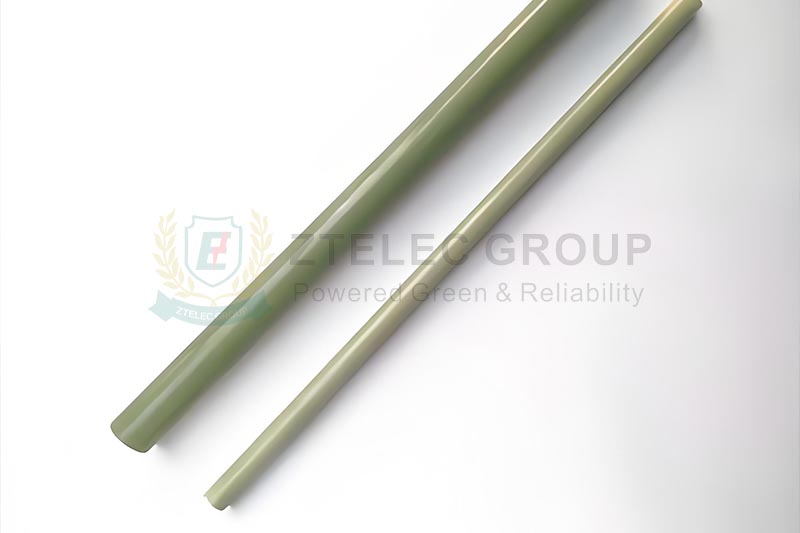
Epoxy pultruded rods are composite insulating materials made from glass fiber as reinforcement and epoxy resin as the matrix, produced through a continuous drawing process. This material has a compact structure and stable performance, and is widely used in composite insulators, surge arresters, and other power support components.
Main Characteristics:
High mechanical strength
Good electrical insulation performance
Resistant to damp heat and aging
Lightweight and good dimensional stability
The Role of Epoxy Pultruded Rods in Composite Insulators
In composite insulator structures, epoxy pultruded rods are typically used as core rods, primarily undertaking the following three functions:
Bearing Mechanical Loads:
As the main load-bearing component of the composite insulator, the epoxy pultruded rod bears conductor tension, wind loads, ice loads, and long-term mechanical fatigue stress. Its high tensile strength and bending resistance ensure the structural stability and safety of the insulator under various operating conditions.
Providing Insulation Paths:
Epoxy pultruded rods possess high volume resistivity and voltage withstand capability, forming the main electrical insulation core of the insulator and effectively preventing internal breakdown.
Supporting the External Insulation Structure:
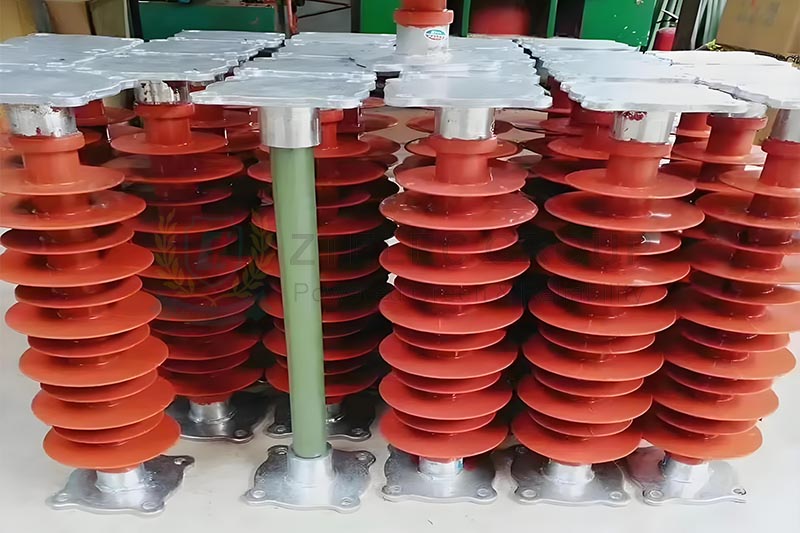
The external silicone rubber sheath and skirts are formed by attaching to the epoxy pultruded rod. The dimensional accuracy and surface quality of the pultruded rod directly affect the overall operational reliability of the composite insulator.
Applications of Epoxy Pultruded Rods in Insulators
Among various types of insulators, epoxy pultruded rods play a crucial role as a core component:
Suspension Composite Insulators:
The insulator is composed of epoxy fiberglass pultruded rods, silicone rubber sheds, and fittings. It is suitable for 35kV and above transmission lines.
Their core rods possess high bending strength, enhancing the safety and reliability of the line.
Composite Post Insulators:
The insulator uses epoxy fiberglass pultruded rods as the inner insulating core rod, and is wrapped with silicone rubber sheds. It is suitable for 35kV and above power transmission and transformation systems, railway traction systems, etc.
These core rods have high tensile and bending strength, and the product is designed to be non-puncture-proof, eliminating the need for zero-value testing during operation.
Pin-Type Composite Insulators:
They are suitable for 10kV overhead distribution lines. And their core uses epoxy fiberglass pultruded rods, which makes them suitable for polluted areas and lines with high mechanical loads.
Composite suspension insulator:
Its core structure includes a glass fiber reinforced epoxy resin core rod with a tensile strength exceeding 1000 MPa, which helps to achieve high mechanical properties and lightweight design of the insulator.
Key Technologies for Epoxy Pultruded Rod Applications
The reliable application of epoxy pultruded rods in insulators relies on the support of the following key technologies:
Material Proportioning Technology: Selecting a suitable epoxy resin system and ensuring good compatibility with high-strength glass fiber is fundamental to guaranteeing the long-term stable operation of the core rod.
Interface Treatment Technology: The interfacial bonding strength between glass fiber and epoxy resin significantly affects performance. Treating the glass fiber surface with a special coupling agent enables effective stress transfer and improves overall mechanical properties.
Pull-out Molding Process: By controlling parameters such as pull-out speed, mold temperature, and curing process, uniform resin distribution, complete curing, and the absence of internal defects in the core rod are ensured, thereby achieving stable mechanical and electrical properties.
As a core component of composite insulators, the performance of epoxy pultruded rods directly affects the operational safety and service life of the insulators. By selecting qualified raw materials, mature pull-out processes, and strict quality control, epoxy pultruded rods can provide long-term, stable insulation support for power systems.
For more information on epoxy pultruded rods, please contact us. We will provide technical data, samples, and quotations.
oil immersed transformer lifespan
oil immersed transformer maintenance
transformer lifecycle
transformer insulation aging
dry type transformer temperature monitoring
- more+releated article
- 2026-05-11How Long Does an Oil-Immersed Transformer Last
- 2026-05-08Modern Power System Dry-Type Transformer Insta
- 2026-05-07Oil-Immersed Transformer Overheating: Causes,
- 2026-05-07Dry-Type Transformers for Data Centers: 2026 R
- 2026-04-30Air-Core Reactor vs Iron-Core Reactor: How to
- 2026-04-29Compact Enclosed Transformer for Smart Grid: T
- 2026-04-2812-Pulse and 24-Pulse Phase-Shifting Transform
- 2026-04-27Oil-Immersed Transformers for Industrial Plant
- 2026-04-25Why Dry-Type Transformers Are Preferred for Ho
- 2026-04-24Enclosed Transformer Outdoor Solutions: IP Pro
- ELECTRICAL INSULATION BOARD MATERIALS
- ELECTRICAL INSULATION MATERIALS
- POWER TRANSFORMER
- ENAMELED WIRE
- SWITCHGEAR


transformer insulation aging
transformer lifecycle
oil immersed transformer lifespan
oil immersed transformer maintenance
dry type transformer installation
dry type transformer temperature monitoring
dry type transformer maintenance
dry type transformer sizing
transformer cooling system failure
transformer overheating causes
oil immersed transformer overheating
transformer oil temperature
harmonic mitigation
dry type transformer
K factor transformer
data center transformer
Cast resin transformer
insulation oil degradation
DGA analysis transformer
transformer fault analysis
oil immersed transformer failure
smart grid transformer
compact enclosed transformer
integrated distribution transformer
compact transformer substation