
1250kVA Oil-Immersed Transformer Price and Cost Factors
In industrial power distribution systems, commercial buildings, and infrastructure projects, the 1250kVA oil-immersed transformer remains one of the most widely used and cost-effective solutions. Whether for new substations or equipment upgrades, buyers are often focused on one key question: what determines the actual price of a 1250kVA oil-immersed transformer?
This guide provides a comprehensive 2025 market overview, helping you understand pricing ranges and the critical cost drivers behind transformer quotations, enabling smarter and more cost-efficient procurement decisions.
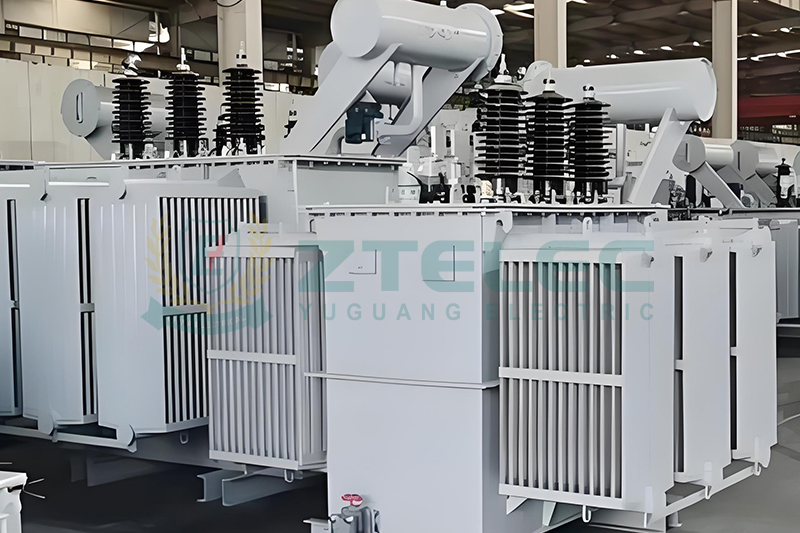
Market Price Range in 2025
The price of a 1250kVA oil-immersed transformer varies depending on specifications, materials, efficiency levels, and project requirements.
For standard configurations such as 10kV/0.4kV, the typical market price ranges between RMB 120,000 and RMB 180,000. Energy-efficient and low-loss designs generally cost 10% to 25% more due to upgraded core materials and optimized winding structures.
For export projects or special applications such as high altitude, high temperature, or corrosive environments, customized designs will significantly increase total costs. Final pricing always depends on technical specifications, raw material fluctuations, and order quantity.
Key Cost Factors Affecting Transformer Pricing
Raw Material Selection
Raw materials are the most influential cost component in transformer manufacturing.
Copper windings offer superior conductivity, lower losses, and stronger overload capacity, but are more expensive than aluminum. Many cost-sensitive projects adopt aluminum or mixed winding designs to reduce initial investment.
Core materials also play a major role. High-permeability grain-oriented silicon steel significantly reduces no-load losses but comes at a higher cost compared to conventional materials.
Transformer oil type further impacts pricing. Mineral oil is commonly used, while high-performance or environmentally friendly insulating oils increase overall cost but improve safety and lifespan.
Voltage Rating and Configuration
Even with the same 1250kVA capacity, different voltage combinations such as 10kV/0.4kV or 11kV/0.415kV require different winding designs, insulation levels, and core structures. These variations directly influence manufacturing complexity and cost.
Insulation System and Oil Design
The insulation system determines long-term reliability. Higher-grade insulation materials, optimized oil channel design, and enhanced thermal performance increase manufacturing cost but significantly improve operational stability and service life.
Transformers designed for continuous operation or heavy load conditions require stronger insulation systems, which adds to the total price but reduces failure risk.
Technical Parameters and Customization
Standard models are more economical, while non-standard requirements increase costs.
Higher impedance levels, such as 8% instead of the standard 4% or 6%, require additional winding material and design adjustments. Non-standard voltage ratios, such as 35kV high-voltage input, also result in higher pricing.
Additional accessories such as on-load tap changers, temperature monitoring systems, protective enclosures, and upgraded bushings further increase total cost but enhance performance and safety.
Standards and Certification Requirements
Compliance with international standards such as IEC or national standards increases design and testing requirements. Type testing, certification, and export compliance all contribute to higher production costs.
However, higher standards ensure better product reliability, safety, and long-term performance.
Market and External Factors
Fluctuations in copper, aluminum, and silicon steel prices directly affect transformer costs. In addition, logistics, transportation distance, and installation requirements must be considered in the total procurement budget.
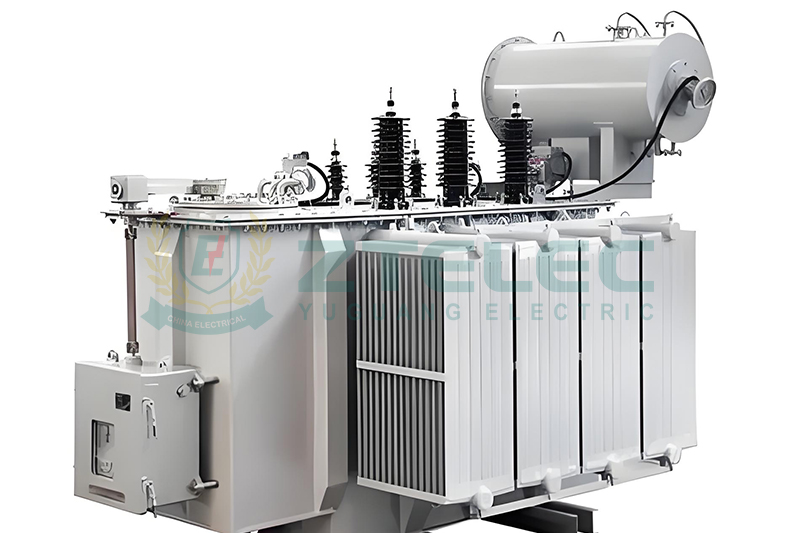
Procurement Tips for Buyers
When evaluating supplier quotations, price alone should not be the only factor. It is essential to verify what is included in the quotation, such as transformer oil, enclosures, accessories, and documentation.
Buyers should also confirm energy efficiency levels and request third-party test reports to validate loss performance. Material specifications, especially winding materials, should be clearly defined in the contract to avoid disputes.
From a lifecycle perspective, investing in a high-efficiency transformer with lower losses often delivers better long-term value. Energy savings can typically offset the higher initial cost within 3 to 5 years.
The price of a 1250kVA oil-immersed transformer is influenced by multiple factors, including materials, technical design, standards, and market conditions. A well-informed procurement strategy should focus on total lifecycle cost rather than initial purchase price alone.
For the best results, provide detailed technical requirements when requesting quotations and compare multiple suppliers based on configuration, loss values, and service support.
Request a Quote
Looking for a reliable and cost-effective 1250kVA oil-immersed transformer? Contact our team today to receive a detailed quotation tailored to your project requirements.
oil immersed transformer lifespan
oil immersed transformer maintenance
transformer lifecycle
transformer insulation aging
dry type transformer temperature monitoring
- more+releated article
- 2026-05-11How Long Does an Oil-Immersed Transformer Last
- 2026-05-08Modern Power System Dry-Type Transformer Insta
- 2026-05-07Oil-Immersed Transformer Overheating: Causes,
- 2026-05-07Dry-Type Transformers for Data Centers: 2026 R
- 2026-04-30Air-Core Reactor vs Iron-Core Reactor: How to
- 2026-04-29Compact Enclosed Transformer for Smart Grid: T
- 2026-04-2812-Pulse and 24-Pulse Phase-Shifting Transform
- 2026-04-27Oil-Immersed Transformers for Industrial Plant
- 2026-04-25Why Dry-Type Transformers Are Preferred for Ho
- 2026-04-24Enclosed Transformer Outdoor Solutions: IP Pro
- ELECTRICAL INSULATION BOARD MATERIALS
- ELECTRICAL INSULATION MATERIALS
- POWER TRANSFORMER
- ENAMELED WIRE
- SWITCHGEAR


transformer insulation aging
transformer lifecycle
oil immersed transformer lifespan
oil immersed transformer maintenance
dry type transformer installation
dry type transformer temperature monitoring
dry type transformer maintenance
dry type transformer sizing
transformer cooling system failure
transformer overheating causes
oil immersed transformer overheating
transformer oil temperature
harmonic mitigation
dry type transformer
K factor transformer
data center transformer
Cast resin transformer
insulation oil degradation
DGA analysis transformer
transformer fault analysis
oil immersed transformer failure
smart grid transformer
compact enclosed transformer
integrated distribution transformer
compact transformer substation