
FR4 Material Density: Standard Values and Tolerances
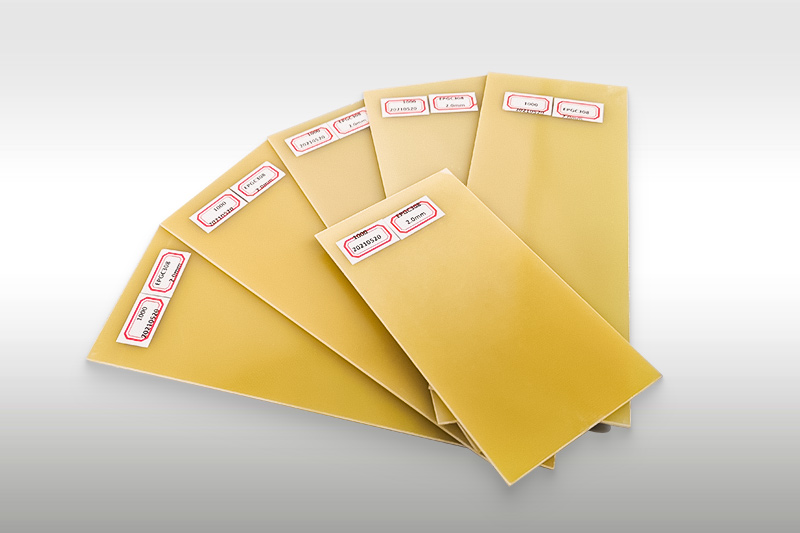
FR4 is a composite insulating board with glass fiber cloth as reinforcement and epoxy resin as the matrix, possessing excellent electrical properties, mechanical strength, and heat resistance. It is widely used in electronics, electrical, and industrial equipment. Among its various technical parameters, FR4 material density is one of the key indicators for evaluating its quality stability and application suitability. This article will explain the standard values and tolerance ranges for FR4 material density.
Overview of FR4 Material Density
FR4 material density refers to the mass of FR4 epoxy glass fiber board per unit volume, usually measured in g/cm³.
Density mainly depends on the following factors:
Glass fiber content percentage
Epoxy resin formulation and curing degree
Production process parameters (hot pressing pressure, temperature, number of layers)
A reasonable and stable FR4 material density reflects its dense internal structure and uniform performance.
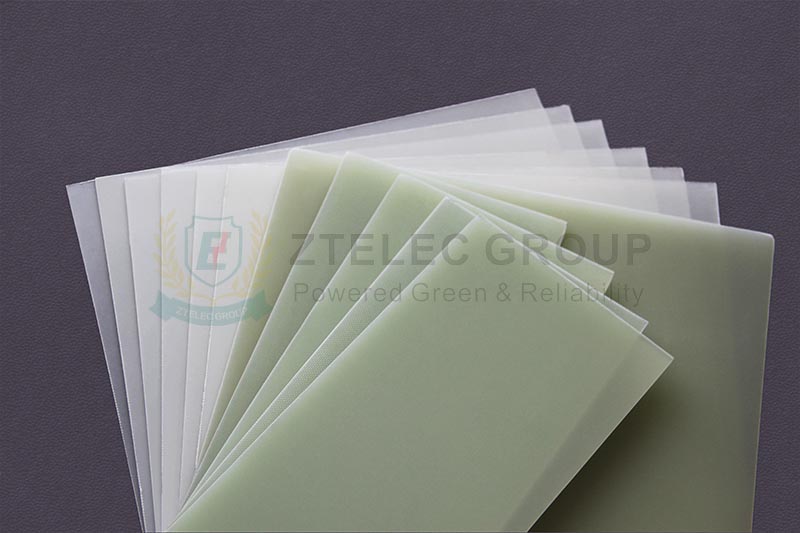
Standard Values for FR4 Material Density
The density range of standard FR4 epoxy glass cloth laminates is 1.85 g/cm³ ~ 2.10 g/cm³, which can be further subdivided as follows:
Typical Average/Design Value:
Most general-purpose FR4 materials have a density between 1.85 g/cm³ and 1.90 g/cm³. This value is often used for weight estimation in the early design stages of a product.
High-Frequency/High-Performance FR4 Variants:
Some high-performance FR4 materials with added special fillers or using new resin systems (such as halogen-free FR4, high Tg FR4) have slightly higher densities, reaching 1.95 g/cm³ ~ 2.10 g/cm³.
It is important to note that there is no globally unified absolute standard value for FR4 material density. The specific value depends on factors such as resin formulation, glass cloth type and thickness, and filler content. Therefore, obtaining the product datasheet for the corresponding model from the board supplier is an effective way to obtain accurate density data.
The Influence of Density on FR4 Material Properties
1.Electrical Properties
Stable density indicates a uniform distribution of resin and glass fiber. This helps improve the material's dielectric strength and insulation reliability.
2.Mechanical Strength
Too low a density may lead to increased internal porosity, reducing its flexural strength and impact resistance.
3.Water Absorption and Environmental Resistance
A reasonable density reduces the material's water absorption, improving its stability in humid environments.
FR4 Material Density Tolerance: Allowable Deviation Range
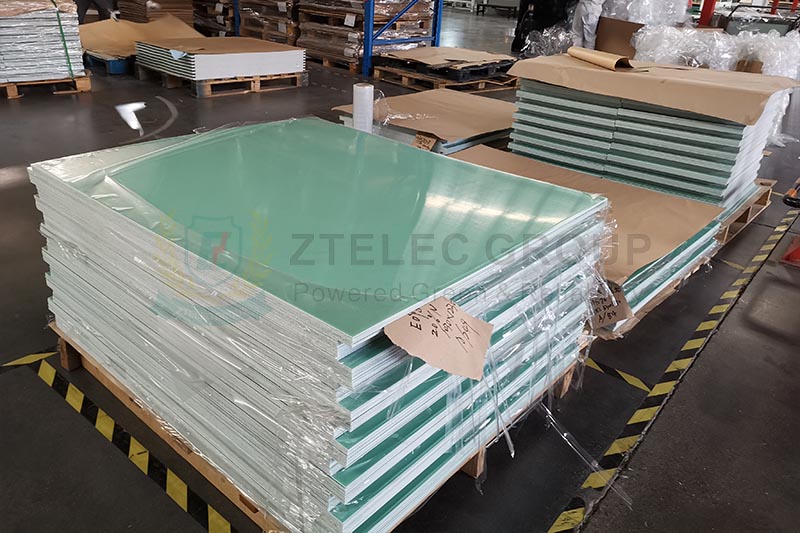
Like all industrial materials, FR4 sheet density has manufacturing tolerances. These tolerances are generally not specified separately but are reflected in the sheet thickness tolerance and thickness uniformity indicators. Therefore, small changes in density can be reflected by the difference in weight per unit area of sheets of the same thickness.
In actual production, the density tolerance of FR4 material is typically controlled within the range of ±2% to ±5%. For example, FR4 sheet with a nominal density of 1.85 g/cm³ typically exhibits measured density values ranging from 1.76 g/cm³ to 1.94 g/cm³.
The main factors affecting density tolerance include:
Uniformity of resin content
Fluctuations in the glass cloth weaving process
Degree of resin curing
Differences between different production batches
FR4 Material Selection Recommendations
When selecting FR4 material, pay close attention to the following key points:
Target application area (electronics, power, industrial, etc.)
Flame retardant performance requirements (must meet UL94 V-0 standard)
Density stability and batch consistency
Compliance with international standards such as IEC, NEMA, and UL
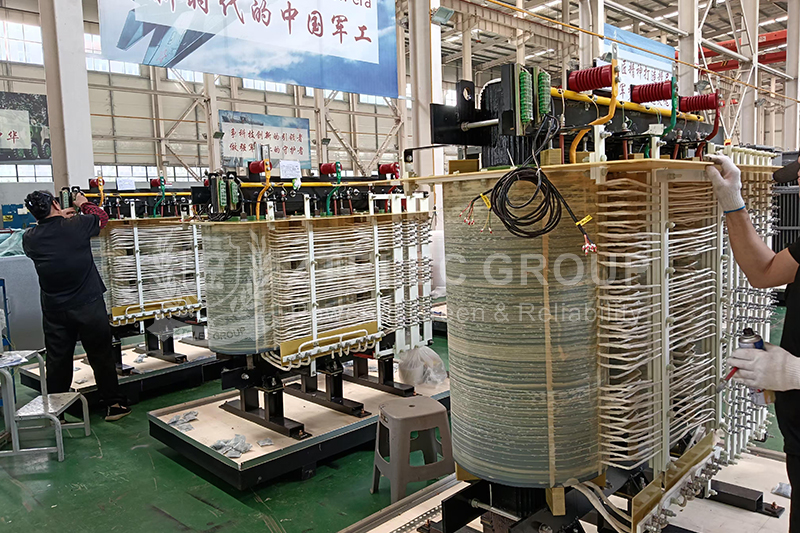
For FR4 insulation components used in power and transformer applications, density stability is more important than a single density value.
FAQs
Q1: Is there a difference in density between halogen-free FR4 and standard FR4?
A1: Yes. Halogen-free FR4 uses phosphorus-based or nitrogen-based flame retardants instead of traditional bromine-based flame retardants, resulting in a relatively higher resin system density. Therefore, the overall material density is usually slightly higher than standard FR4.
Q2: Does density affect the dielectric constant (Dk) of FR4 material?
A2: There is a certain indirect correlation. Higher density usually indicates a denser material structure, which may have a slight impact on the dielectric constant. However, the core influencing factors of dielectric constant are resin type, the ratio of glass fiber to resin, and frequency of use. Density is not the decisive factor.
The density and tolerance range of FR4 material are key parameters for measuring the consistency of material quality and performance.
Controlling density tolerance helps ensure the reliability of products in terms of electrical performance, mechanical properties, and environmental adaptability.
If you are looking for density-stable FR4 insulation materials that meet international standards, please contact us. We will provide you with technical data, sample support, and customized quotation solutions.
oil immersed transformer lifespan
oil immersed transformer maintenance
transformer lifecycle
transformer insulation aging
dry type transformer temperature monitoring
- more+releated article
- 2026-05-11How Long Does an Oil-Immersed Transformer Last
- 2026-05-08Modern Power System Dry-Type Transformer Insta
- 2026-05-07Oil-Immersed Transformer Overheating: Causes,
- 2026-05-07Dry-Type Transformers for Data Centers: 2026 R
- 2026-04-30Air-Core Reactor vs Iron-Core Reactor: How to
- 2026-04-29Compact Enclosed Transformer for Smart Grid: T
- 2026-04-2812-Pulse and 24-Pulse Phase-Shifting Transform
- 2026-04-27Oil-Immersed Transformers for Industrial Plant
- 2026-04-25Why Dry-Type Transformers Are Preferred for Ho
- 2026-04-24Enclosed Transformer Outdoor Solutions: IP Pro
- ELECTRICAL INSULATION BOARD MATERIALS
- ELECTRICAL INSULATION MATERIALS
- POWER TRANSFORMER
- ENAMELED WIRE
- SWITCHGEAR
transformer insulation aging
transformer lifecycle
oil immersed transformer lifespan
oil immersed transformer maintenance
dry type transformer installation
dry type transformer temperature monitoring
dry type transformer maintenance
dry type transformer sizing
transformer cooling system failure
transformer overheating causes
oil immersed transformer overheating
transformer oil temperature
harmonic mitigation
dry type transformer
K factor transformer
data center transformer
Cast resin transformer
insulation oil degradation
DGA analysis transformer
transformer fault analysis
oil immersed transformer failure
smart grid transformer
compact enclosed transformer
integrated distribution transformer
compact transformer substation