
Dry-Type Transformer Model Comparison Analysis: Balancing Cost-Effectiveness and Performance
In industrial manufacturing, commercial facilities, and renewable energy projects, selecting the appropriate dry-type transformer is a critical factor in ensuring power system reliability and long-term operational efficiency. Different dry-type transformer models vary significantly in insulation structure, energy efficiency, durability, and overall lifecycle cost. A clear understanding of these differences helps project owners and engineers balance initial investment with long-term performance.
This article provides a comprehensive comparison of mainstream dry-type transformer models currently used in power distribution systems. By analyzing technical parameters, operating characteristics, and application scenarios, it aims to support informed decision-making for projects with different performance requirements and budget constraints.
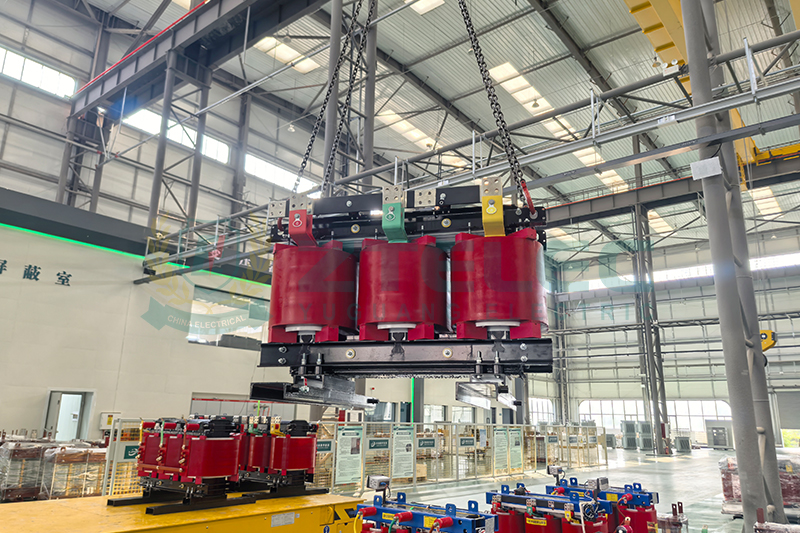
Overview of Dry-Type Transformers
Dry-type transformers use air or solid insulation materials such as epoxy resin instead of insulating oil. This oil-free design significantly improves fire safety, reduces environmental risks, and lowers routine maintenance requirements. As a result, dry-type transformers are widely applied in indoor power distribution systems, industrial facilities, and new energy power generation projects.
Compared with oil-immersed transformers, dry-type transformers eliminate the risk of oil leakage and minimize fire hazards. Their compact structure and stable performance make them suitable for densely populated areas and locations with strict safety regulations.
Key Technical Parameters Affecting Performance
The performance of a dry-type transformer is closely related to several core technical parameters. These parameters directly affect system stability, energy efficiency, and total operating cost throughout the service life of the equipment.
Insulation Class and Thermal Endurance
Insulation class defines the maximum allowable operating temperature of the transformer winding. Common thermal classes for dry-type transformers include Class F with a temperature limit of 155 degrees Celsius and Class H with a limit of 180 degrees Celsius. Higher insulation classes allow stronger overload capacity and improved thermal stability, but they also increase manufacturing complexity and procurement cost.
When selecting a transformer, insulation class should be evaluated together with ambient temperature, load fluctuation, and expected service conditions rather than being considered in isolation.
No-Load Loss and Load Loss
No-load loss refers to the power consumed by the transformer core when it is energized without load, while load loss increases proportionally with the operating current. These losses directly influence long-term energy consumption and operating expenses.
High-efficiency dry-type transformer models typically require higher initial investment. However, for systems with high load rates or long daily operating hours, reduced losses can significantly lower electricity costs over the equipment lifecycle.
Protection Class and Environmental Adaptability
Protection class, commonly expressed as an IP rating, reflects the transformer’s ability to resist dust, moisture, and external contaminants. IP20-rated transformers provide basic protection against solid objects, making them suitable for clean indoor environments. IP23-rated designs offer additional protection against dripping water and are often used in humid or semi-outdoor installations.
Higher protection levels improve environmental adaptability but require optimized cooling and ventilation design to maintain stable thermal performance.
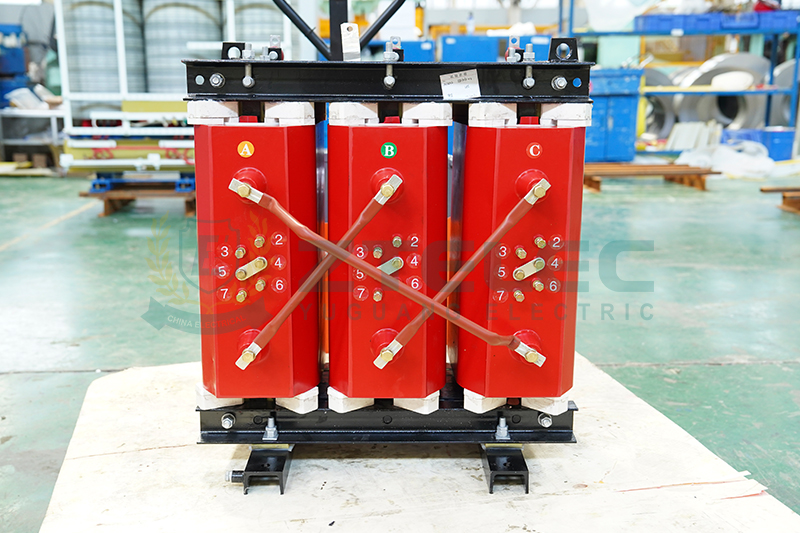
Comparison of Mainstream Dry-Type Transformer Models
Epoxy Resin Cast Dry-Type Transformers
Epoxy resin cast dry-type transformers are widely used in commercial buildings, public infrastructure projects, and small to medium-sized industrial facilities. The windings are fully encapsulated in epoxy resin, providing excellent insulation strength and resistance to moisture and contaminants.
This model offers stable electrical performance, low operating noise, and strong fire resistance. Routine maintenance requirements are minimal, making it suitable for installations where access for frequent inspection is limited.
From a cost perspective, epoxy resin cast transformers have a moderate initial investment and standard operating efficiency. Their typical service life ranges from 15 to 25 years under normal operating conditions, making them a balanced option for projects with controlled budgets and stable load profiles.
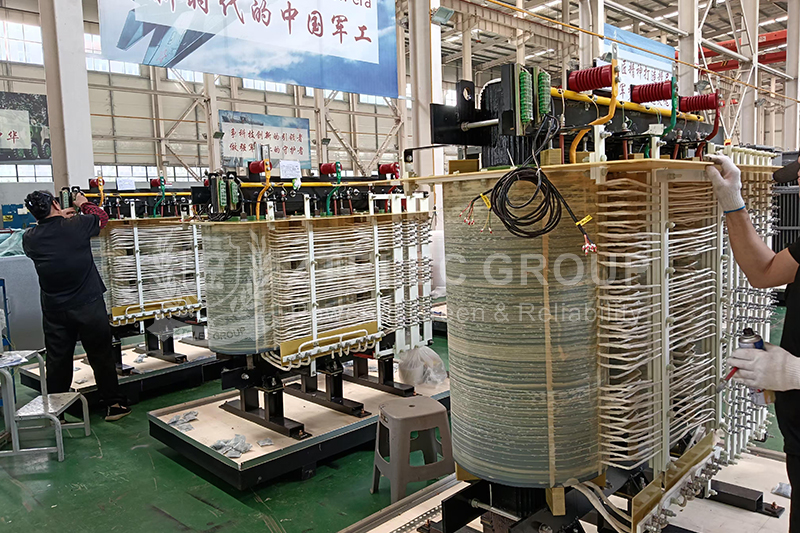
Open Ventilated Dry-Type Transformers
Open ventilated dry-type transformers feature exposed windings and rely on natural or forced air circulation for cooling. This design provides excellent heat dissipation and strong overload capability, making it suitable for industrial plants and environments with higher thermal stress.
The open structure allows easy visual inspection and convenient on-site maintenance. In case of winding damage, localized repairs are often possible, reducing downtime. However, this design is more sensitive to dust, humidity, and environmental pollution.
Open ventilated transformers generally have lower initial costs, but their operating efficiency and service life depend heavily on maintenance quality and environmental conditions. With proper maintenance, their lifespan can reach 20 to 30 years in industrial applications.
Amorphous Alloy Dry-Type Transformers
Amorphous alloy dry-type transformers are designed for applications with strict energy efficiency requirements and continuous operation. The use of amorphous metal cores significantly reduces no-load losses, often by 60 to 70 percent compared with conventional silicon steel cores.
These transformers demonstrate excellent environmental performance, stable operation, and strong short-circuit withstand capability. They are commonly used in data centers, renewable energy facilities, and power systems operating around the clock.
The main drawback of amorphous alloy dry-type transformers is their high initial procurement cost. However, depending on electricity prices and utilization rates, the payback period through energy savings typically ranges from three to seven years.
Typical Application Areas
Dry-type transformers are widely applied in industrial production workshops, commercial buildings, and data center power supply systems. Their safety advantages make them suitable for hospitals, schools, and other public facilities where fire risk must be minimized.
They are also increasingly used in wind power plants, photovoltaic power stations, mining operations, and petrochemical facilities, where reliability, environmental protection, and low maintenance requirements are critical.
Selecting the appropriate dry-type transformer model requires a comprehensive evaluation of performance requirements, operating environment, and total lifecycle cost. Epoxy resin cast transformers offer balanced performance and cost efficiency, open ventilated transformers provide maintenance flexibility for industrial environments, and amorphous alloy transformers deliver superior energy efficiency for continuous operation systems.
By understanding the characteristics and limitations of each model, project planners and engineers can achieve an optimal balance between cost-effectiveness and performance, ensuring stable and efficient power system operation over the long term.
oil immersed transformer lifespan
oil immersed transformer maintenance
transformer lifecycle
transformer insulation aging
dry type transformer temperature monitoring
- more+releated article
- 2026-05-11How Long Does an Oil-Immersed Transformer Last
- 2026-05-08Modern Power System Dry-Type Transformer Insta
- 2026-05-07Oil-Immersed Transformer Overheating: Causes,
- 2026-05-07Dry-Type Transformers for Data Centers: 2026 R
- 2026-04-30Air-Core Reactor vs Iron-Core Reactor: How to
- 2026-04-29Compact Enclosed Transformer for Smart Grid: T
- 2026-04-2812-Pulse and 24-Pulse Phase-Shifting Transform
- 2026-04-27Oil-Immersed Transformers for Industrial Plant
- 2026-04-25Why Dry-Type Transformers Are Preferred for Ho
- 2026-04-24Enclosed Transformer Outdoor Solutions: IP Pro
- ELECTRICAL INSULATION BOARD MATERIALS
- ELECTRICAL INSULATION MATERIALS
- POWER TRANSFORMER
- ENAMELED WIRE
- SWITCHGEAR



transformer insulation aging
transformer lifecycle
oil immersed transformer lifespan
oil immersed transformer maintenance
dry type transformer installation
dry type transformer temperature monitoring
dry type transformer maintenance
dry type transformer sizing
transformer cooling system failure
transformer overheating causes
oil immersed transformer overheating
transformer oil temperature
harmonic mitigation
dry type transformer
K factor transformer
data center transformer
Cast resin transformer
insulation oil degradation
DGA analysis transformer
transformer fault analysis
oil immersed transformer failure
smart grid transformer
compact enclosed transformer
integrated distribution transformer
compact transformer substation