
Detailed Explanation of Specifications, Ratings, and Standards for Oil-Immersed Autotransformers
Oil-immersed autotransformers are critical voltage transformation devices widely used in modern power systems. They play an essential role in power transmission and distribution networks, industrial production facilities, and large-scale infrastructure projects. Compared with conventional two-winding transformers, autotransformers adopt a shared winding structure, which enables higher efficiency and reduced material consumption. Combined with oil-immersed insulation and cooling technology, these transformers deliver reliable electrical performance and long-term operational stability.
This article provides a comprehensive and SEO-optimized explanation of the specifications, rated values, and international standards applicable to oil-immersed autotransformers, offering practical guidance for power engineers, EPC contractors, and procurement decision-makers.
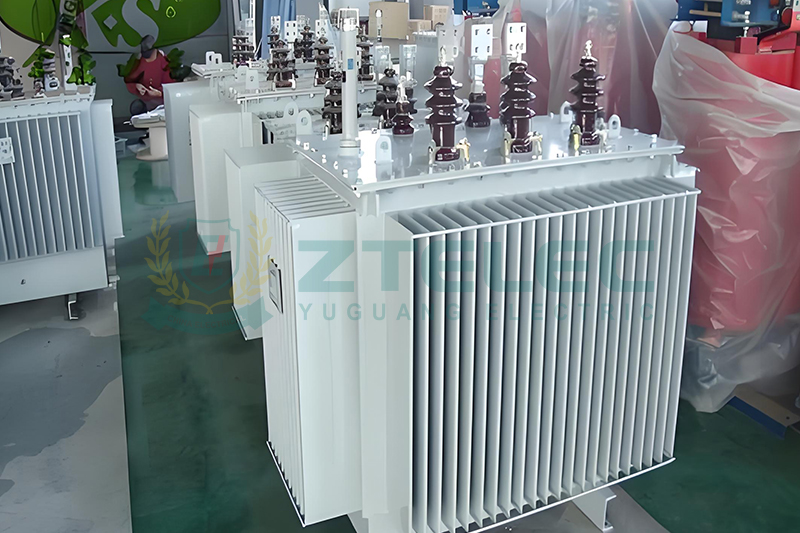
Basic Structure and Operating Characteristics of Oil-Immersed Autotransformers
An oil-immersed autotransformer uses a single winding that functions as both the primary and secondary winding. Voltage transformation is achieved by selecting different tap points on the same winding. This structural design allows part of the electrical energy to be transferred directly through electrical connection, significantly improving efficiency compared with traditional two-winding transformers.
The internal components are fully immersed in transformer oil, which serves as both an insulating medium and a cooling agent. Transformer oil effectively removes heat generated during operation while maintaining insulation strength, thereby extending equipment service life and improving reliability.
From a technical perspective, oil-immersed autotransformers feature a compact structure and reduced footprint, low copper and iron losses, and high operating efficiency. Their optimized material utilization results in favorable economic performance, particularly in power systems where the voltage ratio between the high-voltage and low-voltage sides is relatively small, such as 110kV to 220kV or 66kV to 35kV applications.
Main Technical Specifications of Oil-Immersed Autotransformers
During transformer selection and system design, technical specifications form the foundation for performance evaluation and equipment matching. Among these parameters, rated capacity, rated voltage, frequency, cooling method, and tap changer configuration are the most critical.
Rated Capacity
The rated capacity of an oil-immersed autotransformer is expressed in kVA or MVA and defines the maximum apparent power the transformer can carry continuously under specified conditions. Typical capacity ranges vary depending on application scenarios.
Small to medium-capacity autotransformers are generally rated between 5 MVA and 31.5 MVA and are often used in regional substations or industrial power distribution systems. Medium to large-capacity units typically range from 40 MVA to 250 MVA and are common in transmission substations. Extra-large autotransformers rated at 300 MVA and above are primarily designed for grid interconnection and high-capacity power transmission projects.
Rated Voltage
Oil-immersed autotransformers are predominantly applied in medium-voltage, high-voltage, and ultra-high-voltage power systems. Common high-voltage side ratings include 220kV, 110kV, and 66kV, while medium-voltage side ratings often include 35kV, 20kV, and 10kV.
Due to the shared winding structure, the voltage ratio of an autotransformer is typically limited to within 3:1. This characteristic makes autotransformers particularly suitable for interconnecting systems with similar voltage levels.
Rated Frequency
The standard rated frequency for oil-immersed autotransformers is either 50Hz or 60Hz, corresponding to different regional power grid systems. Frequency directly affects magnetic flux density and core design. Transformers can be customized to meet specific grid frequency requirements depending on the project location.
Cooling Method
Cooling design has a direct impact on transformer loading capability and service life. Oil-immersed autotransformers commonly adopt one of three cooling methods. ONAN cooling relies on natural oil circulation and natural air cooling and is suitable for moderate load conditions. ONAF cooling enhances heat dissipation by adding forced air cooling, increasing the transformer’s permissible load. OFAF cooling uses forced oil circulation combined with forced air cooling and is typically applied to large-capacity or heavily loaded transformers.
Tap Changer Configuration
Tap changers allow voltage regulation to accommodate grid fluctuations. Off-load tap changers are used in systems with relatively stable voltage conditions and require transformer de-energization for adjustment. On-load tap changers enable voltage regulation during operation and are essential for networks with frequent or dynamic voltage variations.
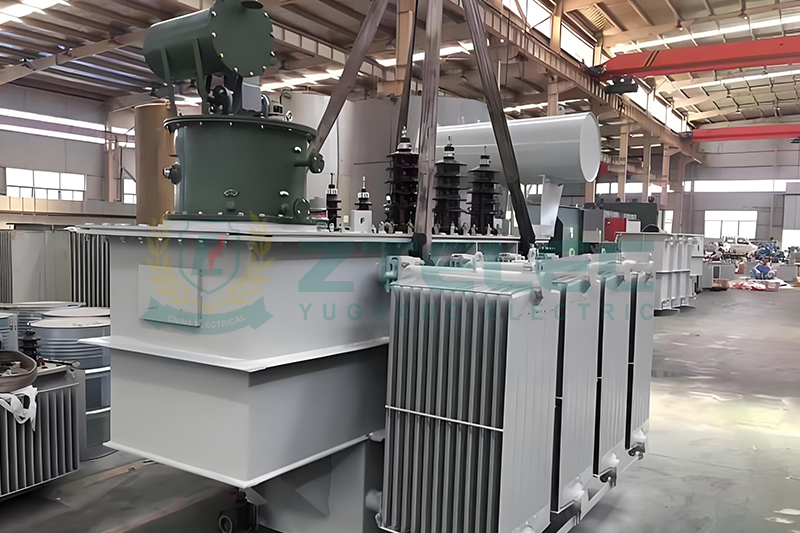
Detailed Interpretation of Rated Values
Rated values define the operational boundaries of oil-immersed autotransformers and ensure safe and reliable performance throughout their service life.
Capacity Rated Values
Transformer capacity determines the allowable load under continuous operation without exceeding thermal limits. Proper capacity selection should satisfy current load requirements while considering future load growth, system expansion plans, and short-term overload capability. Temperature rise limitations of windings and insulating oil are the primary constraints in capacity design.
Voltage and Frequency Rated Values
The rated voltage must align with the nominal voltage and maximum operating voltage of the connected power system. Frequency rating is equally important, as it directly influences magnetic core performance and losses. Mismatched frequency operation can result in overheating or reduced efficiency.
Other Key Operating Limits
Temperature rise limits specify the maximum allowable temperatures for windings and transformer oil. Adhering to these limits is essential to preserve insulation integrity and extend transformer lifespan. Overload capacity defines the transformer’s ability to handle temporary load surges within standard-defined limits, which is particularly valuable during peak demand or emergency conditions.
International Standards and Certifications
Compliance with recognized international standards is a fundamental requirement for oil-immersed autotransformers used in global projects. These standards ensure consistent quality, safety, and performance.
IEC 60076 is the core international standard for power transformers, covering general requirements, temperature rise limits, insulation coordination, and short-circuit withstand capability. The IEEE C57 series standards are widely adopted in North America and international projects following ANSI practices.
In addition to IEC and IEEE standards, national and regional standards also apply. GB and DL standards are commonly used in China’s power industry, while GOST standards apply to Russia and CIS countries.
From a management and manufacturing perspective, reputable transformer suppliers typically hold ISO 9001 quality management certification, ISO 14001 environmental management certification, and ISO 45001 occupational health and safety certification. These certifications reflect standardized production processes and consistent quality control.
The specifications and ratings of oil-immersed autotransformers provide measurable indicators of their technical performance, while international standards establish the framework for quality assurance and operational reliability. A clear understanding of these parameters enables informed decision-making in transformer selection, system design, and long-term operation and maintenance.
For projects requiring customized oil-immersed autotransformer solutions or detailed technical parameters, consulting with an experienced manufacturer familiar with international standards and large-scale power projects is strongly recommended.
Contact us to receive professional technical support and optimized autotransformer solutions tailored to your power system requirements.
oil immersed transformer lifespan
oil immersed transformer maintenance
transformer lifecycle
transformer insulation aging
dry type transformer temperature monitoring
- more+releated article
- 2026-05-11How Long Does an Oil-Immersed Transformer Last
- 2026-05-08Modern Power System Dry-Type Transformer Insta
- 2026-05-07Oil-Immersed Transformer Overheating: Causes,
- 2026-05-07Dry-Type Transformers for Data Centers: 2026 R
- 2026-04-30Air-Core Reactor vs Iron-Core Reactor: How to
- 2026-04-29Compact Enclosed Transformer for Smart Grid: T
- 2026-04-2812-Pulse and 24-Pulse Phase-Shifting Transform
- 2026-04-27Oil-Immersed Transformers for Industrial Plant
- 2026-04-25Why Dry-Type Transformers Are Preferred for Ho
- 2026-04-24Enclosed Transformer Outdoor Solutions: IP Pro
- ELECTRICAL INSULATION BOARD MATERIALS
- ELECTRICAL INSULATION MATERIALS
- POWER TRANSFORMER
- ENAMELED WIRE
- SWITCHGEAR



transformer insulation aging
transformer lifecycle
oil immersed transformer lifespan
oil immersed transformer maintenance
dry type transformer installation
dry type transformer temperature monitoring
dry type transformer maintenance
dry type transformer sizing
transformer cooling system failure
transformer overheating causes
oil immersed transformer overheating
transformer oil temperature
harmonic mitigation
dry type transformer
K factor transformer
data center transformer
Cast resin transformer
insulation oil degradation
DGA analysis transformer
transformer fault analysis
oil immersed transformer failure
smart grid transformer
compact enclosed transformer
integrated distribution transformer
compact transformer substation