
What Is an Oil-Filled Self-Cooled Transformer and How Does It Work?
In power transmission and distribution systems, transformer cooling is not just a design detail. It directly affects operational safety, system stability, and equipment lifespan. Among all cooling methods used today, the oil-filled self-cooled transformer remains one of the most common and reliable solutions.
Thanks to its mature technology and simple structure, this transformer type is widely applied in substations, industrial facilities, commercial buildings, and infrastructure projects around the world.
This article explains what an oil-filled self-cooled transformer is, how it operates, and why it continues to be widely used in modern power systems.
What Is an Oil-Filled Self-Cooled Transformer?
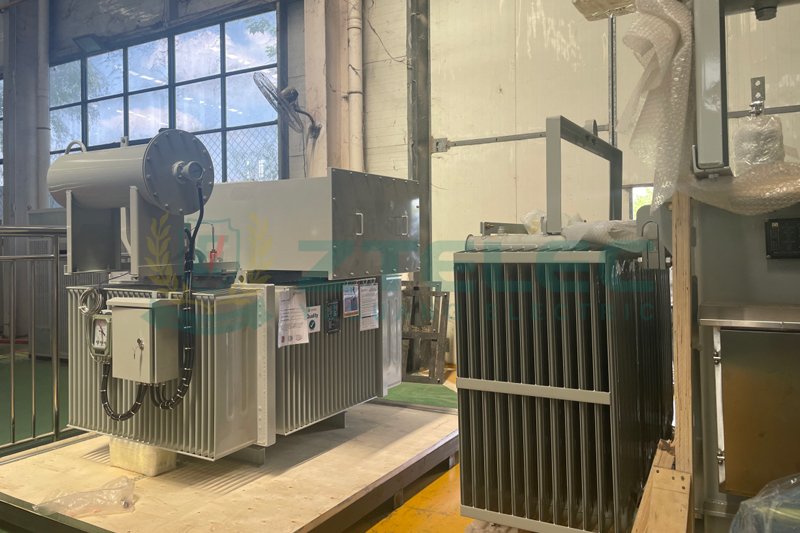
An oil-filled self-cooled transformer uses insulating oil as both its electrical insulation medium and its cooling medium. The transformer relies entirely on natural oil circulation and natural air cooling to remove heat generated during operation.
The transformer core and windings are fully immersed in insulating oil. As the transformer operates, heat is transferred from the internal components to the oil and then released to the surrounding air without any fans, pumps, or external cooling devices.
Under IEC and IEEE standards, this cooling method is classified as ONAN, which stands for Oil Natural Air Natural.
Main Structural Components
The magnetic core is typically made from laminated silicon steel sheets. This construction forms an efficient magnetic circuit while reducing energy losses caused by eddy currents.
The windings include high-voltage and low-voltage coils. Depending on design and cost requirements, the conductors may be copper or aluminum. Proper insulation and mechanical support ensure electrical safety and long-term reliability.
Transformer oil, usually high-quality mineral oil, plays multiple roles. It provides electrical insulation, absorbs heat from the core and windings, and protects internal parts from moisture and oxidation.
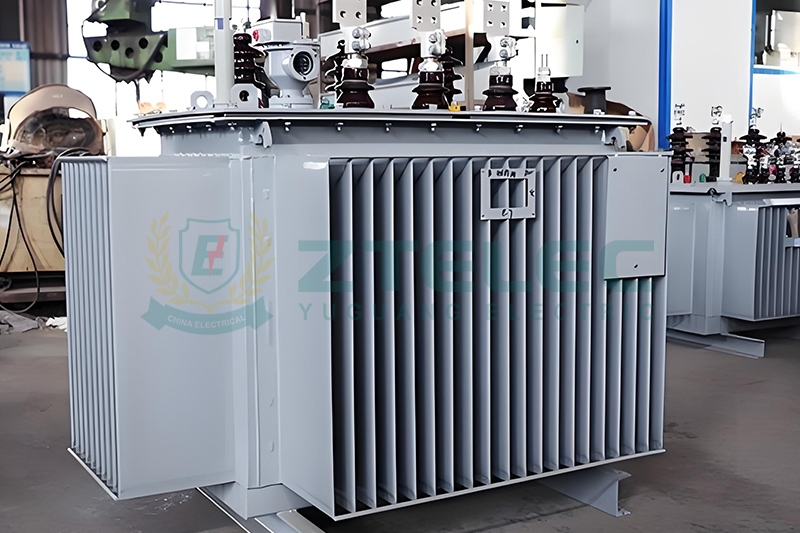
All internal components are enclosed in a sealed oil tank. External radiators or cooling fins are mounted on the tank to increase the heat dissipation surface and improve natural cooling efficiency.
Monitoring and protection devices such as oil level indicators, temperature gauges, gas relays, and pressure relief components help ensure safe operation. Insulating bushings connect the internal windings to the external power system.
How an Oil-Filled Self-Cooled Transformer Works
Energy Conversion Inside the Transformer
When alternating current flows through the primary winding, it creates an alternating magnetic field in the core. This magnetic field induces voltage in the secondary winding, allowing electrical energy to be transferred at a different voltage level.
During this process, part of the electrical energy is converted into heat due to winding resistance and magnetic losses in the core.
Heat Generation and Oil Heat Transfer
Two main types of heat are produced during transformer operation. Copper losses occur as current passes through the windings, while core losses result from magnetic hysteresis and eddy currents.
This heat is immediately absorbed by the surrounding insulating oil, which acts as an efficient heat transfer medium.
Natural Oil Circulation and Cooling
As the oil near the windings and core heats up, it becomes less dense and naturally rises toward the top of the transformer tank.
The hot oil releases heat to the outside air through the radiator surfaces. After cooling, the oil becomes denser and flows back down to the lower part of the tank.
This continuous circulation process is driven purely by temperature differences. No mechanical power or auxiliary cooling equipment is required.
Insulation and Protective Functions
In addition to cooling, insulating oil prevents electrical breakdown between windings and between live parts and ground. It also creates a sealed environment that protects the core and windings from moisture and oxygen.
Why Oil-Filled Self-Cooled Transformers Are Widely Used
One of the main reasons for their popularity is structural simplicity. Without fans or oil pumps, there are fewer mechanical components that can fail during long-term operation.
The combined cooling and insulation function of transformer oil supports stable performance and extends equipment service life under normal operating conditions.
Maintenance requirements are relatively low. Routine inspections, oil testing, and basic monitoring are usually sufficient to keep the transformer operating reliably.
Operating noise is also lower compared to forced-air or fan-cooled transformers, making this design suitable for residential areas, commercial districts, and other noise-sensitive locations.
Typical Application Areas
Oil-filled self-cooled transformers are commonly installed in urban and rural power distribution networks where dependable performance is required.
They are widely used in medium-voltage substations rated at 35 kV, 10 kV, and 6 kV.
Industrial plants such as factories, steel mills, and cement facilities rely on these transformers to supply stable power to production equipment.
Public buildings including shopping centers, hospitals, and schools often use oil-filled transformers when outdoor installation is available.
Renewable energy projects, such as solar and wind power systems, also use oil-filled self-cooled transformers for power collection and distribution.
Safety and Maintenance Considerations
Regular inspection of oil level and oil quality is essential to maintain insulation strength and cooling performance.
Operating temperature should be monitored to prevent overheating and premature insulation aging. Periodic oil sampling and dissolved gas analysis help detect early internal faults.
Seals and joints should be checked to avoid oil leakage and moisture ingress. Radiators should be kept clean to ensure effective natural heat dissipation.
Oil-filled self-cooled transformers offer a proven balance of reliability, efficiency, and cost. Their simple structure, dependable cooling mechanism, and low maintenance requirements have made them a long-standing choice in power systems worldwide.
From distribution networks and industrial facilities to renewable energy projects, this transformer type continues to deliver stable performance under a wide range of operating conditions. For project-specific selection advice or customized transformer solutions, working with experienced manufacturers can help ensure long-term success.
oil immersed transformer lifespan
oil immersed transformer maintenance
transformer lifecycle
transformer insulation aging
dry type transformer temperature monitoring
- more+releated article
- 2026-05-11How Long Does an Oil-Immersed Transformer Last
- 2026-05-08Modern Power System Dry-Type Transformer Insta
- 2026-05-07Oil-Immersed Transformer Overheating: Causes,
- 2026-05-07Dry-Type Transformers for Data Centers: 2026 R
- 2026-04-30Air-Core Reactor vs Iron-Core Reactor: How to
- 2026-04-29Compact Enclosed Transformer for Smart Grid: T
- 2026-04-2812-Pulse and 24-Pulse Phase-Shifting Transform
- 2026-04-27Oil-Immersed Transformers for Industrial Plant
- 2026-04-25Why Dry-Type Transformers Are Preferred for Ho
- 2026-04-24Enclosed Transformer Outdoor Solutions: IP Pro
- ELECTRICAL INSULATION BOARD MATERIALS
- ELECTRICAL INSULATION MATERIALS
- POWER TRANSFORMER
- ENAMELED WIRE
- SWITCHGEAR



transformer insulation aging
transformer lifecycle
oil immersed transformer lifespan
oil immersed transformer maintenance
dry type transformer installation
dry type transformer temperature monitoring
dry type transformer maintenance
dry type transformer sizing
transformer cooling system failure
transformer overheating causes
oil immersed transformer overheating
transformer oil temperature
harmonic mitigation
dry type transformer
K factor transformer
data center transformer
Cast resin transformer
insulation oil degradation
DGA analysis transformer
transformer fault analysis
oil immersed transformer failure
smart grid transformer
compact enclosed transformer
integrated distribution transformer
compact transformer substation