
Main Types of Power Transformers and Their Applications in Power Systems
Power transformers are essential equipment in modern power systems. Their primary function is voltage conversion, which enables efficient power transmission, stable distribution, and safe end-user consumption. From power generation plants to transmission networks and terminal distribution systems, transformers operate at different voltage levels and serve a wide range of applications.
This article provides a clear overview of the main types of power transformers and their typical applications in power systems, helping engineers, project managers, and procurement professionals make informed selection decisions.
Classification by Cooling Method
Oil-Immersed Transformers
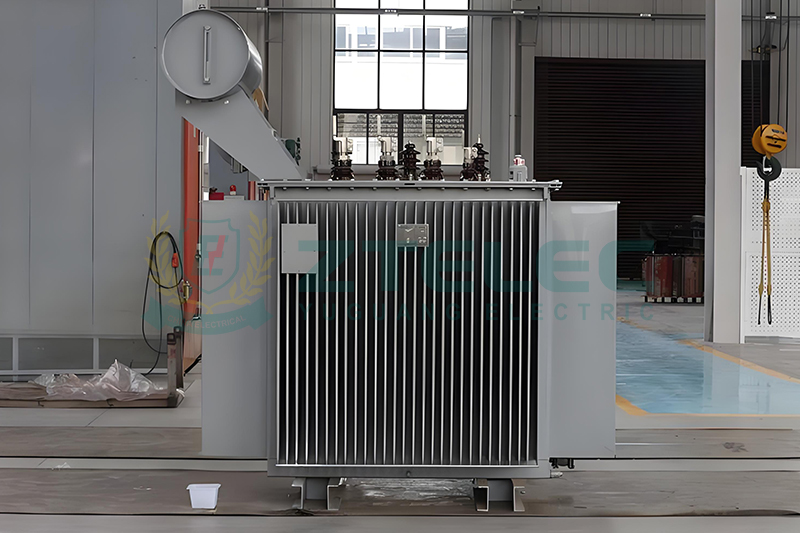
Oil-immersed transformers use mineral oil or synthetic insulating oil as both the insulation medium and the cooling agent. The oil efficiently transfers heat from the windings and core to the external cooling system.
These transformers are known for their strong heat dissipation capability, stable insulation performance, and suitability for large-capacity designs. They are widely applied in systems where long-term reliability and high power capacity are required. However, they require strict environmental protection measures due to the potential risks of oil leakage and fire.
Typical applications include transmission and distribution substations, industrial parks, main power transformer systems, and medium- to high-voltage power systems at 35kV and above.
Dry-Type Transformers
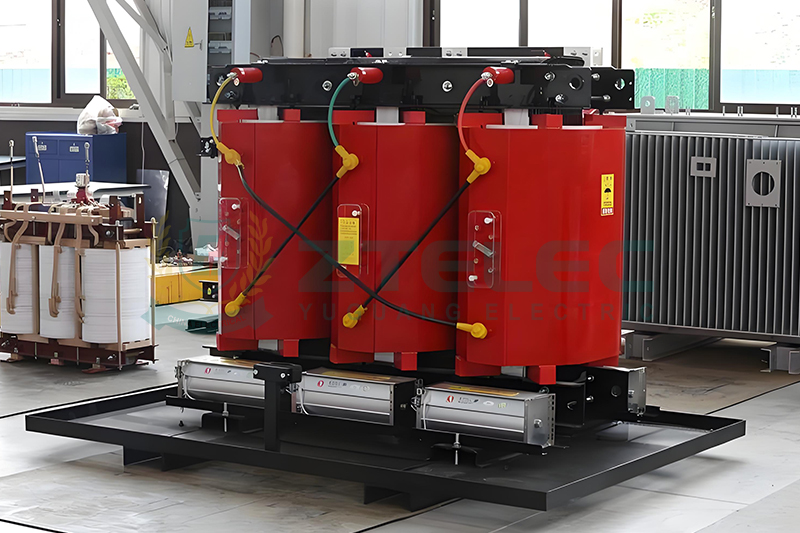
Dry-type transformers rely on air cooling and use solid insulation materials such as epoxy resin or NOMEX paper. Unlike oil-immersed designs, they do not contain flammable liquids.
Their main advantages include excellent fire resistance, low environmental impact, and relatively simple maintenance. Although their capacity is generally smaller and manufacturing costs are higher, dry-type transformers are well suited for locations with strict safety and environmental requirements.
They are commonly used in commercial buildings, high-rise residential complexes, hospitals, subways, data centers, new energy power generation systems, and indoor power distribution networks in urban areas.
Classification by Application and Function
Step-Up Transformers
Step-up transformers increase the low voltage generated by power plants to higher transmission voltages. This process significantly reduces power losses during long-distance transmission.
They are mainly installed in thermal power plants, hydropower stations, wind farms, photovoltaic power stations, and at the starting points of transmission systems.
Step-Down Transformers
Step-down transformers reduce high-voltage or medium-voltage electricity to levels suitable for end users. They play a critical role in ensuring safe and reliable power delivery.
These transformers are widely used in distribution substations, industrial facilities, commercial buildings, and residential power systems.
Special Transformers
Special transformers are designed for specific industrial or technical applications. Common examples include rectifier transformers, electric furnace transformers, and traction transformers.
They are tailored to meet unique electrical characteristics such as high current, strong harmonics, or frequent load fluctuations, making them indispensable in specialized industries.
Classification by Structure
Two-winding transformers have a simple structure and are suitable for most standard voltage conversion applications. Three-winding transformers provide three voltage levels and are often used to interconnect multiple power systems with different voltage requirements.
Autotransformers share part of their windings between the primary and secondary sides. This design results in smaller size, lower material consumption, and higher efficiency, making them suitable for systems with relatively small voltage differences.
These structural types are commonly applied in 110kV and above transmission systems, grid voltage regulation projects, and interconnection substations.
Classification by Voltage Level
Distribution Transformers
Distribution transformers typically operate at voltage levels such as 6kV, 10kV, and 35kV. Their main function is terminal power distribution.
They are widely used in factory internal power systems, commercial facilities, and residential power consumption networks.
Main Power Transformers
Main power transformers operate at high voltage levels, including 110kV, 220kV, 500kV, and above. They are core components of transmission networks and large substations.
These transformers are installed at main substations and critical nodes of the power grid to ensure stable and efficient power transmission.
Key Considerations for Selecting Power Transformers
Selecting the right power transformer requires comprehensive evaluation. Key factors include voltage level and capacity based on system demand, installation environment such as indoor or outdoor conditions, ambient temperature and humidity, and load characteristics including continuous load, impact load, and harmonic content.
Reliability requirements, maintenance conditions, compliance with local energy efficiency standards, and total cost of ownership across the entire lifecycle should also be carefully considered.
Proper selection and standardized application of power transformers are essential for the safe, reliable, and economical operation of power systems. As power grids continue to evolve toward higher efficiency, intelligence, and cleaner energy, transformer technologies are also advancing to meet these new demands.
Professional Transformer Selection and Technical Support
If you need professional advice on power transformer selection or technical support, we provide comprehensive solutions covering product selection, technical consultation, installation guidance, and operation and maintenance services.
Contact us to learn more about customized power transformer solutions for your projects.
oil immersed transformer lifespan
oil immersed transformer maintenance
transformer lifecycle
transformer insulation aging
dry type transformer temperature monitoring
- more+releated article
- 2026-05-11How Long Does an Oil-Immersed Transformer Last
- 2026-05-08Modern Power System Dry-Type Transformer Insta
- 2026-05-07Oil-Immersed Transformer Overheating: Causes,
- 2026-05-07Dry-Type Transformers for Data Centers: 2026 R
- 2026-04-30Air-Core Reactor vs Iron-Core Reactor: How to
- 2026-04-29Compact Enclosed Transformer for Smart Grid: T
- 2026-04-2812-Pulse and 24-Pulse Phase-Shifting Transform
- 2026-04-27Oil-Immersed Transformers for Industrial Plant
- 2026-04-25Why Dry-Type Transformers Are Preferred for Ho
- 2026-04-24Enclosed Transformer Outdoor Solutions: IP Pro
- ELECTRICAL INSULATION BOARD MATERIALS
- ELECTRICAL INSULATION MATERIALS
- POWER TRANSFORMER
- ENAMELED WIRE
- SWITCHGEAR



transformer insulation aging
transformer lifecycle
oil immersed transformer lifespan
oil immersed transformer maintenance
dry type transformer installation
dry type transformer temperature monitoring
dry type transformer maintenance
dry type transformer sizing
transformer cooling system failure
transformer overheating causes
oil immersed transformer overheating
transformer oil temperature
harmonic mitigation
dry type transformer
K factor transformer
data center transformer
Cast resin transformer
insulation oil degradation
DGA analysis transformer
transformer fault analysis
oil immersed transformer failure
smart grid transformer
compact enclosed transformer
integrated distribution transformer
compact transformer substation