
Why Dry-Type Transformers Are Preferred for Hospitals, Subways, and Data Centers
When critical infrastructure depends on uninterrupted power, transformer selection becomes far more important than simple efficiency calculations. In hospitals, subway systems, and data centers, electrical reliability is directly connected to human safety, operational continuity, and regulatory compliance.
Dry-type transformers have become the preferred solution in these environments not because of marketing trends, but because they solve real operational problems. They do not leak oil, they present a much lower fire risk, and they can be safely installed inside occupied buildings or underground facilities where oil-filled transformers create significant safety challenges.
Behind hospital walls, inside subway tunnels, and in modern server facilities, dry-type transformers operate quietly and continuously, delivering the stable power these high-demand environments require.
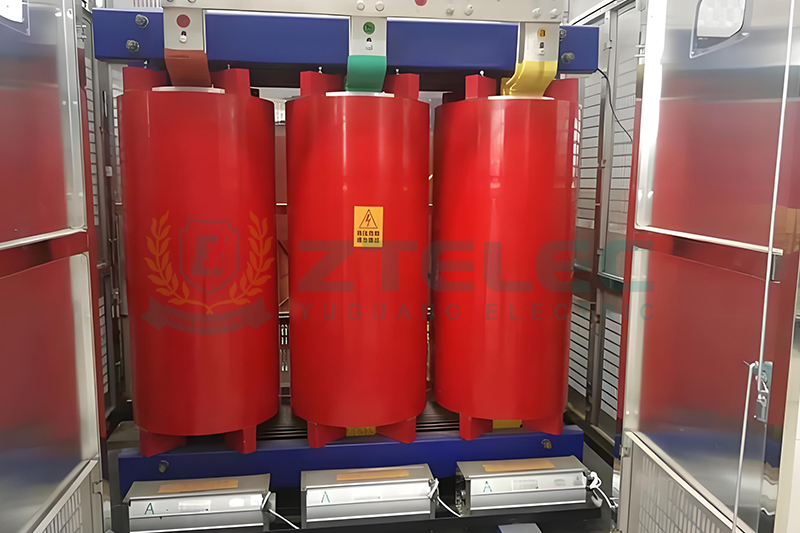
What Makes a Transformer a Dry-Type Transformer
Traditional oil-filled transformers use mineral oil or synthetic insulating fluid for both cooling and electrical insulation. This design is effective and widely used, especially in outdoor utility applications, but it introduces combustible liquid into the system.
In environments where fire risk must be minimized, that becomes a major concern.
Dry-type transformers eliminate this issue by using air, epoxy resin, or cast resin as the insulating medium. Their windings are usually vacuum-pressure encapsulated, creating a sealed structure that protects against moisture, dust, and contaminants while maintaining strong thermal stability.
Heat is dissipated naturally through air cooling or supported by forced ventilation systems in high-load applications. Without oil, there is no leakage risk, no need for oil containment, and no requirement for fire-rated transformer vaults in many indoor installations.
This makes dry-type transformers especially suitable for hospitals, transit systems, commercial buildings, and data centers where safety and installation flexibility are top priorities.
Hospitals: Where Fire Safety Cannot Be Compromised
Hospitals are among the most demanding environments for power distribution systems. Life-support equipment, surgical rooms, ICU systems, emergency lighting, and medical imaging equipment all depend on continuous and reliable power.
The biggest concern is fire safety.
An electrical fire inside a hospital is not simply an equipment issue—it can directly threaten patient lives and disrupt essential medical services. Oil-filled transformers installed inside healthcare facilities usually require dedicated fire-rated vaults, automatic suppression systems, and secondary containment infrastructure.
Dry-type transformers avoid these requirements. They can be installed in standard electrical rooms, basements near patient areas, and close to critical operational zones without introducing the same fire hazard profile.
In many regions, NEC regulations restrict oil-insulated transformers inside occupied buildings unless installed in approved fire-rated vaults. Dry-type transformers offer significantly greater flexibility for hospital designers and facility managers.
They also operate with lower acoustic noise, which is important in patient care environments where noise control affects comfort and recovery.
Subways and Transit Systems: Safe Operation Underground
Underground railway systems create one of the highest-risk environments for electrical infrastructure. Fire inside a tunnel or station is extremely difficult to suppress and can quickly become life-threatening for passengers and emergency responders.
Because of this, transit authorities apply strict fire safety standards to every electrical component installed below ground.
Dry-type transformers meet demanding fire performance requirements such as EN 45545 and other railway fire protection standards. Their non-flammable insulation systems ensure that even during severe electrical faults, the transformer itself does not contribute to fire spread.
This is why systems such as the London Underground, Paris Metro, and major subway networks worldwide rely heavily on dry-type transformers for traction power and auxiliary electrical supply.
Installing oil-filled transformers inside tunnels would require expensive containment systems, explosion-proof enclosures, and continuous environmental monitoring. Dry-type units avoid these complications while reducing long-term maintenance requirements.
Subway environments are humid, dusty, and subject to constant vibration. Oil-filled transformers in these conditions require regular oil testing, filtration, and hazardous fluid disposal. Dry-type transformers require only periodic inspection and surface cleaning, making long-term operation much simpler.
Data Centers: Uptime Is Everything
In data centers, downtime is measured in financial loss, customer impact, and operational risk. Tier IV facilities aim for extremely high availability, often described as “nine-nines” reliability, where even minutes of outage per year are unacceptable.
Transformer selection directly affects this goal.
Dry-type transformers align perfectly with modern data center requirements. Their sealed construction protects against dust and contamination commonly found in server environments. Their thermal behavior is stable and predictable, supporting the precise cooling models used in hyperscale facilities.
Most importantly, they eliminate the fire risks associated with flammable insulating fluids.
Data centers often use clean-agent fire suppression systems designed for sensitive electronics. These systems are not ideal for oil fire suppression, making dry-type transformers a much better fit for indoor deployment.
As AI computing workloads continue to grow, power density inside data centers is increasing rapidly. Operators are installing more medium-voltage transformers closer to server rooms and high-density GPU clusters.
Because dry-type transformers can be safely installed indoors without dedicated fire vaults, they support this high-density infrastructure expansion far more efficiently than oil-filled alternatives.
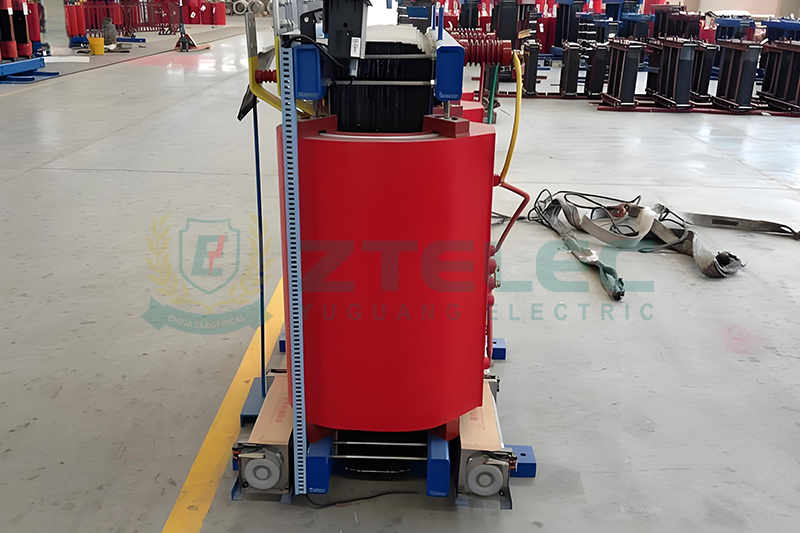
Dry-Type Transformer vs Oil-Filled Transformer
| Feature | Dry-Type Transformer | Oil-Filled Transformer |
|---|---|---|
| Fire Hazard | Very Low (F1 Class) | High |
| Indoor Installation | Allowed without vault | Often restricted |
| Maintenance | Minimal | Regular oil testing required |
| Environmental Containment | Not required | Mandatory |
| Moisture Resistance | High with cast resin sealing | Moderate |
| High Voltage Cost | Higher above 33kV | More economical |
| Full Load Efficiency | Comparable | Slightly higher |
Regulations and Insurance Are Driving More Adoption
Global regulations are increasingly focused on fire safety, environmental protection, and energy efficiency. This trend strongly supports the continued growth of dry-type transformer installations.
European Ecodesign regulations, updated IEC standards, and stricter environmental liability rules for dielectric fluids are making oil-filled transformer installations more complex and expensive in urban environments.
Insurance companies are also recognizing the lower fire risk profile of dry-type transformers. Facilities using dry-type units often qualify for lower property insurance premiums compared to similar sites using oil-filled equipment.
For large hospitals, transportation hubs, and hyperscale data centers, the insurance savings alone can offset the higher initial purchase cost over several years.
Where Oil-Filled Transformers Still Have Advantages
Dry-type transformers are not always the best choice for every project.
At voltage levels above 33kV, oil-filled transformers are often more cost-effective and technically easier to manufacture. In outdoor utility-scale substations where installation space is abundant and fire risk is manageable, oil-filled designs remain dominant.
In very high ambient temperature environments where cooling becomes the main challenge, oil-based cooling systems may also provide thermal advantages that air-cooled dry-type systems cannot easily match.
However, for most medium-voltage commercial and industrial applications below 36kV, especially indoors, these limitations are rarely decisive.
The Future of Dry-Type Transformer Technology
Cast resin technology continues to improve. New insulation systems offer better thermal conductivity, allowing higher power density in smaller physical footprints.
Manufacturers are also integrating partial discharge monitoring systems directly into transformer windings, enabling real-time condition monitoring and early fault detection without intrusive testing.
Digital twin systems and AI-based predictive maintenance are making dry-type transformers even more valuable. By analyzing temperature behavior, vibration patterns, and acoustic signatures, maintenance teams can detect degradation early and schedule replacement before failures occur.
This transforms the dry-type transformer from a passive electrical component into an active part of intelligent power infrastructure.
As cities become denser, buildings become smarter, and downtime becomes more expensive, the advantages of dry-type transformers become even more important.
Fire safety, low maintenance, indoor installation flexibility, and environmental cleanliness are no longer optional features—they are core requirements for modern critical infrastructure.
In hospitals where patients depend on uninterrupted power, in subway systems where fire risk must be eliminated, and in data centers where uptime defines success, dry-type transformers are not simply a preferred option—they are the right engineering decision.
They may not always be the lowest-cost solution upfront, but where failure is not acceptable, they consistently deliver the reliability that critical infrastructure demands.
oil immersed transformer lifespan
oil immersed transformer maintenance
transformer lifecycle
transformer insulation aging
dry type transformer temperature monitoring
- more+releated article
- 2026-05-11How Long Does an Oil-Immersed Transformer Last
- 2026-05-08Modern Power System Dry-Type Transformer Insta
- 2026-05-07Oil-Immersed Transformer Overheating: Causes,
- 2026-05-07Dry-Type Transformers for Data Centers: 2026 R
- 2026-04-30Air-Core Reactor vs Iron-Core Reactor: How to
- 2026-04-29Compact Enclosed Transformer for Smart Grid: T
- 2026-04-2812-Pulse and 24-Pulse Phase-Shifting Transform
- 2026-04-27Oil-Immersed Transformers for Industrial Plant
- 2026-04-25Why Dry-Type Transformers Are Preferred for Ho
- 2026-04-24Enclosed Transformer Outdoor Solutions: IP Pro
- ELECTRICAL INSULATION BOARD MATERIALS
- ELECTRICAL INSULATION MATERIALS
- POWER TRANSFORMER
- ENAMELED WIRE
- SWITCHGEAR



transformer insulation aging
transformer lifecycle
oil immersed transformer lifespan
oil immersed transformer maintenance
dry type transformer installation
dry type transformer temperature monitoring
dry type transformer maintenance
dry type transformer sizing
transformer cooling system failure
transformer overheating causes
oil immersed transformer overheating
transformer oil temperature
harmonic mitigation
dry type transformer
K factor transformer
data center transformer
Cast resin transformer
insulation oil degradation
DGA analysis transformer
transformer fault analysis
oil immersed transformer failure
smart grid transformer
compact enclosed transformer
integrated distribution transformer
compact transformer substation