
2026 Dry-Type Transformer Price Factors: Capacity, Insulation Class & IP Protection
The purchase price of a dry-type transformer is never a fixed number that can be easily checked online. Even within the same brand and product series, a larger capacity, higher insulation class, or upgraded enclosure protection can increase the quotation by 20% to 50% or more.
Many project buyers receive significantly different quotations during their first inquiry and struggle to understand where the price gap comes from. In reality, the most important pricing factors are transformer capacity, insulation class, and protection rating. In addition, voltage level, energy efficiency standards, special functional configurations, and brand differences can further affect the final procurement cost.
Based on the 2026 market situation, this article explains the pricing logic of dry-type transformers from an engineering and application perspective, helping companies control investment costs while ensuring reliable power distribution.
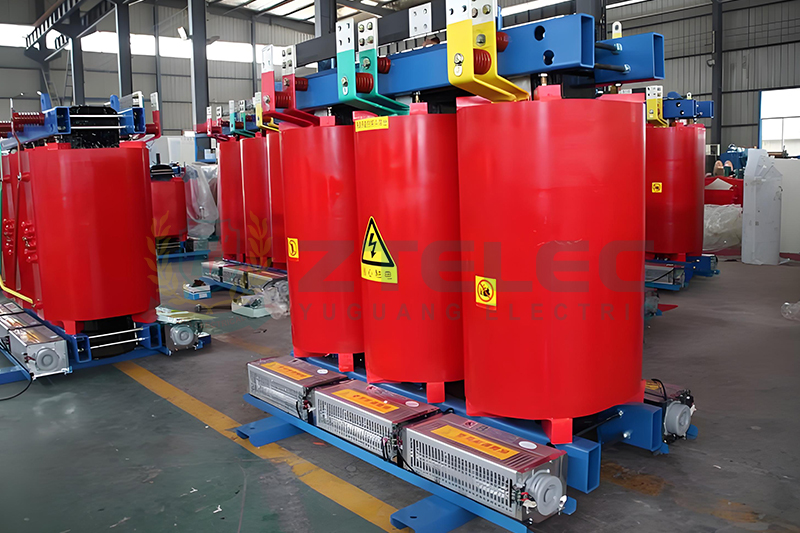
Capacity Determines the Basic Transformer Price
Capacity is the most direct factor affecting the price of a dry-type transformer. Transformer rated capacity is usually expressed in kVA, with common ratings including 100kVA, 315kVA, 630kVA, 1000kVA, 1600kVA, and 2500kVA. Heavy industrial applications may even require transformers above 5000kVA.
As capacity increases, the core size, silicon steel consumption, copper conductor weight, and overall structural dimensions also increase. Copper and silicon steel are the main material costs of dry-type transformers, and fluctuations in copper prices have a particularly significant impact on market quotations.
Taking the mainstream SC(B)11 epoxy resin cast dry-type transformer series in 2026 as an example, the market price range is approximately as follows:
| Capacity | Reference Ex-Factory Price (Without Enclosure) |
|---|---|
| 100kVA | Approx. RMB 12,000–18,000 |
| 315kVA | Approx. RMB 25,000–35,000 |
| 630kVA | Approx. RMB 40,000–55,000 |
| 1000kVA | Approx. RMB 60,000–80,000 |
| 1600kVA | Approx. RMB 90,000–130,000 |
| 2500kVA | Approx. RMB 150,000–200,000 |
The above prices usually refer to standard open-type units without protective enclosures and may fluctuate with copper prices, silicon steel costs, and transportation expenses. The rise in global copper prices during the second half of 2025 had a direct impact on transformer quotations in early 2026, making raw material trends an important consideration during procurement.
Selecting transformer capacity is not simply about choosing the largest possible model. In practical engineering applications, the long-term load rate is generally recommended to remain between 60% and 80%. Undersized transformers may operate under continuous overload conditions, causing excessive winding temperature rise and accelerated insulation aging. Oversized transformers, on the other hand, increase no-load losses, initial investment, and long-term electricity costs.
For commercial buildings, data centers, and industrial power systems, accurate load calculation is one of the most effective ways to optimize procurement costs and improve operating efficiency.
Insulation Class Affects Transformer Lifespan and Cost
The insulation class directly determines the maximum operating temperature that a dry-type transformer can withstand and is closely related to the materials and manufacturing process used.
According to IEC standards, the common insulation classes for dry-type transformers include:
| Insulation Class | Maximum Allowable Temperature | Typical Applications |
|---|---|---|
| Class B | 130°C | General low-load applications |
| Class F | 155°C | Mainstream commercial and industrial distribution systems |
| Class H | 180°C | High-temperature and high-reliability environments |
Most mainstream products currently use Class F insulation, while Class H insulation is increasingly adopted in data centers, hospitals, rail transit systems, metallurgy, and chemical plants.
Upgrading the insulation class not only improves heat resistance but also requires a complete upgrade of the insulation material system. This includes epoxy resin formulations, fiberglass materials, insulation spacers, impregnation processes, and winding structure design.
In general, upgrading from Class F to Class H insulation increases the transformer price by approximately 8% to 15%.
Recommended insulation classes for different applications are as follows:
| Application | Recommended Insulation Class |
|---|---|
| Commercial buildings and office facilities | Class F |
| Data centers and hospital operating rooms | Class H |
| Chemical plants, metallurgy, and high-temperature environments | Class H with anti-corrosion treatment |
| High-altitude regions | Higher insulation class or derated operation |
Another often overlooked factor is temperature rise limit. Even with the same Class F insulation, some transformers are designed for 100K temperature rise while others use a 75K low-temperature-rise design. Lower temperature rise means stricter cooling design, lower operating temperature, and longer service life, but also higher manufacturing costs.
For continuously operating industrial loads and critical power systems, low-temperature-rise transformers often provide better long-term economic value.
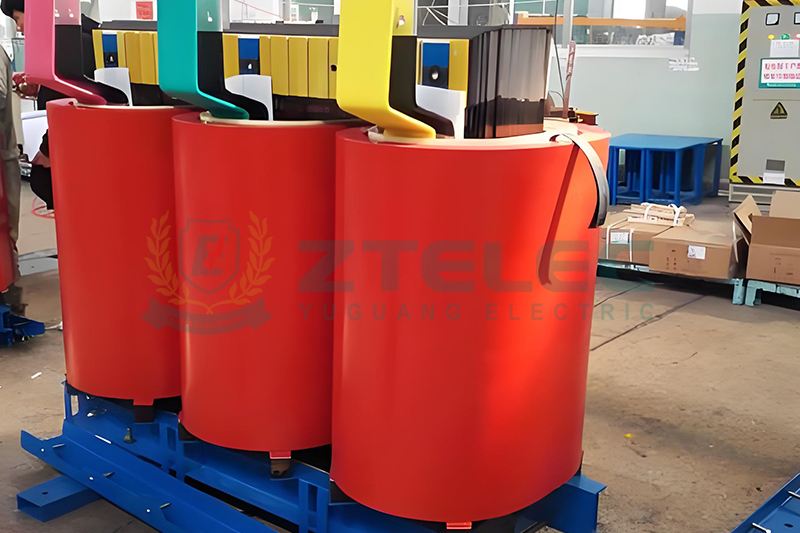
Higher IP Protection Ratings Mean Higher Costs
The protection level of a dry-type transformer is expressed using an IP (Ingress Protection) code, which indicates the transformer’s resistance to dust, foreign objects, and moisture.
Standard open-type transformers without enclosures are typically rated IP00 and are suitable only for dedicated transformer rooms with safety barriers. This configuration offers the lowest manufacturing cost and is the most common basic design.
After adding a protective enclosure, the transformer gains higher environmental protection capability, but manufacturing costs and cooling design complexity also increase.
| IP Rating | Typical Environment | Price Increase Compared to Open-Type Unit |
|---|---|---|
| IP00 | Dedicated transformer room | Base price |
| IP20 | General indoor environment | Approx. +3% to 5% |
| IP23 | Indoor anti-drip environment | Approx. +5% to 8% |
| IP44 | Indoor or outdoor splash-proof areas | Approx. +10% to 15% |
| IP54 | Dusty or outdoor environments | Approx. +15% to 25% |
The enclosure material also affects the price. Painted cold-rolled steel enclosures are the most common option, while coastal areas and chemical plants may require 304 stainless steel enclosures, which further increase costs.
A common misconception is that higher IP ratings are always better. In reality, for dry-type transformers above 1000kVA, higher protection ratings require more complex cooling structures, including optimized airflow channels, forced-air cooling systems, and enhanced enclosure ventilation design.
If the cooling system is poorly designed, a highly sealed enclosure may actually cause long-term overheating and shorten transformer lifespan. Therefore, the IP rating should always match the actual installation environment instead of being selected blindly.
Other Important Factors Affecting Dry-Type Transformer Prices
Besides capacity, insulation class, and protection rating, the following factors also influence the final quotation.
Voltage Level
10kV is currently the most common distribution voltage level, making related products highly standardized and relatively stable in price. For 35kV systems, however, the high-voltage winding insulation distance and structural requirements become much stricter, significantly increasing manufacturing costs.
Loss Level and Energy Efficiency
Dry-type transformers are commonly divided into Level 1 and Level 2 energy efficiency categories. Level 1 energy-efficient transformers use lower-loss designs that significantly reduce long-term electricity costs, although manufacturing costs are typically 5% to 10% higher.
For data centers, rail transit systems, and large industrial facilities operating continuously, high-efficiency transformers often provide better lifecycle cost performance.
Special Functional Configurations
Additional features such as temperature control systems, PT100 temperature sensors, intelligent temperature controllers, forced-air cooling systems, and thermal protection relays all add extra costs. Some engineering projects specify these components as standard requirements, making careful review of technical specifications essential during procurement.
Brand and Manufacturing Quality
Price differences between brands can easily exceed 20%. Large manufacturers usually provide better material consistency, manufacturing stability, testing standards, and after-sales support, making them more suitable for critical power distribution systems.
For hospitals, rail transit systems, data centers, and large industrial projects, long-term reliability is often more important than simply obtaining the lowest purchase price.
Practical Purchasing Recommendations for 2026
Before requesting quotations, it is recommended to clearly define all technical parameters, including capacity, voltage level, insulation class, protection rating, energy efficiency level, and special functional requirements. Only when specifications are fully aligned can quotations from different suppliers be compared fairly.
Due to ongoing copper price volatility, some manufacturers now provide quotations valid for only about seven days. For long-cycle projects, it is advisable to include copper price adjustment clauses in contracts to reduce future pricing disputes.
In addition, buyers should not focus solely on transformer ex-factory prices. Transportation, installation, commissioning, switchgear coordination, and on-site construction costs can significantly affect the total project budget.
Dry-type transformers are highly engineered products, and pricing is determined not only by model numbers but also by capacity, insulation class, protection rating, and the actual operating environment. Understanding these core factors is the key to achieving the right balance between safety, reliability, and investment cost.
dry-type transformer capacity
2026 dry-type transformer
SCB11 transformer
dry-type transformer price
oil filled transformer
- more+releated article
- 2026-05-142026 Dry-Type Transformer Price Factors: Capac
- 2026-05-13What Is an Oil-Immersed Transformer? Working P
- 2026-05-13Medium Voltage Dry-Type Transformers in Solar
- 2026-05-11How Long Does an Oil-Immersed Transformer Last
- 2026-05-08Modern Power System Dry-Type Transformer Insta
- 2026-05-07Oil-Immersed Transformer Overheating: Causes,
- 2026-05-07Dry-Type Transformers for Data Centers: 2026 R
- 2026-04-30Air-Core Reactor vs Iron-Core Reactor: How to
- 2026-04-29Compact Enclosed Transformer for Smart Grid: T
- 2026-04-2812-Pulse and 24-Pulse Phase-Shifting Transform
- ELECTRICAL INSULATION BOARD MATERIALS
- ELECTRICAL INSULATION MATERIALS
- POWER TRANSFORMER
- ENAMELED WIRE
- SWITCHGEAR


dry-type transformer price
SCB11 transformer
2026 dry-type transformer
dry-type transformer capacity
distribution transformer
oil filled transformer
Oil immersed transformer
Power transformer
solar transformer
medium voltage dry-type transformer
renewable energy transformer
transformer lifecycle
oil immersed transformer maintenance
transformer insulation aging
oil immersed transformer lifespan
dry type transformer maintenance
dry type transformer sizing
dry type transformer temperature monitoring
dry type transformer installation
transformer oil temperature
transformer overheating causes
oil immersed transformer overheating
transformer cooling system failure
dry type transformer
data center transformer