
How Long Does an Oil-Immersed Transformer Last? Lifespan, Maintenance & Warning Signs
Oil-immersed transformers are among the most critical assets in modern power systems, widely used in substations, industrial facilities, data centers, renewable energy plants, and large-scale infrastructure projects. One of the most common questions from utility operators and industrial users is: “How long can an oil-immersed transformer actually last?”
In most cases, the designed service life of an oil-immersed transformer ranges from 20 to 40 years. However, actual lifespan depends on multiple factors including operating temperature, loading conditions, insulation aging, oil quality, short-circuit stress, and maintenance quality. Well-maintained premium transformers can remain in service for over 50 years, while poorly maintained units exposed to overload or inadequate cooling may experience premature aging within just a decade.
This article explains the lifecycle stages of oil-immersed transformers, insulation aging mechanisms, essential maintenance strategies, and major fault warning signs to help operators maximize asset value and reduce failure risks.
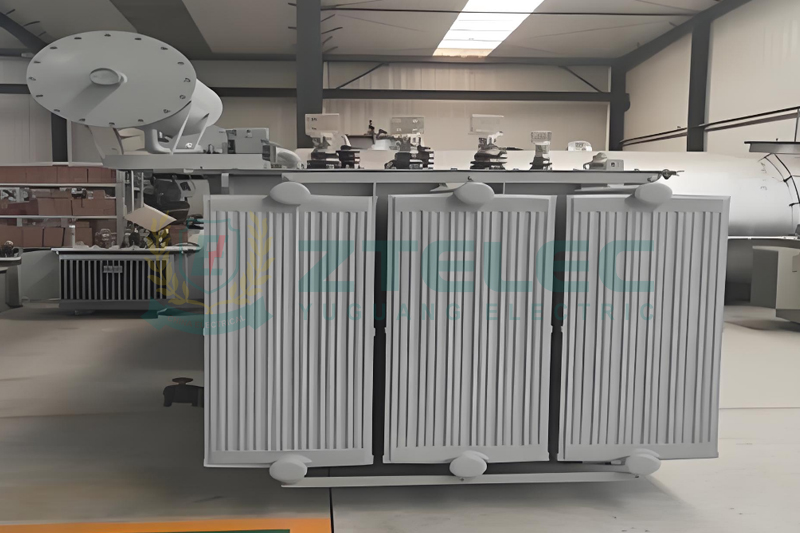
Standard Service Life of Oil-Immersed Transformers
According to IEC 60076 and GB 1094 standards, the typical design life of an oil-immersed power transformer is approximately 20 to 40 years. The real limiting factor is not the steel structure itself, but the aging rate of the internal insulation system.
Inside the transformer, cellulose insulation paper immersed in transformer oil gradually deteriorates under thermal stress, oxidation, and moisture exposure. When the Degree of Polymerization (DP) drops from its original value of around 1000 to below 200, the insulation mechanical strength decreases sharply, and the transformer enters the end-of-life risk zone.
The widely recognized Montsinger thermal aging rule states that every 6°C increase in winding hotspot temperature doubles the insulation aging rate. This makes temperature control one of the most critical factors affecting transformer longevity.
| Key Parameter | Reference Value |
|---|---|
| Design Service Life | 20–40 Years |
| Possible Lifetime with Proper Maintenance | 40–50+ Years |
| Every 6°C Hotspot Temperature Increase | Insulation Aging Rate Doubles |
| Typical Hotspot Temperature Limit | Approx. 98°C |
| End-of-Life DP Value | Below 200 |
Lifecycle Stages of Oil-Immersed Transformers
Initial Stabilization Stage (0–5 Years)
After commissioning, the transformer insulation system gradually stabilizes. During this stage, operators should establish baseline operating data including oil quality, DGA reference values, and thermal performance records.
Key maintenance tasks include dielectric oil testing, grounding verification, oil leakage inspection, and temperature rise monitoring. Transportation damage, installation defects, or moisture contamination often become visible during this period.
Stable Operating Stage (5–20 Years)
This is generally the most reliable operating phase, where failure rates remain relatively low and the transformer achieves optimal economic performance.
Routine oil analysis, cooling system maintenance, and load management become the primary focus. Cooling fans, oil pumps, radiators, and OLTC systems should all undergo regular inspection and servicing.
Accelerated Aging Stage (20–35 Years)
As operating years accumulate, insulation paper mechanical strength declines significantly, while acid value, moisture, and furan content in transformer oil gradually increase.
At this stage, testing frequency should increase. DGA analysis is commonly performed every six months, combined with furan testing to evaluate insulation paper degradation. Asset replacement or refurbishment planning should also begin.
End-of-Life Stage (35+ Years)
Transformers operating for more than 35 years generally enter a high-risk period. The probability of partial discharge, insulation brittleness, winding deformation, and accessory failure increases substantially.
Online monitoring systems such as partial discharge detection, online DGA monitoring, and hotspot temperature monitoring are highly recommended during this stage to reduce catastrophic failure risks.
Key Measures to Extend Transformer Lifespan
Transformer Oil Management Is the Core of Lifespan Control
Transformer oil performs both insulation and cooling functions. Oil degradation directly accelerates insulation aging.
According to GB/T 7252, routine oil analysis should focus on dielectric strength, moisture content, acid value, dielectric dissipation factor, and dissolved gas analysis results.
| Test Item | Recommended Standard | Typical Interval |
|---|---|---|
| Dielectric Strength | ≥35 kV (110kV Class) | Annually |
| Moisture Content | ≤15 mg/L | Annually |
| Acid Value | ≤0.1 mgKOH/g | Annually |
| Dielectric Dissipation Factor | ≤0.005 (90°C) | Annually |
| DGA Dissolved Gas Analysis | According to IEC 60599 | Every 6–12 Months |
When oil quality deteriorates while insulation paper remains healthy, vacuum oil filtration, hot oil circulation, or online oil regeneration can significantly extend transformer service life at a much lower cost than full replacement.
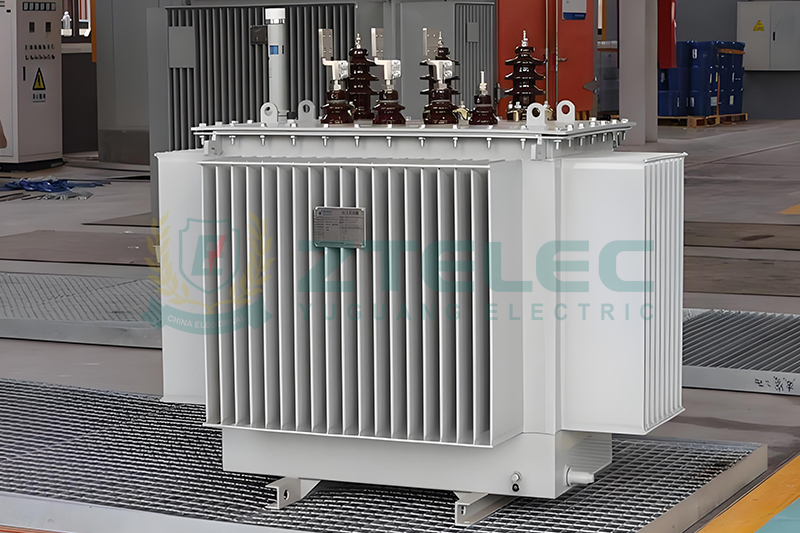
Control Operating Temperature
Winding hotspot temperature is the single most important factor influencing insulation lifespan. Continuous high-temperature operation rapidly reduces cellulose insulation strength.
In practice, radiators should remain clean to prevent dust buildup from reducing cooling efficiency. Load management is equally important, and short-term overload operation should always follow manufacturer guidelines.
In hot climates, transformer room ventilation should be enhanced, and forced-air cooling systems may be necessary during summer peak periods.
Implement Modern Insulation Diagnostics
Modern transformer maintenance has evolved from periodic disassembly inspection to condition-based online monitoring.
Dissolved Gas Analysis (DGA) can detect latent faults such as overheating, arcing, and partial discharge. It is often referred to as the “blood test” of transformers. Among all gases, acetylene (C₂H₂) is one of the most dangerous indicators, typically associated with high-energy arcing faults.
Furan (2-FAL) testing is widely recognized as the most effective method for evaluating insulation paper aging, while Frequency Response Analysis (FRA) is used to identify winding deformation caused by transportation impact or short-circuit stress.
In recent years, online partial discharge monitoring systems have become increasingly common for large power transformers, significantly improving predictive maintenance capability.
Accessory and Mechanical Maintenance
Long transformer life depends not only on insulation quality but also on reliable accessories and mechanical systems.
On-load tap changers (OLTCs) are among the most common mechanical failure points and should be serviced regularly according to operation counts, including contact replacement and oil replacement.
Silica gel inside breathers must be replaced periodically to prevent moisture ingress, while bushings require regular dielectric loss and capacitance testing to avoid insulation failure.
Additionally, aging sealing gaskets are a major source of oil leakage and should be replaced during major overhauls.
Major Warning Signs of Transformer Failure
Transformer Oil Darkening
Healthy transformer oil is normally light yellow and transparent. Significant darkening or blackening usually indicates overheating, oxidation, or internal discharge activity and requires immediate oil analysis.
Acetylene Detected in DGA
Acetylene is a characteristic gas associated with high-energy arcing. Any detectable amount should be treated as a serious warning sign and analyzed using Rogers Ratio or Duval Triangle methods.
Abnormally High Top Oil Temperature
If top oil temperature consistently rises 5–10°C above historical averages under similar loading conditions, potential causes may include cooling failure, blocked oil flow channels, or internal short circuits.
Visible Oil Leakage
Continuous oil leakage reduces both insulation reliability and cooling performance. Severe leakage may eventually expose internal components and lead to dielectric failure.
Abnormal Noise or Vibration
A healthy transformer produces a stable and uniform humming sound. Sharp cracking sounds, discharge noise, or excessive vibration may indicate core looseness, winding deformation, or partial discharge.
Rapid Drop in Insulation Resistance
If insulation resistance values decrease by more than 50% compared with historical records, moisture ingress or insulation deterioration should be suspected. Additional tests such as polarization index evaluation are recommended.
Frequent Buchholz Relay Operation
The Buchholz relay is one of the primary protection devices against internal transformer faults. Frequent gas accumulation alarms indicate increasing gas generation, while heavy gas trips may signal severe internal faults requiring immediate shutdown.
When Should a Transformer Be Replaced Instead of Repaired?
Not all aging transformers are economically suitable for continued repair. Replacement is usually more cost-effective when insulation DP value falls below 200, furan content remains critically high, winding deformation becomes severe, or overhaul costs exceed 60% of a new transformer price.
In addition, replacing older S7 or S9 transformers with modern high-efficiency S13 or S15 models can often recover investment costs through energy savings within 5–8 years.
Oil-immersed transformers are highly durable assets capable of operating reliably for more than 30 years when properly maintained. The essence of transformer lifespan management is insulation aging control.
By controlling hotspot temperature, maintaining oil quality, performing routine DGA and insulation diagnostics, and responding quickly to warning signs such as acetylene generation, abnormal temperature rise, or Buchholz relay operation, operators can significantly reduce failure risks and maximize lifecycle asset value.
oil immersed transformer lifespan
oil immersed transformer maintenance
transformer lifecycle
transformer insulation aging
dry type transformer temperature monitoring
- more+releated article
- 2026-05-11How Long Does an Oil-Immersed Transformer Last
- 2026-05-08Modern Power System Dry-Type Transformer Insta
- 2026-05-07Oil-Immersed Transformer Overheating: Causes,
- 2026-05-07Dry-Type Transformers for Data Centers: 2026 R
- 2026-04-30Air-Core Reactor vs Iron-Core Reactor: How to
- 2026-04-29Compact Enclosed Transformer for Smart Grid: T
- 2026-04-2812-Pulse and 24-Pulse Phase-Shifting Transform
- 2026-04-27Oil-Immersed Transformers for Industrial Plant
- 2026-04-25Why Dry-Type Transformers Are Preferred for Ho
- 2026-04-24Enclosed Transformer Outdoor Solutions: IP Pro
- ELECTRICAL INSULATION BOARD MATERIALS
- ELECTRICAL INSULATION MATERIALS
- POWER TRANSFORMER
- ENAMELED WIRE
- SWITCHGEAR



transformer insulation aging
transformer lifecycle
oil immersed transformer lifespan
oil immersed transformer maintenance
dry type transformer installation
dry type transformer temperature monitoring
dry type transformer maintenance
dry type transformer sizing
transformer cooling system failure
transformer overheating causes
oil immersed transformer overheating
transformer oil temperature
harmonic mitigation
dry type transformer
K factor transformer
data center transformer
Cast resin transformer
insulation oil degradation
DGA analysis transformer
transformer fault analysis
oil immersed transformer failure
smart grid transformer
compact enclosed transformer
integrated distribution transformer
compact transformer substation