
RMU vs Medium Voltage Switchgear: Which Solution Is Best for Your Power Distribution System?
As power distribution networks become increasingly complex due to urban expansion, renewable energy integration, industrial automation, and smart grid development, selecting the right medium-voltage switching equipment has become more important than ever. Two of the most widely used solutions are the Ring Main Unit (RMU) and conventional Medium Voltage Switchgear (MV Switchgear).
Although both technologies serve the same fundamental purpose—controlling, protecting, and isolating electrical power systems—they differ significantly in design philosophy, footprint, operational flexibility, maintenance requirements, and overall lifecycle cost.
This comprehensive guide explains the key differences between RMUs and medium voltage switchgear, helping engineers, utility companies, EPC contractors, consultants, and facility owners make informed decisions for their projects.
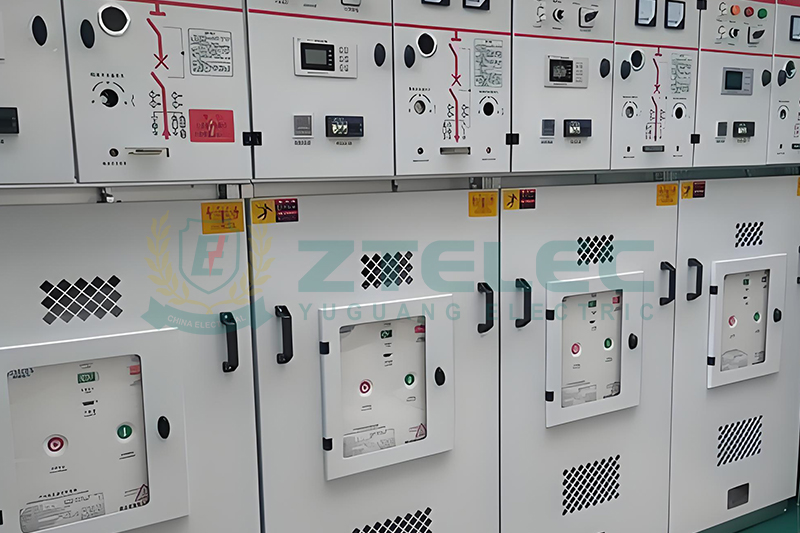
What Is a Ring Main Unit (RMU)?
A Ring Main Unit (RMU) is a compact medium-voltage switchgear assembly designed specifically for ring distribution networks. RMUs are commonly used in voltage ranges from 6kV to 36kV and are particularly popular in urban power distribution systems.
The concept of the RMU originated in Europe, where underground cable networks required highly reliable switching equipment with minimal space requirements. Unlike conventional switchgear, an RMU integrates multiple switching functions into a single compact enclosure.
A typical RMU includes incoming feeder modules, outgoing feeder modules, transformer protection units, earthing switches, load break switches, and optional vacuum circuit breakers.
Most modern RMUs utilize SF₆ gas insulation, solid insulation, or environmentally friendly gas insulation technologies. Because all live components are enclosed within a sealed tank, RMUs offer excellent protection against dust, humidity, salt spray, and other environmental contaminants.
What Is Medium Voltage Switchgear?
Medium Voltage Switchgear refers to metal-enclosed switching equipment designed according to IEC 62271 standards and typically operating between 3.3kV and 72.5kV.
Unlike RMUs, medium voltage switchgear consists of individual functional panels assembled into a switchboard lineup. Each panel performs a specific function such as incoming feeder control, outgoing feeder protection, bus coupling, metering, capacitor switching, or motor control.
MV switchgear commonly uses Air-Insulated Switchgear (AIS), Gas-Insulated Switchgear (GIS), or solid-insulated technologies. Vacuum circuit breakers are currently the most widely used interruption technology due to their long service life, high reliability, and low maintenance requirements.
RMU vs Medium Voltage Switchgear: Key Differences
| Parameter | Ring Main Unit (RMU) | Medium Voltage Switchgear |
|---|---|---|
| Voltage Range | 6kV – 36kV | 3.3kV – 72.5kV+ |
| Rated Current | 400A – 1250A | 630A – 4000A+ |
| Short-Circuit Rating | 16kA – 25kA | 25kA – 63kA+ |
| Footprint | Compact | Larger |
| Maintenance | Very Low | Periodic Maintenance Required |
| Expansion Capability | Limited | Highly Flexible |
| Installation Time | 1–3 Days | Several Weeks |
| Typical Applications | Urban Networks, Solar Plants | Substations, Industrial Plants |
Advantages of Ring Main Units
One of the biggest advantages of RMUs is their compact design. They are ideal for locations where installation space is limited, including underground substations, commercial complexes, residential developments, and compact secondary substations.
The sealed-for-life construction significantly reduces maintenance requirements. Since switching components are protected from environmental influences, reliability remains high even in harsh operating conditions.
RMUs also provide excellent support for ring network configurations. When a fault occurs on one section of the network, operators can isolate the affected section and restore service through an alternate feeder, minimizing downtime.
For renewable energy applications such as solar farms and wind farms, RMUs offer a reliable and cost-effective solution for medium-voltage collection systems.
Advantages of Medium Voltage Switchgear
Medium voltage switchgear offers superior flexibility and scalability. Additional feeder panels can be installed as power demand increases, making it an excellent choice for growing industrial facilities and utility substations.
It supports advanced protection functions including differential protection, busbar protection, arc flash mitigation, power quality monitoring, and IEC 61850 communication.
MV switchgear is also capable of handling significantly higher fault currents and larger loads, making it suitable for heavy industrial applications, mining operations, petrochemical facilities, and data centers.
Typical Applications of RMU
Ring Main Units are commonly used in:
Urban distribution networks, commercial buildings, residential developments, airports, hospitals, industrial parks, renewable energy plants, secondary substations, and underground cable systems.
Utilities often deploy RMUs in city distribution networks because they improve reliability while minimizing installation space requirements.
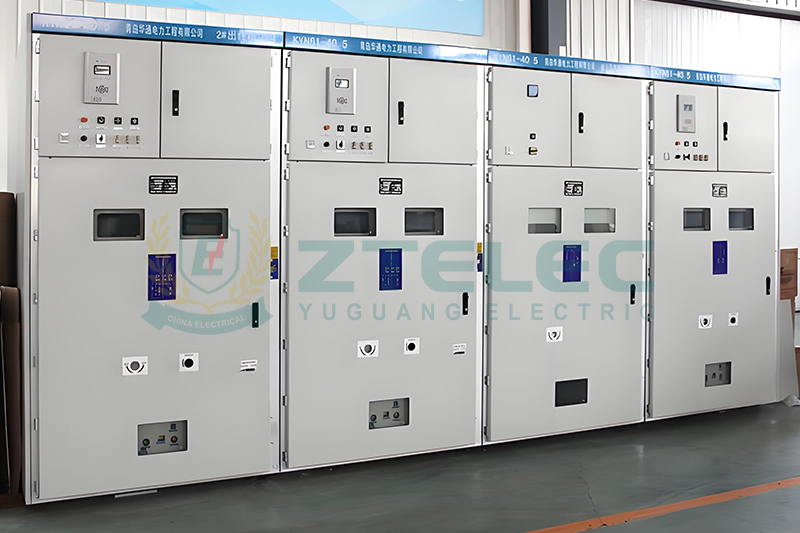
Typical Applications of Medium Voltage Switchgear
Medium voltage switchgear is typically installed in:
Utility substations, manufacturing plants, mining facilities, oil and gas projects, railway systems, airports, large commercial buildings, and mission-critical data centers.
These facilities often require sophisticated protection schemes and future expansion capability, making traditional switchgear the preferred solution.
Lifecycle Cost Analysis
When comparing RMU and medium voltage switchgear, purchase price should not be the only factor. Total lifecycle cost (LCC) provides a more accurate representation of long-term value.
RMUs typically offer lower installation costs, reduced maintenance expenses, and minimal civil engineering requirements. In many medium-sized distribution projects, RMU solutions can reduce total ownership costs by 25%–40% over a 30-year period.
Medium voltage switchgear usually requires a higher initial investment due to larger equipment dimensions, dedicated electrical rooms, ventilation systems, and commissioning requirements. However, its superior expansion capability may provide better long-term value for growing facilities.
Future Trends: SF6-Free RMU and Smart Switchgear
The power industry is rapidly moving toward environmentally friendly technologies. Traditional SF₆-insulated equipment is increasingly being replaced by SF₆-free RMUs that utilize clean air insulation, nitrogen mixtures, or solid dielectric systems.
Digitalization is another major trend. Modern RMUs and switchgear increasingly include intelligent electronic devices (IEDs), condition monitoring sensors, fault indicators, thermal monitoring systems, and predictive maintenance platforms.
Through IEC 61850 communication protocols, these smart devices integrate seamlessly into SCADA systems and smart grid architectures, improving network reliability and operational efficiency.
Frequently Asked Questions
What is the difference between an RMU and switchgear?
An RMU is a specialized type of medium-voltage switchgear designed for compact ring distribution networks, while conventional switchgear offers greater flexibility and protection functionality.
Can RMUs be used in solar power plants?
Yes. RMUs are widely used in photovoltaic and wind energy projects for collector circuits and grid connection points.
Which solution requires less maintenance?
RMUs generally require less maintenance due to their sealed construction and integrated design.
Are SF₆-free RMUs available?
Yes. Many manufacturers now offer environmentally friendly RMUs that comply with modern sustainability requirements.
Which solution is better for future expansion?
Medium voltage switchgear offers greater expansion flexibility because additional panels can be added as system requirements grow.
Both RMUs and medium voltage switchgear play critical roles in modern power distribution systems. RMUs excel in compactness, reliability, low maintenance, and rapid deployment, making them ideal for urban distribution networks and renewable energy projects.
Medium voltage switchgear remains the preferred choice for large industrial facilities, substations, and critical infrastructure requiring advanced protection, higher fault ratings, and long-term scalability.
By carefully evaluating load requirements, environmental conditions, protection needs, and lifecycle costs, engineers and project owners can select the most suitable solution for building a safe, reliable, and future-ready electrical network.
distribution switch cabinet
medium voltage switch equipment
Medium Voltage Switchgear
RMU
Ring Main Unit
- more+releated article
- 2026-06-02RMU vs Medium Voltage Switchgear: Which Soluti
- 2026-06-01Dry Type Transformer Price Guide 2026: Cost by
- 2026-05-29Transformer Oil Testing Guide: DGA, Moisture C
- 2026-05-28Cast Resin vs VPI Dry-Type Transformers: Diffe
- 2026-05-27Transformer Conservator Bladder Replacement Gu
- 2026-05-26110kV Power Transformer: Oil-Immersed vs Dry-T
- 2026-05-251000 kVA Dry-Type Transformer — Resin Cast,
- 2026-05-23China vs Europe Oil-Immersed Transformer Manuf
- 2026-05-221250 kVA Dry-Type vs Oil-Immersed Transformer:
- 2026-05-21Data Center Substations vs Industrial Substati
- ELECTRICAL INSULATION BOARD MATERIALS
- ELECTRICAL INSULATION MATERIALS
- POWER TRANSFORMER
- ENAMELED WIRE
- SWITCHGEAR

medium voltage switch equipment
Ring Main Unit
RMU
Medium Voltage Switchgear
distribution switch cabinet
cast resin transformer price
dry transformer price guide 2026
dry type transformer price
dry type transformer cost
DGA testing
transformer oil moisture content
breakdown voltage test
dielectric strength test
transformer oil testing
VPI transformer
epoxy resin transformer
Vacuum Pressure Impregnation Transformer
dry-type transformer
moisture resistant transformer
Cast resin transformer
conservator air bag
transformer conservator bladder
transformer bladder
transformer diaphragm replacement
diaphragm conservator tank