
Cast Resin Distribution Transformers: A Comprehensive Procurement Guide for Industrial Projects
With the rapid development of industrial automation, smart manufacturing, and renewable energy infrastructure, Cast Resin Distribution Transformers have become the preferred choice for modern industrial power distribution systems. Compared with conventional oil-immersed transformers, cast resin transformers offer superior fire safety, lower maintenance requirements, and enhanced environmental adaptability. As a result, they are widely used in data centers, metallurgical industries, chemical plants, mining operations, rail transit systems, ports, and large-scale manufacturing facilities.
However, procuring a transformer for an industrial project is not simply about purchasing equipment. It directly affects long-term power supply reliability, energy efficiency, maintenance costs, and regulatory compliance over a service life that may exceed twenty years. An incorrect selection can lead to increased operating expenses, reduced system reliability, and even disruptions to production processes.
This guide provides engineers, procurement managers, and facility owners with a systematic overview of transformer selection, covering technical specifications, industrial applications, harmonic mitigation, certification requirements, supplier evaluation, and lifecycle cost analysis.
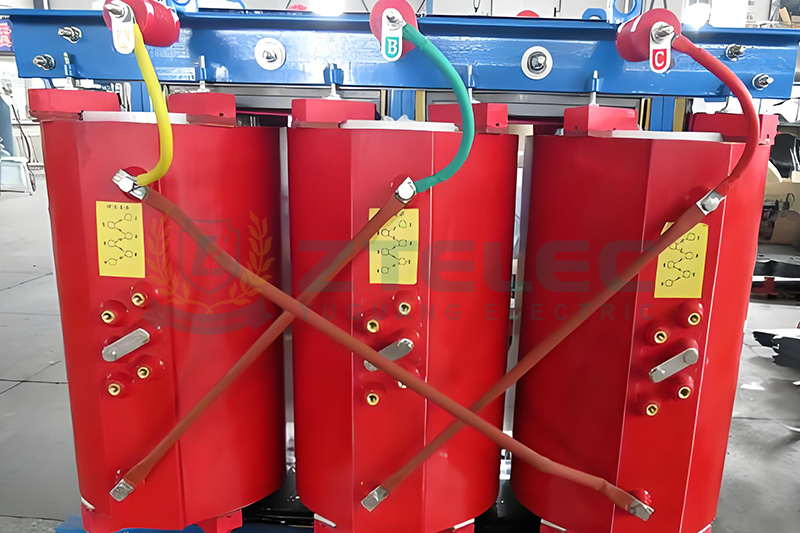
Technical Features and Industrial Advantages of Cast Resin Transformers
Cast resin transformers utilize vacuum casting technology, completely encapsulating the high-voltage windings within epoxy resin insulation. This design creates a robust and reliable insulation system with enhanced mechanical strength, moisture resistance, and short-circuit withstand capability.
| Performance Parameter | Cast Resin Transformer | Oil-Immersed Transformer |
|---|---|---|
| Insulation Medium | Epoxy Resin | Transformer Oil |
| Fire Safety | F1 Class Flame Retardant | Potential Fire Risk |
| Maintenance Requirements | Near-Zero Maintenance | Regular Oil Testing Required |
| Environmental Risk | No Leakage Risk | Potential Oil Leakage |
| Typical Installation Areas | Indoor, Basements, Occupied Areas | Outdoor or Dedicated Transformer Rooms |
| Design Life | 25–35 Years | 20–30 Years |
Thanks to their oil-free design and excellent fire-retardant properties, cast resin transformers have become the preferred power distribution solution for hospitals, airports, metro stations, commercial complexes, and industrial facilities.
Eight Critical Technical Parameters Before Procurement
Technical specifications are the foundation of any industrial transformer procurement process. The following eight parameters directly determine whether the transformer can meet operational requirements.
| Parameter | Typical Range | Procurement Focus |
|---|---|---|
| Rated Capacity | 100kVA–20,000kVA | Recommended sizing at 125%–135% of maximum demand |
| Primary Voltage | 6kV, 10kV, 20kV, 35kV | Must match local utility supply voltage |
| Secondary Voltage | 400V, 690V, 3.3kV | Selected according to load requirements |
| Impedance Voltage | 4%–8% | Affects short-circuit current and parallel operation |
| No-Load Loss | A0–C0 Class | Prefer low-loss core designs |
| Temperature Rise Class | Class B / F / H | F-Class Rise with H-Class Insulation Recommended |
| Protection Rating | IP00–IP55 | Selected according to environmental conditions |
| Noise Level | 45–75dB(A) | Below 55dB(A) Recommended for Data Centers |
Procurement documents should require suppliers to provide third-party type test reports, including temperature-rise tests, partial discharge tests, short-circuit withstand tests, and noise measurement reports.
Selection Strategies for Different Industrial Applications
Metallurgical and Heavy Industries
Steel mills, electric arc furnaces, and rolling mills are characterized by frequent load fluctuations and high short-circuit currents. Transformers should feature reinforced winding structures, enhanced mechanical strength, forced-air cooling systems, and enclosure protection ratings of IP44 or higher.
Chemical and Petrochemical Industries
Chemical plants often operate in corrosive and humid environments. E2 and C2 environmental classification transformers with corrosion-resistant enclosures and protective coatings are recommended for long-term reliability.
Data Centers and Semiconductor Facilities
UPS systems, rectifiers, and server loads generate significant harmonic currents. K-factor transformers and electrostatic shields should be specified to improve power quality and operational reliability. Low-noise designs and high MTBF ratings are also critical.
Mining and Port Projects
Mining projects frequently involve high-altitude installations, while port facilities face severe salt spray corrosion. Procurement specifications should address altitude correction factors, anti-corrosion protection, and minimum operating temperature requirements.
Special Requirements in Harmonic Environments: K-Factor and Shielded Windings
Modern industrial systems increasingly rely on variable frequency drives, UPS systems, arc furnaces, rectifiers, and automation equipment, resulting in elevated harmonic levels throughout the electrical network. Standard transformers operating under high harmonic conditions may experience excessive heating and accelerated insulation aging.
| K-Factor Rating | Load Type | Typical Applications |
|---|---|---|
| K1 | Linear Loads | General Lighting and Heating Equipment |
| K4 | Light Harmonic Loads | Office Buildings and Small UPS Systems |
| K13 | Moderate Harmonic Loads | Data Centers and Variable Speed Drive Systems |
| K20+ | Heavy Harmonic Loads | Arc Furnaces, Rectifiers, and Metallurgical Industries |
When nonlinear loads exceed 25% of the total system load, the required K-factor should be clearly specified to the manufacturer. Electrostatic shields are also recommended to reduce common-mode interference and improve power quality.
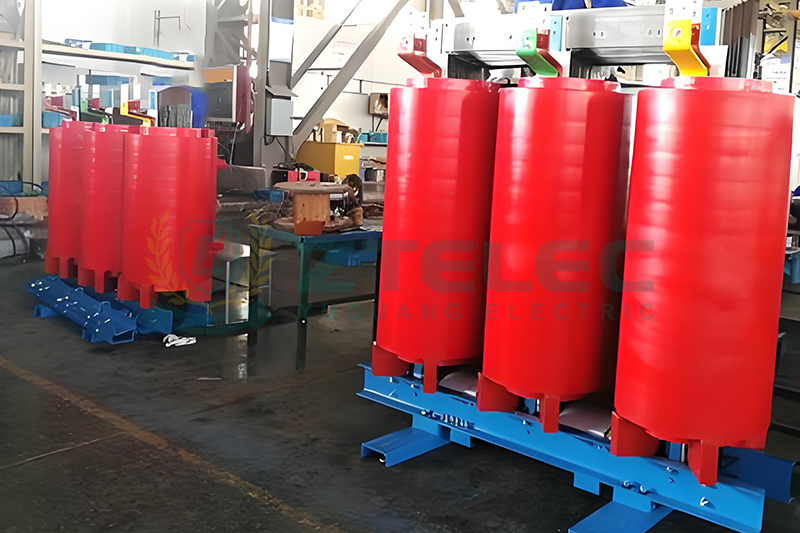
International Certification Systems and Compliance Requirements
For export projects and international EPC contracts, certifications are often mandatory qualification requirements for suppliers.
IEC 60076-11 is the most important international standard for dry-type transformers, defining design, manufacturing, and testing requirements.
Common certifications include IEC 60076-11, GB/T 10228, EN 60076-11, CE Marking, UL 1562, CSA Certification, and CESI/KEMA third-party type test reports.
Procurement specifications should require suppliers to provide complete type test reports issued within the past five years, covering temperature-rise testing, partial discharge testing, short-circuit withstand testing, and fire classification testing.
How to Evaluate Cast Resin Transformer Suppliers
Industrial procurement should focus not only on product pricing but also on the overall capability of the supplier.
Key evaluation criteria include manufacturing capacity, annual production output, maximum transformer rating, and factory certifications.
Third-party type test reports and international certifications should be carefully verified to ensure technical compliance.
Delivery schedules, engineering support capabilities, local service networks, and spare parts availability should also be assessed.
Suppliers with proven experience in data centers, chemical plants, metallurgical facilities, and mining projects generally present lower procurement risks.
Lifecycle Cost (LCC) Analysis
For industrial projects, the initial purchase price typically represents only 25%–35% of total ownership costs, while energy losses account for the largest share over the transformer's operational life.
| Cost Category | Estimated Share | Optimization Strategy |
|---|---|---|
| Initial Procurement Cost | 25%–35% | Evaluate Technical Performance and Service Capabilities |
| No-Load Losses | 30%–40% | Select Low-Loss Core Designs |
| Load Losses | 20%–30% | Maintain Optimal Loading Levels |
| Maintenance Costs | 5%–10% | Periodic Cleaning and Inspection |
| End-of-Life Disposal | 3%–5% | Environmentally Responsible Recycling |
For example, a 1000kVA cast resin transformer with a 1kW reduction in no-load loss can save more than RMB 175,000 in electricity costs over 25 years, assuming 8,760 operating hours annually and an electricity rate of RMB 0.8/kWh. Therefore, low-loss designs often provide a significantly higher return on investment.
Standardized Procurement Process
A comprehensive procurement process should include load analysis, harmonic assessment, technical specification development, supplier prequalification, technical clarification, factory acceptance testing (FAT), installation, commissioning, and final handover.
A standardized procurement framework helps minimize technical risks, quality issues, and project delays.
Frequently Asked Questions (FAQ)
What is the difference between a cast resin transformer and an epoxy resin transformer?
There is essentially no difference. Both terms refer to dry-type transformers manufactured using epoxy resin vacuum casting technology and are commonly known as Cast Resin Transformers (CRT).
Should industrial projects use one large transformer or multiple transformers operating in parallel?
Continuous-process industries typically benefit from N+1 redundancy configurations, which improve reliability and reduce downtime risks.
What special considerations apply to high-altitude installations?
For elevations above 1,000 meters, derating factors should be applied, and higher insulation classes and enhanced cooling designs may be required.
What tests are typically included in Factory Acceptance Testing (FAT)?
Standard FAT procedures include ratio testing, winding resistance measurement, no-load loss testing, load loss testing, dielectric withstand testing, and partial discharge testing.
Procuring cast resin distribution transformers is a comprehensive process involving technical evaluation, regulatory compliance, cost optimization, and supply chain management. Accurate load analysis, proper harmonic assessment, complete certification documentation, and reliable supplier capabilities are essential for project success.
By implementing standardized procurement procedures and lifecycle cost evaluation methodologies, organizations can improve system reliability, reduce long-term operating costs, and achieve safe, efficient, and sustainable power distribution performance.
Cast resin transformer
epoxy resin dry type transformer
cast resin distribution transformer
air cooled dry type transformer
AF dry type transformer
- more+releated article
- 2026-06-05Cast Resin Distribution Transformers: A Compre
- 2026-06-04Air-Cooled Dry Type Transformer Manufacturer |
- 2026-06-02RMU vs Medium Voltage Switchgear: Which Soluti
- 2026-06-01Dry Type Transformer Price Guide 2026: Cost by
- 2026-05-29Transformer Oil Testing Guide: DGA, Moisture C
- 2026-05-28Cast Resin vs VPI Dry-Type Transformers: Diffe
- 2026-05-27Transformer Conservator Bladder Replacement Gu
- 2026-05-26110kV Power Transformer: Oil-Immersed vs Dry-T
- 2026-05-251000 kVA Dry-Type Transformer — Resin Cast,
- 2026-05-23China vs Europe Oil-Immersed Transformer Manuf
- ELECTRICAL INSULATION BOARD MATERIALS
- ELECTRICAL INSULATION MATERIALS
- POWER TRANSFORMER
- ENAMELED WIRE
- SWITCHGEAR
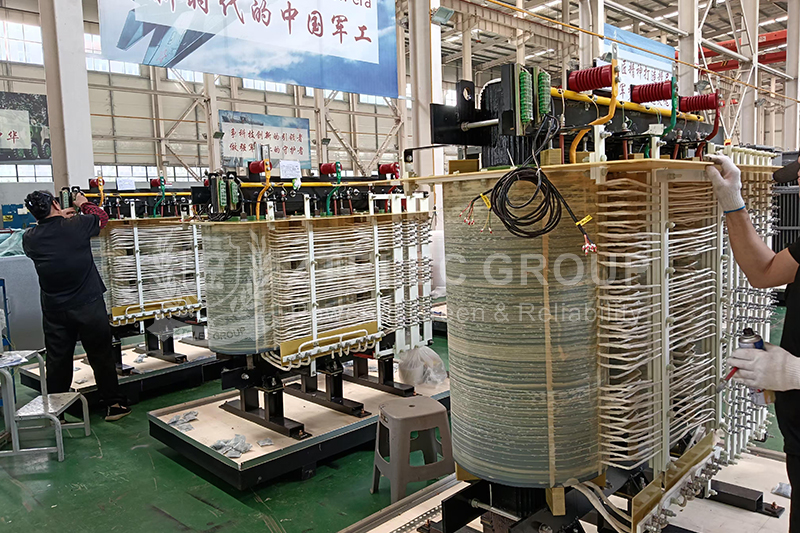


Cast resin transformer
cast resin distribution transformer
epoxy resin dry type transformer
air cooled dry type transformer
AF dry type transformer
AN AF transformer
Ring Main Unit
RMU
distribution switch cabinet
Medium Voltage Switchgear
medium voltage switch equipment
dry type transformer cost
dry transformer price guide 2026
dry type transformer price
cast resin transformer price
dielectric strength test
DGA testing
transformer oil moisture content
transformer oil testing
breakdown voltage test
VPI transformer
epoxy resin transformer
Vacuum Pressure Impregnation Transformer
moisture resistant transformer
dry-type transformer