
Prefabricated Substations: Complete 2026 Buying Guide to Types, Specifications, and Pricing
As global power infrastructure upgrades accelerate, renewable energy projects expand, and industrial automation continues to advance, prefabricated substations have become a critical solution for modern power distribution systems. Compared with traditional civil-engineered substations, prefabricated substations offer shorter construction periods, lower investment costs, reduced footprint requirements, and simplified installation. As a result, they are widely used in industrial parks, commercial complexes, data centers, mining operations, utility distribution networks, solar power plants, wind farms, and infrastructure projects.
This comprehensive guide explores substation types, technical specifications, capacity ranges, pricing trends, international standards, and procurement strategies to help EPC contractors, project owners, consulting engineers, and procurement teams make informed decisions.
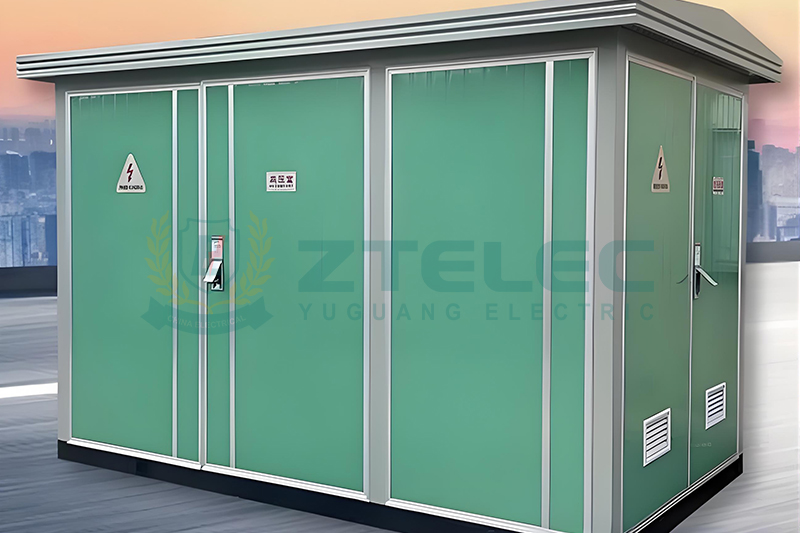
What Is a Prefabricated Substation?
A prefabricated substation, also known as a compact substation, packaged substation, or box-type substation, is an integrated power distribution solution that combines high-voltage switchgear, a distribution transformer, low-voltage switchboards, protection and control systems, and auxiliary equipment within a single enclosure.
The equipment is fully designed, manufactured, assembled, and tested in the factory. Once delivered to the project site, only foundation work and cable connections are required before commissioning, significantly reducing installation time and labor costs.
Construction schedules shortened by 60%–75%
Installation footprint reduced by 40%–60%
Total project costs lowered by 25%–35%
Modular design allows easy transportation and future expansion
Factory assembly ensures consistent quality and reliability
Suitable for IEC, ANSI, GB, and other international standards
Main Applications of Prefabricated Substations
Industrial manufacturing plants and industrial parks
Commercial complexes and large building projects
Data centers and telecommunications infrastructure
Urban power distribution network upgrades
Solar power plants and wind farm grid-connection systems
Mining, oil & gas, and energy development projects
Airports, ports, railways, and metro systems
Emergency and temporary power supply installations
Comparison of the Four Main Types of Prefabricated Substations
1. European-Type Compact Substation
The European-style compact substation features separate compartments for the high-voltage switchgear, transformer, and low-voltage switchboard. Its organized layout allows convenient operation and maintenance, making it one of the most widely adopted designs worldwide.
It is commonly used in utility distribution networks, commercial buildings, industrial parks, and residential developments.
| Feature | Description |
|---|---|
| Structure | HV Compartment + Transformer Compartment + LV Compartment |
| Transformer Type | Dry-Type or Oil-Immersed |
| Capacity Range | 100kVA–2500kVA |
| Typical Voltages | 10kV, 11kV, 20kV, 35kV |
| Applicable Markets | Global |
2. American-Type Substation
The American-style substation adopts a highly integrated structure where the transformer, high-voltage protection, and low-voltage distribution components are combined within a compact oil-filled enclosure, minimizing space requirements.
It is widely used in North America, the Middle East, and Latin America.
3. Solar and Wind Power Step-Up Substations
Renewable energy substations are specifically designed for solar farms and wind power projects. They increase inverter output voltage to 35kV or higher before grid connection.
These substations often integrate inverter interfaces, SVG reactive power compensation systems, protection relays, remote monitoring systems, and communication equipment.
4. Containerized Substations
Containerized substations utilize standard ISO shipping container structures, making them ideal for long-distance transportation and rapid deployment.
They are widely used in mining operations, oil fields, offshore platforms, and temporary power supply projects where mobility and flexibility are essential.
Key Technical Specifications and Selection Parameters
Before purchasing a prefabricated substation, it is essential to determine the appropriate technical parameters based on load requirements, utility conditions, and environmental factors.
| Parameter | Typical Range | Description |
|---|---|---|
| Rated Voltage | 6kV, 10kV, 11kV, 20kV, 35kV, 66kV, 110kV | Must match local grid requirements |
| Transformer Capacity | 100kVA–63000kVA | Recommended to reserve 15%–20% future expansion capacity |
| HV Switchgear | RMU, VCB, GIS | Selected according to network configuration |
| LV System | MNS, GCS, GCK, MCC | Designed according to load characteristics |
| Protection Degree | IP34D–IP65 | IP54 or higher recommended for coastal environments |
| Cooling Method | AN, ONAN, ONAF | Depends on transformer type |
| Insulation Class | Class F, Class H | Class H recommended for high-temperature environments |
| Altitude Capability | ≤1000m Standard Design | Special design required for higher elevations |
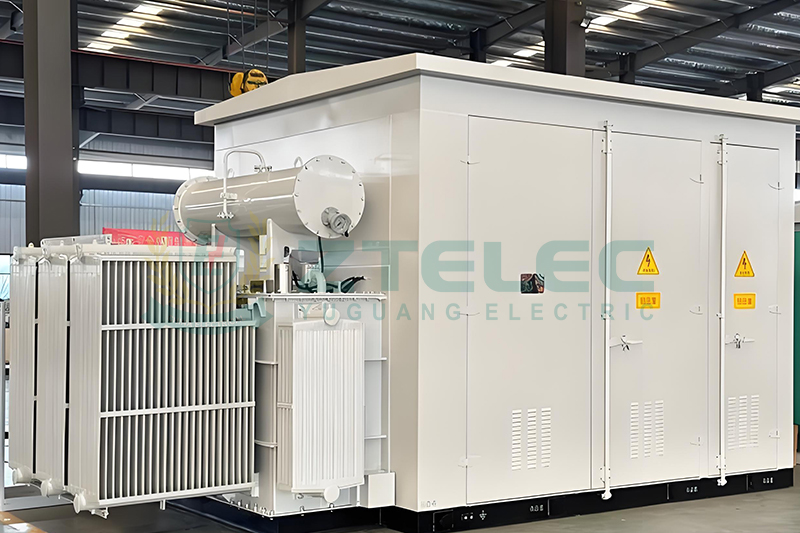
Dry-Type vs. Oil-Immersed Transformers: Which Should You Choose?
Dry-Type Transformer Solution
Cast resin dry-type transformers offer excellent fire resistance, moisture resistance, and maintenance-free operation, making them suitable for hospitals, data centers, metro systems, commercial buildings, and densely populated areas.
Although the initial purchase cost is higher, their lower maintenance requirements can reduce lifecycle costs.
Oil-Immersed Transformer Solution
Oil-filled transformers provide superior cooling performance, lower losses, and lower initial investment costs. They are commonly used in industrial facilities, renewable energy projects, and outdoor distribution applications.
However, they require oil containment systems, fire protection measures, and periodic oil testing.
2026 Prefabricated Substation Price Reference
The following pricing is based on FOB export quotations from leading Chinese manufacturers and is intended for budgeting purposes only.
| Substation Type | Capacity | Reference Price (USD) | Typical Application |
|---|---|---|---|
| European-Type (Dry-Type) | 315kVA | 8,500-12,000 | Commercial Buildings |
| European-Type (Oil-Immersed) | 630kVA | 11,000-16,000 | Industrial Parks |
| European-Type (Oil-Immersed) | 1250kVA | 18,000-26,000 | Industrial Facilities & Data Centers |
| American-Type | 500kVA | 9,500-14,500 | North American Export Projects |
| Solar Step-Up Substation | 1600kVA | 28,000-42,000 | Renewable Energy Projects |
| Solar Step-Up Substation | 3150kVA | 48,000-68,000 | Large Solar Power Plants |
| Containerized Substation | 5MVA | 85,000-130,000 | Mining & Oilfield Projects |
Key Factors Affecting Pricing
Transformer capacity and voltage level
Dry-type versus oil-immersed configuration
Certification requirements such as IEC, CE, UL, and ANSI
Integration of smart monitoring and SCADA systems
Corrosion protection and environmental adaptation requirements
Transportation distance and packaging methods
Order quantity and long-term supply agreements
Nine Essential Procurement Considerations
Confirm applicable project standards and technical specifications.
Provide accurate load calculations.
Consider future expansion requirements.
Verify installation site altitude and environmental conditions.
Define incoming and outgoing cable arrangements.
Request type test reports.
Arrange Factory Acceptance Testing (FAT).
Confirm after-sales service and spare parts availability.
Select manufacturers with proven international project experience.
Industry Trends in 2026
As the global energy transition accelerates, environmentally friendly substations are becoming the industry standard. SF₆-insulated switchgear is gradually being replaced by solid-insulated switchgear (SIS) and clean-air insulation technologies.
At the same time, digital substations, intelligent monitoring systems, remote operation platforms, and predictive maintenance technologies are rapidly gaining adoption, helping operators reduce maintenance costs while improving power system reliability.
Over the next five years, growth in renewable energy projects, data center construction, and utility grid modernization is expected to drive strong demand for prefabricated substations worldwide.
With their modular design, rapid deployment capability, high reliability, and lower lifecycle costs, prefabricated substations have become a preferred solution for modern power distribution infrastructure. Whether for industrial facilities, commercial buildings, renewable energy plants, or international EPC projects, selecting the right substation type, transformer technology, voltage level, and certification package is critical to achieving optimal long-term performance and return on investment.
For projects planned in 2026 and beyond, buyers should prioritize manufacturers that provide IEC-compliant designs, comprehensive type test reports, extensive international project experience, and strong after-sales support to ensure successful installation and reliable operation throughout the equipment lifecycle.
Request a Prefabricated Substation Solution and Quotation
If you are planning a 10kV, 11kV, 20kV, 35kV, or 110kV power distribution project, provide your load requirements, voltage level, installation environment, and technical specifications to receive a customized design proposal, single-line diagram, technical datasheet, and the latest export quotation.
box type substation
compact substation
prefabricated substation
packaged substation
prefabricated transformer substation
- more+releated article
- 2026-06-06Prefabricated Substations: Complete 2026 Buyin
- 2026-06-05Cast Resin Distribution Transformers: A Compre
- 2026-06-04Air-Cooled Dry Type Transformer Manufacturer |
- 2026-06-02RMU vs Medium Voltage Switchgear: Which Soluti
- 2026-06-01Dry Type Transformer Price Guide 2026: Cost by
- 2026-05-29Transformer Oil Testing Guide: DGA, Moisture C
- 2026-05-28Cast Resin vs VPI Dry-Type Transformers: Diffe
- 2026-05-27Transformer Conservator Bladder Replacement Gu
- 2026-05-26110kV Power Transformer: Oil-Immersed vs Dry-T
- 2026-05-251000 kVA Dry-Type Transformer — Resin Cast,
- ELECTRICAL INSULATION BOARD MATERIALS
- ELECTRICAL INSULATION MATERIALS
- POWER TRANSFORMER
- ENAMELED WIRE
- SWITCHGEAR



prefabricated substation
prefabricated transformer substation
packaged substation
compact substation
box type substation
epoxy resin dry type transformer
cast resin distribution transformer
Cast resin transformer
AN AF transformer
AF dry type transformer
air cooled dry type transformer
Medium Voltage Switchgear
Ring Main Unit
medium voltage switch equipment
RMU
distribution switch cabinet
cast resin transformer price
dry type transformer cost
dry transformer price guide 2026
dry type transformer price
breakdown voltage test
transformer oil moisture content
DGA testing
dielectric strength test
transformer oil testing