
11kV Substation: Technical Specifications, Applications, Equipment Selection and Compact Design Solutions
The 11kV substation is one of the most widely deployed medium-voltage power distribution systems worldwide. It serves as the critical link between high-voltage transmission networks such as 33kV or 110kV and low-voltage end users operating at 400V or 415V. Due to its mature equipment ecosystem, cost-effective insulation requirements, operational flexibility, and broad international acceptance, the 11kV voltage level remains the preferred choice for industrial facilities, commercial complexes, renewable energy projects, utility distribution networks, and data centers.
This guide provides a comprehensive overview of 11kV substation technology, including technical specifications, equipment configuration, compact substation design, GIS solutions, international standards, and procurement considerations for EPC contractors, consultants, and utility engineers.
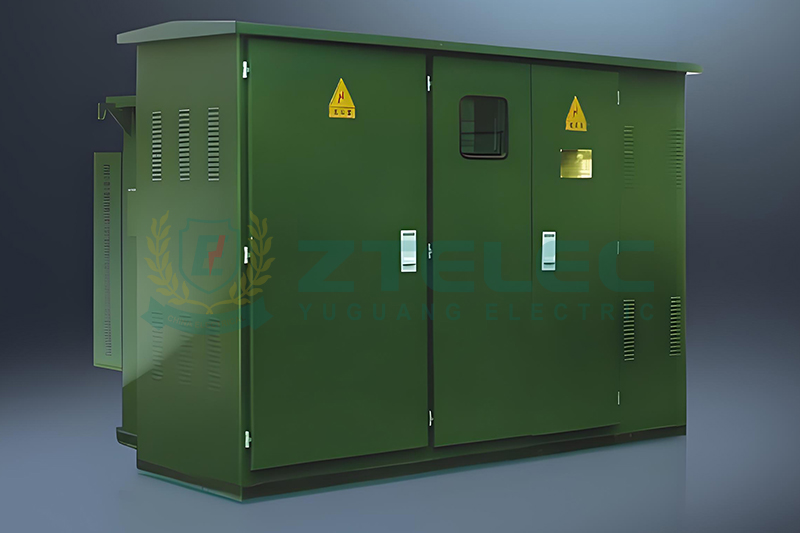
Technical Specifications of an 11kV Substation
A properly designed 11kV substation must comply with international standards such as IEC 60038, IEC 62271, IEC 60076, and local utility regulations. Typical technical parameters include:
| Parameter | Typical Value | Applicable Standard |
|---|---|---|
| Rated Voltage | 11kV (Um = 12kV) | IEC 60038 |
| Power Frequency Withstand Voltage | 28kV / 1 min | IEC 62271-1 |
| Lightning Impulse Withstand Voltage (BIL) | 75kV | IEC 62271-1 |
| Rated Frequency | 50Hz / 60Hz | IEC 60038 |
| Short Circuit Withstand Current | 16kA, 25kA, 31.5kA | IEC 62271-200 |
| Transformer Capacity | 50kVA – 2500kVA | IEC 60076 |
| Low Voltage Output | 400V / 415V / 380V | IEC 60038 |
| Protection Degree | IP33D, IP44, IP54 | IEC 60529 |
When exporting substations to Southeast Asia, the Middle East, Africa, or Latin America, engineers should verify utility-specific requirements regarding insulation levels, short-circuit duration, earthing systems, and protection philosophies before finalizing equipment specifications.
Where Are 11kV Substations Used?
Industrial Manufacturing Facilities
Industrial plants with high energy demand, including steel mills, chemical factories, automotive manufacturing plants, and cement production facilities, commonly use 11kV distribution systems to minimize power losses and improve network reliability.
Commercial Buildings and Data Centers
Large commercial complexes, airports, hospitals, and hyperscale data centers frequently adopt 11kV substations with dual incoming feeders, ring-main configurations, and N+1 redundancy strategies to ensure uninterrupted power supply.
Renewable Energy Projects
Solar farms, battery energy storage systems (BESS), and wind power projects often collect generated power at 11kV before stepping up voltage to 33kV, 66kV, or 110kV for grid interconnection.
Urban Power Distribution Networks
Municipal distribution systems extensively deploy 11kV ring main units (RMUs) and compact substations to supply residential communities, commercial districts, EV charging infrastructure, and public facilities.
Transportation Infrastructure
Rail transit systems, metro stations, airports, water treatment facilities, pumping stations, and municipal utility projects rely on dedicated 11kV substations for stable and secure power delivery.
Mining, Oil and Gas Operations
Remote mining sites and oilfield developments often use 11kV distribution systems integrated with explosion-proof equipment compliant with IEC 60079 standards for hazardous environments.
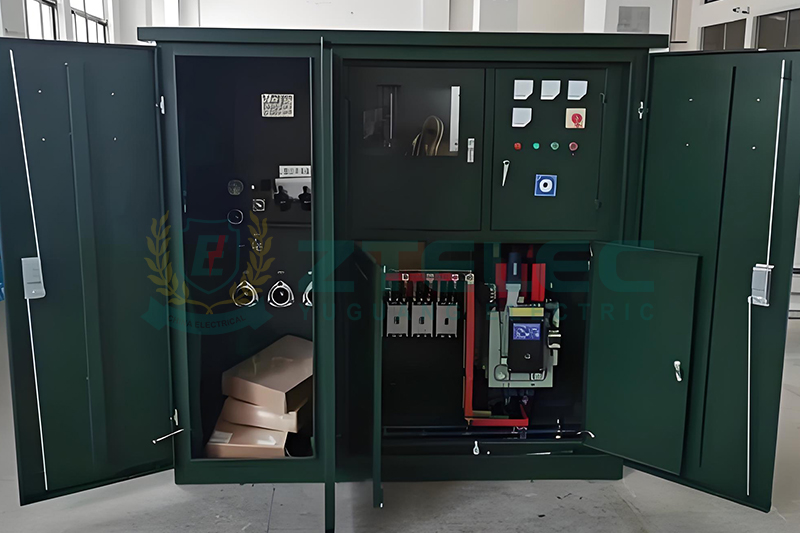
Main Equipment in an 11kV Substation
11kV Medium Voltage Switchgear
Medium-voltage switchgear forms the operational and protection core of the substation. Common configurations include Air-Insulated Switchgear (AIS), Gas-Insulated Switchgear (GIS), and Compact Gas-Insulated Switchgear (C-GIS).
Popular switchgear models such as KYN28A-12 metal-clad switchgear and XGN15-12 ring main units comply with IEC 62271-200 requirements and provide reliable protection, isolation, and operational flexibility.
For coastal regions, high-humidity environments, or locations with severe pollution levels, gas-insulated switchgear offers enhanced reliability and reduced maintenance requirements.
Power Transformers
The transformer is the primary voltage conversion device within an 11kV substation. Typical options include:
Oil-Immersed Transformers are suitable for outdoor installations and compact substations. Capacities generally range from 50kVA to 2500kVA, with ONAN and ONAF cooling methods commonly applied.
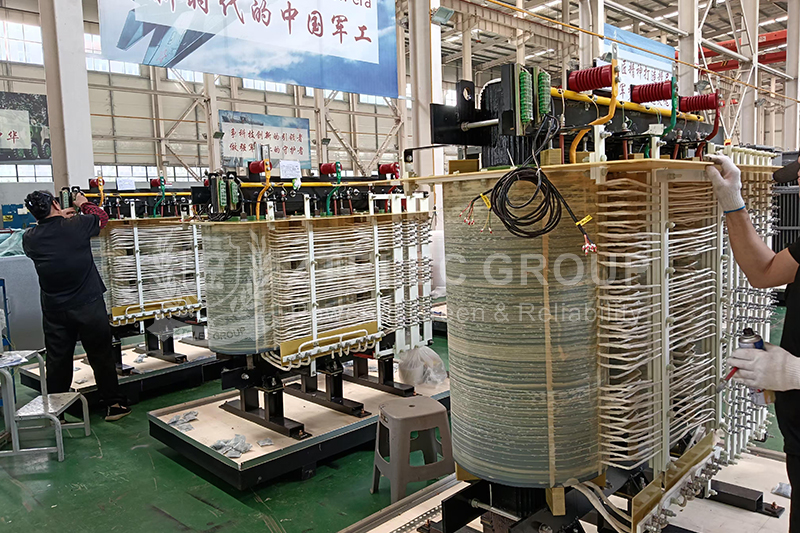
Cast Resin Dry-Type Transformers are ideal for indoor applications such as commercial buildings, hospitals, tunnels, and data centers where fire safety is critical.
Amorphous Alloy Transformers provide significantly lower no-load losses and are increasingly adopted in utility networks focused on energy efficiency and carbon reduction objectives.
Protection, Control and Automation
Modern substations utilize intelligent electronic devices (IEDs) and digital protection relays supporting IEC 61850 communication protocols. Typical protection functions include overcurrent protection, earth fault protection, transformer differential protection, auto-transfer schemes, and remote SCADA integration.
Compact and Prefabricated 11kV Substation Solutions
With increasing urbanization and land constraints, prefabricated substations have become one of the most popular deployment methods for modern 11kV distribution systems.
Benefits of Compact Substations
Compact substations significantly reduce installation space requirements. A standard 11kV/400V package substation typically occupies only 6–20 square meters, reducing land use by more than 70% compared with conventional civil-construction substations.
Factory-assembled designs integrate the medium-voltage compartment, transformer compartment, and low-voltage distribution compartment into a single enclosure, allowing rapid installation and commissioning on site.
Modular architecture also enables future expansion and simplified maintenance throughout the equipment lifecycle.
European Compact Substation vs American Pad-Mounted Transformer
| Comparison Item | European Compact Substation | American Pad-Mounted Transformer |
|---|---|---|
| Configuration | Separate MV, Transformer and LV Compartments | Integrated Design |
| Switchgear | RMU or VCB Switchgear | Integrated Load Break Switch |
| Maintenance Safety | High | Moderate |
| Capacity Range | 50kVA – 2500kVA | Typically Below 630kVA |
| Main Applications | Industrial and Utility Projects | Residential Distribution |
| Standards | IEC 62271-202 | ANSI C57.12.25 |
11kV GIS Substation Solutions
Gas-insulated substations are increasingly used in underground substations, metropolitan centers, high-altitude regions, coastal environments, and locations with severe contamination levels.
Compared with conventional AIS systems, GIS technology can reduce equipment footprint by up to 80%, making it particularly attractive where land costs are high.
Environmental regulations are driving the transition from traditional SF₆ insulation toward eco-friendly alternatives such as dry air, nitrogen mixtures, and g³ gas technologies.
Key Procurement Considerations for International Projects
Procurement teams should verify that suppliers can provide independent type test reports issued by recognized laboratories such as KEMA, CESI, ASTA, or CPRI.
Transformer efficiency requirements should comply with applicable regulations including EU Ecodesign standards and local energy efficiency requirements.
For coastal and tropical regions, enclosure corrosion protection systems should include hot-dip galvanizing or epoxy coating systems with adequate thickness to ensure long-term durability.
Communication compatibility should be evaluated during project design to ensure seamless integration with SCADA, EMS, and utility automation systems.
Lifecycle cost analysis should consider energy losses, maintenance requirements, spare parts availability, service response times, and expected equipment lifespan rather than focusing solely on initial purchase price.
Frequently Asked Questions
What is the difference between a 10kV and an 11kV substation?
Both systems use equipment with the same maximum system voltage of 12kV. The primary difference lies in regional grid standards. 11kV is common in IEC-based international markets, while 10kV is widely used within China's utility network.
How long does it take to manufacture a prefabricated 11kV substation?
Standard compact substations ranging from 630kVA to 1600kVA typically require 4–8 weeks for production. Customized configurations may extend lead times to 12–16 weeks depending on specifications and certification requirements.
Is SF₆ switchgear still a good choice?
SF₆ technology remains highly reliable and widely deployed. However, due to evolving environmental regulations, project owners planning long-term infrastructure investments should evaluate alternative low-GWP insulation technologies.
How should transformer capacity be selected?
A common engineering practice is to size the transformer at approximately 70–80% of the projected maximum load while maintaining 20–30% reserve capacity for future expansion. Harmonic content, ambient temperature, power factor, and load growth projections should also be considered during sizing calculations.
The 11kV substation remains one of the most versatile and cost-effective solutions for medium-voltage power distribution worldwide. Whether deployed in industrial facilities, renewable energy plants, commercial developments, utility networks, or data centers, modern 11kV substations offer high reliability, flexible configurations, and excellent scalability.
By selecting equipment compliant with IEC standards, evaluating lifecycle costs, and partnering with experienced manufacturers capable of providing certified testing and global technical support, project owners can maximize operational reliability while achieving long-term return on investment.
11kV switchgear
compact substation
prefabricated substation
11kV transformer
11kV substation
- more+releated article
- 2026-06-0911kV Substation: Technical Specifications, App
- 2026-06-08500kVA Oil Immersed Transformer Price Guide 20
- 2026-06-06Prefabricated Substations: Complete 2026 Buyin
- 2026-06-05Cast Resin Distribution Transformers: A Compre
- 2026-06-04Air-Cooled Dry Type Transformer Manufacturer |
- 2026-06-02RMU vs Medium Voltage Switchgear: Which Soluti
- 2026-06-01Dry Type Transformer Price Guide 2026: Cost by
- 2026-05-29Transformer Oil Testing Guide: DGA, Moisture C
- 2026-05-28Cast Resin vs VPI Dry-Type Transformers: Diffe
- 2026-05-27Transformer Conservator Bladder Replacement Gu
- ELECTRICAL INSULATION BOARD MATERIALS
- ELECTRICAL INSULATION MATERIALS
- POWER TRANSFORMER
- ENAMELED WIRE
- SWITCHGEAR

11kV switchgear
11kV transformer
11kV substation
prefabricated substation
compact substation
500kVA transformer cost
500kVA oil immersed transformer price
oil filled transformer 500kVA
500kVA distribution transformer
box type substation
prefabricated transformer substation
packaged substation
epoxy resin dry type transformer
Cast resin transformer
cast resin distribution transformer
AF dry type transformer
AN AF transformer
air cooled dry type transformer
medium voltage switch equipment
Ring Main Unit
Medium Voltage Switchgear
RMU
distribution switch cabinet
dry transformer price guide 2026
cast resin transformer price