
China Dry Type Transformer Export Standards: GB, IEC & Global Certification Guide
China has become one of the world's largest manufacturers and exporters of dry type transformers, supplying reliable power distribution equipment to infrastructure, industrial, commercial, and renewable energy projects worldwide. Thanks to their fire safety, low maintenance requirements, excellent moisture resistance, and environmentally friendly design, dry type transformers are widely used in data centers, hospitals, airports, metro systems, commercial buildings, mining operations, and solar or wind power plants.
However, successful international procurement involves much more than selecting the correct transformer capacity. Buyers must understand the technical standards, mandatory certifications, and energy efficiency regulations that govern products entering different markets. Likewise, Chinese manufacturers must ensure compliance throughout product design, testing, and production to avoid customs delays and certification issues.
This guide explains China's dry type transformer standards, their relationship with international IEC standards, and the certification requirements for exporting to major global markets.
China's National Standards for Dry Type Transformers
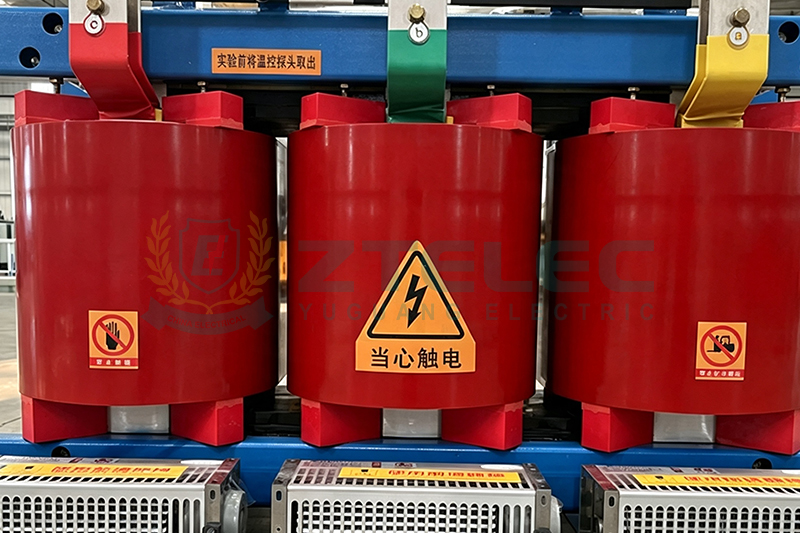
The foundation of China's dry type transformer manufacturing is built upon two major national standards: GB/T 1094.11 and GB/T 10228. Together they establish comprehensive technical requirements covering transformer design, electrical performance, safety, testing, transportation, and long-term reliability.
GB/T 1094.11 – Power Transformers Part 11: Dry-Type Transformers
GB/T 1094.11 is China's primary technical standard for dry type transformers and is based on a modified adoption of the internationally recognized IEC 60076-11 standard. It specifies requirements for insulation systems, dielectric performance, temperature rise limits, routine testing, type testing, induced voltage tests, lightning impulse withstand capability, and operational safety.
Because this standard closely follows IEC specifications, dry type transformers manufactured according to GB/T 1094.11 generally require minimal technical modification when exported to international markets that reference IEC standards.
GB/T 10228 – Technical Requirements for Dry-Type Power Transformers
GB/T 10228 supplements GB/T 1094.11 by introducing additional technical requirements specific to China's power grid and manufacturing practices. It defines performance parameters, structural requirements, cooling methods, installation considerations, inspection procedures, product marking, packaging, transportation, and storage requirements.
The standard also establishes quality benchmarks that help ensure consistent manufacturing performance across Chinese transformer factories.
GB 20052 – Transformer Energy Efficiency Standard
Energy efficiency has become increasingly important in both domestic and export markets. China's mandatory standard GB 20052 establishes minimum allowable energy efficiency values and efficiency grades for power transformers.
Recent revisions have introduced stricter limits on no-load losses, load losses, and no-load current to support national energy-saving objectives. Manufacturers that fail to comply with these requirements may be prohibited from selling products in China, while overseas buyers increasingly request compliance documentation during procurement.
IEC 60076-11: The International Reference Standard
IEC 60076-11 is the globally accepted technical standard for dry type power transformers with rated voltages up to 72.5 kV and at least one winding operating above 1.1 kV.
The standard defines comprehensive technical requirements covering:
Temperature rise limits, insulation classes, dielectric strength, partial discharge performance, short-circuit withstand capability, cooling methods, sound levels, environmental classifications, climatic classifications, fire behavior, and testing procedures.
Because IEC 60076-11 serves as the foundation for many national standards worldwide, it has become the preferred technical specification for international engineering companies, EPC contractors, utilities, and industrial project owners.
The close alignment between GB/T 1094.11 and IEC 60076-11 provides Chinese manufacturers with a significant competitive advantage, allowing products to satisfy international technical expectations while minimizing redesign costs.
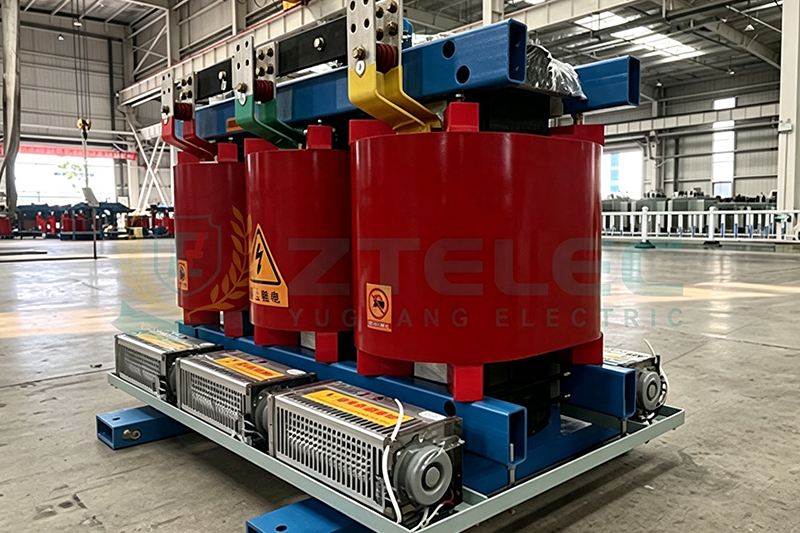
Export Certification Requirements for Major International Markets
European Union
Dry type transformers exported to Europe must comply with applicable EU regulations before entering the market. Depending on product specifications and applications, manufacturers typically need to demonstrate compliance with the Low Voltage Directive (LVD) and Electromagnetic Compatibility (EMC) Directive to obtain CE marking.
Testing is generally performed according to the EN 60076 series, which is the European adoption of IEC 60076 standards. Buyers may also request Ecodesign compliance documentation to verify transformer energy efficiency.
United States
The U.S. market typically requires compliance with UL 1561, the principal safety standard covering dry-type general-purpose and power transformers. Products usually require certification from Underwriters Laboratories (UL) or another Nationally Recognized Testing Laboratory (NRTL).
Industrial customers may additionally request compliance with DOE energy efficiency regulations depending on transformer ratings and applications.
Middle East
Many Middle Eastern countries reference IEC standards while maintaining their own national conformity assessment systems. For example, Saudi Arabia commonly requires SASO certification, while other Gulf countries may request GCC conformity documentation or local testing approvals.
Manufacturers should verify destination-specific certification requirements before production begins to avoid customs delays.
Southeast Asia
Most Southeast Asian countries recognize IEC standards as the technical basis for dry type transformers. However, local certification schemes may still apply. Malaysia may require SIRIM approval, while other countries maintain their own electrical equipment registration systems.
Working closely with local importers and certification agencies can significantly reduce approval time.
Other International Markets
Countries in Africa, South America, and Oceania frequently adopt IEC standards but often impose additional documentation requirements, including factory inspection reports, type test certificates, certificates of origin, or local energy efficiency declarations.
Understanding country-specific import regulations early in the procurement process helps minimize project risks.
Growing Importance of Transformer Energy Efficiency
Worldwide demand for energy-efficient transformers continues to increase as governments strengthen carbon reduction policies and utilities seek to reduce operating costs.
Many countries now regulate maximum allowable transformer losses independently of general safety standards. Buyers increasingly evaluate suppliers based on lifecycle operating costs rather than only purchase price.
Manufacturers that invest in low-loss silicon steel cores, high-conductivity copper windings, optimized magnetic designs, and advanced vacuum pressure impregnation or cast resin technologies can better satisfy global energy efficiency requirements while improving long-term competitiveness.
Best Practices for Chinese Dry Type Transformer Exporters
Successful international manufacturers typically integrate export compliance into the entire product development process rather than treating certification as a final step.
Designing products simultaneously according to GB/T 1094.11, GB/T 10228, and IEC 60076-11 helps minimize engineering changes for different markets. Maintaining updated knowledge of destination-country certification regulations also shortens delivery schedules and reduces compliance risks.
Working with internationally accredited third-party laboratories to obtain complete type test reports, routine test reports, and quality certifications increases buyer confidence and improves bidding competitiveness in international EPC projects.
Manufacturers should also continuously monitor revisions to both Chinese and international energy efficiency regulations, ensuring new transformer designs remain compliant as standards evolve.
China's dry type transformer manufacturing standards have evolved to closely align with internationally recognized IEC requirements, making Chinese products increasingly competitive in global markets. Compliance with GB/T 1094.11, GB/T 10228, and GB 20052 provides a strong technical foundation, while obtaining destination-specific certifications such as CE, UL, SASO, or SIRIM ensures smoother customs clearance and market access.
For international buyers, selecting manufacturers with proven experience in global certification, comprehensive testing capabilities, and internationally recognized quality management systems helps reduce procurement risks and ensures reliable long-term transformer performance. As worldwide demand for energy-efficient, environmentally friendly electrical equipment continues to grow, manufacturers that prioritize technical compliance and international certification will be best positioned to expand their presence in global power infrastructure markets.
GB/T 1094.11
dry type transformer export
GB/T 10228
IEC 60076-11
China dry type transformer standards
- more+releated article
- 2026-07-21China Dry Type Transformer Export Standards: G
- 2026-07-201000 KVA Oil Filled Transformer for Industrial
- 2026-07-18Inverter Duty Solar Transformers – Key Specs
- 2026-07-18315 KVA Cast Resin Dry Type Transformer for Ho
- 2026-07-162000 kVA Oil-Immersed Transformer: A Reliable
- 2026-07-152026 Prefabricated Substation FAQ: 20 Essentia
- 2026-07-142026 Oil-Immersed Transformer Efficiency Stand
- 2026-07-13China Transformer After-Sales Support: A Compl
- 2026-07-1133kV Compact Substations for Industrial Parks:
- 2026-07-10China Oil-Immersed Transformer Manufacturers:
- ELECTRICAL INSULATION BOARD MATERIALS
- ELECTRICAL INSULATION MATERIALS
- POWER TRANSFORMER
- ENAMELED WIRE
- SWITCHGEAR

GB/T 1094.11
dry type transformer export
China dry type transformer standards
IEC 60076-11
GB/T 10228
1000 KVA oil filled transformer
1000 kVA oil immersed transformer
commercial power transformer
industrial transformer
Utility Scale Solar Transformer
Solar Power Transformer
inverter duty solar transformer
PV Inverter Duty Transformer
PV Step Up Transformer
school transformer
hospital transformer
315 kVA dry type transformer
315 kVA cast resin dry-type transformer
distribution transformer
2000 kVA oil immersed transformer
2000 kVA oil filled transformer
prefabricated transformer substation
box type substation
Prefabricated Substation FAQ
Compact Substation Guide