
What Is an Oil Immersed Transformer? Construction, Types and Working Principle
Oil immersed transformers are among the most widely used pieces of electrical equipment in power networks today. They appear in utility substations, industrial plants, and outdoor distribution systems around the world. In short, they keep electricity flowing safely from generation to end use.
This guide explains what an oil immersed transformer is, how it is built, and how it works. It also covers the main types available. By the end, you will understand why this technology remains a top choice for high-capacity power applications.
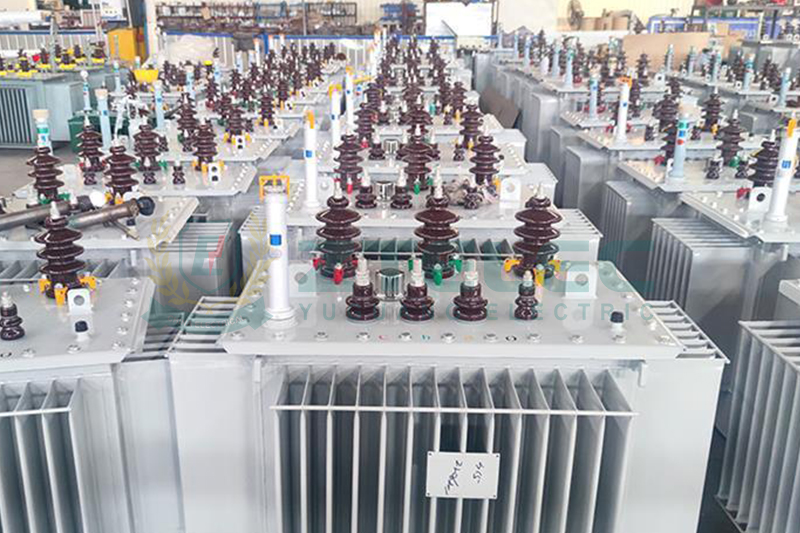
What Is an Oil Immersed Transformer?
An oil immersed transformer is also called an oil-filled transformer. Its core and windings sit fully submerged in insulating oil inside a sealed metal tank. This oil does two jobs at once. First, it insulates energized parts from each other. Second, it carries heat away from the core and windings.
Because one fluid handles both insulation and cooling, oil immersed transformers can be built more compactly than many air-cooled designs of the same power rating. They also perform well under heavy, sustained loads. This makes them the standard choice for high-capacity, outdoor, and utility-scale installations.
Core Components of an Oil Immersed Transformer
Every oil immersed transformer relies on several key parts working together. Understanding each part makes the working principle much easier to follow.
Core
The core is built from thin, laminated silicon steel sheets. These sheets are stacked and insulated from each other to reduce eddy current losses. The core gives magnetic flux a low-resistance path, which enables efficient energy transfer between windings.
Windings
Copper or aluminum conductors wrap around the core to form the primary and secondary windings. The ratio of turns between them sets the voltage transformation ratio. Paper or synthetic insulation covers each winding, and full oil immersion protects them from electrical breakdown and heat buildup.
Insulating Oil
Mineral oil or synthetic ester oil fills the tank around the core and windings. This oil provides dielectric insulation between live parts and the grounded tank. It also moves heat away from internal components through natural or forced convection.
Tank
The tank is a sealed steel enclosure that holds the core, windings, and oil. It resists internal pressure changes and keeps out environmental contamination. Many tanks include fins or external radiators to increase surface area for cooling.
Conservator Tank
Most units include a conservator tank mounted above the main tank. This smaller reservoir absorbs oil expansion and contraction as temperature changes. It keeps the oil level stable and reduces the risk of air or moisture entering the main tank.
Breather
A breather, often filled with silica gel, connects to the conservator tank. It filters moisture from incoming air as oil levels shift with temperature. This step protects the oil's insulating properties over time.
Bushings
Bushings are insulated terminals. They let electrical conductors pass safely through the grounded tank wall. This connects the internal windings to external circuits without current leaking into the tank body.
Cooling Radiators and Fans
Larger transformers use external radiators to increase heat-dissipating surface area. Some designs add cooling fans or oil pumps as well. These features let the transformer handle greater loads while staying within safe temperature limits.
Protective and Monitoring Devices
Common protective devices include Buchholz relays, which detect gas from internal faults. Temperature gauges, oil level indicators, and pressure relief valves round out the monitoring system, helping catch problems early.
Working Principle of an Oil Immersed Transformer
Oil immersed transformers work through electromagnetic induction, the same principle behind all transformer technology. Alternating current flowing through the primary winding creates a constantly changing magnetic field in the core. That changing flux then induces a voltage in the secondary winding. The turns ratio between the windings sets the resulting voltage level.
As current flows, resistive losses generate heat in the windings. The surrounding oil absorbs this heat through natural convection. Warm oil rises toward the top of the tank. In designs with external radiators, it then circulates outward, releases heat into the surrounding air, and returns as cooler oil. This convective cycle keeps the core and windings within safe operating temperatures, even under heavy loads.
At the same time, the oil fills any air gaps between energized parts. Air has much lower dielectric strength than insulating oil, so this matters for safety. This dual role of cooling and insulation is what sets oil immersed transformers apart from dry type designs.
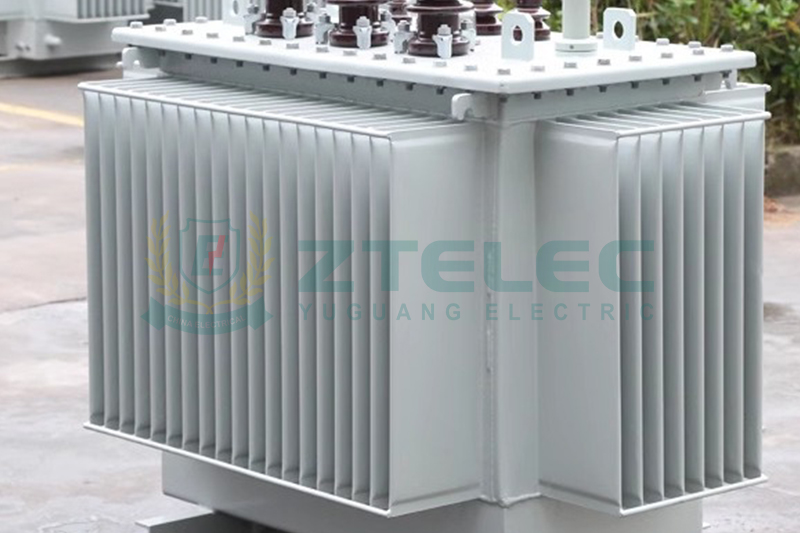
Types of Oil Immersed Transformers
Not all oil immersed transformers are built the same way. They vary by application, mounting method, and cooling approach.
Power Transformers
Power transformers are large oil immersed units used mainly in transmission networks. They step voltage up for long-distance transmission or step it down at major substations. These units typically operate at high voltage and handle large power capacities.
Distribution Transformers
Distribution transformers are smaller oil immersed units. They reduce voltage to levels suitable for homes, businesses, and light industrial facilities. This makes them one of the most common transformer types in utility networks.
Pad-Mounted Transformers
These units sit at outdoor ground level inside tamper-resistant enclosures. They are common in underground distribution systems serving residential neighborhoods and commercial developments.
Pole-Mounted Transformers
Pole-mounted transformers are compact oil immersed units mounted directly on utility poles. They are widely used in overhead distribution systems to step down voltage before it reaches individual consumers.
Sealed and Conservator Type Transformers
Sealed transformers use a nitrogen cushion instead of a conservator, relying on gas pressure to absorb oil expansion. Conservator type units use a separate oil reservoir, as described earlier. Each design has different tradeoffs for maintenance and oil oxidation protection.
Cooling Method Classifications
Oil immersed transformers are also classified by cooling method. The table below summarizes the four most common types.
| Cooling Type | Full Name | How It Works |
| ONAN | Oil Natural, Air Natural | Relies entirely on passive convection for both oil and air circulation. |
| ONAF | Oil Natural, Air Forced | Adds cooling fans to force air over the radiators while oil flows naturally. |
| OFAF | Oil Forced, Air Forced | Uses pumps to force oil circulation along with forced-air cooling fans. |
| ODAF | Oil Directed, Air Forced | Directs oil flow through the windings for targeted cooling, combined with forced air. |
Advantages of Oil Immersed Transformers
Oil immersed transformers offer strong cooling efficiency. This lets them handle high, sustained loads while staying compact for their power rating. Their oil-based insulation also supports high dielectric strength across a wide range of voltage classes. On top of that, oil immersed designs usually cost less upfront than dry type alternatives at large capacities, making them a cost-effective choice for outdoor and utility-scale projects.
Limitations and Considerations
These transformers do carry some risks. Mineral oil is flammable, and leaks can contaminate soil or water sources. Because of this, most installations require outdoor placement, dedicated vaults, or fire containment systems. Indoor or densely occupied buildings are usually not suitable locations.
Regular oil testing is also necessary. It helps monitor insulation quality and catch developing faults before they cause equipment failure.
Typical Applications
Oil immersed transformers are the standard choice for electric utility substations, transmission networks, and large industrial facilities. They also suit outdoor installations where high power capacity and cost efficiency matter most. Their long track record and wide industry familiarity make them a dependable choice for critical infrastructure projects worldwide.
Oil immersed transformers combine a simple idea with highly effective results. Insulating oil delivers both electrical insulation and efficient cooling in a single system. Components like the core, windings, conservator tank, and protective devices all work together to support this process while keeping operating temperatures safe under heavy loads.
With several types available for different voltage levels, installation environments, and cooling needs, oil immersed transformers remain a foundational technology in electrical power systems. They offer a reliable balance of performance, capacity, and cost-effectiveness across a wide range of applications.
transformer construction
Oil immersed transformer
oil filled transformer
transformer working principle
Transformer comparison
- more+releated article
- 2026-09-16What Is an Oil Immersed Transformer? Construct
- 2026-09-15Oil Immersed vs Dry Type Transformer: Which Is
- 2026-09-14Dry Type Transformer Manufacturers: 10-Point S
- 2026-09-12630 kVA Transformer Price – Oil Immersed vs
- 2026-09-11Dry Type Transformer Price in 2026: Cast Resin
- 2026-09-10Transformer Voltage Conversion: 11kV vs 33kV S
- 2026-09-09How to Get the Best Transformer Factory Price:
- 2026-09-08Case Study: 500 kVA 33/0.415 kV Transformer fo
- 2026-09-07Medium Voltage Dry Type Transformers: 3.3kV–
- 2026-09-02Oil Immersed Transformers Explained: Construct
- ELECTRICAL INSULATION BOARD MATERIALS
- ELECTRICAL INSULATION MATERIALS
- POWER TRANSFORMER
- ENAMELED WIRE
- SWITCHGEAR


FR-4 Copper-Free Laminate | High-Performance Insulation Material

FR-4 Copper Clad Laminate Manufacturer & Supplier
transformer construction
oil filled transformer
transformer working principle
Oil immersed transformer
dry type transformer
Power transformer
distribution transformer
Transformer comparison
how to choose a transformer manufacturer
dry type transformer manufacturers
transformer supplier checklist
630 kVA transformer price
dry type transformer price
cast resin transformer cost
VPI transformer price
dry type transformer 2026
medium voltage transformer
transformer voltage conversion
33kV transformer
11kV transformer
buy transformer from factory
transformer negotiation tips
transformer factory price
commercial transformer case study
33kV to 415V transformer