
What Is a Ring Main Unit (RMU)? Function, Purpose and Working Principle
A Ring Main Unit, commonly abbreviated as RMU, is a compact piece of medium voltage switchgear used throughout electrical distribution networks. It plays a quiet but essential role in keeping power flowing reliably to homes, businesses, and industrial facilities. While most people never see one up close, RMUs sit at critical junctions in underground and overhead distribution systems, controlling how power moves through a network and how quickly service can be restored when something goes wrong. This article explains what an RMU is, why it matters, how it works, and what components make it function.
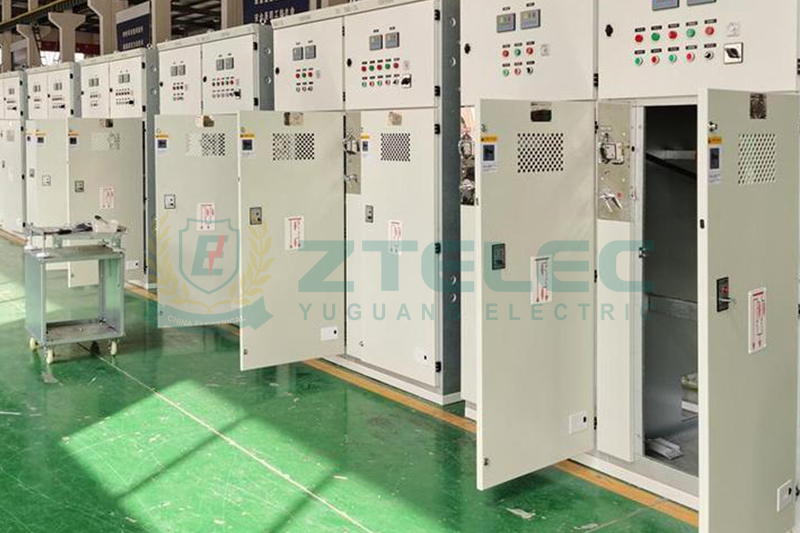
What Is a Ring Main Unit?
A Ring Main Unit is a factory-assembled, compact switchgear unit designed for use in medium voltage distribution networks, typically operating in the range of 11kV to 36kV depending on the region and application. It combines multiple switching functions into a single, sealed enclosure, including load-break switches for incoming and outgoing ring connections and, in most configurations, a protection device for an outgoing transformer feeder.
The name "ring main unit" comes from its most common application: connecting a distribution transformer or substation into a ring-configured network, where power can flow from either direction along the ring. This design gives utilities flexibility to isolate a faulty section of the network while maintaining supply to the rest of the ring through the opposite direction.
Why Ring Main Units Matter in Distribution Networks
Electrical distribution networks are often designed in a ring or loop configuration rather than a simple radial layout. In a ring configuration, each substation or transformer connects to two points along a continuous loop rather than a single dead-end feeder. This structure means that if a fault occurs at one section of the cable, the ring can be opened at that point, and power can still reach every other point on the loop from the opposite direction.
RMUs are what make this ring configuration practical to operate. Without a compact, reliable switching unit at each connection point, isolating faults and restoring service would require far more time, equipment, and manual intervention. By placing an RMU at each substation along the ring, utilities gain the ability to quickly isolate faults, perform maintenance without cutting off entire sections of a network, and reconfigure supply paths as needed.
Core Functions of a Ring Main Unit
Ring Switching
The primary function of an RMU is to provide two switch positions that connect to the incoming and outgoing sections of the ring cable. These switches allow the unit to remain closed under normal conditions, letting power pass through to the next point on the ring, or to be opened to isolate a section of cable during a fault or planned maintenance.
Transformer Feeder Protection
Most RMUs include a third switching device, often a circuit breaker or fused switch-disconnector, dedicated to protecting the outgoing feeder that supplies the local distribution transformer. This device detects fault conditions on the transformer side and disconnects power before damage spreads to the wider network.
Network Sectionalizing
Beyond fault isolation, RMUs allow utilities to sectionalize the network for planned maintenance or load management. Operators can open specific switches to redirect power flow, isolate a section for safe work, or balance loading across different parts of a distribution network without affecting customers outside the isolated section.
Earthing and Safety Isolation
Many RMUs include integrated earthing switches, which allow maintenance personnel to safely ground an isolated section of cable before working on it. This built-in safety feature reduces the risk of accidental re-energization and supports compliance with standard electrical safety procedures.
Main Components of a Ring Main Unit
Switchgear Chambers
An RMU typically consists of three switchgear chambers or panels arranged side by side within a single enclosure: two ring switch panels and one transformer feeder protection panel. Each chamber houses the switching mechanism, busbar connections, and cable termination points for that function.
Insulating Medium
RMUs use either air, SF6 gas, or solid dielectric insulation to maintain safe clearances between energized parts within the compact enclosure. SF6 gas insulation is widely used because it allows for a smaller physical footprint while maintaining high dielectric strength, though environmental concerns around SF6 have driven increasing interest in air-insulated and solid-insulated alternatives.
Load-Break Switches
These switches are designed to make and break load current under normal operating conditions, though not necessarily fault current. They allow ring sections to be opened and closed as part of routine switching operations without requiring the unit to be de-energized first.
Fuses or Circuit Breakers
The transformer feeder panel typically includes either high-voltage fuses combined with a switch-disconnector, or a dedicated circuit breaker, depending on the design and protection requirements. This device is responsible for interrupting fault current specifically on the transformer side of the unit.
Cable Terminations and Bushings
Each panel includes cable termination points, often using plug-in or bolted bushings, allowing incoming and outgoing cables to connect securely to the internal busbar system.
Operating Mechanism
RMUs include a manual or motorized operating mechanism that allows switches to be opened, closed, or earthed. Many modern units also support remote control and monitoring, integrating with utility SCADA systems for faster fault response and network visibility.
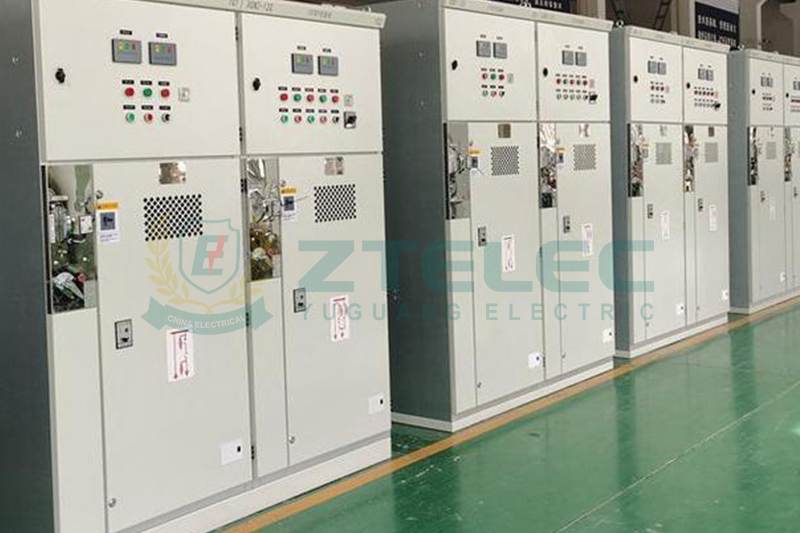
Working Principle of a Ring Main Unit
Under normal operating conditions, both ring switches within an RMU remain closed, allowing power to flow through the unit from one section of the ring to the next while also feeding the local transformer through the protected feeder panel. This closed-ring operation means power can theoretically reach any point on the loop from either direction, providing inherent redundancy.
When a fault occurs on a section of cable between two RMUs, the protection system detects the fault and the affected section is isolated by opening the ring switches on either side of the fault location. Because the ring can be fed from both directions, customers downstream of the fault location, but still connected through the opposite side of the ring, continue to receive power without interruption. Utility crews can then locate and repair the faulted cable section while the rest of the network remains energized.
For the transformer feeder function, the dedicated protection device continuously monitors current flowing to the local transformer. If a fault occurs within the transformer or its immediate connection, the feeder protection device isolates that specific branch without affecting the ring switches or the rest of the network, limiting the impact of the fault to the smallest possible area.
Types of Ring Main Units
Ring Main Units are generally categorized by their insulating medium and switching technology. Air-insulated RMUs use ambient air for insulation and are often favored where environmental regulations restrict the use of SF6 gas. SF6 gas-insulated RMUs remain widely used due to their compact size and reliable performance across a wide range of climates. Solid-insulated or vacuum-based RMUs are gaining popularity as an environmentally friendly alternative, using solid insulation materials and vacuum interrupters instead of gas to achieve similar performance in a smaller footprint.
Typical Applications
Ring Main Units are widely used in urban and suburban underground distribution networks, where reliability and fast fault isolation are essential due to the difficulty of accessing underground cables for repair. They are also common in commercial buildings, industrial parks, renewable energy substations, and any medium voltage network designed with ring or loop topology rather than simple radial feeders. Their compact size makes them well suited for installation in kiosk substations, indoor switchrooms, and underground vaults where space is limited.
A Ring Main Unit may be a relatively small and unassuming piece of equipment, but it plays an outsized role in keeping medium voltage distribution networks reliable and resilient. By combining ring switching, transformer feeder protection, and safety earthing into a single compact enclosure, RMUs allow utilities to isolate faults quickly, maintain power supply through alternate paths, and perform maintenance with minimal disruption to customers. As distribution networks continue to modernize, understanding how RMUs function remains essential knowledge for engineers, utility planners, and anyone involved in designing or maintaining medium voltage power systems.
Medium Voltage Switchgear
Ring Main Unit
ring main unit function
RMU
ring main unit working principle
- more+releated article
- 2026-09-18What Is a Ring Main Unit (RMU)? Function, Purp
- 2026-09-17Dry Type Transformer Maintenance: What You Act
- 2026-09-16What Is an Oil Immersed Transformer? Construct
- 2026-09-15Oil Immersed vs Dry Type Transformer: Which Is
- 2026-09-14Dry Type Transformer Manufacturers: 10-Point S
- 2026-09-12630 kVA Transformer Price – Oil Immersed vs
- 2026-09-11Dry Type Transformer Price in 2026: Cast Resin
- 2026-09-10Transformer Voltage Conversion: 11kV vs 33kV S
- 2026-09-09How to Get the Best Transformer Factory Price:
- 2026-09-08Case Study: 500 kVA 33/0.415 kV Transformer fo
- ELECTRICAL INSULATION BOARD MATERIALS
- ELECTRICAL INSULATION MATERIALS
- POWER TRANSFORMER
- ENAMELED WIRE
- SWITCHGEAR

FR-4 Copper-Free Laminate | High-Performance Insulation Material

FR-4 Copper Clad Laminate Manufacturer & Supplier
Ring Main Unit
ring main unit function
ring main unit working principle
Medium Voltage Switchgear
RMU
cast resin transformer maintenance
dry type transformer maintenance
transformer inspection checklist
Oil immersed transformer
transformer working principle
transformer construction
oil filled transformer
Power transformer
Transformer comparison
distribution transformer
dry type transformer
how to choose a transformer manufacturer
transformer supplier checklist
dry type transformer manufacturers
630 kVA transformer price
dry type transformer 2026
dry type transformer price
cast resin transformer cost
VPI transformer price
transformer voltage conversion