
Dry Type Transformer vs Oil Filled: Which Should You Choose and Why?
Choosing between a dry type transformer and an oil filled transformer is one of the most common decisions in electrical design, and it rarely has a single right answer. Oil filled units dominate utility networks and outdoor substations because they are efficient, tolerant of overload and available in very large ratings. Dry type units dominate the insides of buildings because they remove the fire and spill risk that comes with oil. This guide compares the two on safety, cost, efficiency, maintenance and applications, then gives you a practical way to decide which one fits your project.
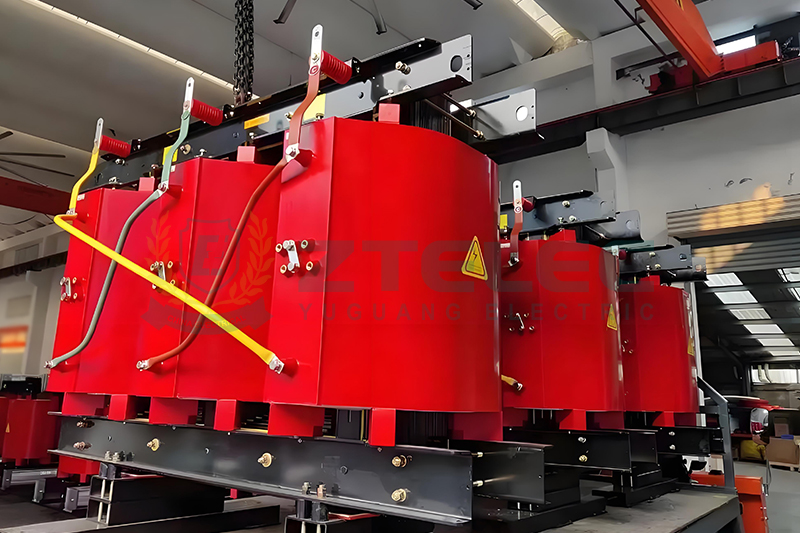
What Is an Oil Filled Transformer?
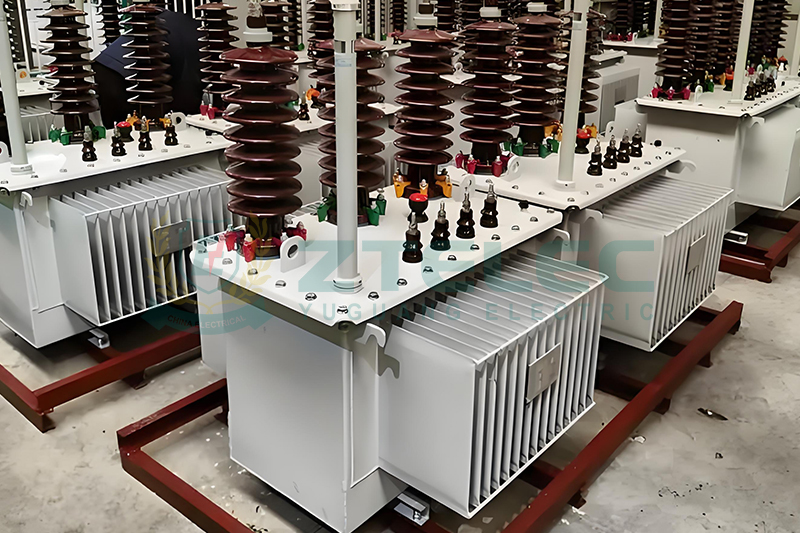
An oil filled transformer, also called an oil immersed transformer, has its core and windings submerged in insulating liquid inside a steel tank. The liquid does two jobs: it insulates the windings and it carries heat away to radiators or cooling fins on the tank. Mineral oil is the traditional fluid. Natural and synthetic ester fluids are increasingly used where a higher fire point or better biodegradability is required.
Cooling is usually ONAN (oil natural, air natural), with fans (ONAF) or oil pumps added at larger ratings. Oil filled designs range from small pole-mounted and pad-mounted distribution units to power transformers of several hundred MVA at 500 kV and above.
What Is a Dry Type Transformer?
A dry type transformer contains no insulating liquid. The windings are insulated with solid materials and surrounded by air, and the unit is cooled by natural or forced air movement. The two main constructions are cast resin, where the windings are encapsulated in epoxy, and vacuum pressure impregnated (VPI), where open windings are sealed with varnish. Cast resin resists moisture and dust better, while VPI is usually cheaper and more compact.
Dry type units are typically built up to about 30 MVA and up to 36 kV, and they are designed to sit inside buildings, close to the loads they serve.
Dry Type vs Oil Filled: Key Differences
| Feature | Dry Type | Oil Filled |
|---|---|---|
| Insulating and cooling medium | Air and solid insulation | Mineral oil or ester fluid |
| Fire risk | Very low; no flammable liquid | Higher; needs mitigation indoors |
| Typical rating | Up to about 30 MVA | Small units to several hundred MVA |
| Typical voltage | Up to 36 kV | Up to 500 kV and above |
| Best location | Indoors, near the load | Outdoors, substations, pads |
| Overload capacity | Limited | Good, thanks to oil thermal mass |
| Maintenance | Low | Oil sampling and testing needed |
| Typical service life | 25 to 30 years | 30 to 40 years with good care |
| Upfront price | Higher | Lower |
Fire safety
Fire safety is the reason most people consider dry type at all. Mineral oil can ignite at roughly 160 to 170 °C, so an internal fault that produces an arc can turn into a serious fire and a pool of burning liquid. Dry type units contain no flammable liquid, and cast resin versions are self-extinguishing with low smoke. Oil filled units can be made safer by using ester fluids, whose fire points are above 300 °C, but they still need spill containment and, in many cases, fire barriers or suppression. Electrical codes such as NEC Article 450 set specific rules for indoor oil filled installations, and local requirements often decide the matter before cost is even discussed.
Environmental impact
An oil filled transformer holds hundreds or thousands of liters of liquid, so a leak can contaminate soil and groundwater. That is why utilities build containment pits and why environmental permits are common. Ester fluids are biodegradable and reduce the consequences of a spill, but the risk is not zero. Dry type units avoid the leak risk completely. Their environmental cost lies elsewhere, in resin and insulation materials that need proper disposal at end of life.
Efficiency and losses
Both types can exceed 98 percent efficiency at typical loads, and both must meet regional minimum efficiency rules such as US DOE requirements and EU Ecodesign regulations. Because oil removes heat far better than air, oil filled designs can often reach slightly lower losses at the same rating. Dry type designs compensate with more conductor and better cores, and low-loss options are widely available. The gap matters most for large, heavily loaded units that run continuously.
Cooling and overload
Oil has high thermal capacity, which lets an oil filled transformer absorb short overloads without overheating quickly. Dry type windings cool through air, so their thermal margins are tighter. Fans can raise a dry type unit's rating by roughly 30 to 40 percent, but the design should still be sized for realistic peaks and for the ambient temperature of the room.
Ambient conditions affect both types. Above 1,000 meters of altitude, or in rooms hotter than the design ambient, the rated output must be reduced or the unit specially designed. Air is thinner at altitude and carries less heat, which hits dry type units hardest. Harmonic loads from drives, UPS systems and server power supplies also add losses, so ask for a harmonic-rated design when they make up a large share of the load.
Maintenance
Dry type maintenance is simple: visual inspection, cleaning, connection torque checks and temperature monitoring. Oil filled maintenance is more involved. Oil should be sampled and tested regularly, including dissolved gas analysis, and breathers, gaskets, bushings and pressure relief devices need periodic attention. Neglect is what shortens the life of an oil filled unit, and a well-maintained one can exceed 30 years.
Size, weight and noise
At high ratings an oil filled unit is normally more compact per MVA than a dry type unit, although it needs a tank, radiators and space around it for cooling and access. Noise levels are comparable when designs are matched, but they depend heavily on core design, so specify a maximum sound level if the unit will sit near occupied space.
Dry Type vs Oil Filled Transformer Cost
| Cost layer | Dry Type | Oil Filled |
|---|---|---|
| Purchase price | Commonly 20 to 50 percent higher | Lower |
| Containment and fire protection | Minimal | Pit, barriers or suppression may be required indoors |
| Installation location | Inside the building, short cable runs | Often outdoors or in a vault |
| Energy losses | Design dependent; may be slightly higher | Often slightly lower |
| Maintenance | Low | Regular oil testing and upkeep |
| End of life | Resin and materials disposal | Oil handling and recycling |
Upfront price
An oil filled transformer is usually the cheaper purchase. At the same rating, a dry type unit commonly costs 20 to 50 percent more, depending on voltage, insulation system and current metal and material prices. That premium is real, but it is only one line in the project budget.
Installation and site costs
Indoors, the picture can flip. An oil filled unit inside a building may need a fire-rated vault, an oil containment pit, ventilation and sometimes automatic suppression. A dry type unit avoids most of that, and it can be placed in the same electrical room as the switchgear or even on the floor it serves. Shorter low-voltage cable runs then reduce copper cost and cable losses. For indoor projects these savings often cancel much of the price difference.
Lifecycle view
Over 25 years, energy losses and maintenance can rival the purchase price. Oil filled units may save a little on losses but add testing, oil handling and inspection work. Dry type units save on upkeep but may cost slightly more to run at high, constant loads. The right answer depends on the loading profile, the location and how well the owner maintains equipment, so run a total cost of ownership calculation instead of comparing quotes alone.
Best Applications for Each Type
Where dry type is the better choice
Commercial and public buildings. Offices, hospitals, schools, airports and shopping centers value fire safety and the ability to place the transformer near the load.
Data centers. Reliability, low maintenance and fire safety make dry type the usual choice for indoor power rooms.
Tunnels, metros and high-rise buildings. Low smoke and no flammable liquid simplify approvals and protect escape routes.
Offshore, marine and wind applications. Cast resin units handle salt, humidity and limited space, and they suit wind turbine towers and nacelles.
Indoor industrial plants. Factories, water treatment plants and food processing facilities benefit from simple maintenance and the absence of oil.
Where oil filled is the better choice
Utility substations and transmission. High voltage and high MVA ratings are beyond the reach of dry type designs.
Power plant step-up transformers. Large generators need large, efficient, well-cooled units.
Outdoor pad-mounted and pole-mounted distribution. Oil filled units are compact, weatherproof and cost-effective on distribution networks.
Large outdoor industrial sites. Steel mills, mines and refineries with heavy loads and open space usually choose oil filled equipment.
Solar and wind farm collector systems. Outdoor step-up units are commonly oil filled, often with ester fluid where fire or environmental limits apply.
The middle ground: less-flammable fluids
When you need oil filled performance but face fire restrictions, ester-filled transformers offer a compromise. Their high fire point allows installation in more locations than mineral oil, often with reduced clearance requirements, though you should confirm the rules that apply to your site and insurer.
How to Choose Between Dry Type and Oil Filled
| Situation | Better choice |
|---|---|
| Installed inside an occupied building | Dry type |
| Strict fire or smoke rules | Dry type |
| Rating above about 30 MVA or voltage above 36 kV | Oil filled |
| Outdoor site with space and a low budget | Oil filled |
| Frequent heavy overloads | Oil filled |
| Indoor site needing fluid-type performance | Ester-filled oil transformer |
Start with the location and the fire regulations. If the transformer must be indoors and near people, dry type is usually the simplest path. If it is outdoors, large and loaded hard, oil filled is usually the more economical and efficient answer.
Common Selection Mistakes
Comparing only the purchase price. Vault, containment, cabling and maintenance costs can reverse the ranking.
Ignoring local codes and insurers. Some insurers and jurisdictions restrict mineral oil indoors, and a late discovery can force a redesign.
Underestimating ventilation. Both types release heat, and dry type units in particular rely on room airflow to reach their rated capacity.
Skipping monitoring. Temperature relays on dry type units and oil temperature, pressure and gas monitoring on oil filled units are inexpensive protection.
Forgetting future growth. A slightly larger unit or a fan option often costs less than replacing a transformer that has run out of margin.
Frequently Asked Questions
Is a dry type transformer safer than an oil filled transformer?
For indoor use, yes. With no flammable liquid there is no pool fire or spill risk. Oil filled units can be operated safely with proper containment, protection and maintenance, especially outdoors.
Which is more efficient?
Oil filled units often have a small efficiency advantage at large ratings, but both types can meet modern efficiency regulations. Compare guaranteed loss figures rather than assuming.
Which lasts longer?
Well-maintained oil filled transformers often reach 30 to 40 years. Dry type units commonly reach 25 to 30 years in suitable conditions. Loading, temperature and maintenance matter more than type.
Can dry type transformers be used outdoors?
Yes, if they are housed in a suitable enclosure with an adequate IP rating and the ambient conditions are within the manufacturer's limits. For large outdoor installations, oil filled is usually more economical.
Dry type and oil filled transformers solve the same problem in different ways. Dry type offers superior fire safety, low maintenance and easy indoor installation, at a higher purchase price and with limits on size and voltage. Oil filled offers efficiency, overload capability, very high ratings and a lower upfront price, but demands containment, fire protection and regular oil testing. Decide on location, fire rules, rating and loading profile first, then compare total cost over the transformer's life. The right choice is usually clear once those facts are on the table.
dry type transformer vs oil filled
dry type transformer
Oil immersed transformer
Medium Voltage Switchgear
Ring Main Unit
- more+releated article
- 2026-09-20Dry Type Transformer vs Oil Filled: Which Shou
- 2026-09-18What Is a Ring Main Unit (RMU)? Function, Purp
- 2026-09-17Dry Type Transformer Maintenance: What You Act
- 2026-09-16What Is an Oil Immersed Transformer? Construct
- 2026-09-15Oil Immersed vs Dry Type Transformer: Which Is
- 2026-09-14Dry Type Transformer Manufacturers: 10-Point S
- 2026-09-12630 kVA Transformer Price – Oil Immersed vs
- 2026-09-11Dry Type Transformer Price in 2026: Cast Resin
- 2026-09-10Transformer Voltage Conversion: 11kV vs 33kV S
- 2026-09-09How to Get the Best Transformer Factory Price:
- ELECTRICAL INSULATION BOARD MATERIALS
- ELECTRICAL INSULATION MATERIALS
- POWER TRANSFORMER
- ENAMELED WIRE
- SWITCHGEAR


FR-4 Copper-Free Laminate | High-Performance Insulation Material

FR-4 Copper Clad Laminate Manufacturer & Supplier
dry type transformer vs oil filled
Oil immersed transformer
dry type transformer
ring main unit function
Medium Voltage Switchgear
RMU
Ring Main Unit
ring main unit working principle
cast resin transformer maintenance
dry type transformer maintenance
transformer inspection checklist
transformer working principle
oil filled transformer
transformer construction
Power transformer
Transformer comparison
distribution transformer
how to choose a transformer manufacturer
transformer supplier checklist
dry type transformer manufacturers
630 kVA transformer price
dry type transformer 2026
dry type transformer price
VPI transformer price
cast resin transformer cost