
3500 kVA Transformer Price 2026: Cost Drivers & Comparison
A 3500 kVA transformer is a workhorse for factories, solar plants, data centers, mining sites and commercial complexes. It is large enough to supply a serious load, yet still practical to ship and install. But when you start collecting quotes, prices can differ by 40% or more between suppliers. This guide explains what drives the 3500 kVA transformer price in 2026, how an oil-immersed transformer compares with a dry-type transformer, and how to read a quotation with confidence.
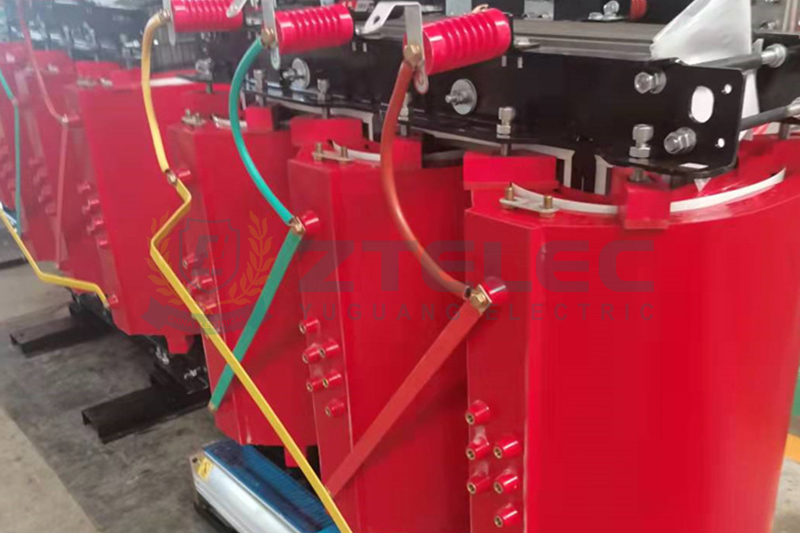
Typical 3500 kVA Transformer Price Range in 2026
Prices depend on specification, so any figure is only a starting point. The ranges below are indicative ex-works levels for standard designs from established manufacturers. Always confirm with a written quotation.
| Transformer Type | Indicative Ex-Works Price (USD) | Typical Voltage Class |
|---|---|---|
| 3500 kVA oil-immersed transformer (copper winding) | 35,000 – 55,000 | 11 kV – 35 kV |
| 3500 kVA oil-immersed transformer (aluminium winding) | 30,000 – 48,000 | 11 kV – 35 kV |
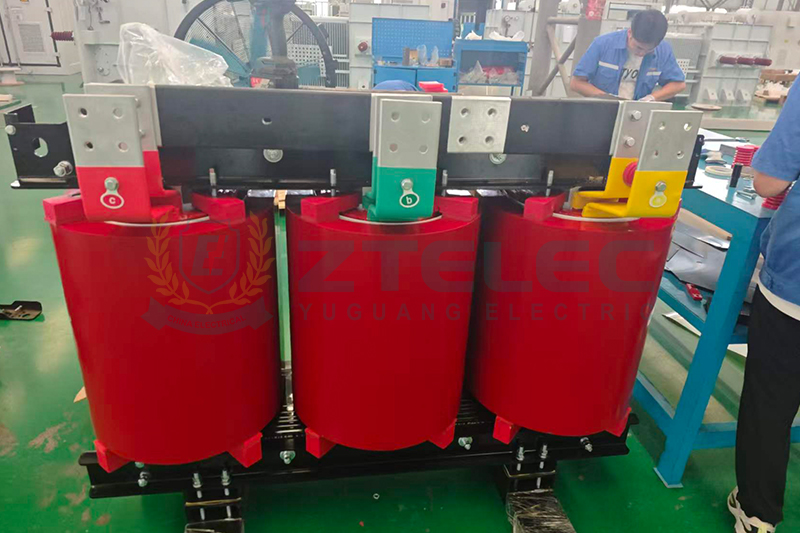
| 3500 kVA dry-type transformer (cast resin) | 55,000 – 90,000 | 6 kV – 35 kV |
Freight, insurance, import duties, installation and commissioning are normally extra. Final landed cost can be 10% to 25% above the ex-works figure depending on destination.
Oil-Immersed Transformer vs Dry-Type Transformer: Price Comparison
The most important decision affecting your budget is the cooling and insulation technology. A oil-immersed transformer uses mineral or natural ester oil to insulate and cool the core and windings. A dry-type transformer uses cast resin or varnish insulation and relies on air cooling.
Why an oil-immersed transformer costs less
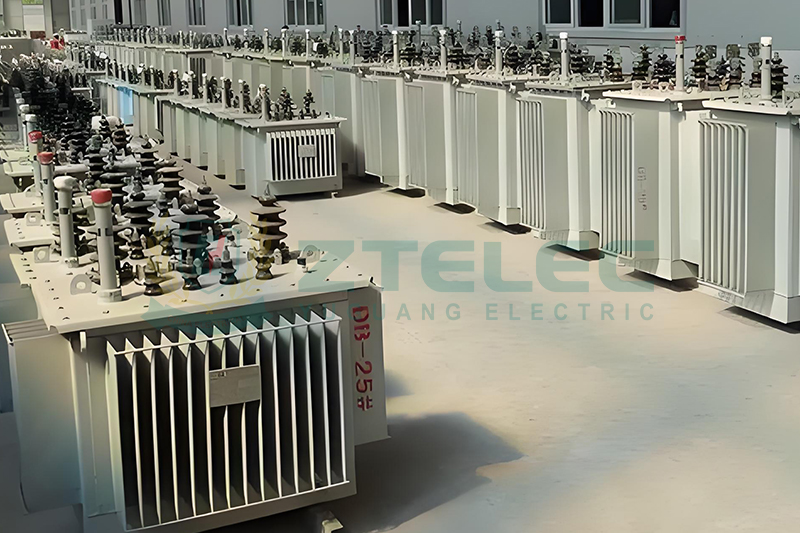
An oil-immersed transformer is cheaper to build at 3500 kVA. Oil is an excellent coolant, so the active part can be more compact. Radiators dissipate heat efficiently, and the manufacturing process is simpler than vacuum casting.
It also offers better overload capability and usually lower losses per dollar spent. For outdoor substations and utility-type installations, it is often the default choice.
Why a dry-type transformer costs more
A dry-type transformer needs vacuum-cast resin coils, higher-grade insulation and a larger core and coil assembly to manage heat in air. The enclosure and ventilation design also add cost. At 3500 kVA, the upfront premium is typically 40% to 80% over an equivalent oil unit.
The extra cost buys safety. A dry-type transformer has no oil, so there is no oil leak, no fire hazard from flammable liquid and no need for an oil containment pit. That is why it dominates in hospitals, high-rise buildings, tunnels, metro systems and offshore platforms.
Eight Key Cost Drivers of a 3500 kVA Transformer
1. Raw material prices
Copper, aluminium, silicon steel and insulating materials make up the majority of the cost. Copper alone can represent a large share of the price of a copper-wound unit. When LME copper moves, supplier quotations move with it, which is why most price validity periods are short, often 15 to 30 days.
2. Winding material: copper or aluminium
Copper windings give lower load losses, better short-circuit strength and a smaller footprint. Aluminium windings reduce the purchase price but usually increase losses and size. For a 3500 kVA unit running at high load factor, the copper premium often pays back through energy savings.
3. Core material and efficiency class
A standard grain-oriented silicon steel core is the baseline. Upgrading to high-permeability steel or an amorphous alloy core lowers no-load loss but raises the price. Higher efficiency classes, such as IEC Tier 2 or Chinese energy-efficiency grade 1 or 2, add cost upfront and cut running cost for decades.
4. Voltage class and insulation level
A 3500 kVA transformer at 11 kV is cheaper than one at 33 kV or 35 kV. Higher voltage needs larger clearances, higher basic impulse insulation levels (BIL) and a bigger tank or coil structure. Dual-voltage or multi-tap designs also add manufacturing complexity.
5. Standards and certification
Compliance with IEC 60076, IEEE C57, GB/T 1094 or regional standards affects test scope and design margins. Third-party witness tests, type test reports and special certifications such as KEMA or SASO add cost and lead time. If your project requires them, include them in your inquiry from the start.
6. Site conditions and options
Altitude above 1000 m, high ambient temperature, heavy pollution, seismic zones and coastal corrosion all require design adjustments. Typical options that increase price include:
On-load tap changer instead of off-circuit tap changer, forced-air fan cooling for a dry-type transformer, IP54 or IP23 enclosures, temperature controllers, Buchholz relays, pressure relief devices and marshalling boxes. Each item is small alone, yet together they can add 5% to 15% to the base price.
7. Order quantity and delivery time
Buying several identical units usually lowers the per-unit price. Urgent delivery, on the other hand, can mean overtime production and priority material purchasing. Standard lead time for a 3500 kVA transformer is often 6 to 12 weeks, while special designs take longer.
8. Supplier location and brand tier
Prices differ between global brands, regional manufacturers and Chinese factories. Global brands charge for brand value, local service networks and long warranty terms. Chinese manufacturers generally offer strong cost-performance, but quality varies, so supplier evaluation matters more than the headline price.
Total Cost of Ownership: Beyond the Purchase Price
The lowest quotation is not always the cheapest transformer. A 3500 kVA unit may operate for 25 to 30 years, so energy losses and maintenance can exceed the original purchase price.
Losses and energy cost
No-load loss runs continuously, 8,760 hours a year. Load loss varies with the square of the current. A unit with 3 kW lower total losses can save tens of thousands of kilowatt-hours every year. When electricity costs are high, paying more for a low-loss design often delivers payback within a few years.
Maintenance and service life
An oil-immersed transformer needs periodic oil sampling, dissolved gas analysis and occasional oil treatment. A dry-type transformer needs regular cleaning, inspection of ventilation and checks on temperature protection. Maintenance for dry-type units is simpler, but the cooling environment must stay clean and dry.
Installation and civil work
Oil-immersed units usually need an oil containment pit, fire separation and outdoor or dedicated room space. A dry-type transformer can be installed close to the load inside the building, which shortens low-voltage cable runs and may cut civil and cabling cost. In indoor projects, these savings can offset part of the higher purchase price.
Which Is Better for Your Project?
Choose an oil-immersed transformer when you need the lowest purchase price, high overload tolerance, outdoor installation and a typical utility or industrial environment. It is also a strong fit for solar farms, wind projects, mines and large factory substations where space and fire rules allow oil.
Choose a dry-type transformer when fire safety, indoor installation, environmental protection or proximity to people is the priority. Commercial buildings, hospitals, airports, data centers, subways and marine applications usually point toward dry-type technology, even at higher cost.
How to Get an Accurate 3500 kVA Transformer Quotation
Vague inquiries produce vague quotations. To compare suppliers fairly, send the same technical sheet to everyone. A complete inquiry should include:
Rated power (3500 kVA), primary and secondary voltage, frequency (50 Hz or 60 Hz), vector group, impedance, tapping range, cooling method, insulation class, winding material, applicable standard, installation environment, altitude, enclosure or accessories required, loss limits, and delivery terms such as FOB, CIF or DAP.
Ask each supplier to state guaranteed no-load loss, load loss and impedance values. Two quotes that look similar can hide very different loss figures. Also confirm warranty length, test reports included, packaging method and payment terms.
Common Mistakes When Comparing Transformer Prices
The first mistake is comparing quotations with different winding materials. A copper-wound and an aluminium-wound unit are not equivalent, even if both are rated 3500 kVA.
The second is ignoring loss values. A cheap transformer with high losses can cost more over ten years than a premium design.
The third is overlooking what is excluded. Accessories, spare parts, test fees, export packing and commissioning are sometimes left out of the basic price.
The fourth is oversizing or undersizing. A 3500 kVA rating should match actual load, expected growth and demand factor. A better-sized unit runs at an efficient load point and avoids paying for unused capacity.
2026 Market Outlook for Transformer Prices
Global demand for distribution and power transformers remains strong, driven by renewable energy, grid upgrades, data center expansion and industrial electrification. Lead times for large units remain longer than before 2020, and material costs still fluctuate with copper and electrical steel markets.
For buyers, this means two practical steps. Lock in specifications early, and request quotations with a clear validity period. If your project timeline is fixed, ordering sooner is often safer than waiting for a price drop that may not arrive.
The 3500 kVA transformer price in 2026 depends on far more than kVA rating. Technology type, winding material, efficiency level, voltage class, certifications and site conditions all shape the final number. An oil-immersed transformer delivers the lowest upfront cost and strong efficiency for outdoor and industrial use, while a dry-type transformer offers superior fire safety and indoor flexibility at a higher price.
Evaluate the total cost of ownership, send a complete technical inquiry and compare guaranteed loss values, not just the headline number. If you share your voltage, standard and site details, a qualified manufacturer can prepare a detailed quotation for either type so you can make a confident decision.
3500 kVA transformer cost
oil-immersed transformer
500 kVA transformer price
dry-type transformer
no-load loss
- more+releated article
- 2026-11-033500 kVA Transformer Price 2026: Cost Drivers
- 2026-11-023500 kVA Transformer Load Factor: Losses, Heat
- 2026-10-30Copper vs Aluminium Windings: 3500 kVA Losses
- 2026-10-293500 kVA Oil-Immersed Transformer TCO: 20-Year
- 2026-10-28Transformer Cost per kVA: How to Benchmark a 3
- 2026-10-273500 kVA Oil-Immersed Transformer: Altitude De
- 2026-10-263500 kVA vs 2×1750 kVA Transformers: Cost &am
- 2026-10-2150 Hz vs 60 Hz Transformer: Design Differences
- 2026-10-20ZTELEC to Showcase Power Equipment at POWER GR
- 2026-10-19How to Size a 3500 kVA Transformer: Load &
- ELECTRICAL INSULATION BOARD MATERIALS
- ELECTRICAL INSULATION MATERIALS
- POWER TRANSFORMER
- ENAMELED WIRE
- SWITCHGEAR

FR-4 Copper-Free Laminate | High-Performance Insulation Material

FR-4 Copper Clad Laminate Manufacturer & Supplier
3500 kVA transformer cost
500 kVA transformer price
oil-immersed transformer
dry-type transformer
no-load loss
transformer losses
transformer load factor
3500 kVA transformer
load loss
copper winding transformer
aluminium winding transformer
copper vs aluminium windings
20-year transformer cost
total cost of ownership transformer
transformer TCO
3500 kVA oil-immersed transformer
3500 kVA transformer quote
ransformer cost per kVA
oil filled transformers
3500 kVA transformer price
dry cast resin transformers
transformer derating above 1000 m
transformer altitude derating
high altitude transformer
two transformers vs one