
ONAN vs ONAF Cooling for a 3500 kVA Transformer: When Forced Cooling Pays Off
Cooling class is one of the first lines on a 3500 kVA transformer datasheet, yet it is often treated as an afterthought. It shouldn't be. The choice between ONAN and ONAF decides how much load the unit can carry, how hot the insulation runs and how much you pay upfront.
This guide explains both cooling methods in plain terms. It compares capacity, losses, noise, cost and maintenance, and shows when forced cooling is worth adding to an oil filled transformer.
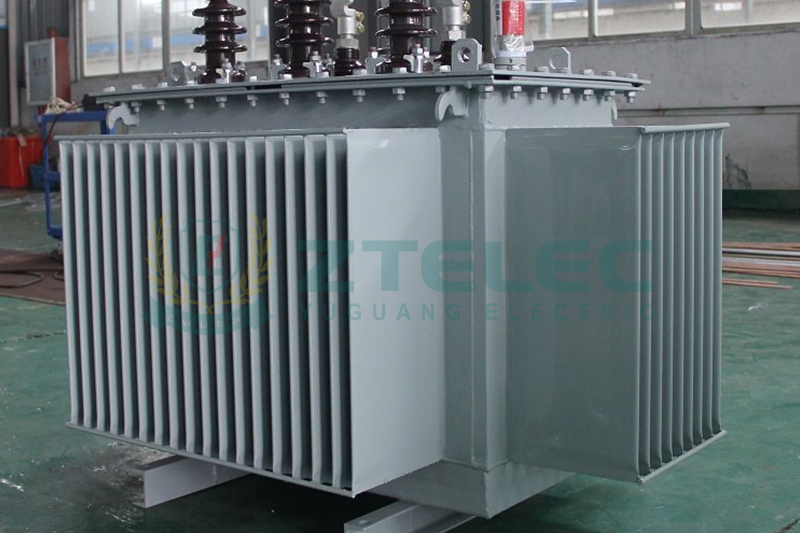
What Do ONAN and ONAF Mean?
These codes come from the IEC 60076 cooling designation system. Each letter describes the coolant and how it moves.
ONAN stands for Oil Natural, Air Natural. Oil circulates through the windings and radiators by thermal convection only. Air passes over the radiators by natural convection. No pumps or fans are involved.
ONAF stands for Oil Natural, Air Forced. Oil still circulates naturally, but fans blow air across the radiators. The extra airflow removes heat faster, so the transformer can carry more load at the same temperature rise.
Many 3500 kVA units are supplied with a dual rating, written as ONAN/ONAF. The transformer runs on natural cooling at its base rating and switches on fans for a higher rating.
How ONAN Cooling Works in a 3500 kVA Unit
Heat is produced in the core and windings. The hot oil rises to the top of the tank, flows into the radiators, cools against the surrounding air and sinks back to the bottom.
This loop needs no external power. That is the main appeal of ONAN. There are no moving parts to fail, no control wiring to commission and no auxiliary supply to protect.
The trade-off is a fixed capacity. The radiator surface area sets the limit, and the only way to raise it is to build a larger radiator bank or a larger tank.
How ONAF Cooling Works
An ONAF transformer uses the same oil circuit, but fans are mounted on or beside the radiators. They push or pull air across the fins and sharply increase the heat transfer rate.
Fans are normally controlled by a winding temperature indicator or a top oil thermostat. They start when the temperature crosses a set point and stop when it falls back. Under light load they stay off, so the unit behaves like a standard ONAN transformer.
Some designs also let you start the fans manually or from a remote signal. This is useful when a planned overload is coming, such as a seasonal peak.
Rating Gain: What Forced Cooling Adds
The headline benefit of ONAF is extra capacity. Depending on the design, forced air typically raises the rating by roughly 20% to 33% over the natural rating.
For a 3500 kVA unit, a common dual rating is 3500 kVA ONAN and about 4375 to 4500 kVA ONAF. Always confirm the exact figures with the manufacturer, because the gain depends on radiator design and the temperature rise limits in the specification.
Under IEC 60076-2, standard limits are a 60 K top oil rise and a 65 K average winding rise at the rated load, with a maximum ambient of 40 degrees Celsius. The ONAF rating must respect the same limits, just at a higher current.
Why the extra capacity is not free
Load current rises with the rating, and copper losses rise with the square of the current. A 25% higher load means roughly 56% higher load losses at that point. The fans remove that heat, but the energy is still consumed.
Losses and Efficiency
No-load loss is the same for both cooling classes. It depends on the core, not on the airflow.
Load loss depends on the current. At the base rating, an ONAN and an ONAF design of the same size have similar losses. The difference appears only when you actually use the extra ONAF capacity.
Fan motors also draw power. For a 3500 kVA transformer the fan load is small, usually a few hundred watts per fan, and the fans only run when the unit is hot. In practice, fan energy is minor compared with transformer losses.
Noise Considerations
Fans add noise. When they are running, the sound level of the transformer rises by a few decibels compared with its ONAN condition.
This matters near homes, offices and hospitals. Ask the supplier for sound power levels for both ONAN and ONAF operation, and check them against local noise limits.
Low-speed fans, larger fan diameters and sound-reducing enclosures can help. Because fans only run at high temperature, the noisy periods are usually short.
Cost Comparison
ONAF adds cost in several places: fans, a control cabinet, a temperature controller, cabling and testing. For a 3500 kVA oil filled transformer, the added price is typically modest compared with the unit itself.
The comparison that matters is different. Adding fans to a 3500 kVA unit is usually far cheaper than buying a 4500 kVA ONAN transformer. If you need the extra capacity only at peak, ONAF is the cheaper route.
Do not forget lifetime cost. Fans need inspection and eventual replacement, and the control circuit needs a reliable auxiliary supply.
Reliability and Maintenance
ONAN has fewer failure points. ONAF adds motors, bearings, contactors and thermostats. A failed fan does not trip the transformer, but it can quietly remove your overload margin.
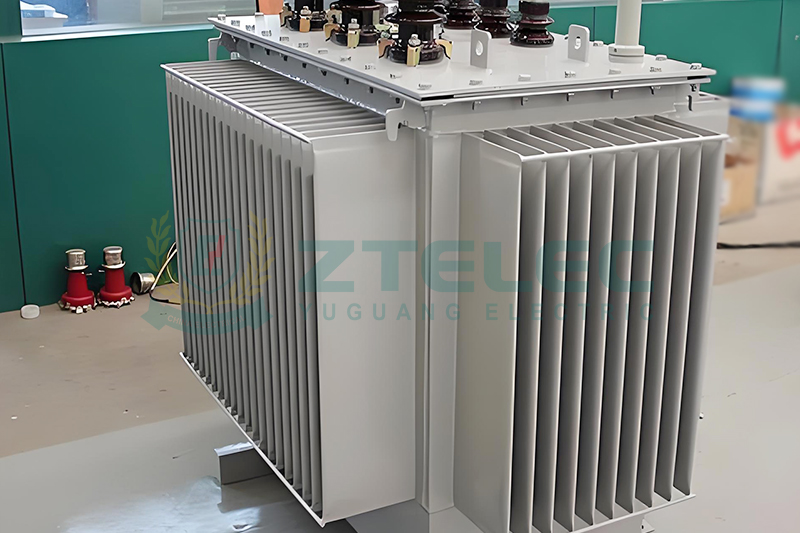
Good practice is to test the fan start sequence during routine maintenance, check rotation direction and clean the radiator fins. Dust, insects and corrosion all reduce cooling performance.
Add a fan failure alarm to your SCADA or local annunciator. A silent fan fault is one of the most common causes of unexpected overheating in an ONAF oil filled transformer.
When Forced Cooling Pays Off
ONAF is worth specifying when the load profile has peaks that are well above the average. Here are the situations where it usually makes sense.
Peaky or seasonal loads
Air conditioning, irrigation, cooling towers and heating loads can push demand above the base rating for a few hours a day or a few weeks a year. Fans let the transformer ride through these peaks without a larger unit.
Hot climates and high ambient temperatures
When ambient air is warmer than the design value, natural cooling loses effectiveness. Forced air recovers part of that margin and helps protect insulation life.
Future load growth
If a plant expects to add equipment within a few years, an ONAN/ONAF transformer provides headroom without replacement. It buys time while the site grows.
Redundancy and N-1 operation
In a two-transformer substation, one unit may need to carry the whole load if the other fails. ONAF capacity can cover that emergency without oversizing both transformers.
Limited space
Where a larger ONAN transformer would not fit the footprint, forced cooling allows a compact unit to deliver more power.
When ONAN Alone Is the Better Choice
ONAN is the right answer when the load is steady and well below the rating. A transformer that runs at 60% to 70% of 3500 kVA all year gains nothing from fans.
It also suits remote sites with weak or unreliable auxiliary power, and locations where noise limits are strict. In these cases, simplicity is worth more than extra capacity.
If you are unsure, remember that you can sometimes specify radiator provisions for future fans. This keeps the initial cost low and leaves the upgrade path open.
Specification Tips for a 3500 kVA Order
State the cooling class clearly in your enquiry. Write it as ONAN/ONAF, give the required kVA for each stage and name the maximum ambient temperature and altitude.
Ask for the temperature rise guarantee at both ratings. Request the fan control logic, the number and power of the fans and the fan motor voltage.
Specify the temperature indicators and alarm contacts you need. Confirm whether the fan supply is taken from the transformer secondary or from a separate source.
Finally, ask for noise data and a type test or heat run test report. A heat run test proves that the cooling system does what the datasheet claims.
Common Mistakes to Avoid
The first mistake is assuming that the ONAF rating is continuous without limits. Sustained operation at the higher rating shortens insulation life if the ambient is high or the oil is already hot.
The second is ignoring the downstream equipment. Cables, breakers and busbars must also be rated for the higher current, or the transformer capacity gain is wasted.
The third is skipping the fan supply design. Without a dependable auxiliary source, the forced cooling will not work when you need it most.
FAQ
Is ONAF better than ONAN?
Neither is better in every case. ONAF gives more capacity and flexibility. ONAN gives simplicity and lower noise. The right choice depends on your load profile.
Can I add fans to an existing ONAN transformer later?
Sometimes, but only if the design allows it. The radiators, the temperature rise margin and the control provisions must support forced cooling. Check with the manufacturer first.
Do fans reduce the life of the transformer?
No. Fans help keep temperatures down. The risk comes from running at high load for long periods, which ages the insulation, not from the fans themselves.
Does ONAF change the price of an oil filled transformer?
Yes, but the increase is usually small compared with the cost of moving up to a larger frame size. Request quotes for both options and compare them.
For a 3500 kVA transformer, ONAN is the simple, quiet and reliable baseline. ONAF is the practical upgrade when your load peaks, your climate is hot or your site is expected to grow.
Match the cooling class to the real load profile, check the temperature rise at both ratings and make sure the rest of the system can handle the extra current. Done well, forced cooling turns a standard oil filled transformer into a flexible asset at a modest premium.
Need a 3500 kVA ONAN/ONAF transformer for your project? Send us your voltage, load profile and site conditions, and our engineers will recommend the right cooling configuration.
oil filled transformer
ONAN vs ONAF
transformer cooling
ONAN ONAF transformer
3500 kVA transformer
- more+releated article
- 2026-11-04ONAN vs ONAF Cooling for a 3500 kVA Transforme
- 2026-11-033500 kVA Transformer Price 2026: Cost Drivers
- 2026-11-023500 kVA Transformer Load Factor: Losses, Heat
- 2026-10-30Copper vs Aluminium Windings: 3500 kVA Losses
- 2026-10-293500 kVA Oil-Immersed Transformer TCO: 20-Year
- 2026-10-28Transformer Cost per kVA: How to Benchmark a 3
- 2026-10-273500 kVA Oil-Immersed Transformer: Altitude De
- 2026-10-263500 kVA vs 2×1750 kVA Transformers: Cost &am
- 2026-10-2150 Hz vs 60 Hz Transformer: Design Differences
- 2026-10-20ZTELEC to Showcase Power Equipment at POWER GR
- ELECTRICAL INSULATION BOARD MATERIALS
- ELECTRICAL INSULATION MATERIALS
- POWER TRANSFORMER
- ENAMELED WIRE
- SWITCHGEAR


FR-4 Copper-Free Laminate | High-Performance Insulation Material

FR-4 Copper Clad Laminate Manufacturer & Supplier
oil filled transformer
transformer cooling
ONAN ONAF transformer
3500 kVA transformer
ONAN vs ONAF
3500 kVA transformer cost
dry-type transformer
500 kVA transformer price
oil-immersed transformer
load loss
no-load loss
transformer load factor
transformer losses
aluminium winding transformer
copper winding transformer
copper vs aluminium windings
20-year transformer cost
3500 kVA oil-immersed transformer
transformer TCO
total cost of ownership transformer
dry cast resin transformers
oil filled transformers
3500 kVA transformer quote
ransformer cost per kVA
3500 kVA transformer price