
3500 kVA Transformer: EU Tier 2 vs US DOE Loss Limits
A 3500 kVA transformer runs for 25 years or more, and its losses are paid for every hour of that time. That is why efficiency rules in the European Union and the United States matter to any buyer of an oil-immersed transformer, wherever the unit is finally installed.
The two regimes look similar on the surface, but they are built differently. They use different metrics, different test points and, importantly, different scope. This guide explains how EU Tier 2 and US DOE limits apply to a 3500 kVA power transformer, and how to turn them into a clear purchase specification.
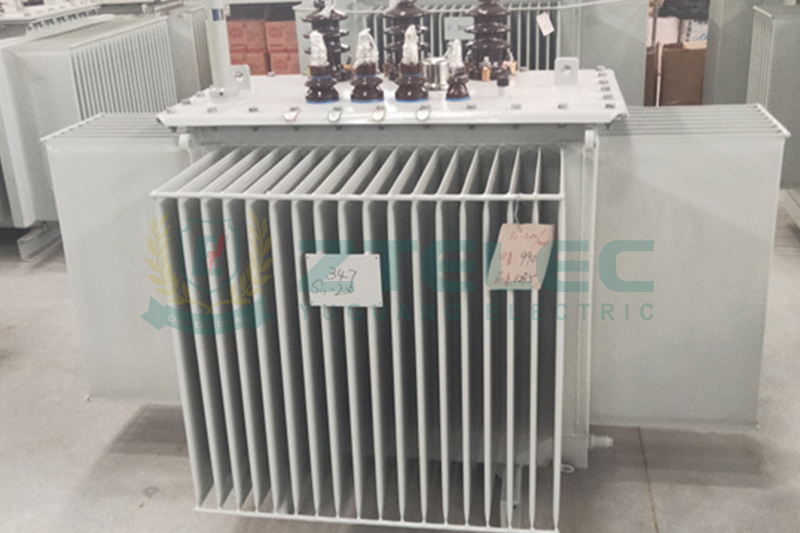
Why Loss Limits Matter for a 3500 kVA Transformer
Every transformer has two main loss components. No-load loss (core loss) is present whenever the unit is energised. Load loss (copper loss) rises with the square of the current.
For a 3500 kVA oil filled transformer, even a small reduction in either component adds up to a large energy saving over the service life. Loss limits therefore affect purchase price, operating cost and carbon footprint at the same time.
Regulation also affects market access. A unit sold into the EU must meet Ecodesign rules, while buyers in North America often use DOE efficiency levels as a benchmark in tenders, even when the law does not strictly require them.
EU Tier 2: What the Regulation Requires
The legal basis
The EU rules come from Commission Regulation (EU) No 548/2014, which implements the Ecodesign Directive for small, medium and large power transformers. It sets minimum efficiency requirements for transformers placed on the EU market.
Tier 1 applied from 2015. Tier 2 became mandatory on 1 July 2021 and tightened the limits again. A transformer that does not meet Tier 2 cannot be legally placed on the market in the EU, regardless of how well it performs technically.
Where 3500 kVA sits in the regulation
The regulation splits transformers by rating. Medium power transformers have fixed maximum values for no-load loss and load loss, listed by kVA rating up to 3150 kVA.
A 3500 kVA unit falls above that band. Above 3150 kVA, the regulation does not list fixed loss values. Instead it requires a minimum Peak Efficiency Index (PEI), which is a single figure that expresses efficiency at the load point where the transformer is most efficient.
What PEI means in practice
PEI combines no-load loss, load loss and rated power into one percentage. A higher PEI means a more efficient design. The advantage is flexibility: a manufacturer can trade a lower core loss against a slightly higher load loss, as long as the PEI target is met.
For buyers, this means you should ask for the guaranteed PEI together with the separate no-load and load loss figures. Always check the current regulation text for the exact minimum PEI at your rating and voltage class.
US DOE: Scope and Method
A point many buyers miss: scope
The US Department of Energy standards for distribution transformers are in 10 CFR Part 431. For liquid-immersed units, the covered range stops at 2500 kVA. A 3500 kVA transformer is therefore a power transformer above the DOE distribution transformer scope.
This does not make DOE values irrelevant. Many US utilities and industrial buyers still use DOE-style efficiency numbers as a reference when they evaluate larger units, and some state programs or customer specifications refer to them directly.
Efficiency at 50 percent load
DOE does not set loss limits in watts. It sets a minimum efficiency, measured at 50 percent of rated load for liquid-immersed transformers, with values listed by kVA rating. For ratings between table rows, the standard uses interpolation.
The 50 percent point reflects typical real-world loading. It rewards designs that perform well at partial load, which favours lower core loss.
Rule updates
DOE reviews these standards periodically, and revised levels have been published with later compliance dates. Because the situation changes, confirm the current DOE rule and effective dates before you quote or specify a unit for the US market.
EU Tier 2 vs US DOE at a Glance
| Item | EU Tier 2 (Ecodesign) | US DOE (10 CFR 431) |
|---|---|---|
| Legal basis | Regulation (EU) 548/2014 | 10 CFR Part 431, Subpart K |
| Applies to 3500 kVA? | Yes, as a large power transformer | No, liquid-immersed scope ends at 2500 kVA |
| Metric for 3500 kVA | Minimum PEI | Efficiency at 50% load (benchmark only) |
| Test reference | Losses per IEC 60076 series | Efficiency test procedure in DOE rule |
| System frequency | 50 Hz | 60 Hz |
| Penalty for non-compliance | Cannot be placed on the market | Not applicable above scope |
How to Compare the Two Systems
Convert losses into efficiency
To compare an EU-style loss specification with a DOE-style efficiency target, convert both to the same basis. Efficiency at a given load factor k is roughly one minus total losses divided by the output plus losses.
At 50 percent load, the losses are the no-load loss plus one quarter of the load loss, because load loss scales with the square of the load. For a 3500 kVA transformer, output at 50 percent load is 1750 kVA multiplied by the power factor.
Why the same unit can look different
A design with very low core loss and a higher load loss can score well on DOE-style efficiency at 50 percent load. The same design may show a different ranking under PEI, which looks at the best-efficiency point.
This is why you should never compare a single number from one regime against a single number from the other. Ask the supplier for no-load loss, load loss, impedance and the calculated efficiency at 50 percent and 100 percent load.
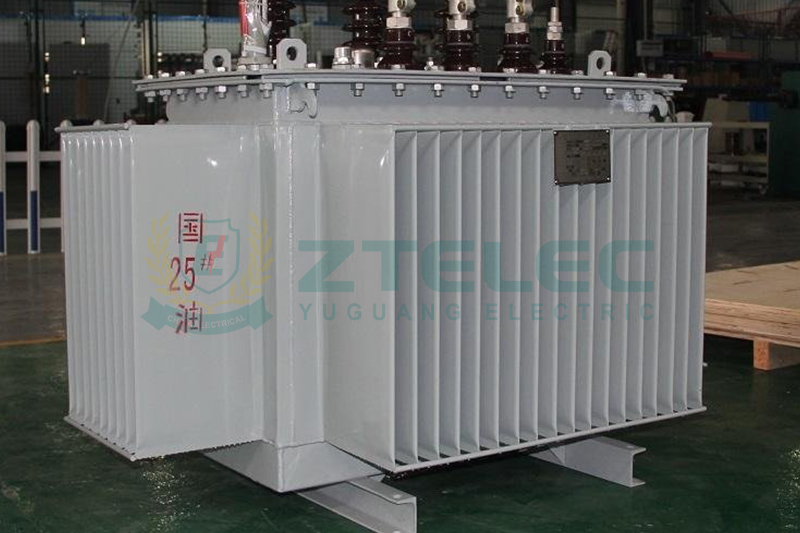
Design Routes to Low Loss in a 3500 kVA Transformer
Core material
Core loss is driven by the steel. High-grade grain-oriented silicon steel, such as laser-scribed or domain-refined grades, lowers no-load loss compared with standard grades.
An amorphous alloy transformer cuts no-load loss even further, often by well over half. The trade-off is a higher purchase price and a slightly larger core. Amorphous cores are more common at the distribution end, but they are also considered for large units that stay energised around the clock.
Winding material and geometry
Load loss depends on conductor material, current density and winding layout. Copper windings give lower resistance than aluminium at the same size, which helps meet tight loss limits without making the unit larger.
Lower current density reduces load loss but increases material cost. Good design finds the balance between copper weight, tank size and the guaranteed loss figures.
Cooling and tank
Cooling type does not change the basic loss limits, but it affects temperature rise and ageing. An ONAN rating is simple and reliable, while an ONAN/ONAF rating adds capacity for peaks. Confirm which rating the guaranteed losses refer to, because the regulation and test standards define the reference rating.
Cost: Loss Capitalisation and Payback
A lower-loss design costs more to build, so the question is how quickly it pays back. The standard tool is loss capitalisation, which assigns a monetary value to each kilowatt of no-load loss and load loss.
No-load loss is usually valued higher per kilowatt, because it runs 8,760 hours a year. Load loss is valued according to the expected loading profile. With electricity prices and a 20 to 30 year life, a premium for a lower-loss 3500 kVA transformer often recovers its cost within a few years.
Include these capitalisation values in your tender documents. It lets suppliers offer the lowest total cost of ownership rather than only the lowest price, and it gives a fair way to compare a standard core against an amorphous or high-grade steel design.
How to Specify a Compliant 3500 kVA Transformer
Define the market first
Start with the destination. A unit for the EU must meet Tier 2 and carry the right documentation. A unit for the US needs a 60 Hz design and, depending on the buyer, DOE-style efficiency data even though the rule does not cover this rating.
Ask for guaranteed values
Your specification should state the maximum no-load loss, maximum load loss, minimum PEI where relevant, and impedance, all at the reference temperature and rated tap. Add the cooling class and the rated voltage ratio, for example 23 kV or 33 kV on the high-voltage side.
Set the tolerance rules
IEC 60076-1 allows a tolerance on guaranteed losses, commonly 15 percent on each component and 10 percent on total losses. Many buyers write tighter limits or a penalty clause into the contract. Decide this before award, not after the factory test.
Require test evidence
Loss values must be proven by measurement. Request routine test reports for every unit, including no-load and load loss measurement, and ask for a type test report from an accredited laboratory for the design. These are the documents that turn a data sheet into a defensible compliance claim.
Common Mistakes to Avoid
The first mistake is assuming DOE rules apply automatically to a 3500 kVA unit. They do not, so a tender that demands DOE compliance should explain which values it actually wants.
The second is comparing watts to percentages. Convert everything to the same basis before ranking suppliers.
The third is ignoring frequency. A 50 Hz design and a 60 Hz design have different core flux and loss characteristics, so a unit built for one grid cannot simply be switched to the other.
The fourth is focusing on price only. A cheap transformer with high losses can cost more than a premium one over its life.
Frequently Asked Questions
Does a 3500 kVA transformer have to meet US DOE limits?
Not under the federal distribution transformer rule, because liquid-immersed coverage ends at 2500 kVA. Individual customers may still require DOE-level efficiency in their own specification.
Does EU Tier 2 apply to a 3500 kVA oil-immersed transformer?
Yes, for units placed on the EU market. Above 3150 kVA the requirement is expressed as a minimum Peak Efficiency Index.
Is an amorphous core required to meet Tier 2?
Not necessarily. Many designs meet the requirement with high-grade grain-oriented steel. Amorphous cores are an option when you want the lowest possible no-load loss.
EU Tier 2 and US DOE both push the industry toward lower-loss transformers, but they apply to a 3500 kVA unit in different ways. In the EU, the unit is covered and judged by PEI. In the US, the unit sits above the federal distribution scope, yet DOE efficiency remains a common benchmark.
The practical approach is to specify guaranteed no-load loss, load loss and efficiency at clear load points, require IEC 60076 test evidence, and evaluate offers using loss capitalisation. That gives you a transformer that is compliant, efficient and cost-effective over its whole life.
If you are planning a 3500 kVA oil-immersed transformer, share your voltage, frequency, cooling class and target market with your supplier so the loss values and test documents can be matched to your project from the start.
EU Tier 2 transformer
transformer loss limits
DOE transformer efficiency
3500 kVA transformer
electrical equipment
- more+releated article
- 2026-11-103500 kVA Transformer: EU Tier 2 vs US DOE Loss
- 2026-11-09ZTELEC GROUP 2026 Year-End Promotion: Electric
- 2026-11-06Dyn11 vs Yyn0: Choosing the Vector Group for a
- 2026-11-05Sealed Tank vs Conservator Design for a 23 kV
- 2026-11-04ONAN vs ONAF Cooling for a 3500 kVA Transforme
- 2026-11-033500 kVA Transformer Price 2026: Cost Drivers
- 2026-11-023500 kVA Transformer Load Factor: Losses, Heat
- 2026-10-30Copper vs Aluminium Windings: 3500 kVA Losses
- 2026-10-293500 kVA Oil-Immersed Transformer TCO: 20-Year
- 2026-10-28Transformer Cost per kVA: How to Benchmark a 3
- ELECTRICAL INSULATION BOARD MATERIALS
- ELECTRICAL INSULATION MATERIALS
- POWER TRANSFORMER
- ENAMELED WIRE
- SWITCHGEAR

FR-4 Copper-Free Laminate | High-Performance Insulation Material

FR-4 Copper Clad Laminate Manufacturer & Supplier
DOE transformer efficiency
EU Tier 2 transformer
3500 kVA transformer
transformer loss limits
insulating materials
2026 year-end promotion
Yuguang Electric
electrical equipment
ZTelec Group
Dyn11 vs Yyn0
23 kV 0.4 kV transformer
Dyn11 transformer
transformer vector group
sealed tank transformer
23 kV oil-immersed transformer
conservator transformer
hermetically sealed transformer
ONAN vs ONAF
ONAN ONAF transformer
transformer cooling
oil filled transformer
oil-immersed transformer
3500 kVA transformer cost
500 kVA transformer price
dry-type transformer