
Dyn11 vs Yyn0: Choosing the Vector Group for a 23 kV / 0.4 kV System
When you specify a 23 kV / 0.4 kV distribution transformer, the kVA rating and impedance usually get all the attention. The vector group is often an afterthought. That is a mistake.
The connection of the windings decides how the transformer handles harmonics, unbalanced single-phase loads and earth faults. It also decides whether two transformers can run in parallel.
This guide compares the two most common options, Dyn11 and Yyn0, and shows which one fits a typical 23 kV / 0.4 kV network.
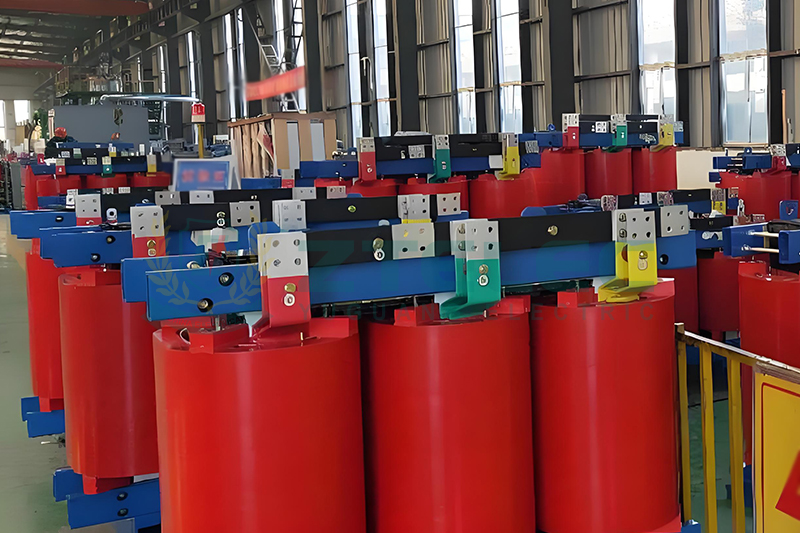
What Does a Vector Group Mean?
A vector group is a short code that describes how the high-voltage (HV) and low-voltage (LV) windings are connected and how their voltages are shifted in phase.
Reading the code
Take Dyn11 as an example. The capital letter D means the HV winding is connected in delta. The lowercase y means the LV winding is connected in star (wye). The letter n means the LV neutral is brought out.
The number 11 is the clock position. The HV phasor sits at 12 o'clock, and the LV phasor sits at 11 o'clock. That means the LV voltage leads the HV voltage by 30 degrees.
Yyn0 is simpler. Both windings are star-connected, the LV neutral is brought out, and the phase shift is zero. HV and LV voltages are in phase.
Dyn11 vs Yyn0: Quick Comparison
The table below summarizes the main differences for a 23 kV / 0.4 kV distribution transformer.
| Item | Dyn11 | Yyn0 |
|---|---|---|
| HV winding | Delta | Star |
| LV winding | Star with neutral | Star with neutral |
| Phase shift | 30 degrees (LV leads) | 0 degrees |
| Third harmonic currents | Trapped in the delta winding | Pass into the HV system unless a tertiary or five-limb core is used |
| Unbalanced LV load | Handled well | Neutral shift and voltage imbalance risk |
| Zero-sequence impedance | Low | High on three-limb cores |
| Typical use | Utility and industrial distribution | Balanced three-phase loads, special cases |
Why Dyn11 Is the Standard Choice at 23 kV
In most distribution networks, Dyn11 is the default. Many utilities and standards require it for 20 kV, 22 kV and 23 kV class transformers feeding 400 V systems. The reasons are practical.
Harmonic circulation
Modern LV loads create third harmonic currents. LED drivers, switch-mode power supplies, UPS units and variable speed drives are common sources.
Triplen harmonics are in phase in all three phases, so they add up in the neutral. In a Dyn11 transformer, these zero-sequence currents circulate inside the HV delta winding. They do not flow out into the 23 kV network.
The result is cleaner HV current and less distortion on the grid side.
Unbalanced single-phase loads
Four-wire LV networks supply many single-phase loads such as lighting, sockets and small motors. The load is rarely balanced across the three phases.
With a delta primary, the unbalanced LV current is balanced by circulating current in the delta. The LV neutral stays stable and phase-to-neutral voltages remain close to nominal.
Better earth fault current on the LV side
A Dyn11 transformer has a low zero-sequence impedance. When a phase-to-earth fault occurs on the 0.4 kV side, a large fault current flows. Circuit breakers and fuses see enough current to trip quickly.
This improves protection sensitivity and personnel safety.
Isolation of earth faults between systems
The delta winding blocks zero-sequence current from passing between the two sides. An LV earth fault does not appear as an earth fault on the 23 kV side. The two networks have separate earthing behavior.
This simplifies HV protection coordination.
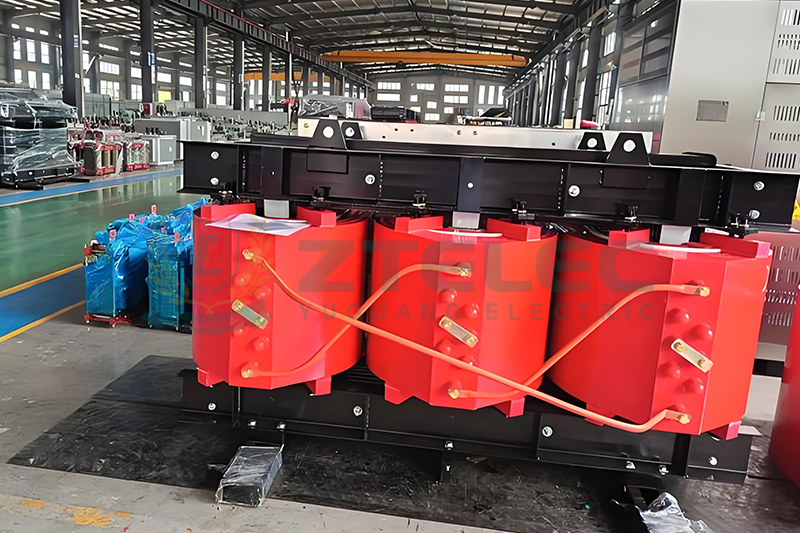
Where Yyn0 Still Makes Sense
Yyn0 is not obsolete. It has a place in specific applications, but it requires more care.
Balanced loads and limited neutral current
If the LV side feeds mainly balanced three-phase loads, the neutral carries little current. Industrial motor loads are a typical example. In this case the weaknesses of Yyn0 are less visible.
Network compatibility
Some existing networks were built around zero phase shift. A new transformer must match the vector group of the units it will run beside. In those cases Yyn0 may be required for parallel operation.
Insulation and tap changing
A star-connected HV winding has lower phase voltage across each winding. That can reduce insulation stress and allows a neutral-end tap changer in some designs. At 23 kV the advantage is small, but it is real for higher voltage classes.
The Main Weakness of Yyn0
The core issue is zero-sequence flux. In a Yyn0 transformer with no delta winding, third harmonic and unbalanced currents have nowhere to circulate.
Neutral displacement
When the LV load is unbalanced, the neutral point of the star shifts. One phase voltage rises while another falls. Equipment connected to the overloaded phase may see undervoltage, and the lightly loaded phase may see overvoltage.
Extra heating in three-limb cores
In a three-limb core, zero-sequence flux cannot close through the core. It leaves through the air, tank walls and structural parts. This causes stray losses and local hot spots.
That is why standards limit the permitted neutral current of Yyn0 transformers. A common limit is around 10 percent of rated current, though you should always check the applicable standard and the manufacturer's data.
Mitigation options
Designers can add a tertiary delta winding, use a five-limb core or use a shell-type core. Each option adds cost and complexity. For a standard distribution transformer, it is usually simpler to choose Dyn11 from the start.
Parallel Operation Rules
Vector group is one of the strict conditions for running transformers in parallel. A mismatch can cause large circulating currents.
Same group only
A Dyn11 transformer must not be paralleled with a Yyn0 transformer. The 30-degree phase difference creates a large circulating current, even when voltage ratios match perfectly.
Before ordering a new unit for an existing substation, check the nameplate of the installed transformer. Match the vector group, voltage ratio, impedance and rated power ratio as closely as possible.
Dyn11 and Dyn5
Dyn5 is sometimes found in older installations. It has a 150-degree shift, so it cannot be paralleled with Dyn11 either. Always confirm the clock number, not just the letters.
Cast Resin and Oil-Immersed Considerations
The vector group choice applies equally to cast resin dry-type and oil-immersed transformers. Still, a few points are worth noting.
Cast resin transformers are widely used in buildings, data centers and commercial sites, where harmonic loads are heavy. Dyn11 is the common choice because it protects the supply from third harmonic injection.
Oil-immersed distribution transformers for utility feeders are also normally Dyn11. Utilities prefer a design that keeps zero-sequence current out of the MV feeder.
How to Choose for a 23 kV / 0.4 kV System
Use the following checks to reach a decision quickly.
Step 1: Check local standards and utility rules
Many utilities specify the vector group in their connection requirements. If the requirement is Dyn11, the decision is already made.
Step 2: Review the load profile
If the LV side has single-phase loads, harmonic sources or a four-wire distribution, choose Dyn11. If the load is almost fully balanced and three-wire, Yyn0 may be acceptable.
Step 3: Confirm parallel operation needs
If a new unit will share a busbar with an existing transformer, match the existing vector group exactly.
Step 4: Consider earthing and protection
Check the LV earthing system and the earth fault current required by the protection scheme. Dyn11 gives a low zero-sequence impedance and reliable tripping.
Step 5: Confirm with the manufacturer
Share the single-line diagram, load type, neutral current expectation and standard requirements with your supplier. A good manufacturer will confirm the design and test report before production.
Common Mistakes to Avoid
Ordering by kVA and voltage alone is the most frequent error. The vector group must appear on the purchase order and the nameplate.
Another mistake is using Yyn0 for a building with many electronic loads. The neutral current and heating will cause trouble later.
Finally, do not assume that two transformers with the same voltage ratio can be paralleled. The vector group must match first.
Frequently Asked Questions
Is Dyn11 better than Yyn0?
For most 23 kV / 0.4 kV distribution systems, yes. Dyn11 handles harmonics, unbalanced loads and earth faults better, which is why it is the common standard.
Can I replace a Yyn0 transformer with a Dyn11 unit?
Only if it works alone, or if every parallel transformer is changed too. The 30-degree phase shift also affects protection settings and any downstream phase-sensitive equipment.
Does the vector group change the transformer price?
The difference is small for standard units. The cost of a wrong vector group, such as rework or a failed parallel connection, is far higher than any saving.
What does the n in Dyn11 mean?
It means the neutral of the star-connected LV winding is brought out to a terminal. This allows a four-wire supply for single-phase loads.
For a 23 kV / 0.4 kV system, Dyn11 is the safer and more widely accepted vector group. The delta HV winding absorbs harmonics, tolerates unbalanced loads and gives strong earth fault current on the LV side.
Yyn0 can work for balanced three-phase loads or to match existing equipment, but it needs careful design and neutral current limits.
Whatever you choose, state the vector group clearly in your specification and check it against the units already on site. If you need help selecting a transformer for your project, contact an experienced manufacturer with your load data and standard requirements.
23 kV 0.4 kV transformer
Dyn11 transformer
Dyn11 vs Yyn0
transformer vector group
hermetically sealed transformer
- more+releated article
- 2026-11-06Dyn11 vs Yyn0: Choosing the Vector Group for a
- 2026-11-05Sealed Tank vs Conservator Design for a 23 kV
- 2026-11-04ONAN vs ONAF Cooling for a 3500 kVA Transforme
- 2026-11-033500 kVA Transformer Price 2026: Cost Drivers
- 2026-11-023500 kVA Transformer Load Factor: Losses, Heat
- 2026-10-30Copper vs Aluminium Windings: 3500 kVA Losses
- 2026-10-293500 kVA Oil-Immersed Transformer TCO: 20-Year
- 2026-10-28Transformer Cost per kVA: How to Benchmark a 3
- 2026-10-273500 kVA Oil-Immersed Transformer: Altitude De
- 2026-10-263500 kVA vs 2×1750 kVA Transformers: Cost &am
- ELECTRICAL INSULATION BOARD MATERIALS
- ELECTRICAL INSULATION MATERIALS
- POWER TRANSFORMER
- ENAMELED WIRE
- SWITCHGEAR

FR-4 Copper-Free Laminate | High-Performance Insulation Material

FR-4 Copper Clad Laminate Manufacturer & Supplier
transformer vector group
Dyn11 transformer
23 kV 0.4 kV transformer
Dyn11 vs Yyn0
hermetically sealed transformer
conservator transformer
sealed tank transformer
23 kV oil-immersed transformer
ONAN ONAF transformer
3500 kVA transformer
transformer cooling
oil filled transformer
ONAN vs ONAF
dry-type transformer
3500 kVA transformer cost
500 kVA transformer price
oil-immersed transformer
no-load loss
transformer load factor
transformer losses
load loss
copper vs aluminium windings
copper winding transformer
aluminium winding transformer
transformer TCO