
3500 kVA Transformer Oil: Mineral vs Ester vs Silicone
Choosing the insulating liquid is one of the most important decisions when you buy a 3500 kVA transformer. The liquid insulates the windings, carries heat away from the core, and largely decides how safe, how long-lived and how expensive the unit will be.
Most oil immersed transformer projects still default to mineral oil. Yet natural ester, synthetic ester and silicone fluid are now common in solar plants, data centers, industrial sites and urban substations. This guide compares all three families so you can write a clear specification and avoid costly surprises.
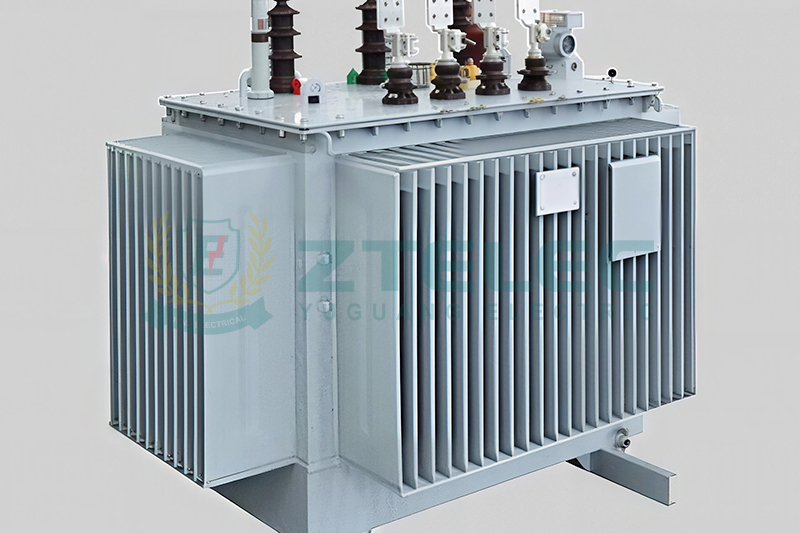
Why the Insulating Liquid Matters at 3500 kVA
A 3500 kVA unit typically holds between 1,800 and 2,500 liters of fluid, depending on voltage class, cooling design and loss level. That is a large volume of combustible or environmentally sensitive material, often installed close to buildings or process areas.
Three jobs, one fluid
The liquid must withstand electrical stress, remove heat from the windings through convection, and protect the cellulose paper insulation from moisture and oxidation. Each fluid family handles these jobs differently, which is why the choice affects both safety and lifespan.
Where the decision shows up
Fluid choice influences tank and radiator size, fire protection requirements, spill containment rules, insurance premiums and end-of-life disposal. It also affects the price of every oil filled transformers quotation you receive, so it should be fixed before you request offers.
Mineral Oil: The Proven Standard
Mineral oil is refined from crude petroleum and specified under IEC 60296 or ASTM D3487. It has been used for well over a century, and nearly every power transformer manufacturer knows how to design around it.
Strengths of mineral oil
Mineral oil has low viscosity, so it flows easily and cools efficiently. Its pour point is around minus 40 degrees Celsius, which suits cold climates. It is also the cheapest option by a wide margin, and testing laboratories everywhere understand how to interpret its dissolved gas analysis results.
Limitations of mineral oil
The flash point is roughly 145 to 160 degrees Celsius and the fire point sits only slightly higher. This classes it as a conventional flammable liquid. It is also poorly biodegradable, so a leak can contaminate soil and groundwater, and many sites must add oil pits, sumps and fire walls.
Best fit
Mineral oil remains the sensible choice for outdoor substations, utility yards and projects where budget is the main driver and fire exposure is low. A well-built 23 kV oil-immersed transformer filled with mineral oil can run reliably for 25 to 30 years with routine maintenance.
Natural Ester: Renewable and Fire-Resistant
Natural esters are made from vegetable oils such as soybean, rapeseed or sunflower, and are specified under IEC 62770 or ASTM D6871. They have become the leading alternative to mineral oil for distribution and medium power transformers.
Fire safety
The flash point is typically above 300 degrees Celsius and the fire point is around 350 degrees Celsius. Natural esters qualify as less-flammable liquids and are widely approved by FM Global and UL. In many jurisdictions this allows smaller clearances, indoor installation and reduced fire suppression.
Environmental profile
Natural ester is readily biodegradable, with test results commonly above 95 percent within 28 days. It is also derived from renewable feedstock, which supports carbon-footprint reporting and corporate sustainability targets.
Moisture tolerance and paper life
Esters can hold far more dissolved water than mineral oil before reaching saturation. They also draw moisture out of the paper insulation, which slows paper aging. Studies and field experience show that cellulose can last noticeably longer in ester, which is useful when the transformer runs hot or is frequently overloaded.
Trade-offs
Natural ester is thicker than mineral oil, with a viscosity roughly three to four times higher at 40 degrees Celsius. It is also more prone to oxidation if exposed to air, so it is best used in sealed-tank designs. The pour point is generally higher, around minus 10 to minus 25 degrees Celsius, which needs attention in very cold regions.
Synthetic Ester: High Performance for Demanding Sites
Synthetic esters are manufactured from organic acids and alcohols and are specified under IEC 61099. They combine the fire safety of esters with better low-temperature behavior and strong oxidation stability.
Key characteristics
The fire point is usually above 300 degrees Celsius and the pour point can be as low as minus 50 degrees Celsius. Viscosity is lower than natural ester, so cooling is easier. Biodegradability is good, though generally a little below natural ester.
Where it is used
Synthetic ester is popular in railway traction, offshore platforms, wind turbines and compact transformers that run at high temperature. It is also chosen for retrofill projects, where an aging unit is converted to a safer fluid. Expect a higher price than natural ester.
Silicone Fluid: Maximum Fire Safety, Niche Use
Silicone transformer fluid is a synthetic polydimethylsiloxane liquid specified under IEC 60836. It has an exceptional fire point, typically above 340 degrees Celsius, and its dielectric properties stay stable across a wide temperature range.
Advantages
Silicone fluid is very stable against heat and oxidation, which suits indoor installations in tunnels, high-rise buildings and ships where fire consequences are severe. It has a low pour point of around minus 50 degrees Celsius or lower.
Drawbacks
It is the most expensive option, often several times the price of mineral oil. Its viscosity is higher, its heat transfer is weaker, and it is not readily biodegradable. For these reasons, silicone is now used far less than ester in new 3500 kVA projects, and it is mainly specified where an authority or insurer demands it.
Side-by-Side Comparison
| Property | Mineral Oil | Natural Ester | Synthetic Ester | Silicone Fluid |
|---|---|---|---|---|
| Typical standard | IEC 60296 | IEC 62770 | IEC 61099 | IEC 60836 |
| Flash point | about 145-160 °C | above 300 °C | above 250 °C | above 300 °C |
| Fire point | about 165-170 °C | about 350 °C | above 300 °C | above 340 °C |
| Viscosity at 40 °C | low (about 10 cSt) | high (about 35 cSt) | medium (about 29 cSt) | high (about 38 cSt) |
| Pour point | about -40 °C | about -10 to -25 °C | about -50 °C | about -50 °C |
| Biodegradability | low | very high | high | low |
| Relative price | 1x (baseline) | about 2-4x | about 3-6x | about 5-10x |
Values are typical and vary by manufacturer. Always request the supplier's datasheet for the exact fluid brand.
Fire Safety and Installation Location
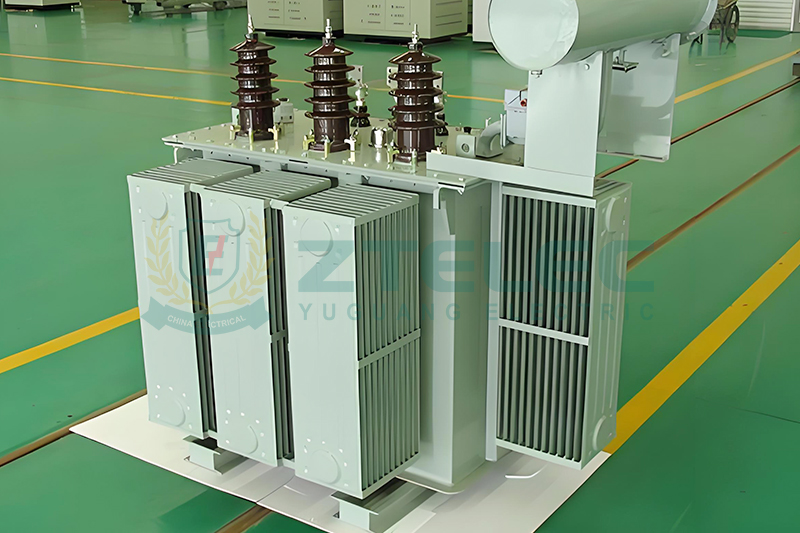
Fire risk is the most common reason to leave mineral oil behind. Where a 3500 kVA transformer sits near a building, under a roof, on a rooftop or inside a plant, less-flammable fluids can reduce clearance distances and sometimes remove the need for sprinklers or deluge systems.
Local codes differ, so confirm requirements with your insurer and local authority early. In some projects, switching to ester saves more on civil works and fire protection than it adds to the transformer price.
Environmental Considerations
If the site is near a river, a nature reserve, farmland or a water source, a leak can create serious liability. Natural ester biodegrades quickly and is non-toxic, which simplifies spill response and environmental approval.
Mineral oil needs stronger containment, and silicone persists in the environment. For projects with ESG reporting or green-finance conditions, ester is often the easiest fluid to justify.
Cost and Total Cost of Ownership
Mineral oil gives the lowest purchase price. Ester fluids add cost for the liquid itself and sometimes a slightly larger tank or radiator. However, total cost of ownership can favor ester when you include fire protection savings, insurance, longer paper life and lower environmental risk.
A useful rule is to compare the price difference against the avoided civil and safety costs, not only against the nameplate quote. For a simple utility yard with plenty of space, mineral oil usually wins. For a constrained urban site, ester often wins.
Design Impact: Cooling, Tank and Accessories
Because ester and silicone are more viscous, designers may increase radiator surface or choose ONAF cooling to keep winding temperature rise within limits. This is a manageable change, but it must be specified at the quotation stage.
Sealed tank construction with a nitrogen cushion or an integral diaphragm is recommended for natural ester to limit oxygen contact. Gaskets, paints and accessories must also be confirmed as compatible with the chosen fluid.
Which Fluid Should You Choose?
Choose mineral oil when
The transformer is installed outdoors in an open utility or industrial yard, fire exposure is low, the budget is tight, and a standard 23 kV oil-immersed transformer design is acceptable.
Choose natural ester when
You need better fire safety, biodegradability and paper life, such as at solar plants, wind farms, commercial buildings and sites near water. It is the most balanced upgrade from mineral oil.
Choose synthetic ester when
You need ester-level fire safety combined with excellent cold-start performance or high-temperature operation, such as in cold regions, traction systems or retrofill projects.
Choose silicone when
A regulation, insurer or project owner specifically requires the highest fire-point fluid and the budget supports it.
When to Consider a Dry Type Instead
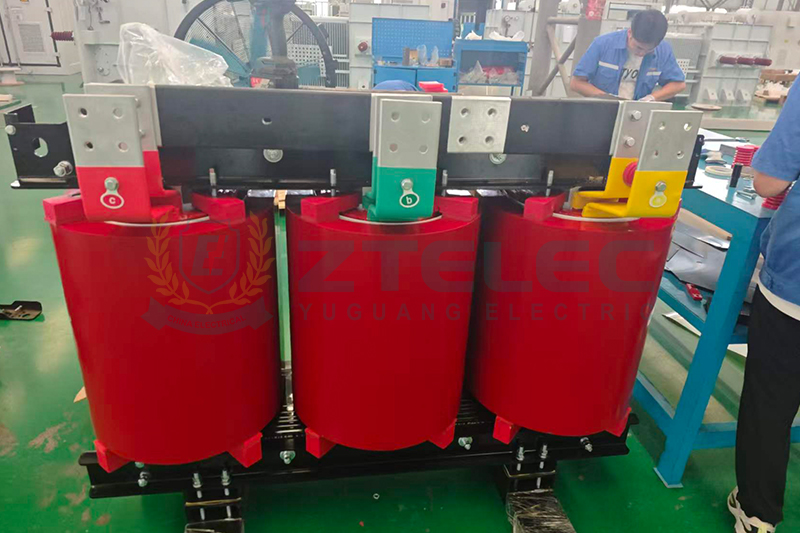
If the transformer must sit indoors in a public or high-occupancy space, a dry type transformer or cast resin transformer may remove liquid concerns altogether. Dry type designs avoid oil leaks and have very low fire load, although they usually cost more at 3500 kVA and have lower overload tolerance.
A fluid-filled design with natural ester is often a middle path: it keeps the efficiency and overload strength of oil filled transformers while giving fire performance close to dry type solutions.
What to Put in Your Specification
State the fluid type and applicable IEC or ASTM standard, the minimum flash and fire point, the pour point for your climate, and the required water content at delivery. Ask the supplier to name the fluid brand and provide a manufacturer certificate.
Also request the temperature rise limits, cooling class, tank type, a fluid compatibility statement for gaskets and paint, and a sampling plan for dissolved gas analysis after commissioning. For ester-filled units, confirm the supplier's experience and reference list.
Frequently Asked Questions
Can I fill a mineral-oil transformer with ester later?
Retrofilling is possible after checking materials, gaskets and insulation condition, and after flushing the residual mineral oil. Ask the manufacturer to confirm suitability before converting a unit.
Is ester oil safe for a 23 kV, 3500 kVA unit?
Yes. Ester-filled transformers are widely used at distribution and medium power ratings, including 23 kV class units, as long as the design is verified for the fluid.
Can different fluids be mixed?
Mixing is not recommended. Different fluids have different properties, and small amounts of mineral oil can reduce the fire point of ester. Keep each unit on a single, clearly labeled fluid.
For a 3500 kVA transformer, mineral oil is the economical default, natural ester is the best all-round upgrade for safety and sustainability, synthetic ester suits extreme conditions, and silicone remains a specialist choice. The right answer depends on your site, your codes and your cost model, not on the fluid alone.
ZTELEC GROUP supplies oil immersed transformer, oil filled transformers and dry type transformer solutions with mineral oil or ester filling, built to IEC standards. Send us your voltage, site conditions and fire requirements, and our engineers will recommend the right fluid and a clear quotation.
mineral oil vs ester vs silicone
Oil immersed transformer
oil filled transformers
3500 kVA transformer oil
DOE transformer efficiency
- more+releated article
- 2026-11-113500 kVA Transformer Oil: Mineral vs Ester vs
- 2026-11-103500 kVA Transformer: EU Tier 2 vs US DOE Loss
- 2026-11-09ZTELEC GROUP 2026 Year-End Promotion: Electric
- 2026-11-06Dyn11 vs Yyn0: Choosing the Vector Group for a
- 2026-11-05Sealed Tank vs Conservator Design for a 23 kV
- 2026-11-04ONAN vs ONAF Cooling for a 3500 kVA Transforme
- 2026-11-033500 kVA Transformer Price 2026: Cost Drivers
- 2026-11-023500 kVA Transformer Load Factor: Losses, Heat
- 2026-10-30Copper vs Aluminium Windings: 3500 kVA Losses
- 2026-10-293500 kVA Oil-Immersed Transformer TCO: 20-Year
- ELECTRICAL INSULATION BOARD MATERIALS
- ELECTRICAL INSULATION MATERIALS
- POWER TRANSFORMER
- ENAMELED WIRE
- SWITCHGEAR

FR-4 Copper-Free Laminate | High-Performance Insulation Material

FR-4 Copper Clad Laminate Manufacturer & Supplier
Oil immersed transformer
3500 kVA transformer oil
mineral oil vs ester vs silicone
oil filled transformers
EU Tier 2 transformer
transformer loss limits
DOE transformer efficiency
3500 kVA transformer
ZTelec Group
2026 year-end promotion
insulating materials
electrical equipment
Yuguang Electric
Dyn11 vs Yyn0
transformer vector group
23 kV 0.4 kV transformer
Dyn11 transformer
sealed tank transformer
hermetically sealed transformer
conservator transformer
23 kV oil-immersed transformer
oil filled transformer
ONAN ONAF transformer
transformer cooling
ONAN vs ONAF