
IEC 60076 Transformer Tests: Routine, Type & Special
A nameplate tells you what a transformer should do. A test report proves what it actually does.
IEC 60076 is the international standard series that defines how power transformers are tested. This guide explains its three test categories in plain language, so you know exactly which reports to ask for before you buy.
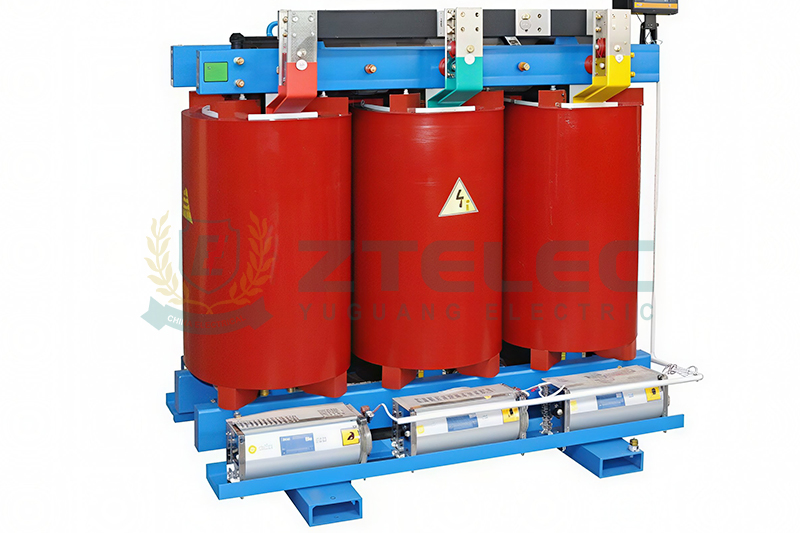
Quick Answer: The Three Test Categories
Routine tests are done on every unit. Type tests are done once per design. Special tests are done only if the contract says so.
| Category | Performed on | Main question it answers |
|---|---|---|
| Routine test | Every transformer | Was this specific unit built correctly? |
| Type test | One unit per design | Is the design strong enough? |
| Special test | Only by agreement | Does it meet the extra needs of my site? |
Why Transformer Testing Matters
A transformer is a long-life asset. Many units run for 25 to 30 years. A hidden defect can cause an outage, a fire risk or an expensive early replacement.
Testing is the cheapest insurance you can buy. The cost of a full routine test is small compared with the cost of one failure on site.
Tests also protect your contract. Measured values give you a clear, objective basis for acceptance, penalties and warranty claims.
What Is IEC 60076?
IEC 60076 is a multi-part series from the International Electrotechnical Commission. It covers ratings, design, testing and application of power transformers. Utilities, EPC contractors and factories in over 100 countries use it.
The parts below matter most when you write a test specification.
| Part | Subject |
|---|---|
| IEC 60076-1 | General requirements and test definitions |
| IEC 60076-2 | Temperature rise of liquid-immersed transformers |
| IEC 60076-3 | Insulation levels and dielectric tests |
| IEC 60076-5 | Ability to withstand short circuit |
| IEC 60076-10 | Determination of sound levels |
| IEC 60076-11 | Dry type transformers |
Tip: always name the standard edition in your contract. Test requirements change between editions.
Routine Tests: Checking Every Transformer
Routine tests are carried out on every unit before it leaves the factory. They are fast, they are repeatable, and they catch manufacturing defects early.
| Routine test | What it proves | Why buyers care |
|---|---|---|
| Winding resistance | Joints and conductors are correct | Finds loose connections and wrong conductor sizes |
| Voltage ratio and phase displacement | Ratio is right on every tap, vector group is correct | A wrong vector group blocks parallel operation |
| Short-circuit impedance and load loss | Impedance and copper loss match the guarantee | Sets fault current, voltage regulation and running cost |
| No-load loss and current | Core quality and core loss | Core loss runs 24 hours a day for decades |
| Dielectric routine tests | Insulation withstands working and overvoltage stress | Confirms safe operation on the real network |
Dielectric Routine Tests
These normally include a separate-source AC withstand test and an induced AC withstand test. Higher voltage classes may also need a lightning impulse routine test.
Partial Discharge in Dry Type Units
Under IEC 60076-11, partial discharge measurement is a routine test for medium voltage dry type units. It is the best quality indicator for a cast resin transformer. Voids in the resin show up as discharge activity.
Other Routine Checks
Depending on the design, routine testing also covers on-load tap-changer operation, tank leak and pressure tests for oil filled transformers, and core and frame insulation checks.
Type Tests: Proving the Design
A type test is performed on one representative transformer. If the design does not change, the result applies to identical or similar units. That is why a valid type test report is the first thing to compare between suppliers.
Temperature Rise Test
This is the most important type test. The transformer is loaded with its total losses until the temperature stabilizes. Engineers then measure the rise of top oil and windings.
For an oil-immersed transformer, the method comes from IEC 60076-2. For a dry type transformer, it comes from IEC 60076-11. A pass shows that cooling, insulation class and losses work together. A unit that runs too hot ages faster.
As a rule of thumb, every sustained 6 to 8 degrees of extra winding temperature roughly halves insulation life. That is why this test is worth checking carefully.
Lightning Impulse Test
A very fast, very high voltage wave is applied to the windings. It simulates lightning strikes and network surges. For a typical 23 kV or 24 kV class unit, this is a type test and it proves the basic insulation level (BIL).
Engineers inspect the recorded waveforms. Any difference between reduced and full voltage shots can signal insulation damage.
Special Tests: Extra Proof by Agreement
Special tests are never automatic. If they are not written into the order, they will not be done. They are common on large power transformer projects and in demanding environments.
| Special test | Best suited for |
|---|---|
| Short-circuit withstand (IEC 60076-5) | Critical grid and industrial projects |
| Sound level (IEC 60076-10) | Sites near offices, hospitals, homes or data centers |
| Partial discharge on liquid-immersed units | High-reliability networks |
| Switching impulse and chopped-wave impulse | Systems with severe switching surges |
| Zero-sequence impedance | Grounded neutral and unbalanced loads |
| Harmonics of no-load current | Networks with many non-linear loads |
| Frequency response analysis (FRA) | Creating a baseline before shipment |
| Climatic, environmental and fire classes (dry type) | Humid, coastal or high-risk indoor sites |
A Note on Short-Circuit Testing
The short-circuit withstand test is expensive. Many projects accept a design calculation or a test report on a similar unit instead. Decide early which option your project can accept.
Typical Factory Test Sequence
Test order matters. Dielectric tests stress the insulation, so manufacturers usually run them after the measurement tests.
First, visual and dimensional checks, then ratio, vector group and winding resistance.
Second, no-load and load loss measurements, including impedance.
Third, dielectric tests: applied voltage, induced voltage and partial discharge where required.
Last, tap-changer operation, leak tests and final inspection before packing.
Ask the supplier for the planned sequence before the witness date. It saves time on the day.
Oil-Immersed vs Dry Type: What Changes in Testing?
The test philosophy is the same. The details are not.
| Item | Oil-immersed transformer | Dry type transformer |
|---|---|---|
| Main standard | IEC 60076-1, -2, -3 | IEC 60076-11 |
| Temperature limits | Top oil and average winding rise | Based on insulation class, such as F or H |
| Special focus | Tank leak test, oil quality, gas analysis on large units | Partial discharge, enclosure and environmental classes |
If your project compares both types, review the test plan together with the product choice. Ask for a clear test list for each option.
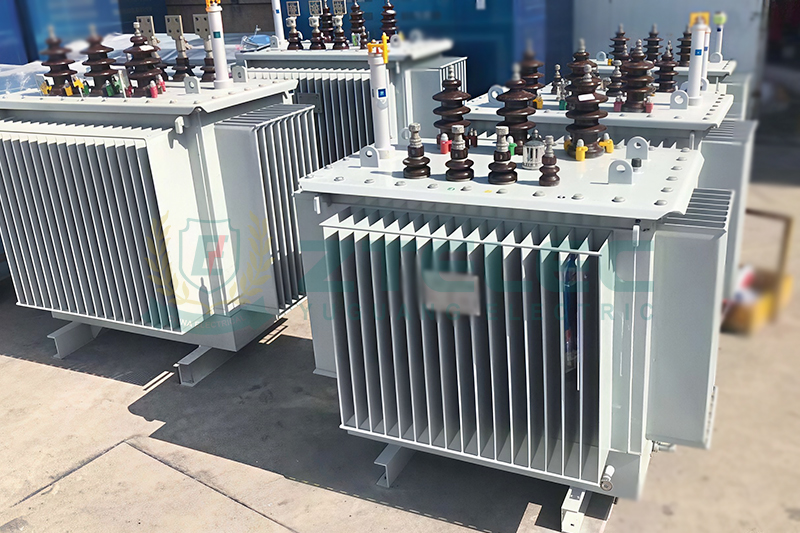
How to Specify Tests in a Transformer Tender
A short, clear test clause prevents disputes later. Use four steps.
Step 1: Name the Standard
State the series and edition, for example IEC 60076.
Step 2: Require Routine Tests on Every Unit
Make full routine testing and written results part of delivery.
Step 3: Request a Valid Type Test Report
Ask for a report on the same design, ideally from an accredited laboratory and issued within the last five to ten years.
Step 4: List Special Tests and Acceptance Criteria
Name each special test you need and state who pays for it. Set tolerances for guaranteed no-load loss, load loss, impedance and sound level. State the consequence if a value is exceeded.
Documents to Request With Your Order
A complete document package makes acceptance and later maintenance much easier. Ask for these items.
Routine test report for each serial number, signed by the manufacturer.
Type test report for the same design, with the laboratory name and date.
Special test reports for every test listed in the contract.
Calibration certificates for the main measuring equipment used.
Material and component certificates for the core steel, winding conductor, bushings and insulating oil or resin.
Outline drawing and nameplate drawing that match the final unit.
Request soft copies in PDF as well as printed originals. Digital copies are easier to store with your asset records.
Witness Testing and Reading the Reports
You can witness factory tests yourself or send a third-party inspector. This is common on utility projects, large industrial orders and first-time supplier relationships.
When the reports arrive, check three things:
Identity. The serial number, rating, tap position and date must match the nameplate.
Guarantees. Compare measured losses and impedance with the contract values.
Conditions. A temperature rise report made at a different rating may not apply to your unit.
Keep every report. It becomes your baseline for maintenance, warranty claims and future diagnostics.
Common Mistakes When Reviewing Test Requirements
Accepting a type test report for a different design. A report on another rating, another core or another winding layout does not prove your unit. Check the technical data on the first page.
Forgetting loss tolerances. Guaranteed losses without stated tolerances invite disputes. Write the limits into the contract.
Mixing standard families. IEC and IEEE test lists and limits differ. A tender that quotes both leaves room for argument.
Skipping special tests to save money, then needing them later. Sound level and FRA baselines are hard to recreate after delivery. If you may need them, order them upfront.
Not checking test equipment calibration. A good factory keeps calibration certificates for its meters and impulse generator. Ask to see them during the audit.
Frequently Asked Questions
Does every transformer need its own type test?
No. One representative unit per design is tested. Confirm that the design in the report matches your product.
Are special tests mandatory?
No. They are performed only if agreed in the contract.
Can IEC 60076 be used for both oil-immersed and dry type units?
Yes. Dry type units follow IEC 60076-11. The other parts cover liquid-immersed units and general requirements.
Is IEC 60076 the same as IEEE C57?
No. The two families have different test lists, limits and terms. Do not mix them in one tender.
Match the Test Plan to the Project Risk
Routine tests protect you from defects in each unit. Type tests protect you from weak designs. Special tests protect you from the risks specific to your site.
For a standard distribution transformer, routine tests plus a valid type test report are usually enough. For critical or high-value assets, add the special tests that match your real risks.
Planning to buy an oil-immersed transformer, a cast resin transformer or a complete substation? Send us your voltage class, capacity and site conditions. Our engineers will recommend the right IEC 60076 test plan and include the matching test reports with your quotation.
special test
transformer tests
dry type transformer
routine test
IEC 60076
- more+releated article
- 2026-11-13IEC 60076 Transformer Tests: Routine, Type &am
- 2026-11-12Outdoor Transformer Installation: Clearances &
- 2026-11-113500 kVA Transformer Oil: Mineral vs Ester vs
- 2026-11-103500 kVA Transformer: EU Tier 2 vs US DOE Loss
- 2026-11-09ZTELEC GROUP 2026 Year-End Promotion: Electric
- 2026-11-06Dyn11 vs Yyn0: Choosing the Vector Group for a
- 2026-11-05Sealed Tank vs Conservator Design for a 23 kV
- 2026-11-04ONAN vs ONAF Cooling for a 3500 kVA Transforme
- 2026-11-033500 kVA Transformer Price 2026: Cost Drivers
- 2026-11-023500 kVA Transformer Load Factor: Losses, Heat
- ELECTRICAL INSULATION BOARD MATERIALS
- ELECTRICAL INSULATION MATERIALS
- POWER TRANSFORMER
- ENAMELED WIRE
- SWITCHGEAR


FR-4 Copper-Free Laminate | High-Performance Insulation Material

FR-4 Copper Clad Laminate Manufacturer & Supplier
routine test
IEC 60076
transformer tests
dry type transformer
type test
special test
oil-immersed transformer
transformer fire safety
outdoor transformer installation
pad-mounted transformer
transformer clearances
3500 kVA transformer oil
Oil immersed transformer
mineral oil vs ester vs silicone
oil filled transformers
3500 kVA transformer
transformer loss limits
EU Tier 2 transformer
DOE transformer efficiency
2026 year-end promotion
ZTelec Group
insulating materials
Yuguang Electric
electrical equipment
transformer vector group