
What Is a Prefabricated Substation? Types and Uses
A prefabricated substation is a factory-built, factory-tested power distribution unit that combines a transformer, medium voltage switchgear and low voltage panels inside one compact enclosure. It arrives on site ready to connect, which is why it has become a standard choice for modern power projects.
This guide explains what a prefabricated substation is, how it is built, the main types available, where it is used and how to choose the right one. If you are planning a grid, solar, wind, industrial or infrastructure project, this overview will help you make a clear decision.
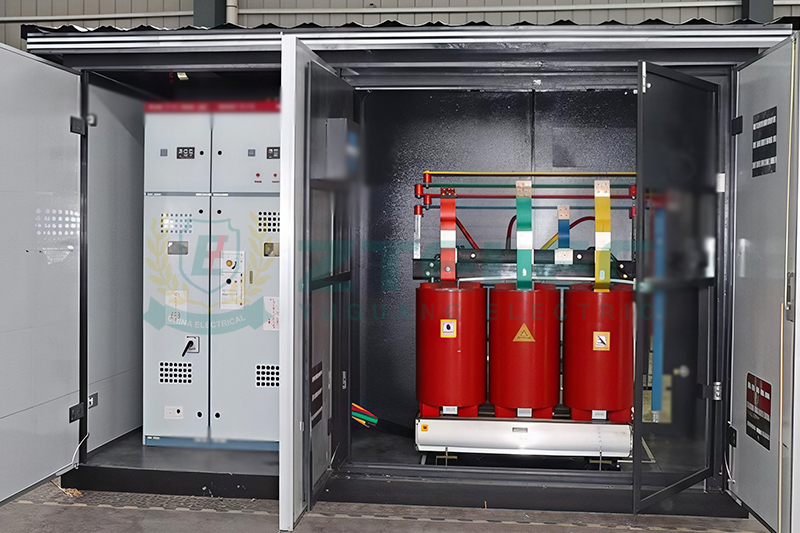
What Is a Prefabricated Substation?
A prefabricated substation, also called a prefab substation, packaged substation, compact substation or modular substation, is a complete electrical substation assembled and tested in the factory before shipment.
Instead of building a brick or concrete substation room on site and installing each device one by one, the customer receives a finished unit. The transformer, switchgear and distribution equipment are already installed, wired and tested inside a weatherproof housing.
The unit only needs to be placed on a foundation, connected to incoming and outgoing cables and commissioned. This shortens project time and reduces on-site risk.
Main Components of a Prefabricated Substation
Every prefabricated substation is divided into functional sections. The exact layout depends on the type and the project requirements, but most units contain three core parts.
Medium Voltage Switchgear
The medium voltage section receives power from the grid, usually at 6 kV, 10 kV, 11 kV, 13.8 kV, 22 kV, 23 kV, 33 kV or 35 kV. It typically uses a ring main unit or metal-clad switchgear with load break switches, circuit breakers and fuse protection.
Power Transformer
The transformer steps the voltage down to the level required by the load, commonly 400 V, 415 V or 690 V. Depending on the application, the unit can house an oil immersed transformer or a dry type transformer.
Low Voltage Distribution Panel
The low voltage section distributes power to outgoing feeders. It includes circuit breakers, metering, protection devices, and in many cases reactive power compensation and monitoring equipment.
Enclosure and Auxiliary Systems
The enclosure is made of galvanized steel, stainless steel, aluminum or other corrosion resistant material. It includes ventilation, lighting, grounding, interlocks and, where needed, fire protection and temperature control.
How a Prefabricated Substation Works
Power enters the unit through the medium voltage cable or overhead connection. The MV switchgear protects and switches the incoming supply and feeds the transformer.
The transformer converts the medium voltage to low voltage. The LV panel then distributes this power to buildings, machines, charging stations or other loads through protected feeders.
Protection relays, fuses and interlocks work together to isolate faults and keep operators safe. Because the whole system is designed as one product, the components are matched in rating, size and performance.
Types of Prefabricated Substations
There are several types of prefabricated substation. The right choice depends on space, local standards, climate, load profile and budget.
European Type Prefabricated Substation
The European type, often called a box type substation, places the MV switchgear, transformer and LV panel in separate compartments inside one enclosure. The transformer is installed inside the box, which gives good protection from weather and tampering.
This design is widely used in urban distribution networks, residential areas, commercial buildings and industrial parks. It follows IEC standards, such as IEC 62271-202.
American Type Prefabricated Substation
The American type, also known as a pad-mounted substation, uses an oil immersed transformer with the MV and LV compartments built on the same base. The transformer is usually outside the enclosure and cooled by natural air.
This type is compact, cost effective and common in North America and other markets that follow IEEE and ANSI standards. It is popular for parks, utilities and underground distribution networks.
Skid-Mounted Prefabricated Substation
A skid-mounted substation is built on a steel skid, so the full assembly can be moved and installed quickly. It is common in oil and gas fields, mining sites, construction projects and temporary power supply.
Container Type Substation
A container type substation uses a standard or customized shipping container as the enclosure. It is easy to transport, stack and install. It is widely chosen for solar plants, battery energy storage systems and remote sites.
Marine and Offshore Prefabricated Substation
Marine and offshore units are designed for ships, platforms and coastal projects. They must resist salt spray, humidity, vibration and movement, and they often need classification society certification.
Renewable Energy Prefabricated Substation
These units are designed for photovoltaic and wind power plants. They integrate the step-up transformer, MV switchgear, LV auxiliary supply and monitoring equipment, and they can handle changing load conditions and bidirectional power flow in storage systems.
Prefabricated Substation vs. Conventional Substation
A conventional substation is built on site using civil works, masonry or concrete rooms, and individually installed equipment. A prefabricated substation shifts most of that work into the factory.
Installation time: A prefabricated substation can be installed in days instead of weeks or months, because civil work is limited to a simple foundation.
Footprint: The compact design uses much less land, which is valuable in cities and industrial sites.
Quality control: Factory assembly and testing give more consistent quality than site assembly in changing weather.
Cost control: Less civil work, fewer site workers and shorter schedules make total project cost easier to predict.
Relocation: Many prefabricated substations can be moved or expanded when the project changes.
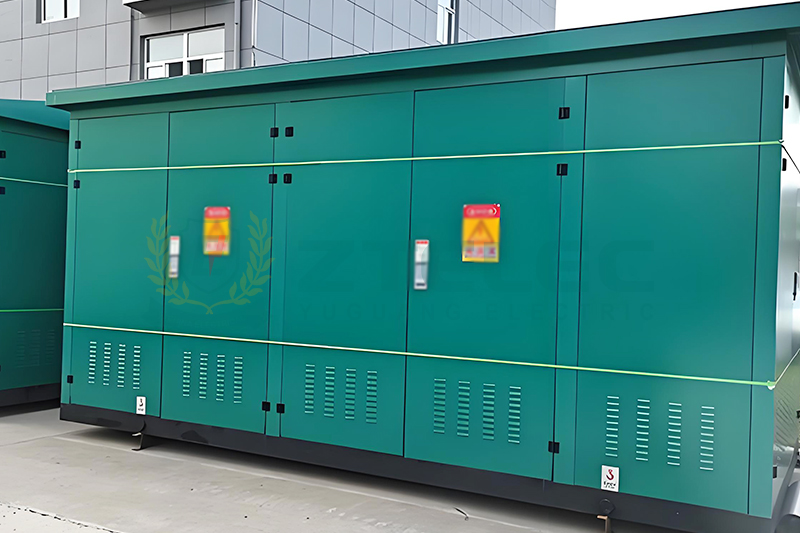
Key Advantages of a Prefabricated Substation
The growing popularity of the prefabricated substation comes from several practical benefits.
Fast delivery and commissioning. Because the equipment is pre-assembled and pre-tested, the project can be energized quickly.
Compact and space saving. A single enclosure replaces a full substation building.
Safe operation. Fully enclosed live parts, interlocks and internal arc protection reduce risk for operators and the public.
Flexible customization. Voltage level, capacity, cooling method, enclosure material and protection scheme can be tailored to the project.
Low maintenance. Sealed design and quality components reduce routine maintenance work.
Strong environmental adaptability. Units can be designed for heat, cold, high altitude, dust, humidity and coastal conditions.
Common Uses of Prefabricated Substations
A prefabricated substation is used anywhere reliable medium voltage to low voltage power distribution is needed.
Utility and Urban Power Distribution
Utilities use prefab substations to supply residential districts, commercial centers and public buildings, especially where land is limited.
Solar and Wind Power Plants
Renewable projects use prefabricated substations to step up voltage from inverters and collect power from generation units. Fast installation helps developers meet grid connection dates.
Battery Energy Storage Systems
Energy storage projects rely on prefabricated substations and BESS transformers to connect battery containers to the grid and to supply auxiliary loads.
Industrial Plants and Mining
Factories, mines, chemical plants and oil and gas sites use them for dependable power at production areas, often in harsh environments.
Infrastructure Projects
Railways, airports, ports, tunnels, data centers and EV charging stations use prefabricated substations for stable and scalable power supply.
Construction and Temporary Power
Skid-mounted and container units can provide temporary or movable power for construction sites and special events.
How to Choose the Right Prefabricated Substation
Selecting a prefabricated substation is easier when you define the main parameters at the start.
Voltage and capacity: Confirm the primary and secondary voltage, frequency and total kVA required, with some margin for future growth.
Transformer type: Choose between an oil immersed transformer and a dry type transformer based on safety rules, space and environment.
Applicable standards: Check whether the project follows IEC, IEEE, ANSI or GB standards, and whether third-party witness testing is needed.
Installation environment: Consider temperature, altitude, humidity, pollution, salt spray and seismic requirements.
Protection and layout: Decide on switchgear type, protection schemes, metering, and the internal layout that suits your operation.
Supplier capability: Work with a manufacturer that can design, build and test the full unit, not just individual parts.
Prefabricated Substation Solutions from ZTELEC
ZTELEC is a professional manufacturer of power transformers and substation equipment for global energy storage, grid, offshore and industrial customers. We supply customized prefabricated substations, oil immersed transformers, dry type transformers, BESS transformers and marine transformers.
Our products can be designed to IEEE, ANSI, IEC and GB standards, with full third-party witness testing available. Our engineers work with each customer to match the voltage level, capacity and enclosure design to the real project conditions.
prefabricated substation types
what is a prefabricated substation
prefabricated substation
prefab substation
cast-resin transformer
- more+releated article
- 2026-11-17What Is a Prefabricated Substation? Types and
- 2026-11-16Cast Resin vs VPI Dry Type Transformers: Key D
- 2026-11-1423 kV Transformer Standards: IEC vs IEEE/ANSI
- 2026-11-13IEC 60076 Transformer Tests: Routine, Type &am
- 2026-11-12Outdoor Transformer Installation: Clearances &
- 2026-11-113500 kVA Transformer Oil: Mineral vs Ester vs
- 2026-11-103500 kVA Transformer: EU Tier 2 vs US DOE Loss
- 2026-11-09ZTELEC GROUP 2026 Year-End Promotion: Electric
- 2026-11-06Dyn11 vs Yyn0: Choosing the Vector Group for a
- 2026-11-05Sealed Tank vs Conservator Design for a 23 kV
- ELECTRICAL INSULATION BOARD MATERIALS
- ELECTRICAL INSULATION MATERIALS
- POWER TRANSFORMER
- ENAMELED WIRE
- SWITCHGEAR
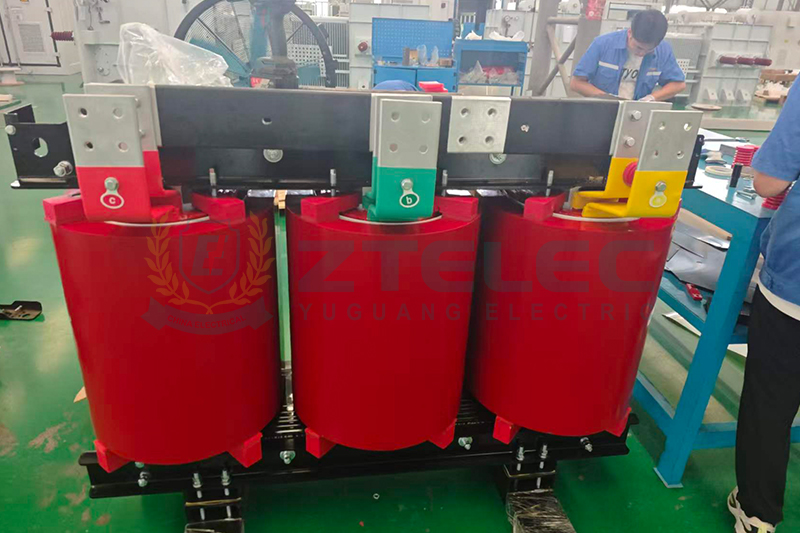
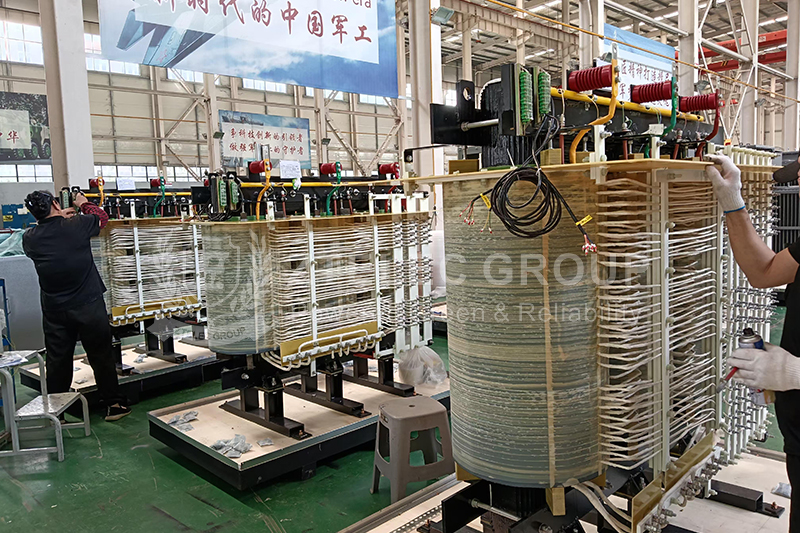


FR-4 Copper-Free Laminate | High-Performance Insulation Material

FR-4 Copper Clad Laminate Manufacturer & Supplier
prefabricated substation
what is a prefabricated substation
prefab substation
prefabricated substation types
cast resin vs VPI dry type transformer
cast-resin transformer
dry-type transformer
VPI transformer
23 kV transformer
dry type transformer
IEEE C57.12.00
23 kV transformer standards
GB 1094
oil-immersed transformer
IEC 60076
type test
routine test
special test
transformer tests
transformer clearances
pad-mounted transformer
transformer fire safety
outdoor transformer installation
mineral oil vs ester vs silicone
Oil immersed transformer