
Dry Type Transformer Price List 2026: What to Expect
Buyers planning projects in 2026 keep asking the same question: how much does a dry-type transformer really cost? The honest answer is that it depends on rating, losses, materials and specification.
This guide gives indicative price ranges for each common size, explains what moves the numbers, and shows how to compare quotations fairly. It focuses on the cast-resin transformer, the most widely specified type of dry-type transformer for buildings, factories and infrastructure.
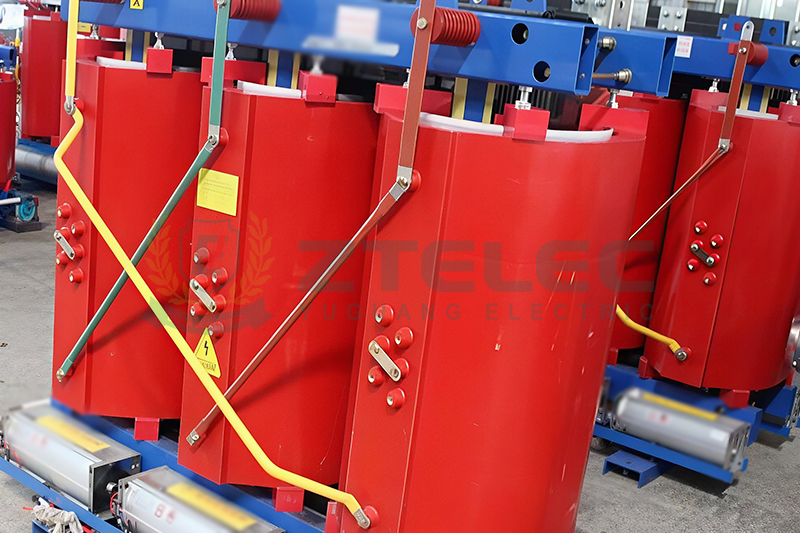
Why Dry-Type Transformer Prices Matter in 2026
Demand for the dry-type transformer keeps growing. Data centers, commercial towers, hospitals, metro systems, solar plants and factories all prefer fire-safe, low-maintenance equipment installed close to the load.
At the same time, copper, silicon steel and epoxy resin prices have been volatile. A quote that looks cheap today may not hold for long, so understanding the cost structure helps you budget and negotiate with confidence.
Dry Type Transformer Price List 2026: Indicative Ranges
The table below shows typical ex-works price ranges in US dollars for a three-phase, 10 kV class, copper-winding, cast-resin transformer supplied without an enclosure. These figures are estimates for planning only, not a binding offer.
| Rated Capacity (kVA) | Indicative Price Range (USD, EXW) | Typical Application |
|---|---|---|
| 100 | 3,000 – 4,500 | Small commercial sites |
| 200 | 4,000 – 6,000 | Retail, light industry |
| 315 | 5,000 – 7,500 | Offices, schools |
| 500 | 7,000 – 10,000 | Residential blocks |
| 630 | 8,000 – 12,000 | Shopping centers |
| 800 | 9,500 – 14,000 | Hotels, hospitals |
| 1000 | 11,000 – 16,000 | Factories, data rooms |
| 1250 | 13,000 – 19,000 | Industrial plants |
| 1600 | 16,000 – 23,000 | Large buildings |
| 2000 | 19,000 – 28,000 | Heavy industry |
| 2500 | 23,000 – 33,000 | Infrastructure, renewables |
As a rule of thumb, price per kVA falls as capacity rises. Small units cost more per kVA because fixed costs for design, testing and tooling are spread over less power.
What Drives the Price of a Cast-Resin Transformer
Two quotes for the same kVA can differ by 30 percent or more. Five factors explain most of the gap.
1. Core Material and Loss Grade
The core is built from grain-oriented silicon steel. Higher-grade steel lowers no-load loss but raises cost. Moving from a standard grade to a high-efficiency grade, such as the SCB13 series, usually adds a few percent to the price.
Amorphous alloy cores cut no-load loss even further, yet they cost noticeably more and suit projects where energy savings justify the premium.
2. Winding Material: Copper vs Aluminium
Copper windings are the market standard for a premium cast-resin transformer. Aluminium windings reduce the purchase price, but they need larger conductors for the same losses and offer lower mechanical strength.
Always check that the quotation states the winding material for both high-voltage and low-voltage coils.
3. Insulation Class and Temperature Rise
Most units use class F insulation with a 100 K temperature rise, while class H gives extra thermal margin. A lower temperature rise or a higher insulation class raises material usage and cost, although it can extend service life.
4. Enclosure, Cooling and Accessories
A basic dry-type transformer ships without a housing. Adding an IP20, IP21 or IP23 enclosure can add several percent. Forced-air cooling fans, temperature controllers, PT100 sensors, anti-vibration pads and lifting accessories also increase the final figure.
Fans can raise short-term capacity by up to 40 percent, which is a cost-effective way to handle peak loads without buying a larger unit.
5. Voltage Class and Standards
A 10 kV unit costs less than a 20 kV or 35 kV unit because insulation distances and resin volume grow with voltage. Compliance with IEC 60076-11, GB 1094.11, or regional rules such as EU Ecodesign Tier 2 also affects design and test requirements.
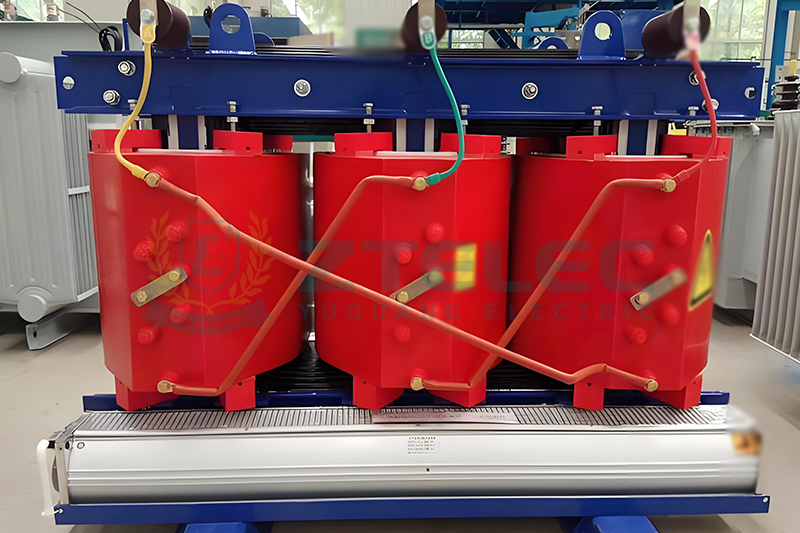
Cast-Resin Transformer vs Other Dry-Type Designs
Not every dry-type transformer is cast in resin. Vacuum pressure impregnated (VPI) units are usually cheaper, while cast-resin designs cost more but offer better moisture resistance, short-circuit strength and fire performance.
For humid, dusty or coastal sites, the premium for a cast-resin transformer is often worth paying. For clean, dry indoor rooms, a VPI design may deliver enough protection at a lower price.
Raw Material Trends Shaping 2026 Pricing
Three inputs dominate the bill of materials: copper, silicon steel and epoxy resin. Copper often accounts for the largest share of the cost of a cast-resin transformer, so even small moves on the metal market flow straight into quotations.
Silicon steel prices follow global steel demand and energy costs. Epoxy resin and hardener prices depend on petrochemical markets. Freight rates and currency exchange also play a role for overseas buyers.
Because of this volatility, many suppliers now limit quote validity to 15 or 30 days. Ask for a clear validity date and a price-adjustment clause if your order is large or delivery is far away.
Hidden Costs Beyond the Unit Price
The ex-works price is only the starting point. A realistic budget should also include the following items.
Packing, Freight and Insurance
Export wooden cases, container loading, ocean freight and marine insurance can add 5 to 12 percent depending on destination and shipping terms such as FOB, CIF or DAP.
Duties, Taxes and Testing
Import duty, VAT and local certification fees vary widely by country. Third-party witness testing, type-test reports and factory acceptance visits also carry costs that should be agreed in advance.
Installation and Commissioning
Foundations, cable terminations, grounding, ventilation and protection relays belong in your project budget. Good ventilation matters because every kilowatt of loss turns into heat in the room.
How to Read a Dry-Type Transformer Quotation
A professional quotation should list rated power, voltage ratio, vector group, impedance, losses, insulation class, temperature rise, cooling method, enclosure rating and applicable standards.
Pay special attention to guaranteed no-load loss and load loss. A low headline price combined with high losses will cost far more over the life of the unit.
Also confirm lead time, warranty period, payment terms, and which accessories are included. Missing details are the most common reason for price comparisons going wrong.
Tips to Get a Better Price Without Cutting Quality
Smart buyers focus on value, not only the lowest number. These practical steps usually help.
First, send a complete inquiry with kVA, voltage, frequency, impedance, altitude, ambient temperature, enclosure and standards. Complete data prevents repeated revisions and lets suppliers quote accurately.
Second, standardize ratings across a project. Ordering several identical cast-resin transformers lowers design and production cost per unit.
Third, compare at least three suppliers using the same technical sheet. Check factory capability, vacuum casting equipment, test facilities and references from similar projects.
Finally, balance price against losses. Choosing a loss grade that fits your load profile often saves more money than negotiating a small discount.
Total Cost of Ownership: The Real Price
The purchase price may represent only a portion of what a transformer costs over 20 years. Electricity lost in the core and windings, cooling needs and maintenance all add up.
A more efficient dry-type transformer with lower losses can repay its higher upfront cost within a few years, especially in facilities that run continuously such as data centers and process plants.
Frequently Asked Questions
How much does a 1000 kVA dry-type transformer cost in 2026?
A standard 1000 kVA cast-resin unit typically falls in the range of 11,000 to 16,000 USD ex-works, depending on loss grade, enclosure and accessories. Final cost depends on your specification.
Is a cast-resin transformer more expensive than an oil-immersed transformer?
Generally yes, the upfront price is higher. However, a cast-resin transformer needs less maintenance, avoids oil handling and simplifies fire protection, which can narrow the lifetime cost gap.
Can I reduce the price by choosing aluminium windings?
You can lower the purchase price, but copper offers better conductivity, strength and reliability. Evaluate losses, short-circuit performance and project needs before deciding.
The 2026 dry type transformer price list shows wide ranges because specifications differ so much. Rating, core grade, winding material, insulation class, enclosure and standards all shape the final figure.
Use the indicative table above for early budgeting, then request detailed quotations from qualified manufacturers. Compare losses, accessories, lead time and total cost of ownership, not only the headline price, and you will secure a reliable dry-type transformer or cast-resin transformer at a fair market value.
cast-resin transformer price
dry-type transformer price
dry type transformer price list 2026
1250kVA epoxy resin cast dry-type transformer price
1250kVA transformer price
- more+releated article
- 2026-11-19Dry Type Transformer Price List 2026: What to
- 2026-11-18Oil Filled Self Cooled Transformer: ONAN Basic
- 2026-11-17What Is a Prefabricated Substation? Types and
- 2026-11-16Cast Resin vs VPI Dry Type Transformers: Key D
- 2026-11-1423 kV Transformer Standards: IEC vs IEEE/ANSI
- 2026-11-13IEC 60076 Transformer Tests: Routine, Type &am
- 2026-11-12Outdoor Transformer Installation: Clearances &
- 2026-11-113500 kVA Transformer Oil: Mineral vs Ester vs
- 2026-11-103500 kVA Transformer: EU Tier 2 vs US DOE Loss
- 2026-11-09ZTELEC GROUP 2026 Year-End Promotion: Electric
- ELECTRICAL INSULATION BOARD MATERIALS
- ELECTRICAL INSULATION MATERIALS
- POWER TRANSFORMER
- ENAMELED WIRE
- SWITCHGEAR

FR-4 Copper-Free Laminate | High-Performance Insulation Material
FR-4 Copper Clad Laminate Manufacturer & Supplier
dry type transformer price list 2026
cast-resin transformer price
dry-type transformer price
1250kVA transformer price
1250kVA epoxy resin cast dry-type transformer price
dry-type transformers
prefabricated substation
prefab substation
prefabricated substation types
what is a prefabricated substation
cast-resin transformer
dry-type transformer
VPI transformer
cast resin vs VPI dry type transformer
23 kV transformer
GB 1094
oil-immersed transformer
IEC 60076
dry type transformer
23 kV transformer standards
IEEE C57.12.00
type test
special test
routine test
transformer tests