
How to service a dry type transformer?
For extended life and optimal performance, dry-type transformer repair and maintenance activities are highly recommended periodically.
How to service a dry type transformer?
Before the inspection, we must make sure whether the transformer has been powered off and grounded, whether the surrounding environment has safety hazards, and we must prepare the tools needed for maintenance, such as insulation gloves, insulation rods, screwdrivers, wrenches, test instruments, etc.
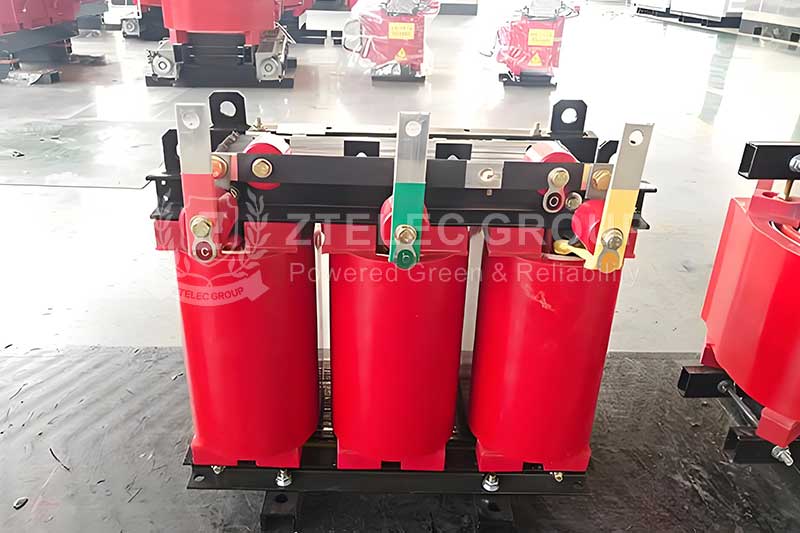
Specific steps:
Dust removal: Clean the dust around the transformer and accessories to ensure the smooth maintenance process.
Check the connection: Check whether the equal potential connection is good, whether the wire joint is corroded, whether it is often disassembled and corroded; Tighten the lead connectors, pins, equipotential connection screws, and connection bus screws.
Check insulation: Use test instruments to check the insulation resistance of the transformer to ensure that the insulation resistance is not less than 70% of the original factory's original record. If it does not meet the requirements, it should be reported first, and close the equal potential connection knob on the high voltage side again, and charge the dry type transformer battery.
Check the heat dissipation system: Check whether the heat dissipation fan and thermostat work properly. If there is a fault, replace or maintain it in time.
Check the core and winding: Check the grounding status of the core and the insulation status of the through screw, check and clean the winding, winding clamping device, wire, etc. Check whether the winding insulation is good and the gasket is firm. Coil no loosening, deformation, displacement, primary winding and secondary winding should be asymmetric.
Check the switch: Including the overhaul of the connecting switch, additional equipment, dynamic and static contacts and their transmission mechanism. Check and repair control devices with load division switches including motors, transmission mechanisms and their operating circuits.
Handling anomalies: If abnormal conditions such as abnormal rise in transformer temperature and increase in noise are found, the transformer should be stopped for inspection in time and corresponding treatment measures should be taken.
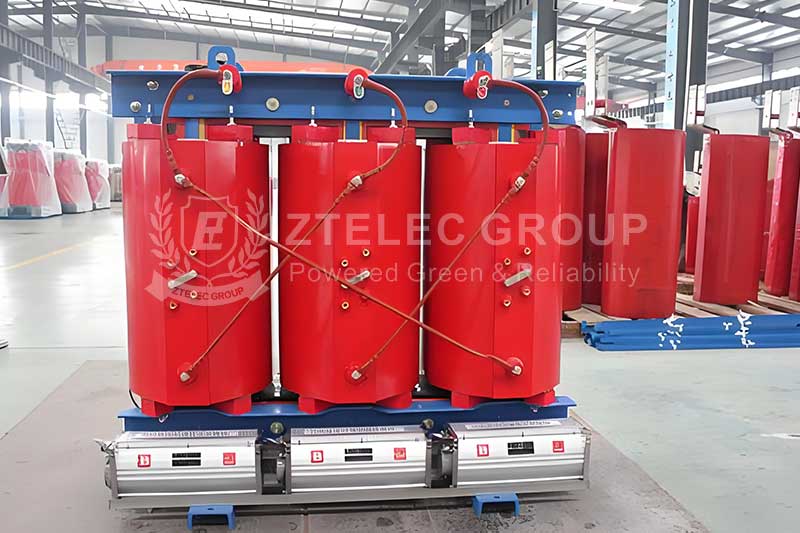
Inspection after maintenance
Appearance check: Check whether the transformer appearance is intact, no deformation, cracks and other defects.
Functional test: Perform functional test on the transformer to ensure that the performance indicators meet the specified requirements.
Safety check: Check the transformer and its surrounding environment again for safety hazards to ensure safety after maintenance.
While liquid-filled transformers are monitored based on indicating gauges, dry-type transformer maintenance consists mostly of subjective observations. Regardless of how often you’re doing maintenance on your units, issues can arise at any time. Be sure to be observant of your dry type transformer’s appearance and operation. If you notice anything out of the ordinary, it’s vital that you attend to the issue immediately to avoid damage.
oil immersed transformer lifespan
oil immersed transformer maintenance
transformer lifecycle
transformer insulation aging
dry type transformer temperature monitoring
- more+releated article
- 2026-05-11How Long Does an Oil-Immersed Transformer Last
- 2026-05-08Modern Power System Dry-Type Transformer Insta
- 2026-05-07Oil-Immersed Transformer Overheating: Causes,
- 2026-05-07Dry-Type Transformers for Data Centers: 2026 R
- 2026-04-30Air-Core Reactor vs Iron-Core Reactor: How to
- 2026-04-29Compact Enclosed Transformer for Smart Grid: T
- 2026-04-2812-Pulse and 24-Pulse Phase-Shifting Transform
- 2026-04-27Oil-Immersed Transformers for Industrial Plant
- 2026-04-25Why Dry-Type Transformers Are Preferred for Ho
- 2026-04-24Enclosed Transformer Outdoor Solutions: IP Pro
- ELECTRICAL INSULATION BOARD MATERIALS
- ELECTRICAL INSULATION MATERIALS
- POWER TRANSFORMER
- ENAMELED WIRE
- SWITCHGEAR



transformer insulation aging
transformer lifecycle
oil immersed transformer lifespan
oil immersed transformer maintenance
dry type transformer installation
dry type transformer temperature monitoring
dry type transformer maintenance
dry type transformer sizing
transformer cooling system failure
transformer overheating causes
oil immersed transformer overheating
transformer oil temperature
harmonic mitigation
dry type transformer
K factor transformer
data center transformer
Cast resin transformer
insulation oil degradation
DGA analysis transformer
transformer fault analysis
oil immersed transformer failure
smart grid transformer
compact enclosed transformer
integrated distribution transformer
compact transformer substation