
Air-Core Reactor vs Iron-Core Reactor: How to Select the Right Solution
In modern power systems and industrial distribution networks, reactor selection plays a critical role in system stability, efficiency, and equipment lifespan. Air-core reactors and iron-core reactors represent the two dominant technologies, each with fundamentally different magnetic structures and performance behaviors. Understanding these differences is essential for engineers and procurement professionals seeking reliable and cost-effective solutions.
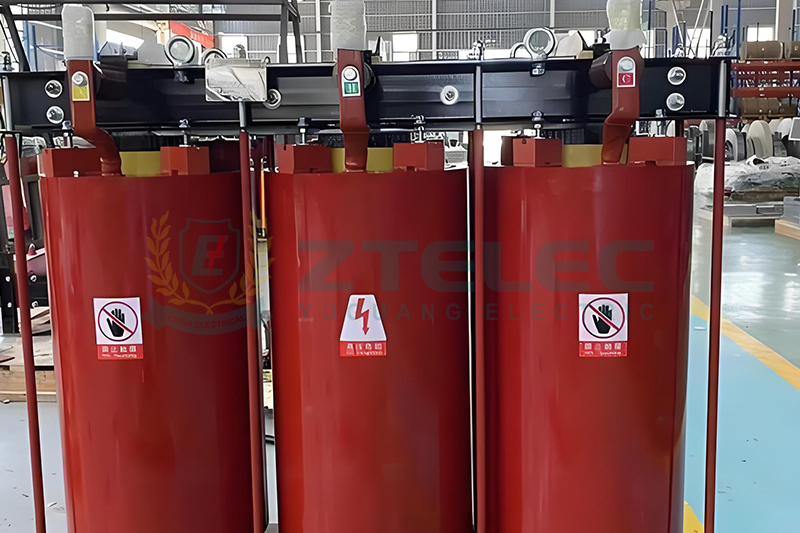
Structure and Operating Principles
Air-Core Reactor
Air-core reactors use air as the magnetic medium, with windings supported by non-magnetic structures. The inductance is determined purely by coil geometry, including turns, diameter, and length, without reliance on magnetic materials.
Their permeability remains constant, ensuring stable inductance regardless of current variation. The absence of magnetic saturation provides excellent linearity across the full operating range. Losses are primarily resistive (copper losses), with no core losses involved.
Iron-Core Reactor
Iron-core reactors incorporate laminated silicon steel cores to significantly increase magnetic permeability. Air gaps are typically introduced into the core to control saturation and improve linearity.
This structure allows for higher inductance within a smaller volume. However, it introduces core losses, including hysteresis and eddy current losses. As current increases, inductance becomes nonlinear due to magnetic saturation effects.
Performance Comparison
Air-core reactors offer superior linearity, maintaining stable impedance even under high current and harmonic conditions. They are highly resistant to saturation and perform reliably in dynamic or distorted electrical environments.
Iron-core reactors, by contrast, provide compact size and higher inductance density, making them suitable for installations with space constraints. However, their performance can degrade under harmonic-rich or overload conditions due to saturation and increased losses.
From a loss perspective, air-core reactors eliminate core losses entirely, while iron-core designs combine copper and core losses. In long-term continuous operation, this difference can significantly impact total energy consumption.
Electromagnetic behavior also differs. Air-core reactors generate stronger external magnetic fields, requiring careful installation planning. Iron-core reactors confine magnetic flux more effectively, reducing electromagnetic interference.
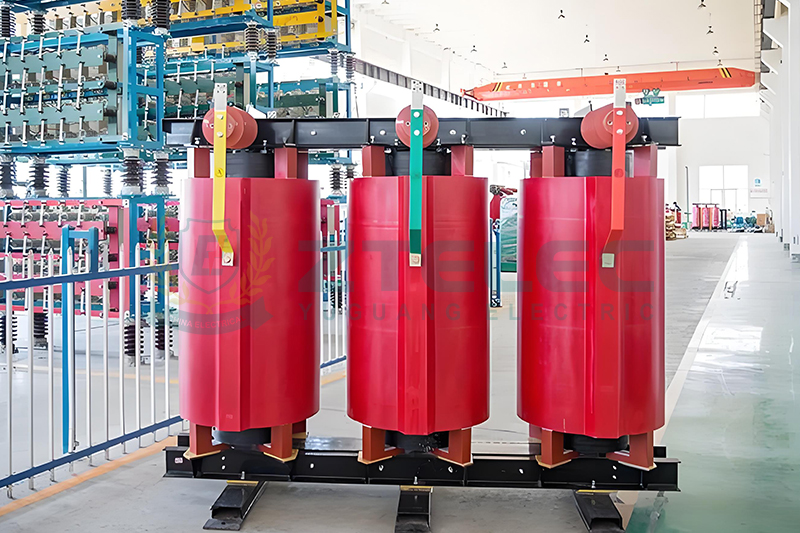
Typical Application Scenarios
Air-Core Reactor Applications
In harmonic filtering systems, especially where variable frequency drives and rectifiers generate significant distortion, air-core reactors provide stable tuning performance. Their linear characteristics prevent detuning caused by saturation.
For high-voltage transmission systems, particularly in shunt compensation at ultra-high voltage levels, air-core reactors ensure predictable impedance under wide voltage fluctuations, reducing resonance risks.
In current limiting applications, such as short-circuit protection or capacitor inrush control, air-core reactors maintain consistent impedance even during transient high-current events.
They are also widely used at inverter outputs, where harmonic-rich currents would otherwise increase losses and saturation risks in iron-core designs.
Iron-Core Reactor Applications
Iron-core reactors are commonly used as DC smoothing reactors in rectifier systems, where controlled ripple suppression and compact design are required.
In low-voltage reactive power compensation systems, such as capacitor banks, iron-core reactors provide an economical solution for limiting inrush currents and mitigating harmonic amplification.
They are also suitable for adjustable inductance applications, where air-gap tuning enables flexible control of inductance values.
In power electronics and UPS systems, iron-core and ferrite-based inductors dominate due to their compact size and cost efficiency in high-frequency environments.
Selection Strategy
When selecting between air-core and iron-core reactors, begin by evaluating harmonic content. Systems with high total harmonic distortion require air-core solutions to avoid saturation risks.
Next, assess overload and fault conditions. Applications involving frequent short-circuit or transient currents benefit from the inherent stability of air-core reactors.
Installation constraints must also be considered. Where space and weight are limited, iron-core reactors provide a clear advantage due to their compact design.
Lifecycle cost analysis is equally important. Although air-core reactors may have higher initial costs, their lower losses can result in reduced operating expenses over time.
Finally, electromagnetic compatibility should be evaluated. Sensitive environments such as hospitals or precision manufacturing facilities may favor iron-core reactors due to reduced stray magnetic fields.
Common Engineering Misconceptions
It is often assumed that iron-core reactors always have higher losses. In reality, under low inductance and low-frequency conditions, reduced winding resistance can offset core losses, making total losses comparable.
Another misconception is that air-core reactor magnetic fields are negligible. In practice, they can be significant and must be managed through proper spacing and layout design.
There is also a tendency to oversize air gaps in iron-core reactors to improve linearity. While this reduces saturation risk, it can lower inductance and increase acoustic noise, requiring careful optimization.
There is no universally superior reactor type. The optimal choice depends on balancing linearity, size, efficiency, cost, and electromagnetic performance. Air-core reactors excel in harmonic-rich and high-reliability environments, while iron-core reactors provide compact and economical solutions for stable, low-distortion systems.
For best results, engineers should base their selection on detailed load analysis, including current waveform and harmonic spectrum, and collaborate with manufacturers for thermal and performance validation under real operating conditions.
oil immersed transformer lifespan
oil immersed transformer maintenance
transformer lifecycle
transformer insulation aging
dry type transformer temperature monitoring
- more+releated article
- 2026-05-11How Long Does an Oil-Immersed Transformer Last
- 2026-05-08Modern Power System Dry-Type Transformer Insta
- 2026-05-07Oil-Immersed Transformer Overheating: Causes,
- 2026-05-07Dry-Type Transformers for Data Centers: 2026 R
- 2026-04-30Air-Core Reactor vs Iron-Core Reactor: How to
- 2026-04-29Compact Enclosed Transformer for Smart Grid: T
- 2026-04-2812-Pulse and 24-Pulse Phase-Shifting Transform
- 2026-04-27Oil-Immersed Transformers for Industrial Plant
- 2026-04-25Why Dry-Type Transformers Are Preferred for Ho
- 2026-04-24Enclosed Transformer Outdoor Solutions: IP Pro
- ELECTRICAL INSULATION BOARD MATERIALS
- ELECTRICAL INSULATION MATERIALS
- POWER TRANSFORMER
- ENAMELED WIRE
- SWITCHGEAR


transformer insulation aging
transformer lifecycle
oil immersed transformer lifespan
oil immersed transformer maintenance
dry type transformer installation
dry type transformer temperature monitoring
dry type transformer maintenance
dry type transformer sizing
transformer cooling system failure
transformer overheating causes
oil immersed transformer overheating
transformer oil temperature
harmonic mitigation
dry type transformer
K factor transformer
data center transformer
Cast resin transformer
insulation oil degradation
DGA analysis transformer
transformer fault analysis
oil immersed transformer failure
smart grid transformer
compact enclosed transformer
integrated distribution transformer
compact transformer substation