
How Dry-Type Transformers Reduce Operating Costs: Energy Efficiency & Long Life
As the global energy landscape shifts and industrial electricity prices continue to rise, companies are under pressure to optimize operations and reduce power-related expenses. In this context, the power system plays a vital role, with transformers being one of the most influential pieces of equipment. Dry-type transformers, with their innovative design and performance advantages, are becoming the preferred choice for modern businesses looking to lower costs and improve efficiency. This article explores how dry-type transformers contribute to cost reduction from the perspectives of energy efficiency, service life, and maintenance.
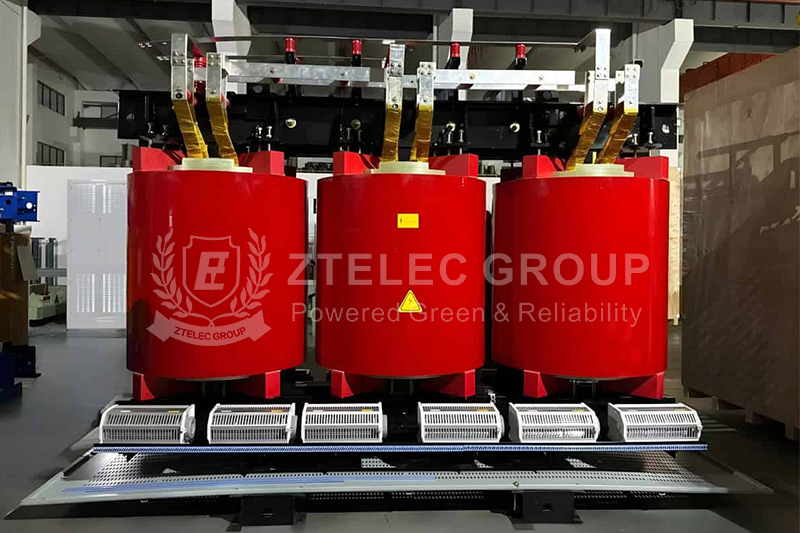
Energy Efficiency Advantage
Efficient and Energy-Saving Design
Dry-type transformers are engineered using advanced materials and low-loss cores, significantly reducing no-load losses compared to traditional models. This makes them especially beneficial for applications requiring continuous power, such as data centers, hospitals, and manufacturing plants, where they can substantially lower base electricity costs.
Intelligent Temperature Control System
Equipped with smart temperature regulation, dry-type transformers adjust their internal cooling dynamically based on load conditions. This helps avoid unnecessary energy consumption and improves the overall efficiency of power usage.
Adaptation to Time-of-Use Electricity Pricing
In regions where two-part or time-of-use electricity pricing is in effect, dry-type transformers help companies optimize their load distribution. By minimizing reactive power losses and improving power factor, they reduce peak-time power charges and demand-related costs.
Long-Life Design
High-Temperature Insulation System
Using heat-resistant insulation materials, dry-type transformers offer improved thermal endurance. This slows down material degradation, extends operational lifespan, and spreads the equipment investment over a longer timeframe, lowering long-term capital costs.
Resistance to Harsh Environments
The epoxy resin cast structure of dry-type transformers provides excellent protection against humidity, dust, and chemical contaminants. This enables reliable operation in demanding environments such as chemical plants, mining sites, or offshore platforms, with fewer failures and reduced unplanned downtime.
Shock Resistance and Load Adaptability
With specially designed winding structures, dry-type transformers can absorb short-circuit shocks and handle fluctuating loads, making them ideal for production lines with high startup frequency or variable power demands.
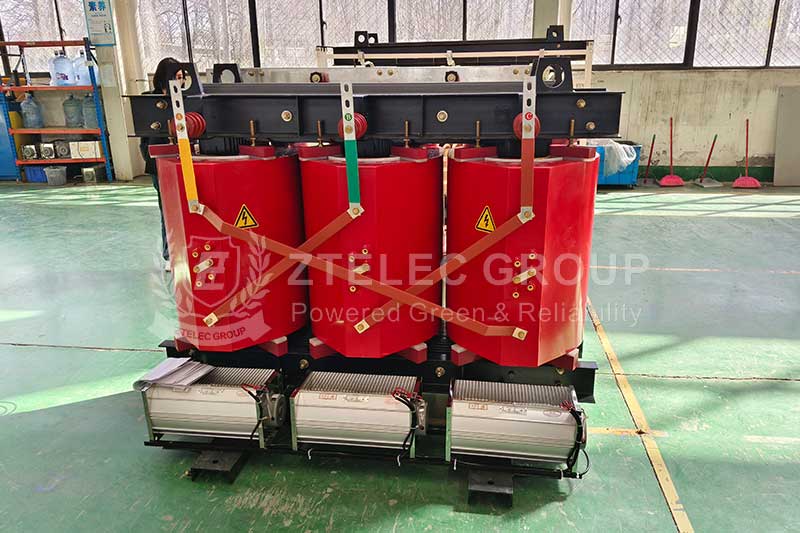
Maintenance Cost Advantage
Oil-Free Design Reduces Environmental and Safety Risks
Unlike traditional oil-immersed transformers, dry-type transformers do not use insulating oil, eliminating issues such as oil leaks, flammability, and the cost of oil testing or disposal. This significantly lowers both environmental risks and maintenance expenditures.
Simplified Routine Maintenance
Daily upkeep is straightforward — mainly involving surface inspections and dust removal. Compared to complex procedures required by oil-filled transformers, this ease of maintenance translates into lower labor costs and less downtime.
Lower Failure Rates and Higher Reliability
Precision manufacturing and optimized magnetic circuit design result in a low failure rate. With fewer unexpected shutdowns, companies benefit from improved production continuity and reduced repair costs.
Comprehensive Economic Benefits
Although the initial purchase price of dry-type transformers may be higher, the energy savings they generate can often offset the cost difference within a few years in high-consumption scenarios. Additionally, lower annual maintenance costs and extended service life provide long-term value. Upon retirement, these transformers also offer higher residual value, further improving return on investment.
Dry-type transformers offer companies a strategic advantage in managing electricity costs through their high energy efficiency, long operational life, and minimal maintenance requirements. For businesses aiming at sustainable growth and operational efficiency, investing in dry-type transformers is more than a technological upgrade — it’s a smart financial decision that reshapes the long-term energy cost structure.
oil immersed transformer lifespan
oil immersed transformer maintenance
transformer lifecycle
transformer insulation aging
dry type transformer temperature monitoring
- more+releated article
- 2026-05-11How Long Does an Oil-Immersed Transformer Last
- 2026-05-08Modern Power System Dry-Type Transformer Insta
- 2026-05-07Oil-Immersed Transformer Overheating: Causes,
- 2026-05-07Dry-Type Transformers for Data Centers: 2026 R
- 2026-04-30Air-Core Reactor vs Iron-Core Reactor: How to
- 2026-04-29Compact Enclosed Transformer for Smart Grid: T
- 2026-04-2812-Pulse and 24-Pulse Phase-Shifting Transform
- 2026-04-27Oil-Immersed Transformers for Industrial Plant
- 2026-04-25Why Dry-Type Transformers Are Preferred for Ho
- 2026-04-24Enclosed Transformer Outdoor Solutions: IP Pro
- ELECTRICAL INSULATION BOARD MATERIALS
- ELECTRICAL INSULATION MATERIALS
- POWER TRANSFORMER
- ENAMELED WIRE
- SWITCHGEAR



transformer insulation aging
transformer lifecycle
oil immersed transformer lifespan
oil immersed transformer maintenance
dry type transformer installation
dry type transformer temperature monitoring
dry type transformer maintenance
dry type transformer sizing
transformer cooling system failure
transformer overheating causes
oil immersed transformer overheating
transformer oil temperature
harmonic mitigation
dry type transformer
K factor transformer
data center transformer
Cast resin transformer
insulation oil degradation
DGA analysis transformer
transformer fault analysis
oil immersed transformer failure
smart grid transformer
compact enclosed transformer
integrated distribution transformer
compact transformer substation