
Dry-Type Transformers: Technical Conditions, Advantages, and Applications
In the power system, dry-type transformers are key equipment, and their technical characteristics, performance advantages and application scenarios have attracted much attention. The following is a detailed introduction from multiple aspects.
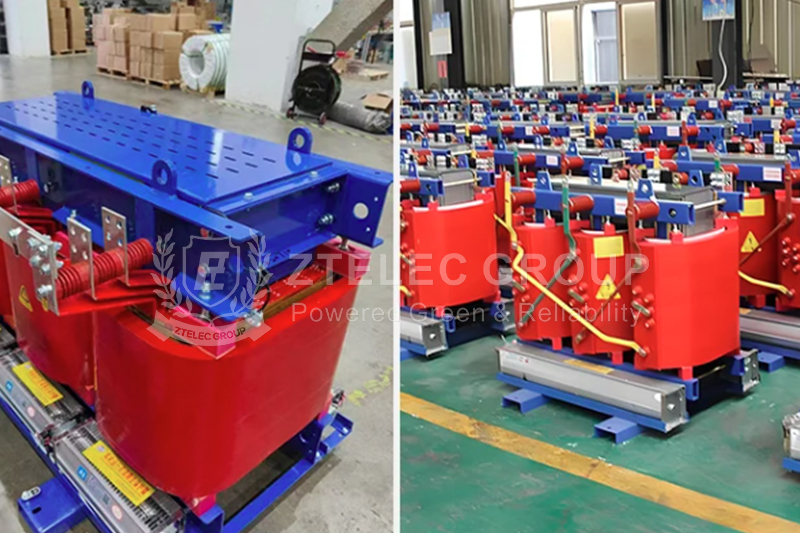
Technical Conditions of Dry-Type Transformers
Cooling Methods: Dry-type transformers use natural air cooling for small-capacity units, enabling long-term stable operation, and forced air cooling for large-capacity systems to enhance heat dissipation and performance under high load.
Electrical Parameters: Typically operate at 50Hz or 60Hz. No-load current is minimized to improve power efficiency and reduce energy consumption.
Insulation and Withstand Voltage: Strict standards govern insulation resistance and withstand voltage testing for both high and low voltage to ensure safe operation.
Winding Connection: Common configurations include Yyn0 and Dyn0, which can be selected to meet different grid and load requirements.
Temperature and Noise: Temperature rise is tightly controlled to avoid thermal failure, and low noise levels ensure minimal disturbance in sensitive environments.
Operating Environment: Requirements include regulated temperature, humidity, and altitude to ensure optimal transformer performance.
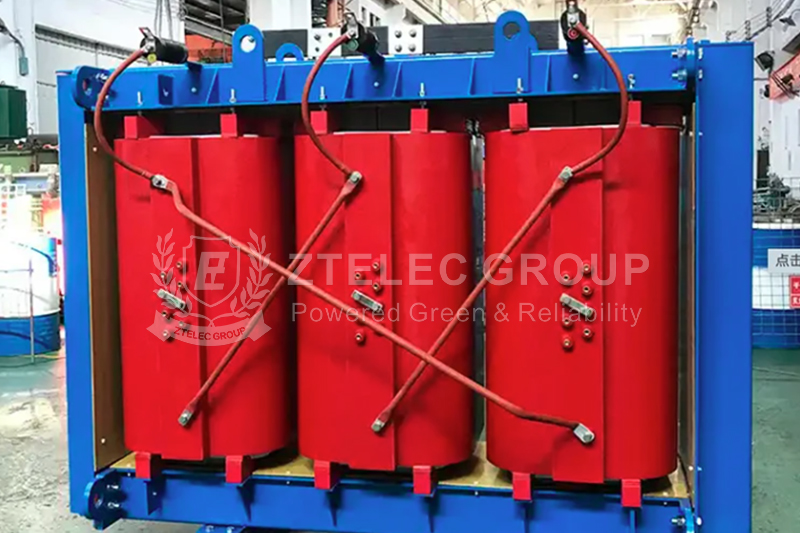
Structural Components: Made of high-quality stainless steel for protection, with well-monitored windings and integrated temperature control and alarm systems to ensure consistent and safe operation.
Advantages of Dry-Type Transformers
Outstanding Safety Performance: Dry-type transformers eliminate oil-leakage and explosion risks. Epoxy resin castings offer strong thermal stability and mechanical strength, enhancing overload and seismic resistance.
Significant Environmental Benefits: Oil-free, pollution-free, and low in no-load losses. Compliant with top-tier energy efficiency standards, suitable for eco-friendly and noise-sensitive urban environments.
Economic and Reliable: Long insulation life (up to 30 years), low maintenance, and smart sensor integration for remote monitoring make these transformers a cost-effective solution.
Typical Applications of Dry-Type Transformers
Commercial and Public Buildings: Ideal for malls, hotels, and hospitals, ensuring fire safety and stable power for critical facilities.
Industrial Field: Suitable for corrosive and explosive environments like chemical plants and mines. Provides stable, interference-resistant power in manufacturing systems.
New Energy and Data Centers: Widely used in renewable energy booster stations and mission-critical data centers for their energy efficiency and intelligent control features.
Special Occasions: Employed in marine platforms and nuclear plants where corrosion resistance and fire safety are essential, complying with high industry standards.
Dry-type transformers are an effective and efficient method for electrical energy transfer. Their safety, durability, and environmentally friendly features make them a popular and modern alternative to oil-filled transformers across diverse industries and applications.
oil immersed transformer lifespan
oil immersed transformer maintenance
transformer lifecycle
transformer insulation aging
dry type transformer temperature monitoring
- more+releated article
- 2026-05-11How Long Does an Oil-Immersed Transformer Last
- 2026-05-08Modern Power System Dry-Type Transformer Insta
- 2026-05-07Oil-Immersed Transformer Overheating: Causes,
- 2026-05-07Dry-Type Transformers for Data Centers: 2026 R
- 2026-04-30Air-Core Reactor vs Iron-Core Reactor: How to
- 2026-04-29Compact Enclosed Transformer for Smart Grid: T
- 2026-04-2812-Pulse and 24-Pulse Phase-Shifting Transform
- 2026-04-27Oil-Immersed Transformers for Industrial Plant
- 2026-04-25Why Dry-Type Transformers Are Preferred for Ho
- 2026-04-24Enclosed Transformer Outdoor Solutions: IP Pro
- ELECTRICAL INSULATION BOARD MATERIALS
- ELECTRICAL INSULATION MATERIALS
- POWER TRANSFORMER
- ENAMELED WIRE
- SWITCHGEAR



transformer insulation aging
transformer lifecycle
oil immersed transformer lifespan
oil immersed transformer maintenance
dry type transformer installation
dry type transformer temperature monitoring
dry type transformer maintenance
dry type transformer sizing
transformer cooling system failure
transformer overheating causes
oil immersed transformer overheating
transformer oil temperature
harmonic mitigation
dry type transformer
K factor transformer
data center transformer
Cast resin transformer
insulation oil degradation
DGA analysis transformer
transformer fault analysis
oil immersed transformer failure
smart grid transformer
compact enclosed transformer
integrated distribution transformer
compact transformer substation