
Gas Insulated Switchgear (GIS) vs Air Insulated Switchgear (AIS): Advantages, Differences & Applications
As electrical grids continue to modernize, utilities, industrial facilities, renewable energy developers, and infrastructure owners are increasingly seeking compact, reliable, and low-maintenance power distribution solutions. One of the most important decisions when designing a medium- or high-voltage substation is choosing between Gas Insulated Switchgear (GIS) and traditional Air Insulated Switchgear (AIS).
While both technologies provide safe switching, protection, and control of electrical networks, they differ significantly in terms of footprint, reliability, installation requirements, maintenance, lifecycle cost, and environmental performance. As land becomes more valuable and electrical systems demand higher reliability, GIS has become the preferred technology for many modern substations.
This guide explains how GIS works, compares it with AIS, and highlights the major advantages of gas insulated switchgear for today's power infrastructure projects.'
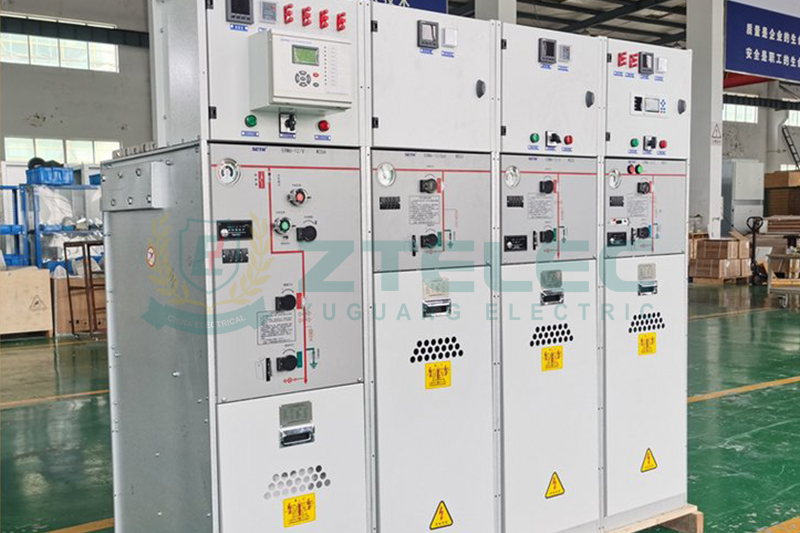
What Is Gas Insulated Switchgear (GIS)?
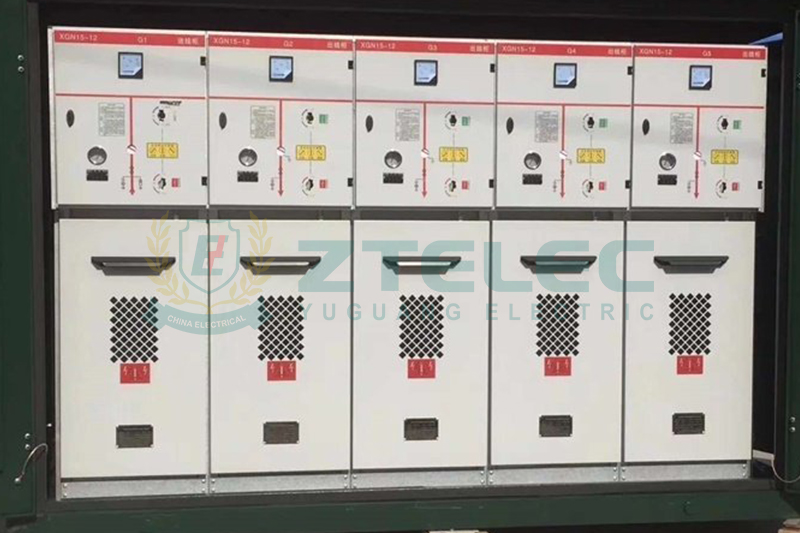
Gas Insulated Switchgear (GIS) is a compact switchgear system in which all primary electrical components—including circuit breakers, disconnect switches, earthing switches, current transformers, voltage transformers, and busbars—are enclosed inside grounded metal compartments filled with highly insulating gas.
Traditionally, sulfur hexafluoride (SF6) has been the insulating medium because of its exceptional dielectric strength and arc-quenching capability. Today, many manufacturers also offer environmentally friendly alternatives, including dry air, nitrogen-based insulation, vacuum interruption combined with clean gases, and fluoronitrile technologies such as g³.
Because insulating gases possess a dielectric strength several times greater than atmospheric air, GIS allows energized components to be positioned much closer together. The result is an extremely compact switchgear assembly capable of delivering the same electrical performance while occupying only a fraction of the space required by conventional air insulated systems.
What Is Air Insulated Switchgear (AIS)?
Air Insulated Switchgear (AIS) uses ambient air as the insulation medium between live conductors. Since air has a much lower dielectric strength than pressurized insulating gases, AIS installations require substantially larger electrical clearances and creepage distances to ensure safe operation.
Consequently, AIS substations generally require larger outdoor switchyards, taller supporting structures, and greater spacing between equipment. Although AIS has remained the industry standard for decades due to its lower initial investment and familiar maintenance procedures, growing urbanization and rising land costs have made GIS an increasingly attractive alternative.
GIS vs AIS: Key Differences
The primary distinction between GIS and AIS lies in their insulation method. GIS uses sealed gas-filled metal enclosures that isolate electrical components from the surrounding environment, while AIS exposes equipment directly to atmospheric conditions. This design difference influences nearly every aspect of substation performance, including installation space, maintenance frequency, operational reliability, environmental resistance, and long-term ownership costs.
1. Significant Space Savings
The most recognized advantage of Gas Insulated Switchgear is its compact design. Depending on voltage level and substation configuration, a GIS installation typically occupies only 10% to 30% of the land area required by an equivalent AIS substation.
This dramatic reduction in footprint makes GIS particularly valuable for urban substations, underground installations, high-rise commercial developments, transportation hubs, data centers, offshore wind farms, oil and gas platforms, and industrial facilities where available land is extremely limited or expensive.
Smaller substations also reduce civil engineering work, shorten cable routes, simplify site planning, and allow electrical infrastructure to be located closer to load centers, improving overall system efficiency.
2. Outstanding Reliability
Because GIS components operate inside sealed metal enclosures, they are protected from dust, moisture, pollution, salt spray, insects, wildlife, and industrial contaminants that commonly affect outdoor equipment.
This enclosed design greatly reduces insulation deterioration and minimizes failures caused by environmental exposure. Utilities operating GIS installations often experience longer inspection intervals, fewer unplanned outages, and lower failure rates throughout the equipment's service life.
For critical infrastructure such as hospitals, airports, metro systems, semiconductor plants, and utility transmission networks, this high level of reliability provides significant operational advantages.
3. Lower Maintenance Requirements
Compared with AIS, Gas Insulated Switchgear requires considerably less routine maintenance. Since most energized components are sealed inside factory-tested compartments, they remain protected from corrosion, oxidation, contamination, and weather-related deterioration.
Major inspections may only be required every 15 to 25 years, depending on equipment design and operating conditions. Reduced maintenance translates into lower labor costs, fewer planned shutdowns, and improved equipment availability over the lifetime of the substation.
4. Improved Personnel Safety
Safety is another major advantage of GIS technology. The grounded metal enclosure completely isolates live electrical parts from operators and maintenance personnel, significantly reducing the risk of accidental contact.
Modern GIS systems also provide excellent arc containment, helping minimize the impact of internal faults and improving protection during switching operations. Additionally, enclosed equipment is less vulnerable to wildlife intrusion, falling debris, lightning-induced contamination, and severe weather events that may affect exposed AIS equipment.
5. Superior Environmental Resistance
AIS performance can be influenced by environmental conditions such as humidity, pollution, coastal salt deposits, sandstorms, heavy snowfall, and high-altitude operation. In contrast, GIS maintains stable insulation performance because the electrical insulation is provided within a controlled sealed environment.
For this reason, GIS has become the preferred solution for coastal substations, offshore platforms, mining operations, chemical plants, desert regions, mountainous terrain, and heavily polluted industrial environments where traditional air insulated systems face increased maintenance challenges.
6. Faster Installation and Project Delivery
Most modern GIS equipment is manufactured as factory-assembled and factory-tested modules. Once delivered to site, installation mainly consists of positioning, interconnecting, testing, and commissioning the equipment.
This modular construction significantly shortens installation schedules compared with AIS, which generally requires more extensive field assembly, conductor alignment, structural work, and clearance verification.
Faster installation reduces construction risk, minimizes site labor requirements, and accelerates project completion—particularly important for utility upgrades and brownfield expansion projects.
7. Reduced Noise and Better Aesthetics
GIS installations have a much smaller visual footprint than conventional outdoor switchyards. Their enclosed construction also produces lower operational noise levels, making them suitable for residential developments, commercial districts, hospitals, universities, and environmentally sensitive locations where appearance and noise control are important.
The compact architecture also allows substations to be integrated inside buildings or underground facilities, further improving land utilization in densely populated cities.
8. Lower Total Cost of Ownership
Although GIS generally requires a higher initial investment than AIS, lifecycle economics often favor GIS over operating periods of 25 to 40 years.
Reduced land acquisition costs, lower maintenance expenses, improved reliability, fewer outages, extended equipment life, and decreased operational interruptions frequently offset the higher capital expenditure. For many utilities and industrial operators, evaluating total cost of ownership rather than purchase price alone provides a more accurate comparison between the two technologies.
Environmental Considerations: The Future Beyond SF6
One challenge associated with traditional GIS is the use of SF6 gas, which possesses an extremely high global warming potential if released into the atmosphere. Consequently, governments and environmental agencies are encouraging the transition toward cleaner insulation technologies.
Leading switchgear manufacturers are investing heavily in SF6-free solutions, including vacuum switching combined with clean air insulation, nitrogen mixtures, dry air technologies, and fluoronitrile-based gases that significantly reduce greenhouse gas emissions while maintaining comparable electrical performance.
For organizations pursuing carbon reduction goals or preparing for future environmental regulations, selecting SF6-free GIS technology can provide long-term sustainability benefits.
When Air Insulated Switchgear Is Still the Better Choice
Despite the numerous advantages of GIS, Air Insulated Switchgear continues to be an excellent option for certain applications.
AIS is often preferred where land availability is not a constraint, project budgets are limited, maintenance personnel are highly experienced with conventional switchgear, or lower-voltage distribution systems do not justify the additional investment in GIS technology.
Large rural substations, transmission switching stations, and remote utility facilities frequently continue using AIS because the available installation space reduces the economic advantage offered by compact GIS equipment.
Typical Applications of Gas Insulated Switchgear
Today, GIS is widely deployed in urban utility substations, renewable energy projects, offshore wind farms, hydroelectric stations, airports, railway electrification systems, metro networks, data centers, manufacturing facilities, petrochemical plants, mining operations, commercial buildings, and industrial power distribution systems requiring maximum reliability within limited installation space.
Gas Insulated Switchgear has transformed modern substation design by delivering exceptional reliability, compact dimensions, enhanced personnel safety, reduced maintenance, faster installation, and outstanding environmental resistance. Although its initial purchase cost is generally higher than Air Insulated Switchgear, GIS frequently delivers superior lifecycle value through lower operating costs, improved availability, and substantial land savings.
As cities expand, renewable energy capacity grows, and power networks demand greater reliability, GIS continues to replace conventional AIS in many medium- and high-voltage applications. For utilities, EPC contractors, industrial facilities, and infrastructure developers planning future-ready substations, carefully evaluating Gas Insulated Switchgear alongside traditional AIS is now an essential part of modern electrical system design.
GIS advantages
AIS vs GIS
GIS switchgear
Gas Insulated Switchgear
Air Insulated Switchgear
- more+releated article
- 2026-07-24Gas Insulated Switchgear (GIS) vs Air Insulate
- 2026-07-23315 KVA Cast Resin Dry Type Transformer – Co
- 2026-07-2233KV GIS Switchgear Installation & Mainten
- 2026-07-21China Dry Type Transformer Export Standards: G
- 2026-07-201000 KVA Oil Filled Transformer for Industrial
- 2026-07-18Inverter Duty Solar Transformers – Key Specs
- 2026-07-18315 KVA Cast Resin Dry Type Transformer for Ho
- 2026-07-162000 kVA Oil-Immersed Transformer: A Reliable
- 2026-07-152026 Prefabricated Substation FAQ: 20 Essentia
- 2026-07-142026 Oil-Immersed Transformer Efficiency Stand
- ELECTRICAL INSULATION BOARD MATERIALS
- ELECTRICAL INSULATION MATERIALS
- POWER TRANSFORMER
- ENAMELED WIRE
- SWITCHGEAR



AIS vs GIS
GIS advantages
GIS switchgear
Air Insulated Switchgear
Gas Insulated Switchgear
epoxy resin transformer
Indoor Distribution Transformer
Cast resin transformer
315 KVA Cast Resin Dry Type Transformer
315 kVA dry type transformer
GIS switchgear installation
33KV GIS Switchgear
33kV gas insulated switchgear
China dry type transformer standards
GB/T 10228
IEC 60076-11
GB/T 1094.11
dry type transformer export
1000 kVA oil immersed transformer
1000 KVA oil filled transformer
commercial power transformer
industrial transformer
Utility Scale Solar Transformer
inverter duty solar transformer
Solar Power Transformer