
Prefabricated Substation Price Guide 2026: 200 kVA to 3150 kVA Cost Breakdown by Specification
As industries, renewable energy projects, commercial developments, and urban infrastructure continue to expand worldwide, the demand for reliable, fast-deployment electrical distribution equipment has never been higher. Among the most cost-effective solutions available today, the prefabricated substation has become the preferred choice for engineers, EPC contractors, utilities, and industrial investors seeking reduced construction time, predictable installation costs, and dependable long-term performance.
Unlike conventional substations that require extensive civil construction and months of on-site assembly, a prefabricated substation is completely engineered, assembled, tested, and factory inspected before shipment. Once delivered, only foundation work, cable connections, and commissioning are required, allowing projects to become operational significantly faster.
Whether referred to as a compact substation, package substation, unit substation, or prefabricated electrical substation, these integrated systems combine medium-voltage switchgear, distribution transformers, low-voltage switchboards, protection relays, and auxiliary equipment into one compact enclosure designed according to IEC 62271, IEC 60076, IEEE, ANSI, or GB standards.
This comprehensive 2026 buying guide analyzes the pricing of prefabricated substations from 200 kVA to 3150 kVA while explaining how transformer type, voltage level, switchgear configuration, enclosure materials, protection systems, and customization influence the overall investment. Whether you are comparing suppliers or budgeting for a new power distribution project, this guide provides practical reference pricing and purchasing insights.
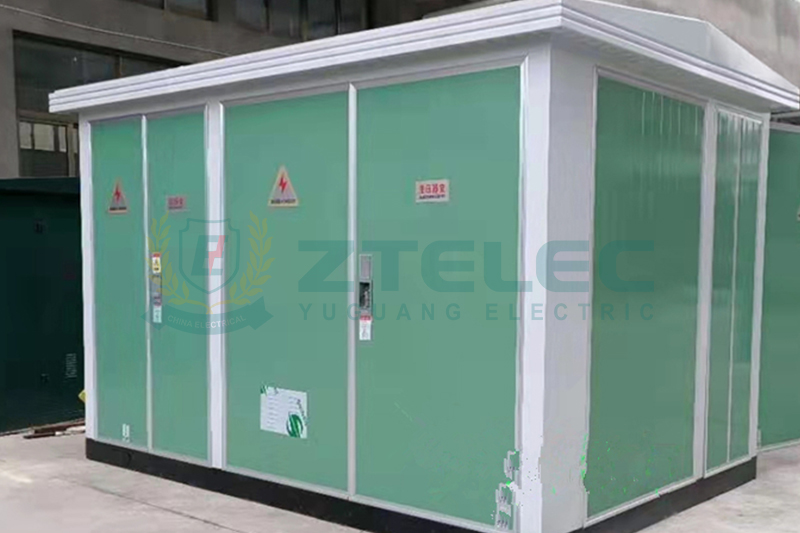
Why Prefabricated Substations Are Becoming the Industry Standard
Traditional substations remain suitable for large transmission projects, but modern distribution networks increasingly favor modular solutions because they shorten construction schedules, reduce labor requirements, and simplify future expansion. For industrial parks, renewable energy stations, commercial buildings, airports, hospitals, mining operations, and municipal infrastructure, prefabricated substations offer a balanced combination of performance, safety, and lifecycle economy.
Significantly Shorter Project Schedules
Factory manufacturing allows mechanical assembly, electrical wiring, testing, and quality inspection to be completed before shipment. Compared with conventional substations, total project delivery time can often be reduced by 40% to 70%, allowing developers to energize facilities much sooner.
Lower Total Installation Cost
Because most work is completed under factory-controlled conditions, on-site labor requirements are dramatically reduced. Civil construction becomes simpler, equipment coordination is minimized, and installation errors are less likely, lowering the overall project budget.
Consistent Manufacturing Quality
Every major component—including transformers, MV switchgear, LV distribution panels, protection relays, and control systems—is assembled and tested before shipment. Factory Acceptance Testing (FAT) verifies operational performance before the equipment reaches the installation site, improving long-term reliability.
Higher Operational Safety
Modern package substations incorporate fully enclosed metal housings, interlocked switchgear, arc-resistant designs, grounding systems, pressure relief devices, and multiple protection mechanisms to enhance personnel safety while reducing environmental exposure.
Flexible Expansion Capability
As electrical demand increases, modular substations can often be upgraded with larger transformers, additional feeders, or expanded switchgear sections without completely rebuilding the distribution system. This flexibility makes them ideal for industrial expansion and renewable energy projects.
Lower Lifetime Operating Costs
High-efficiency transformers, low-loss electrical designs, intelligent monitoring systems, and optimized cooling technologies help reduce power losses throughout decades of operation. Although the initial purchase price varies depending on specifications, lifecycle ownership costs are frequently lower than traditional substation construction.
Main Components of a Prefabricated Substation
Understanding how each component contributes to the overall project cost helps buyers compare quotations more accurately. The transformer normally represents the largest portion of the investment, while switchgear, protection systems, enclosure quality, and automation significantly influence both performance and pricing.
| Component | Primary Function | Typical Cost Share |
|---|---|---|
| Distribution Transformer | Voltage transformation between MV and LV systems | 40%–50% |
| Medium Voltage Switchgear | Incoming power control, protection and isolation | 20%–30% |
| Low Voltage Switchboard | Outgoing power distribution | 10%–15% |
| Protection & Control System | Monitoring, relay protection and automation | 5%–10% |
| Steel Enclosure | Weatherproof housing and equipment protection | 5%–10% |
| Cooling & Ventilation | Temperature control and equipment reliability | 3%–5% |
| Cable Connections | Internal electrical interconnection | 2%–5% |
| Grounding & Accessories | Operational safety and installation support | 2%–5% |
Optional Equipment That Influences Price
Many industrial projects require additional functions beyond the standard configuration. While these options increase the purchase price, they often reduce operating costs, improve reliability, or satisfy project specifications issued by utilities and EPC contractors.
Common optional equipment includes intelligent monitoring systems, SCADA communication interfaces, remote diagnostics, automatic transfer systems, digital protection relays, intelligent energy meters, arc-flash protection, fire suppression systems, anti-condensation heaters, stainless steel enclosures, photovoltaic auxiliary power supplies, battery backup systems, and environmental monitoring sensors.
Renewable energy projects frequently require customized transformer vector groups, higher insulation levels, special surge protection, harmonic mitigation equipment, and communication interfaces compatible with energy management platforms.
Common Applications
Prefabricated substations are widely deployed across numerous industries due to their compact footprint, rapid installation, and excellent reliability.
Typical applications include manufacturing plants, logistics centers, commercial complexes, hospitals, airports, universities, railway stations, metro systems, mining operations, oil and gas facilities, water treatment plants, photovoltaic power stations, wind farms, battery energy storage systems, smart grid infrastructure, utility distribution networks, and temporary construction power supplies.
Typical Voltage Configurations
Although each country operates different distribution standards, most manufacturers can provide customized voltage ratios for international markets. Selecting the proper voltage configuration directly affects transformer cost, switchgear selection, insulation requirements, and project compliance.
| Primary Voltage | Secondary Voltage | Typical Market |
|---|---|---|
| 11 kV | 400 V | Asia, Africa, Middle East |
| 11 kV | 415 V | Commercial Buildings |
| 13.8 kV | 480 V | North America |
| 22 kV | 400 V | Industrial Distribution |
| 33 kV | 11 kV | Utility Distribution |
| 35 kV | 10.5 kV | Mining & Heavy Industry |
| Custom | Custom | OEM & Export Projects |
International Standards
High-quality prefabricated substations should comply with internationally recognized electrical standards to ensure safe operation, simplified certification, and long-term reliability.
Depending on the destination market, manufacturers typically design equipment according to IEC 62271 for high-voltage switchgear, IEC 60076 for power transformers, IEC 61439 for low-voltage assemblies, IEEE C57 transformer standards, ANSI electrical standards, GB/T national standards, and ISO 9001 quality management systems.
Export projects may additionally require CE certification, UL compliance, SGS inspection reports, RoHS environmental certification, or third-party type testing depending on customer specifications and local regulations.
Prefabricated Substation Price Breakdown (200 kVA–3150 kVA)
The price of a prefabricated substation depends primarily on transformer capacity, voltage level, switchgear configuration, enclosure material, protection system, and customization requirements. In general, higher-capacity substations offer a lower cost per kVA because manufacturing, engineering, and transportation costs are distributed over a larger power rating.
The following price ranges are based on standard outdoor package substations equipped with an oil immersed distribution transformer, 11 kV/0.4 kV voltage ratio, medium-voltage ring main unit (RMU), low-voltage distribution panel, and standard protection devices. Prices are indicative for international export markets in 2026 and may vary depending on project specifications.
| Rated Capacity | Typical Price (USD) | Typical Applications |
|---|---|---|
| 200 kVA | $12,000–$18,000 | Residential communities, rural electrification, small commercial buildings |
| 315 kVA | $15,000–$22,000 | Retail centers, workshops, agricultural facilities |
| 400 kVA | $18,000–$25,000 | Factories, apartment developments, municipal projects |
| 500 kVA | $20,000–$30,000 | Manufacturing plants, hotels, logistics centers |
| 630 kVA | $24,000–$34,000 | Industrial parks, hospitals, schools |
| 800 kVA | $28,000–$40,000 | Commercial buildings, warehouses, production lines |
| 1000 kVA | $32,000–$48,000 | Large factories, shopping malls, data centers |
| 1250 kVA | $38,000–$56,000 | Renewable energy projects, mining sites |
| 1600 kVA | $45,000–$68,000 | Utility distribution, infrastructure projects |
| 2000 kVA | $55,000–$82,000 | Heavy industry, substations, airports |
| 2500 kVA | $65,000–$98,000 | Steel plants, petrochemical facilities, wind farms |
| 3150 kVA | $80,000–$125,000 | Grid substations, large industrial complexes, utility networks |
Average Price per kVA Analysis
While buyers often focus on the total purchase price, evaluating the average cost per kVA provides a more meaningful comparison when selecting different capacities. As transformer ratings increase, the average investment per kVA generally decreases due to economies of scale.
| Capacity Range | Average Price per kVA | Cost Trend |
|---|---|---|
| 200–500 kVA | $60–80/kVA | Highest unit cost due to fixed engineering expenses |
| 630–1250 kVA | $50–70/kVA | Excellent balance between investment and performance |
| 1600–3150 kVA | $40–60/kVA | Lowest unit cost with maximum economic efficiency |
For investors planning future expansion, selecting a slightly larger substation can often provide better long-term value than installing multiple smaller units over time.
Main Factors That Affect Prefabricated Substation Prices
Although transformer capacity is the most obvious pricing factor, several engineering decisions have a significant impact on the final quotation. Understanding these variables helps buyers compare suppliers more accurately.
1. Transformer Type
The transformer usually accounts for nearly half of the total package substation cost. Choosing the appropriate transformer technology directly influences both initial investment and lifecycle operating expenses.
| Transformer Type | Price Impact | Recommended Applications |
|---|---|---|
| Oil Filled Transformer | Standard | Outdoor distribution, utilities, industrial projects |
| Dry Type Transformer | +10%–20% | Commercial buildings, hospitals, indoor installations |
| Cast Resin Transformer | +15%–25% | High fire safety environments and public buildings |
| Amorphous Alloy Transformer | +20%–35% | Ultra-low loss energy-saving projects |
Oil immersed transformers remain the preferred solution for medium- and large-capacity outdoor substations because they provide superior cooling performance, higher overload capability, and lower investment costs.
2. Voltage Class
Higher voltage levels require more sophisticated insulation structures, larger clearances, upgraded switchgear, and additional testing procedures.
| Voltage Configuration | Typical Price Impact |
|---|---|
| 11 kV / 400 V | Base Price |
| 22 kV / 400 V | +5%–10% |
| 33 kV / 11 kV | +10%–20% |
| 35 kV Distribution Systems | +15%–25% |
| 66 kV Utility Projects | Quotation Required |
3. Medium Voltage Switchgear
The selected medium-voltage switchgear significantly influences both performance and project budget.
| Switchgear Type | Typical Price Impact | Typical Application |
|---|---|---|
| Air Insulated RMU | Base Price | Commercial and industrial distribution |
| SF6 Gas RMU | +15%–25% | Compact urban substations |
| Vacuum Circuit Breaker | +10%–20% | Industrial power systems |
| Solid Insulated Switchgear | +20%–30% | Environmentally friendly projects |
4. Enclosure Construction
The enclosure protects internal electrical equipment from rain, dust, corrosion, vandalism, and extreme weather conditions. Material selection affects both durability and overall project cost.
| Enclosure Material | Typical Price Impact |
|---|---|
| Galvanized Steel | Base Price |
| Stainless Steel | +10%–15% |
| Aluminum Alloy | +8%–12% |
| Double-Wall Fire Rated Structure | +20%–30% |
5. Protection and Automation
Digital protection and intelligent monitoring systems are becoming standard requirements for modern substations, especially in utility, renewable energy, and smart grid projects.
| Feature | Typical Price Impact |
|---|---|
| Standard Relay Protection | Included |
| Digital Protection Relay | +8%–12% |
| SCADA Communication | +10%–15% |
| Remote IoT Monitoring | +15%–25% |
| Predictive Maintenance Platform | +20%–30% |
Oil Filled vs. Dry Type Package Substations
One of the most common purchasing decisions is selecting between an oil immersed transformer and a dry type transformer. Each solution has advantages depending on the installation environment, maintenance strategy, and project budget.
| Comparison Item | Oil Filled Package Substation | Dry Type Package Substation |
|---|---|---|
| Initial Investment | Lower | Higher |
| Cooling Performance | Excellent | Good |
| Maximum Capacity | Very High | Usually Lower |
| Outdoor Installation | Excellent | Requires Better Protection |
| Indoor Installation | Possible with Fire Protection | Preferred Choice |
| Routine Maintenance | Oil Inspection Required | Minimal |
| Expected Service Life | 30–40 Years | 20–30 Years |
| Best Applications | Utilities, Heavy Industry, Renewable Energy | Hospitals, Airports, Commercial Buildings |
For most outdoor distribution projects above 1000 kVA, oil filled prefabricated substations continue to deliver the best balance of investment cost, efficiency, durability, and overload capability. Dry type package substations are generally preferred where fire safety, indoor installation, or low maintenance is the highest priority.
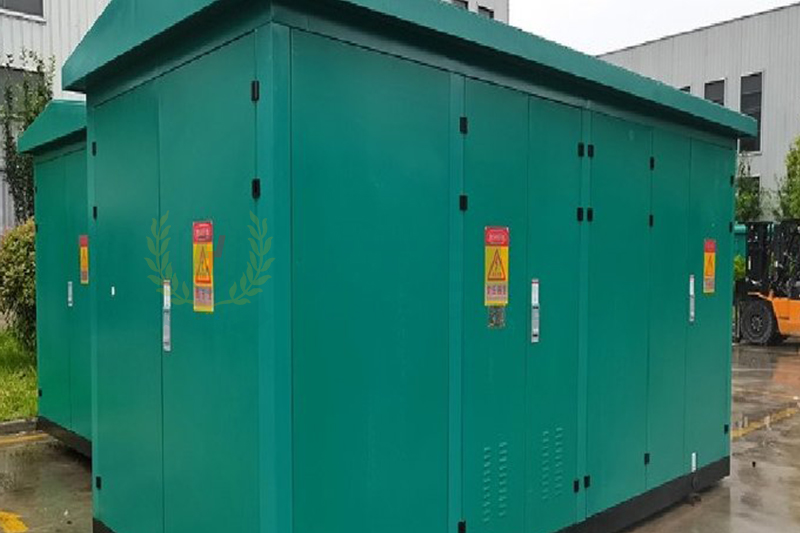
Customization Options and Their Impact on Prefabricated Substation Cost
One of the biggest advantages of a prefabricated substation is its high level of customization. Unlike standard electrical equipment with fixed specifications, package substations can be engineered according to project requirements, local grid standards, environmental conditions, and future expansion plans.
Although customization increases the initial investment, it can significantly improve system reliability, operational efficiency, safety performance, and long-term return on investment. For international projects, customized configurations are often necessary to comply with different voltage standards, climate conditions, and utility requirements.
Voltage and Frequency Customization
Voltage configuration is one of the most important factors affecting prefabricated substation design and price. Different countries and industries require different primary and secondary voltage levels.
| Customization Option | Typical Cost Impact | Application |
|---|---|---|
| Standard 50Hz / 60Hz System | No Additional Cost | General industrial and commercial distribution |
| Custom Voltage Ratio | +10%–20% | Export projects and special industrial applications |
| Dual Secondary Voltage Output | +15%–25% | Multi-purpose power distribution systems |
| High Voltage 33kV Configuration | +10%–20% | Utility substations and renewable energy projects |
Transformer Performance Upgrades
Transformer selection directly determines the efficiency, reliability, and operating cost of the entire prefabricated substation. Customers can select different transformer technologies depending on their project requirements.
| Upgrade Option | Cost Increase | Main Benefits |
|---|---|---|
| High Efficiency Transformer | +5%–10% | Lower energy losses and reduced operating costs |
| Low Noise Transformer Design | +5%–15% | Suitable for residential and urban environments |
| Biodegradable Insulating Oil | +10%–20% | Improved environmental performance |
| Amorphous Core Transformer | +20%–30% | Ultra-low no-load losses and energy savings |
Switchgear Configuration Upgrades
The medium-voltage switchgear system plays a critical role in protecting electrical equipment and maintaining reliable power distribution. Different switchgear technologies influence both the price and maintenance requirements of the prefabricated substation.
| Switchgear Upgrade | Cost Impact | Advantages |
|---|---|---|
| SF6-Free Switchgear | +10%–15% | Environmentally friendly and future-oriented design |
| Vacuum Circuit Breaker | +10%–20% | High reliability and frequent switching capability |
| Arc Resistant Switchgear | +15%–25% | Enhanced personnel safety |
| Automatic Transfer System | +5%–10% | Improved power continuity |
Smart Monitoring and Digital Solutions
With the development of smart grids and digital energy management, many modern prefabricated substations are equipped with intelligent monitoring systems. These solutions allow operators to remotely monitor transformer temperature, load conditions, oil status, switchgear operation, and energy consumption.
| Smart Feature | Typical Cost Impact | Function |
|---|---|---|
| Remote Monitoring System | +10%–15% | Real-time equipment status monitoring |
| SCADA Integration | +20%–30% | Connection with utility control systems |
| IoT Sensors | +15%–25% | Data collection and predictive analysis |
| Cloud-Based Energy Management | +20%–35% | Remote operation and maintenance optimization |
Environmental and Climate Adaptation
Prefabricated substations installed in different regions require different protection levels. Desert environments, coastal areas, cold climates, and high-humidity locations may require additional engineering solutions.
| Environmental Requirement | Additional Cost | Purpose |
|---|---|---|
| IP44 Protection | Standard | Basic outdoor protection |
| IP54/IP65 Protection | +5%–10% | Dust and water resistance |
| Anti-Corrosion Coating | +5%–15% | Coastal and chemical environments |
| Seismic Reinforcement | +5%–15% | Earthquake-prone regions |
| Extreme Temperature Design | +10%–20% | Desert and cold climate applications |
Example Customization Cost Analysis: 1000 kVA Prefabricated Substation
The following example demonstrates how different customization requirements affect the final project budget for a 1000 kVA package substation.
| Configuration | Base Price | Additional Cost | Total Estimated Cost |
|---|---|---|---|
| Standard 11kV/0.4kV Oil Filled Substation | $35,000 | $0 | $35,000 |
| Custom 33kV/0.4kV Voltage Ratio | $35,000 | +$6,000 | $41,000 |
| Digital Protection System | $41,000 | +$4,000 | $45,000 |
| Remote IoT Monitoring | $45,000 | +$7,000 | $52,000 |
| Double-Wall Fire Resistant Enclosure | $52,000 | +$8,000 | $60,000 |
Regional Prefabricated Substation Price Differences in 2026
The price of a prefabricated substation varies significantly between regions due to differences in manufacturing costs, labor expenses, transportation fees, import duties, certification requirements, and local market demand.
For international buyers, selecting the right supplier location can have a major impact on total project cost. However, price should always be evaluated together with manufacturing quality, technical support, compliance capability, and after-sales service.
| Region | Typical Price Range for 1000 kVA Substation | Main Cost Factors |
|---|---|---|
| North America | $40,000–$65,000 | High labor costs, UL certification, NEC requirements |
| Europe | $38,000–$60,000 | High environmental standards, CE requirements |
| China | $25,000–$45,000 | Large manufacturing capacity and competitive production costs |
| India | $23,000–$38,000 | Local production advantages and competitive pricing |
| Middle East | $40,000–$60,000 | Desert protection requirements and oil-filled transformer demand |
| Latin America | $32,000–$50,000 | Import costs and currency fluctuations |
| Africa | $30,000–$48,000 | Infrastructure requirements and logistics costs |
Tips for International Buyers
For overseas projects, buyers should consider more than the factory quotation price. Shipping cost, import duties, certification requirements, installation support, spare parts availability, and technical communication can significantly influence the final investment.
Working directly with an experienced prefabricated substation manufacturer can often reduce unnecessary middleman costs while providing better customization flexibility and engineering support.
Top Prefabricated Substation Manufacturers and Suppliers 2026
Selecting the right prefabricated substation manufacturer is a critical decision that directly affects equipment reliability, project safety, delivery time, and long-term operating costs. A professional supplier should not only provide competitive pricing but also offer engineering support, international certifications, customized solutions, and reliable after-sales service.
When evaluating suppliers, buyers should consider manufacturing experience, production capacity, transformer quality, switchgear technology, testing facilities, export experience, and compliance with international standards such as IEC, IEEE, ANSI, and regional electrical regulations.
Leading Global Prefabricated Substation Manufacturers
| Manufacturer | Country | Main Advantages | Typical Applications |
|---|---|---|---|
| ABB | Switzerland | Advanced compact substations, smart grid solutions, high reliability | Utilities, renewable energy, industrial power systems |
| Siemens | Germany | Digital monitoring technology and energy-efficient solutions | Industrial facilities, smart grids, infrastructure projects |
| Schneider Electric | France | Modular design, intelligent power management systems | Commercial buildings, data centers, industrial applications |
| GE Vernova | USA | Utility-grade equipment and global service network | Power plants, substations, renewable energy projects |
| Toshiba Energy Systems | Japan | Compact design and high reliability | Railway, industrial, and utility projects |
Cost-Effective Prefabricated Substation Manufacturers
For many international projects, especially in developing markets, Chinese and Asian manufacturers provide a strong balance between price, quality, customization capability, and production capacity.
| Supplier Type | Main Advantages | Suitable Projects |
|---|---|---|
| Chinese Manufacturers | Competitive pricing, flexible customization, large production capacity | Industrial projects, renewable energy, export markets |
| Indian Manufacturers | Local service capability and cost efficiency | Regional distribution networks |
| European Manufacturers | High standards, advanced technology, premium quality | High-end infrastructure projects |
Prefabricated Substation Installation Cost
Although prefabricated substations are designed for fast installation, additional costs should still be considered, including foundation construction, cable connection, grounding system, transportation, lifting equipment, testing, and commissioning.
Compared with traditional substations, prefabricated units significantly reduce civil construction work because most components are assembled and tested in the factory before delivery.
| Installation Type | Estimated Cost | Main Cost Factors |
|---|---|---|
| Standard Pad-Mounted Installation | $3,000–$8,000 | Concrete foundation, cable connection, grounding |
| Indoor Installation | $2,000–$6,000 | Ventilation, fire protection, electrical connection |
| Underground Vault Installation | $10,000–$25,000 | Excavation, waterproofing, underground structure |
| Pole-Mounted Installation | $5,000–$12,000 | Pole structure, overhead cables, lifting work |
Factors Affecting Installation Cost
The installation cost of a prefabricated substation depends on several factors:
1. Site Conditions: Uneven terrain, remote locations, and difficult transportation routes may increase construction costs.
2. Transformer Capacity: Larger substations require heavier lifting equipment and stronger foundations.
3. Cable Distance: Longer incoming and outgoing cable routes increase material and labor costs.
4. Local Regulations: Different countries require different approval procedures, testing standards, and safety requirements.
5. Commissioning Requirements: Factory acceptance tests, site testing, and utility approval may affect project schedules and budgets.
Prefabricated Substation Maintenance Cost
One of the major advantages of prefabricated substations is reduced maintenance compared with traditional site-built substations. However, regular inspection is still necessary to maintain safety, efficiency, and reliability.
| Maintenance Item | Recommended Frequency | Estimated Annual Cost |
|---|---|---|
| Routine Visual Inspection | Quarterly | $500–$1,500 |
| Transformer Oil Testing | Every 6–12 Months | $1,000–$2,000 |
| Switchgear Inspection | Annually | $800–$1,500 |
| Protection Relay Testing | Annually | $500–$1,500 |
| Transformer Service | Every 2–3 Years | $1,500–$3,000 |
Typical Annual Maintenance Cost
Oil-Filled Prefabricated Substation: Approximately $3,000–$6,000 per year depending on capacity and operating environment.
Dry-Type Prefabricated Substation: Approximately $1,500–$3,000 per year due to lower maintenance requirements.
Although dry-type transformers require less maintenance, oil-filled transformers are often preferred for larger outdoor applications because of their superior cooling performance and overload capability.
How to Reduce Prefabricated Substation Cost
Purchasing a prefabricated substation is a major investment. However, buyers can reduce total project costs through proper planning, supplier selection, and specification optimization.
1. Select Standard Specifications Whenever Possible
Using standard voltage levels such as 11kV/0.4kV can significantly reduce engineering and manufacturing costs. Customized designs should only be selected when required by the project.
2. Compare Multiple Manufacturers
Requesting quotations from several suppliers allows buyers to compare equipment configuration, technical capability, warranty terms, and total project value instead of focusing only on the lowest price.
3. Purchase Directly From Manufacturers
Working directly with a factory can reduce intermediary costs and provide better access to technical engineers, customization services, and production updates.
4. Consider Total Cost of Ownership
The cheapest transformer is not always the most economical choice. A high-efficiency transformer may have a higher initial price but can save significant energy costs over a 20–30 year operating period.
5. Plan Future Expansion
Selecting a modular prefabricated substation design allows additional capacity upgrades in the future without replacing the entire power distribution system.
Frequently Asked Questions About Prefabricated Substation Price
How much does a prefabricated substation cost?
The price depends on capacity, transformer type, voltage level, switchgear configuration, and customization requirements. A typical 200 kVA unit may cost around $12,000–$18,000, while a 3150 kVA prefabricated substation can exceed $120,000 for customized designs.
What is the difference between a prefabricated substation and a traditional substation?
A prefabricated substation is factory-assembled and delivered as a complete modular system, while a traditional substation requires extensive on-site construction. Prefabricated solutions reduce installation time, labor costs, and project complexity.
How long does a prefabricated substation last?
A properly maintained prefabricated substation typically has a service life of 25–40 years. Oil-filled transformers generally provide longer service life compared with dry-type transformers.
Can prefabricated substations be customized?
Yes. Manufacturers can customize transformer capacity, voltage ratio, switchgear type, enclosure design, protection systems, cooling method, monitoring functions, and environmental protection level.
Are prefabricated substations suitable for solar power plants?
Yes. Compact substations are widely used in photovoltaic plants, wind farms, battery energy storage systems, and renewable energy projects because they allow rapid installation and efficient grid connection.
Which standards should prefabricated substations comply with?
Common international standards include IEC 62271 for switchgear, IEC 60076 for transformers, IEEE C57 series transformer standards, ANSI standards, and regional certification requirements such as CE and UL.
Is a Prefabricated Substation a Smart Investment in 2026?
A prefabricated substation has become one of the most efficient and reliable solutions for modern power distribution projects. Compared with traditional substations, compact package substations provide faster installation, lower construction costs, improved safety, and greater flexibility for different application scenarios.
From small commercial buildings requiring 200 kVA capacity to large industrial and renewable energy projects using 3150 kVA systems, prefabricated substations offer scalable solutions that can be customized according to voltage requirements, transformer technology, environmental conditions, and future expansion plans.
The total cost of a prefabricated substation depends on many factors, including transformer capacity, oil-filled or dry-type transformer selection, voltage level, switchgear configuration, protection system, enclosure design, and additional smart monitoring functions. Therefore, buyers should evaluate the complete lifecycle cost rather than focusing only on the initial purchase price.
For outdoor industrial applications, utility distribution networks, solar farms, and infrastructure projects, oil-filled prefabricated substations often provide better value because of their excellent cooling performance, higher overload capability, and long service life. For indoor applications such as hospitals, data centers, and commercial buildings, dry-type solutions may provide advantages due to their low maintenance and fire-safe characteristics.
Key Advantages of Prefabricated Substations
✔ Faster Project Completion: Factory assembly and testing significantly reduce installation time compared with traditional substations.
✔ Lower Construction Cost: Reduced civil work, shorter installation periods, and less on-site labor help control project budgets.
✔ Flexible Customization: Voltage ratios, transformer types, switchgear systems, and protection functions can be customized for different markets.
✔ High Reliability: Factory-tested components ensure consistent quality and stable operation.
✔ Long-Term Economic Benefits: Efficient transformers and intelligent monitoring systems reduce operating losses and maintenance expenses.
How to Select the Right Prefabricated Substation for Your Project
Before purchasing a prefabricated substation, project owners should carefully evaluate their electrical requirements and future development plans.
Step 1: Calculate Required Capacity
Determine the total connected load, expected future expansion, motor starting requirements, and power factor. Selecting the correct kVA rating prevents overload problems and avoids unnecessary investment.
Step 2: Confirm Voltage Requirements
Identify the incoming grid voltage and required output voltage. Common configurations include 11kV/0.4kV, 22kV/0.4kV, 33kV/11kV, and customized voltage ratios for industrial applications.
Step 3: Choose the Appropriate Transformer Type
Oil-filled transformers are usually recommended for large outdoor installations, while dry-type transformers are preferred for locations requiring low maintenance and enhanced fire safety.
Step 4: Select Protection and Monitoring Functions
Modern projects may require digital protection relays, SCADA integration, IoT monitoring, temperature sensors, and remote operation capabilities.
Step 5: Verify Supplier Capability
Select manufacturers with proven production experience, international certifications, complete testing facilities, and successful export projects.
Why Work With an Experienced Prefabricated Substation Manufacturer?
The quality of a prefabricated substation depends heavily on the manufacturer's engineering capability and production standards. A professional supplier should provide complete technical documentation, including transformer test reports, switchgear specifications, wiring diagrams, installation drawings, and factory acceptance test records.
Experienced manufacturers can also provide customized solutions for different industries, including:
• Industrial manufacturing plants
• Mining and metallurgy projects
• Solar and wind power plants
• Data centers
• Railway and metro systems
• Utility distribution networks
• Commercial and residential developments
Request a Customized Prefabricated Substation Solution
Every power distribution project has different requirements. Transformer capacity, voltage level, protection system, installation environment, and local standards all influence the final design and cost.
Working with a professional manufacturer allows you to receive a complete solution including engineering design, equipment manufacturing, factory testing, transportation support, installation guidance, and after-sales service.
If you are planning a new power distribution project and need a customized 200 kVA–3150 kVA prefabricated substation, selecting the right supplier at the early stage can help reduce project risks, control costs, and ensure reliable operation for decades.
compact substation price
prefabricated substation cost
package substation price
prefabricated substation price
il immersed transformer
- more+releated article
- 2026-07-27Prefabricated Substation Price Guide 2026: 200
- 2026-07-25Oil Immersed Transformers Explained: Cooling S
- 2026-07-24Gas Insulated Switchgear (GIS) vs Air Insulate
- 2026-07-23315 KVA Cast Resin Dry Type Transformer – Co
- 2026-07-2233KV GIS Switchgear Installation & Mainten
- 2026-07-21China Dry Type Transformer Export Standards: G
- 2026-07-201000 KVA Oil Filled Transformer for Industrial
- 2026-07-18Inverter Duty Solar Transformers – Key Specs
- 2026-07-18315 KVA Cast Resin Dry Type Transformer for Ho
- 2026-07-162000 kVA Oil-Immersed Transformer: A Reliable
- ELECTRICAL INSULATION BOARD MATERIALS
- ELECTRICAL INSULATION MATERIALS
- POWER TRANSFORMER
- ENAMELED WIRE
- SWITCHGEAR



package substation price
prefabricated substation cost
compact substation price
prefabricated substation price
il immersed transformer
ONAN transformer
oil filled transformer
ONAF transformer
transformer cooling
GIS advantages
Air Insulated Switchgear
AIS vs GIS
Gas Insulated Switchgear
GIS switchgear
epoxy resin transformer
315 kVA dry type transformer
315 KVA Cast Resin Dry Type Transformer
Cast resin transformer
Indoor Distribution Transformer
33KV GIS Switchgear
33kV gas insulated switchgear
GIS switchgear installation
GB/T 1094.11
GB/T 10228
China dry type transformer standards