
Prefab Substation vs Traditional Build: Cost Comparison
When planning a new power distribution project, one of the first questions is whether to choose a prefab substation or a traditional built-on-site substation. Both can deliver reliable power, but the total cost, schedule and risk can be very different.
This guide compares the two options across equipment, civil work, installation, maintenance and lifetime cost. It will help you decide which approach fits your budget and timeline.
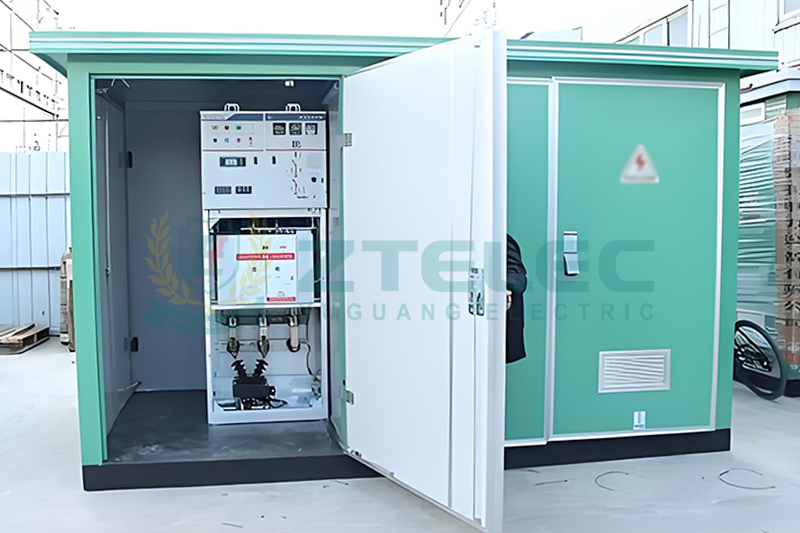
What Is a Prefab Substation?
A prefab substation is also known as a prefabricated substation, packaged substation, modular substation or compact substation. The medium voltage switchgear, transformer and low voltage panel are integrated in a factory-built enclosure.
The complete unit is assembled, wired and tested at the factory. It then ships to site as a ready-to-connect package that only needs foundation work and cable connection.
Common Prefab Substation Types
Box-type substation: a walk-in or compartment-style enclosure that follows IEC standards.
Pad-mounted transformer: a compact tamper-resistant unit on a concrete pad, common in IEEE and ANSI markets.
Skid-mounted or containerized substation: a unit built on a steel base or inside a container for fast deployment.
What Is a Traditional Built-On-Site Substation?
A traditional substation is constructed piece by piece at the project site. Civil contractors build a control building or equipment room, and electrical teams install switchgear, transformers, cables and protection panels one at a time.
This method gives full design freedom and is still used for large, complex or highly customized projects. However, it needs more labor, more site coordination and more time.
Cost Comparison: Prefab vs Traditional Substation
The table below summarizes the main cost and project differences. Actual numbers vary by country, voltage level, capacity and site conditions.
| Factor | Prefab Substation | Traditional Build |
|---|---|---|
| Equipment cost | Packaged price, enclosure included | Separate purchase of each item |
| Civil work | Simple foundation or pad | Building, foundation, finishes |
| Installation labor | Low, mainly cable connection | High, many trades on site |
| Construction time | Short | Long |
| Site risk and delays | Lower, work done in factory | Higher, weather and coordination |
| Space requirement | Small footprint | Larger footprint |
| Customization | Good within design range | Very high |
| Relocation | Possible | Not practical |
Equipment Cost
On paper, buying switchgear, a transformer and low voltage panels separately for a traditional substation may look cheaper than one packaged unit. This is because the prefab price includes the enclosure, internal wiring, assembly and factory testing.
However, the traditional route has hidden equipment-related costs. These include extra cabling, support structures, ventilation, lighting, earthing materials and coordination between several suppliers.
When these items are added, the price gap often becomes smaller than it first appears.
Civil Work and Building Cost
Civil work is usually where prefab substations save the most money. A traditional substation needs a building or room with foundations, walls, roof, doors, drainage and cable trenches.
A packaged substation needs only a concrete foundation or pad and a cable entry design. This can reduce excavation, material and labor significantly.
For small and medium capacities, such as 500 kVA, 1000 kVA, 1600 kVA or 2500 kVA, the saving on civil work is often a major reason to choose prefab.
Installation and Labor Cost
A traditional build requires civil, mechanical and electrical teams to work in sequence on site. Each stage depends on the previous one, so delays can spread quickly.
With a prefab unit, most assembly and wiring is done in a controlled factory environment. On site, the crew mainly positions the unit, connects incoming and outgoing cables and completes commissioning.
This lowers labor hours, reduces the number of site workers and cuts supervision cost.
Construction Time and the Cost of Delay
Time is money, especially for factories, solar plants and commercial buildings that cannot generate income until power is available. A shorter schedule means earlier operation and faster return on investment.
Prefab Timeline
Civil foundation work and factory manufacturing can run in parallel. By the time the foundation is ready, the substation can already be on its way to site.
Traditional Timeline
Building construction must usually finish before equipment installation starts. Weather, material delivery and contractor scheduling can all extend the project.
For many owners, the value of finishing weeks or months earlier is larger than the difference in equipment price.
Quality Control and Testing
Prefab substations are built and tested under factory conditions. Routine tests, insulation checks, wiring checks and function tests can be completed before shipment.
On-site assembly is more exposed to dust, moisture, uneven workmanship and rework. Defects found late can be expensive to fix.
Factory testing reduces commissioning problems and helps avoid costly delays at the end of the project.
Space and Land Cost
Land is expensive in cities, industrial parks and building complexes. A compact substation has a much smaller footprint than a traditional substation room with the same capacity.
This frees space for production, parking or other revenue-generating use. In dense areas, the saved land can be worth more than the equipment itself.
Maintenance and Operating Cost
Both types need regular inspection, cleaning and testing. The long-term cost depends more on equipment quality and design than on whether the substation is prefab or traditional.
Prefab units have an advantage in standardized components and easy replacement of parts. Closed enclosures with interlocks also improve operator safety.
Traditional substations can offer more room inside for large equipment and special maintenance needs. This can matter for high-capacity or complex stations.
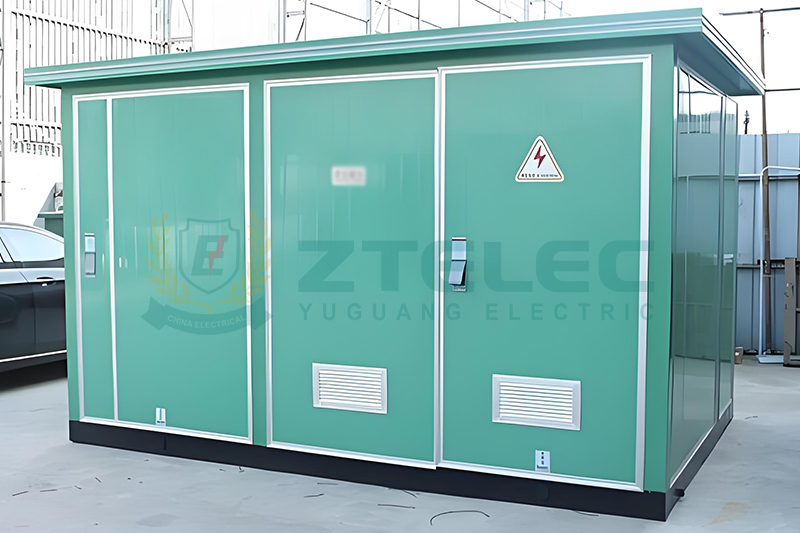
Flexibility, Expansion and Relocation
A traditional building is fixed in place. If the load grows, expansion may require major construction.
A prefab substation can often be expanded by adding another unit. If the project site changes, a skid-mounted or compact unit can be moved and reused.
This flexibility has real financial value for phased projects, temporary sites and fast-growing facilities.
When Is Prefab the Better Choice?
A prefab substation is usually the more economical option in these cases.
Small to medium capacity: typical ratings from a few hundred kVA to several MVA.
Tight schedules: projects that need power quickly.
Limited space: urban sites and crowded industrial areas.
Remote locations: places where skilled site labor is scarce or expensive.
Repeated installations: utilities or developers rolling out many similar substations.
Renewable energy projects: solar farms, wind farms and battery storage systems with standard layouts.
When Is a Traditional Build Better?
A traditional substation may still be the right choice for certain projects.
Very large capacity: major transmission or grid substations with many bays.
Complex layouts: projects that need unusual equipment arrangements.
Strict local rules: sites where regulations or the utility require a built structure.
Long-term fixed assets: installations expected to stay unchanged for decades with room for custom design.
Lifetime Cost: Look Beyond the Purchase Price
A fair comparison should look at total cost of ownership, not only the initial quotation. Include these items in your calculation.
Equipment and enclosure: purchase price of all components.
Civil and site preparation: foundation, building and cable works.
Transport and installation: freight, crane, labor and commissioning.
Project delay cost: the value of earlier or later energization.
Energy losses: transformer efficiency over many years of operation.
Maintenance and downtime: service cost and the cost of outages.
When all of these are counted, prefab often comes out ahead for standard distribution projects. Always confirm with a project-specific calculation rather than a general rule.
How to Reduce Prefab Substation Cost
Smart specification can lower the price without hurting reliability.
Choose standard voltage levels and common layouts instead of heavily customized designs. Select the transformer type that fits the site, since oil immersed units are generally more economical than dry type for outdoor use.
Define the switchgear and protection level you actually need. Compare quotations on the same delivery terms and the same standard so the prices are truly comparable.
Frequently Asked Questions
Is a prefab substation cheaper than a traditional substation?
For most small and medium capacity projects, the total installed cost is lower because of savings in civil work, labor and time. The result depends on your site, capacity and specification.
Is a prefab substation as reliable as a traditional one?
Yes, when it is built to recognized standards and fully tested. Factory assembly often improves consistency and quality control.
How long does a prefab substation take to deliver?
Lead time depends on the configuration and certification needs. Manufacturing can proceed while the site foundation is prepared, which shortens the overall project schedule.
Can a prefab substation be customized?
Yes. Voltage, capacity, switchgear, enclosure material, cooling method and layout can be adjusted to your project requirements.
Get a Prefab Substation Quotation
Comparing a prefab substation with a traditional build for your project? Send us your capacity, voltage levels, standard, site conditions and destination, and our team will prepare a datasheet, layout drawing and competitive quotation for your packaged or compact substation.
prefab substation
prefabricated substation
packaged substation
dry-type transformer price
cast-resin transformer price
- more+releated article
- 2026-11-20Prefab Substation vs Traditional Build: Cost C
- 2026-11-19Dry Type Transformer Price List 2026: What to
- 2026-11-18Oil Filled Self Cooled Transformer: ONAN Basic
- 2026-11-17What Is a Prefabricated Substation? Types and
- 2026-11-16Cast Resin vs VPI Dry Type Transformers: Key D
- 2026-11-1423 kV Transformer Standards: IEC vs IEEE/ANSI
- 2026-11-13IEC 60076 Transformer Tests: Routine, Type &am
- 2026-11-12Outdoor Transformer Installation: Clearances &
- 2026-11-113500 kVA Transformer Oil: Mineral vs Ester vs
- 2026-11-103500 kVA Transformer: EU Tier 2 vs US DOE Loss
- ELECTRICAL INSULATION BOARD MATERIALS
- ELECTRICAL INSULATION MATERIALS
- POWER TRANSFORMER
- ENAMELED WIRE
- SWITCHGEAR


FR-4 Copper-Free Laminate | High-Performance Insulation Material

FR-4 Copper Clad Laminate Manufacturer & Supplier
prefabricated substation
prefab substation
packaged substation
dry type transformer price list 2026
cast-resin transformer price
dry-type transformer price
1250kVA epoxy resin cast dry-type transformer price
dry-type transformers
1250kVA transformer price
what is a prefabricated substation
prefabricated substation types
dry-type transformer
cast resin vs VPI dry type transformer
cast-resin transformer
VPI transformer
23 kV transformer
IEEE C57.12.00
oil-immersed transformer
dry type transformer
IEC 60076
23 kV transformer standards
GB 1094
special test
type test
routine test