
750 kVA Oil Filled Transformer: Specs and Price
A 750 kVA oil filled transformer is one of the most practical sizes in medium-voltage distribution. It is large enough to feed a factory, a commercial complex or a small solar plant, yet compact enough for easy transport and installation. This guide explains the key specifications, the factors that move the price, and how to choose the right unit for your project.
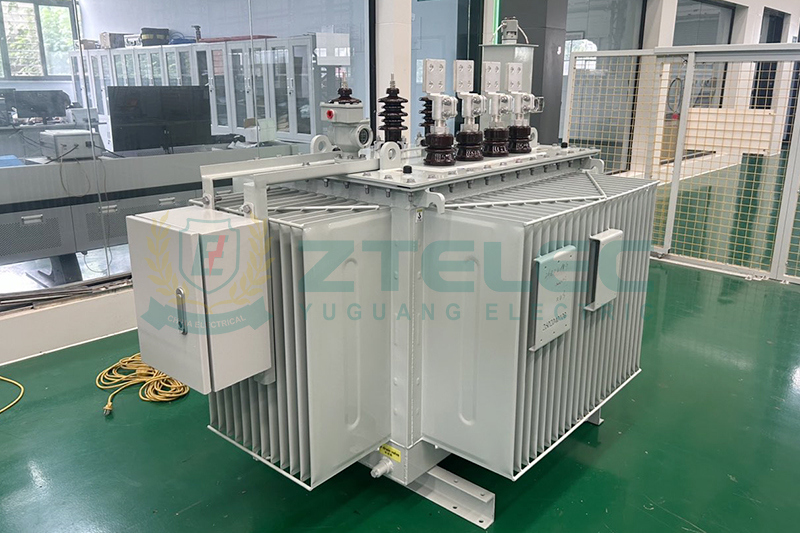
What Is a 750 kVA Oil Filled Transformer?
A 750 kVA oil filled transformer steps medium voltage, such as 11 kV, 22 kV or 33 kV, down to a low voltage such as 400 V or 415 V. The core and windings sit inside a steel tank filled with insulating oil. The oil does two jobs: it insulates the windings and it carries heat to the tank walls and radiators.
Because oil removes heat far better than air, oil-immersed transformers offer high efficiency, strong overload tolerance and a long service life. These are the main reasons they remain the default choice for outdoor substations and utility networks worldwide.
Where a 750 kVA Rating Fits Best
The 750 kVA rating suits loads of roughly 550 to 650 kW at a healthy power factor, leaving room for growth. Typical users include manufacturing plants, shopping centers, hospitals, water treatment stations, data rooms and agricultural processing sites.
It is also a common building block in renewable energy. A 750 kVA unit is a sensible choice for a distributed solar array or a small wind cluster. Projects like these often use dedicated photovoltaic and wind power transformers, which are built to handle variable loading and harmonic content. We cover this in more detail below.
Key Technical Specifications
The table below shows typical values for a standard three-phase, 50 Hz, mineral-oil-filled 750 kVA unit. Exact figures vary by standard, loss level and manufacturer, so always confirm them against the final datasheet.
| Parameter | Typical Value |
|---|---|
| Rated capacity | 750 kVA |
| Phases and frequency | 3-phase, 50 Hz or 60 Hz |
| High voltage | 6.6 kV, 11 kV, 22 kV, 33 kV |
| Low voltage | 400 V, 415 V, 433 V |
| Vector group | Dyn11 (Yzn11 or Dyn5 on request) |
| Impedance | 4% to 6% |
| Tap changer | Off-circuit, +/-2 x 2.5% |
| Cooling | ONAN |
| Winding material | Copper or aluminium |
| Standard | IEC 60076, IEEE C57, GB 1094 |
| Approx. total weight | 2,200 to 3,000 kg |
Rated Current
The rated current follows directly from the kVA rating. On a 400 V secondary, a 750 kVA transformer delivers about 1,083 A. On the primary side, it draws roughly 39 A at 11 kV and about 13 A at 33 kV. These numbers matter when you size cables, breakers and busbars.
Impedance and Short-Circuit Withstand
Impedance is usually set between 4% and 6%. A higher value limits fault current and helps protect downstream equipment. A lower value reduces voltage drop under load. The right choice depends on your switchgear ratings and the fault level at your site.
Vector Group
Dyn11 is the most common vector group for distribution. The delta primary traps third-harmonic currents, and the star secondary provides a neutral for single-phase loads. If your utility requires a different group, state it clearly in your enquiry.
Losses and Efficiency
Losses decide your running cost for the next 20 years or more. Two figures matter. No-load loss, also called core loss, is present whenever the transformer is energized. Load loss, also called copper loss, rises with the square of the current.
For a 750 kVA unit, no-load loss typically falls between 0.7 and 1.1 kW, and load loss between 7 and 9 kW, depending on the efficiency class. Higher-efficiency designs use better silicon steel or amorphous alloy cores, which cut no-load loss sharply.
Efficiency at rated load usually exceeds 98.5%. That sounds small, but across thousands of operating hours the energy savings can offset a higher purchase price within a few years.
Cooling, Oil and Tank Design
Most 750 kVA units use ONAN cooling, meaning oil natural, air natural. Heat moves by convection from the core and windings into corrugated fins or radiators, then disperses into the air. No fans or pumps are required, which keeps maintenance low.
Sealed Tank or Conservator
You can choose between two tank designs. A fully sealed corrugated tank has no conservator and no breather. The oil never contacts outside air, so moisture and oxidation are minimized. A conservator type includes an expansion tank and a silica gel breather, and it is common in some utility specifications.
For a 750 kVA rating, the sealed design is popular because it is compact, nearly maintenance free and well suited to outdoor use.
Insulating Oil Options
Standard mineral oil is the most economical choice. Natural ester oil costs more but offers a higher fire point and better biodegradability. This makes it attractive for sites near buildings, forests or environmentally sensitive areas.
Standard Accessories and Protection
A well-specified unit should include the following as standard: a thermometer with contacts, an oil level gauge, a pressure relief device, a drain and sampling valve, lifting lugs, an earthing terminal and a rating plate. Many buyers also request a Buchholz relay on conservator units and a winding temperature indicator.
Bushings can be porcelain or polymer. Polymer bushings are lighter and resist contamination better in coastal or industrial environments. Cable boxes, air-insulated terminals and plug-in connectors are available when the transformer feeds a ring main unit.
750 kVA Oil Filled Transformer Price
Price is usually the first question buyers ask, and the honest answer is that it depends. As a rough guide, a standard 750 kVA oil filled transformer from a Chinese manufacturer often falls in the range of USD 9,000 to 18,000 on an FOB basis. European, American and Japanese brands are typically higher.
Treat any range as a starting point. Raw material prices, freight rates and exchange rates change, so always request a current written quotation.
What Drives the Price
Winding material. Copper windings cost more than aluminium, but they offer lower losses, higher mechanical strength and easier connections.
Core material. Amorphous alloy cores raise the purchase price while cutting no-load loss by around 60% to 70% compared with conventional silicon steel.
Efficiency level. Meeting stricter standards, such as EU Tier 2 or US DOE 2016, requires more active material and increases the cost.
Voltage class and insulation level. A 33 kV unit needs larger clearances and more insulation than an 11 kV unit, which adds weight and cost.
Oil type. Ester oil can add several hundred to a few thousand dollars compared with mineral oil.
Accessories and testing. Extra relays, special bushings, third-party witnessed tests and custom paint systems all add to the final figure.
Packing and shipping. Terms such as FOB, CFR and CIF change the total landed cost, and so do container choice and destination port charges.
Look Beyond the Purchase Price
The cheapest quote is rarely the cheapest transformer. A unit with higher losses can cost thousands of dollars more in electricity over its life. Ask suppliers for guaranteed loss values and compare the total cost of ownership, not just the invoice amount.
Using 750 kVA Units in Solar and Wind Projects
Renewable plants place unusual demands on transformers. Output rises and falls with sunlight and wind, so the transformer cycles between light and heavy load. Inverters also inject harmonics, which add heat in the windings and core.
That is why specialist photovoltaic and wind power transformers are designed with extra attention to thermal margins, harmonic tolerance and dual or split low-voltage windings. In solar projects, a split-winding design can connect two inverters to one transformer. Wind projects often need higher short-circuit strength and a wider voltage tolerance.
If your 750 kVA transformer will serve a renewable plant, tell the supplier the inverter model, the expected harmonic spectrum and the daily load profile. This lets the factory size the unit correctly instead of treating it as an ordinary distribution transformer.
How to Choose the Right Unit
Step 1: Confirm the Load
Calculate your real peak demand and add a margin for future growth, typically 15% to 25%. Oversizing wastes money and increases no-load loss. Undersizing shortens the life of the insulation.
Step 2: Match Voltage and Frequency
Verify the primary voltage, secondary voltage, frequency and tap range with your utility. A mismatch discovered after delivery is costly and slow to fix.
Step 3: Check the Site Conditions
Altitude above 1,000 m, ambient temperature above 40 degrees C, high humidity, salt air or heavy pollution all require design changes. Report them early so the manufacturer can apply derating or upgrade the insulation and paint system.
Step 4: Define Standards and Tests
Specify the governing standard and the required test reports. Routine tests such as ratio, resistance, loss, impedance and dielectric checks should be standard. Type tests and special tests are available when your project requires them.
Step 5: Compare Suppliers Carefully
Look at factory capability, quality certificates, test equipment, references from similar projects and the warranty terms. A clear datasheet and fast technical replies are good signs of a reliable partner.
Installation and Maintenance Tips
Place the transformer on a level concrete base with enough clearance for airflow and for a safe working zone. Install an oil containment pit where regulations require it. Make sure the earthing system is tested and the protection settings match the transformer rating.
Maintenance is simple. Inspect oil level, leaks, bushings and the silica gel breather regularly. Take oil samples for dissolved gas analysis and breakdown voltage testing every one to three years. With good care, a quality oil filled transformer can run for 25 to 30 years.
Oil Filled or Dry Type: A Quick Comparison
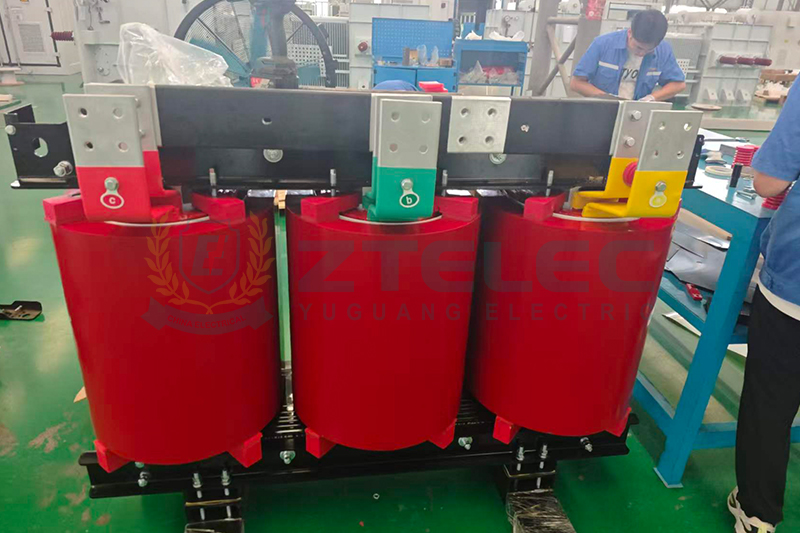
Dry-type units avoid oil and are favored indoors, in tall buildings and in fire-sensitive areas. They typically cost more at this rating and have lower overload capacity. Oil-immersed designs are cheaper per kVA, cool better and fit outdoor installations well. For most 750 kVA outdoor and industrial projects, oil filled remains the more economical choice.
Frequently Asked Questions
How many kW can a 750 kVA transformer supply?
At a power factor of 0.9, it can supply about 675 kW. At 0.8, the figure is about 600 kW.
What is the typical lead time?
Standard designs usually ship in 25 to 45 days after order confirmation. Custom specifications, special testing or peak season demand can extend this.
Can a 750 kVA transformer be overloaded?
Short-term overloads are possible under IEC 60076-7 loading guidance, but sustained overload shortens insulation life. Always check temperature rise limits and oil temperature.
Is a 750 kVA transformer suitable for a solar plant?
Yes, provided it is specified for inverter loading and harmonics. Share your inverter data with the manufacturer to get the correct design.
Get a Quotation for Your 750 kVA Project
To receive an accurate price, send your supplier the rated capacity, primary and secondary voltage, frequency, vector group, impedance, loss requirements, standard, site conditions, accessories and destination port. The more detail you provide, the faster and more precise the quotation will be.
ZTELEC GROUP supplies oil-immersed transformers, cast resin dry-type units and photovoltaic and wind power transformers for utility, industrial and renewable projects worldwide. Contact our team with your specifications for a tailored datasheet and a competitive quote.
750 kVA oil immersed transformer
750 kVA transformer price
750 KVA oil filled transformer
prefab substation
prefabricated substation
- more+releated article
- 2026-11-21750 kVA Oil Filled Transformer: Specs and Pric
- 2026-11-20Prefab Substation vs Traditional Build: Cost C
- 2026-11-19Dry Type Transformer Price List 2026: What to
- 2026-11-18Oil Filled Self Cooled Transformer: ONAN Basic
- 2026-11-17What Is a Prefabricated Substation? Types and
- 2026-11-16Cast Resin vs VPI Dry Type Transformers: Key D
- 2026-11-1423 kV Transformer Standards: IEC vs IEEE/ANSI
- 2026-11-13IEC 60076 Transformer Tests: Routine, Type &am
- 2026-11-12Outdoor Transformer Installation: Clearances &
- 2026-11-113500 kVA Transformer Oil: Mineral vs Ester vs
- ELECTRICAL INSULATION BOARD MATERIALS
- ELECTRICAL INSULATION MATERIALS
- POWER TRANSFORMER
- ENAMELED WIRE
- SWITCHGEAR

FR-4 Copper-Free Laminate | High-Performance Insulation Material

FR-4 Copper Clad Laminate Manufacturer & Supplier
750 KVA oil filled transformer
750 kVA oil immersed transformer
750 kVA transformer price
prefab substation
prefabricated substation
packaged substation
cast-resin transformer price
dry type transformer price list 2026
dry-type transformer price
1250kVA transformer price
1250kVA epoxy resin cast dry-type transformer price
dry-type transformers
what is a prefabricated substation
prefabricated substation types
cast-resin transformer
cast resin vs VPI dry type transformer
VPI transformer
dry-type transformer
23 kV transformer standards
GB 1094
IEC 60076
IEEE C57.12.00
oil-immersed transformer
23 kV transformer
dry type transformer