
Top Dry Type Transformer Manufacturers in China 2026
China is the world's largest production base for power distribution equipment, and the dry-type transformer is one of its strongest export categories. Whether you are buying for a data center, a hospital, a metro line or a solar plant, the supplier you pick matters as much as the specification.
This guide introduces leading dry type transformer manufacturers in China for 2026. It also explains how to compare them and what to check before you place an order for a cast-resin transformer.
Why China Leads in Dry-Type Transformer Manufacturing
A Complete Supply Chain
Chinese factories have access to silicon steel, copper and aluminum conductors, epoxy resin and insulation materials within a short distance. This shortens lead times and keeps prices competitive.
Strong Domestic Demand
Urban rail, high-rise construction, photovoltaic plants and industrial upgrading all need safe, fire-resistant power equipment. A dry-type transformer fits these projects because it uses no insulating oil.
Efficiency Regulations
National standards have raised minimum efficiency levels. As a result, many factories now build low-loss designs as standard, including amorphous alloy dry type transformer models and SCB13 or SCB14 series units.
Dry-Type vs Cast-Resin Transformers: A Quick Refresher
What Is a Dry-Type Transformer?
A dry-type transformer is cooled by air rather than liquid. Its core and windings are not immersed in mineral oil, so there is no oil leakage risk and the fire hazard is greatly reduced.
What Is a Cast-Resin Transformer?
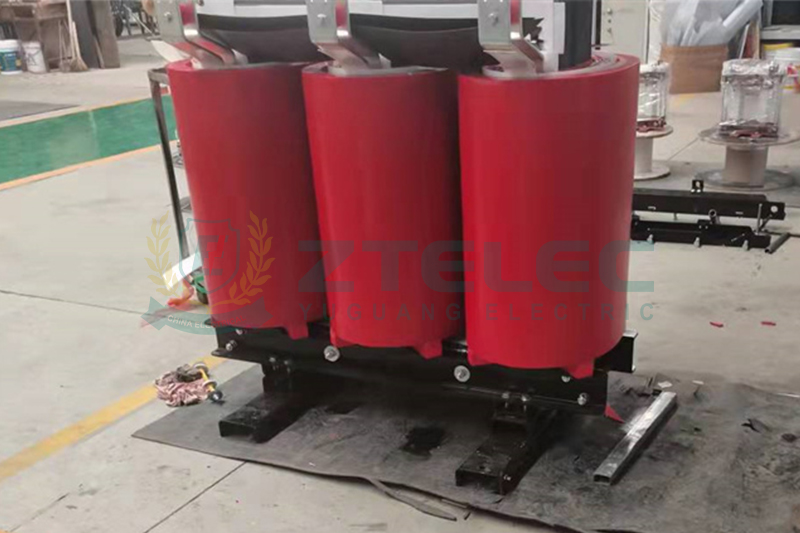
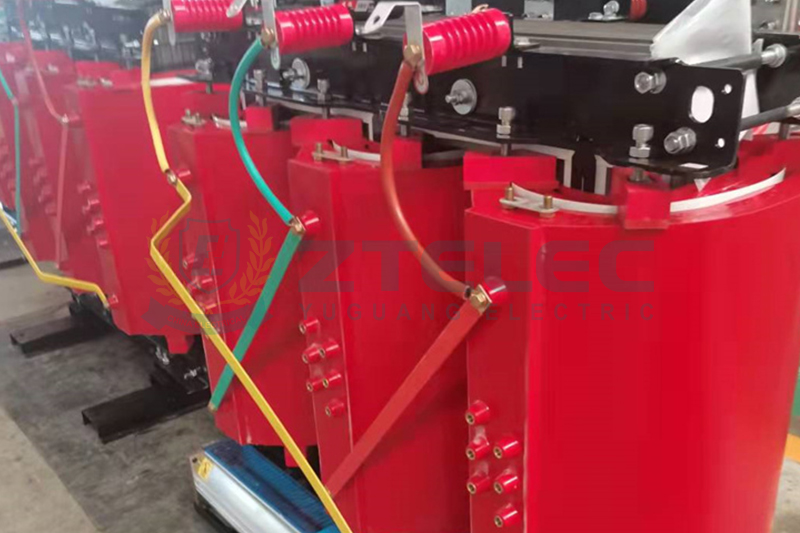
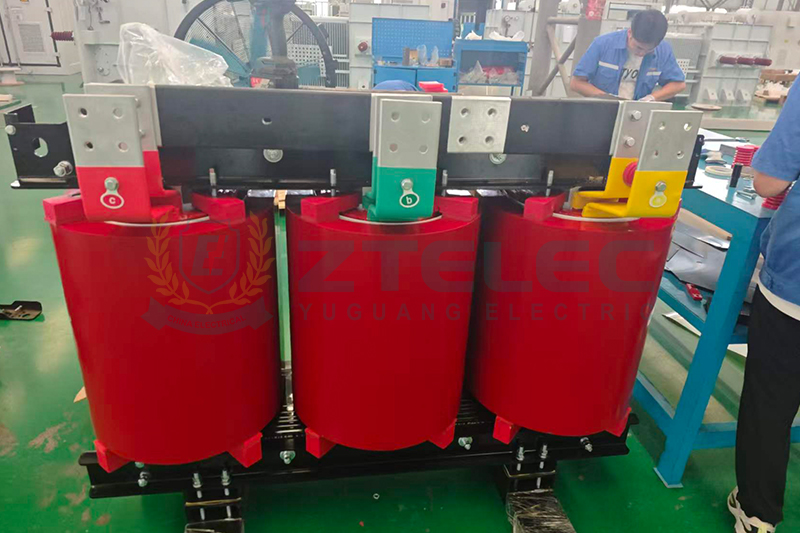
A cast-resin transformer is the most common medium-voltage dry-type design. Its windings are encapsulated in epoxy resin under vacuum, which improves moisture resistance, mechanical strength and short-circuit withstand capability.
Buyers often use the two terms interchangeably. Strictly speaking, cast resin is one construction method within the dry-type family, alongside vacuum pressure impregnated (VPI) designs.
Typical Ratings
Most Chinese suppliers offer 10 kV and 35 kV cast resin units from 30 kVA up to 20,000 kVA. Common secondary voltages include 0.4 kV, 0.69 kV and 6.3 kV, with Dyn11 as the most popular vector group.
Leading Dry Type Transformer Manufacturers in China
The list below covers well-known names that serve both domestic and overseas markets. It is not a paid ranking. Product ranges, certifications and capacity change over time, so confirm current details with each company before you shortlist.
CHINT Electric
CHINT is one of the largest low-voltage and distribution equipment groups in China. Its transformer division produces a wide range of dry type and oil-immersed units, and its brand recognition helps in tenders that require an established name.
TBEA
TBEA is a major power equipment group with large transformer production bases. It supplies utility-scale projects, including renewable energy and long-distance transmission, and also manufactures dry-type transformers for industrial users.
Sieyuan Electric
Sieyuan focuses on power transmission and distribution equipment, with transformers, switchgear and reactive power products in one portfolio. This makes it convenient for buyers who want to source several items from one supplier.
Jinpan Technology
Jinpan is widely known for cast-resin transformer technology. Its specialization in epoxy resin casting has made it a frequent choice for wind power, rail and building projects that demand reliable dry type designs.
Huapeng Transformer
Huapeng has a long history in transformer manufacturing and offers dry type units alongside oil-immersed models. It serves both domestic grid customers and export markets.
International Brands With Chinese Plants
Several global groups, including Siemens, ABB and Schneider Electric, operate transformer factories in China. These plants often supply premium cast resin units for data centers and high-end commercial buildings, usually at higher prices than local brands.
Specialized Export Factories
Beyond the big names, dozens of mid-sized factories focus on exports to Southeast Asia, the Middle East, Africa and Latin America. They typically offer flexible customization, shorter lead times and direct communication with the engineering team.
How to Evaluate a Dry Type Transformer Manufacturer
Check Certifications and Standards
Ask for ISO 9001, ISO 14001 and ISO 45001 certificates. For the product itself, look for compliance with IEC 60076-11, the standard for dry-type power transformers, and the national GB 1094.11 standard.
For export projects, additional marks such as CE, KEMA test reports or local approvals may be required.
Ask for Type Test and Routine Test Reports
A credible manufacturer can provide type test reports from an independent laboratory. These should cover temperature rise, lightning impulse, short-circuit withstand and partial discharge.
Routine tests, such as winding resistance, ratio, no-load loss and load loss, should be carried out on every unit before shipment.
Review the Winding and Casting Process
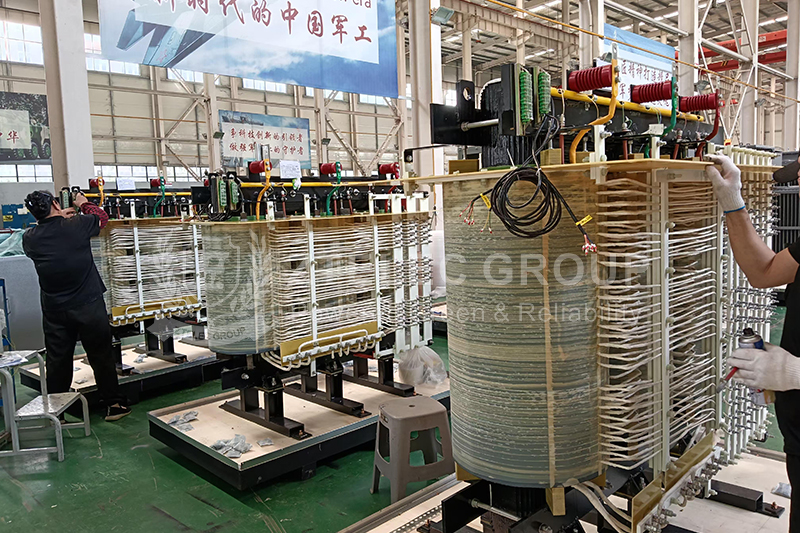
Vacuum casting is the key step in making a quality cast-resin transformer. Ask whether the factory casts under full vacuum and how it controls resin mixing and curing temperature.
Poor casting leads to voids, which cause partial discharge and shorten the transformer's life.
Compare Core and Conductor Materials
High-grade grain-oriented silicon steel reduces no-load loss. Copper windings offer lower resistance and better short-circuit strength, while aluminum windings reduce purchase cost.
Be sure that the quotation states the winding material clearly, because it affects both price and performance.
Evaluate Factory Capacity and Lead Time
Typical lead time for standard dry type transformers is four to eight weeks, depending on rating and order volume. Special voltages, enclosures or heavy customization can extend that period.
Ask about monthly output, testing facilities and spare parts availability.
Look at Reference Projects
Real project references show how a supplier performs in the field. Request a list of recent exports, ideally with contacts in your target country or similar climate conditions.
Key Technical Options to Specify
Cooling Method
Natural air cooling (AN) is standard. Forced air cooling (AF) with fans can raise capacity by around 30 to 40 percent for short periods, which is useful for peak loads.
Insulation Class and Temperature Rise
Class F insulation with a temperature rise of 100 K is common. Class H offers extra thermal margin for hot environments and overload conditions.
Enclosure and Protection Rating
An IP20 enclosure suits indoor electrical rooms. For dusty or humid sites, IP23 or higher may be necessary. Outdoor use generally needs a specially designed enclosure.
Protection and Monitoring
Temperature controllers with PT100 sensors are standard on most units. Optional extras include on-load tap changers, partial discharge monitoring and remote communication modules.
Typical Applications of Cast-Resin Transformers
Commercial and Public Buildings
Hospitals, airports, shopping centers and office towers prefer dry-type transformers because they are safe to install close to occupied areas.
Data Centers
Data centers require compact, low-maintenance and fire-safe equipment. Cast resin units meet these needs and can be paired with low-voltage switchgear in the same room.
Renewable Energy
Solar inverter stations and wind turbines use dry type transformers because they handle frequent load changes and humid or coastal conditions well.
Industrial Plants
Factories use cast resin transformers for rectifier duty, variable frequency drives and general plant distribution. Special designs can handle harmonics and high inrush currents.
Rail and Marine
Metro systems and ships demand vibration resistance and low fire risk. Cast resin windings suit these tough conditions.
Price Factors You Should Understand
Rating and Voltage Class
Price rises with kVA capacity and voltage class. A 35 kV unit costs noticeably more than a 10 kV unit of the same kVA because of the extra insulation needed.
Efficiency Level
Lower-loss designs cost more at purchase but save electricity over the years. An amorphous alloy core can cut no-load loss substantially, which pays back quickly in lightly loaded applications.
Raw Material Costs
Copper, silicon steel and epoxy resin prices move with the market. Ask suppliers about quotation validity, since large swings can change the final price.
Customization and Accessories
Enclosures, fans, tap changers and monitoring options add cost. Define your specification clearly to receive comparable quotations from different suppliers.
Common Mistakes When Choosing a Supplier
The first mistake is choosing the lowest price without checking material quality. A cheap quote often hides lower-grade steel, thinner insulation or reduced testing.
The second mistake is skipping factory acceptance. Whenever possible, witness the tests in person or hire a third-party inspector.
The third mistake is ignoring after-sales support. Confirm warranty length, spare parts supply and the response time of the technical team before signing the contract.
Practical Buying Checklist
Before You Request Quotations
Prepare your rated power, primary and secondary voltage, frequency, vector group, impedance, cooling method, enclosure rating and installation altitude.
While Comparing Offers
Compare loss values, material specification, test items, delivery terms and warranty side by side. Ask each supplier to confirm compliance with the same standard.
Before Shipment
Review test reports, inspect the packing and verify nameplate data. Confirm that documents such as the certificate of origin and packing list match the contract.
China offers a deep pool of dry type transformer manufacturers, from large listed groups to specialized export factories. The best choice depends on your project's voltage, capacity, standards and budget.
Shortlist three to five suppliers, request detailed technical offers and test reports, and compare total cost of ownership rather than purchase price alone. With careful evaluation, a reliable Dry-type transformer or cast-resin transformer supplier in China can deliver safe, efficient and long-lasting equipment for your project.
Frequently Asked Questions
Which is better, dry type or cast resin transformer?
Cast resin is a type of dry transformer. For medium-voltage indoor use, cast resin designs are usually preferred because of their moisture resistance and strong short-circuit performance.
How long does a cast-resin transformer last?
With proper loading and ventilation, a well-made unit can operate for 25 years or more.
Can Chinese dry type transformers meet international standards?
Yes. Many manufacturers build to IEC 60076-11 and can supply type test reports for export projects.
dry-type transformer
dry type transformer manufacturers China
top transformer manufacturers China 2026
cast-resin transformer
750 kVA oil immersed transformer
- more+releated article
- 2026-11-23Top Dry Type Transformer Manufacturers in Chin
- 2026-11-21750 kVA Oil Filled Transformer: Specs and Pric
- 2026-11-20Prefab Substation vs Traditional Build: Cost C
- 2026-11-19Dry Type Transformer Price List 2026: What to
- 2026-11-18Oil Filled Self Cooled Transformer: ONAN Basic
- 2026-11-17What Is a Prefabricated Substation? Types and
- 2026-11-16Cast Resin vs VPI Dry Type Transformers: Key D
- 2026-11-1423 kV Transformer Standards: IEC vs IEEE/ANSI
- 2026-11-13IEC 60076 Transformer Tests: Routine, Type &am
- 2026-11-12Outdoor Transformer Installation: Clearances &
- ELECTRICAL INSULATION BOARD MATERIALS
- ELECTRICAL INSULATION MATERIALS
- POWER TRANSFORMER
- ENAMELED WIRE
- SWITCHGEAR
FR-4 Copper-Free Laminate | High-Performance Insulation Material
FR-4 Copper Clad Laminate Manufacturer & Supplier
top transformer manufacturers China 2026
dry-type transformer
cast-resin transformer
dry type transformer manufacturers China
750 kVA transformer price
750 kVA oil immersed transformer
750 KVA oil filled transformer
prefabricated substation
packaged substation
prefab substation
cast-resin transformer price
dry type transformer price list 2026
dry-type transformer price
dry-type transformers
1250kVA transformer price
1250kVA epoxy resin cast dry-type transformer price
prefabricated substation types
what is a prefabricated substation
VPI transformer
cast resin vs VPI dry type transformer
IEC 60076
IEEE C57.12.00
23 kV transformer standards
GB 1094
dry type transformer