
1500 kVA Oil Filled Transformer Buying Guide | Specs, Losses & Supplier Tips
A 1500 kVA oil filled transformer is one of the most popular sizes for factories, commercial complexes, solar plants and utility feeders. This guide explains what to check before you place an order, so you can compare quotes with confidence.
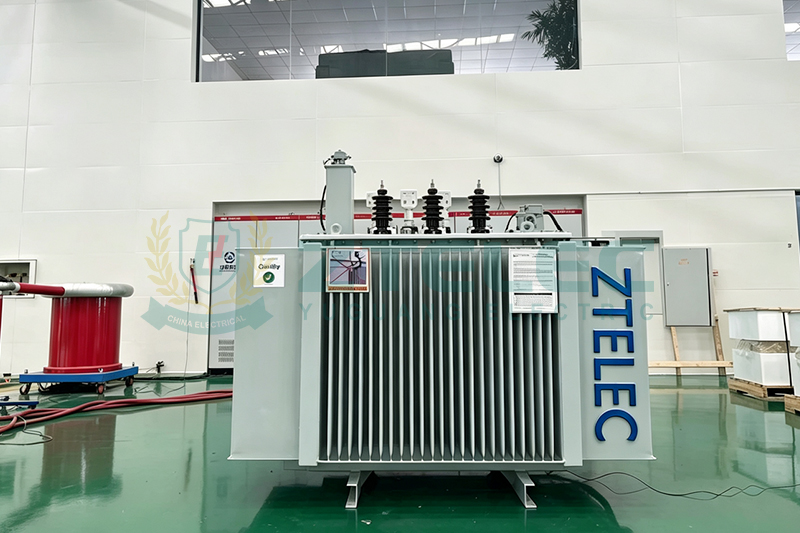
Why the 1500 kVA Rating Is So Widely Used
The 1500 kVA size sits in a practical middle zone. It is large enough to supply a medium factory or a large building, yet small enough to ship, install and maintain without heavy equipment.
On a 400 V secondary, the full load current is about 2,165 A. On an 11 kV primary, it is about 79 A. These figures help you size cables, busbars and breakers correctly.
Oil immersed transformers also handle overloads and outdoor conditions better than most alternatives in this range. That is why they remain the default choice for outdoor substations and utility networks.
Step 1: Confirm Your Voltage and Frequency
Start with the system data. Wrong voltage or frequency is the most expensive mistake in transformer procurement.
Primary and Secondary Voltage
Common primary voltages for this rating are 6.6 kV, 11 kV, 13.8 kV, 22 kV, 23 kV and 33 kV. Common secondary voltages are 400 V, 415 V and 433 V.
Always confirm the real grid voltage with your utility. Tell the supplier the tolerance range, because it affects tap changer design.
50 Hz or 60 Hz
Frequency changes the core design. A 60 Hz unit can usually use a smaller core than a 50 Hz unit, but a 50 Hz transformer should not simply be run on 60 Hz without engineering review. State the frequency clearly in your inquiry.
Step 2: Choose the Vector Group and Impedance
The vector group describes how the windings are connected. For distribution work, Dyn11 is the most common choice because the delta winding helps handle harmonics and unbalanced loads.
Impedance is usually 6% for a 1500 kVA unit under IEC practice. Some utilities specify 5% or 6.25%.
Higher impedance limits short-circuit current. Lower impedance improves voltage regulation. Check your protection settings and downstream breaker ratings before you decide.
Step 3: Understand Cooling Methods
Most 1500 kVA oil filled transformers use ONAN cooling, which means oil natural and air natural. Heat moves from the core and windings into the oil, then out through radiators.
ONAN has no fans or pumps, so it is quiet and needs very little maintenance. Some projects add fans for ONAF operation to gain extra short-term capacity, but this adds cost and control equipment.
If your site has high ambient temperature, ask for a design based on that temperature rather than a standard 40°C maximum. Also review altitude, because thin air reduces cooling performance above 1,000 m.
Step 4: Compare Losses, Not Just Price
The purchase price is only the start of the cost. A transformer runs 24 hours a day for 25 years or more, so energy loss often costs more than the unit itself.
No-Load Loss
No-load loss occurs in the core whenever the transformer is energized. It runs constantly, even when the load is zero. Better core steel, such as high-grade silicon steel or amorphous alloy, reduces it.
Load Loss
Load loss occurs in the windings and rises with the square of the current. It matters most when the transformer runs near full load for long hours.
Efficiency Standards
Ask which standard applies. Common references include IEC 60076, EU Ecodesign Tier 2, US DOE rules and local national standards. Request guaranteed loss values in the quotation, together with the penalty terms if the factory test result exceeds them.
Step 5: Select Winding Material
Copper windings give lower resistance, higher mechanical strength and a smaller coil size. Aluminum windings cost less and weigh less, but they need a larger cross-section to carry the same current.
For a 1500 kVA unit, copper is often preferred when loss evaluation is strict. Aluminum can be a sound choice when the budget is tight and the loss limits are still met.
Ask the supplier to state the winding material for both high and low voltage in writing. Do not accept a vague description.
Step 6: Pick the Right Oil and Tank Design
Insulating Oil Options
Mineral oil is the standard choice and the most economical. Natural ester oil has a higher fire point and is biodegradable, so it suits indoor sites, buildings and environmentally sensitive locations. Many liquid filled transformer manufacturers now offer ester-filled versions at your request.
Sealed Tank or Conservator
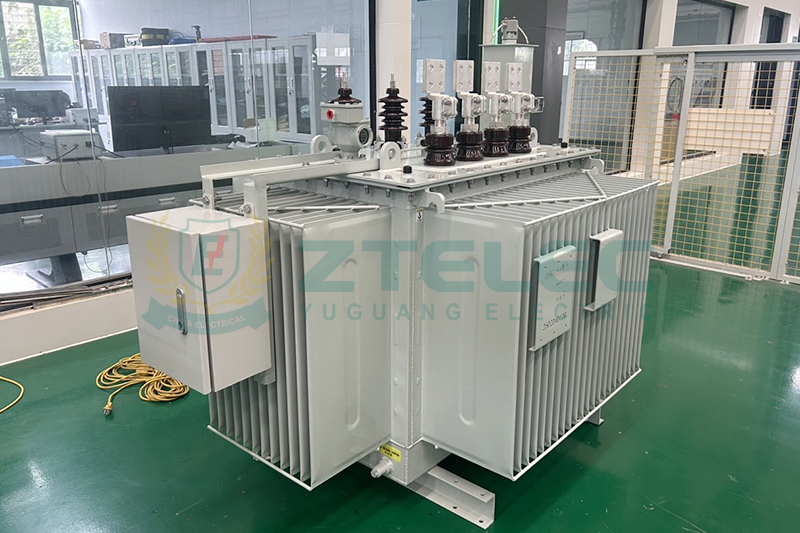
A hermetically sealed tank has no conservator. It keeps air and moisture away from the oil and needs less maintenance. A conservator type has an oil expansion tank and a breather, and it is easy to inspect and top up.
For most 1500 kVA projects, a sealed corrugated tank is compact and reliable. Choose a conservator design if your utility specification requires it.
Step 7: Check Accessories and Protection
The accessories protect the transformer and tell your operators what is happening inside. Confirm these items in the quotation:
Oil temperature indicator with alarm and trip contacts.
Winding temperature indicator for load monitoring.
Oil level gauge that is easy to read from the ground.
Pressure relief device to release dangerous internal pressure.
Buchholz relay on conservator type units, for gas and oil surge detection.
Off-circuit tap changer, usually with a ±2 × 2.5% range.
Bushings and cable boxes suited to your cable or busbar connection.
If the transformer will feed a compact substation or a ring main unit, tell the supplier early. Cable box type and bushing position must match the switchgear.
Step 8: Review the Test Plan
A good transformer is proven by testing, not by brochures. Ask for the test plan before you sign the contract.
Routine Tests
Every unit should receive routine tests, including winding resistance, ratio and vector group, no-load loss, load loss, impedance voltage, applied voltage and induced voltage tests.
Type and Special Tests
Type tests prove the design. They include the temperature rise test and the lightning impulse test. Short-circuit withstand tests and sound level measurements may also be requested.
If you cannot visit the factory, hire a third-party inspector or ask for a live video witness test. Insist on test reports with serial numbers that match the nameplate.
Step 9: Evaluate Liquid Filled Transformer Manufacturers
The supplier matters as much as the specification. Two quotes can look identical on paper and still produce very different products.
Use this approach when you screen liquid filled transformer manufacturers:
Check the certificates. Look for ISO 9001 and valid type test reports from recognized laboratories.
Ask for references. Request projects of similar size and voltage, ideally in your country or region.
Visit or audit the factory. Look at core cutting, coil winding, vapor phase drying and the test room.
Compare materials. Ask for core steel grade, conductor type and oil brand in writing.
Review after-sales support. Confirm warranty length, spare part supply and response time.
Be careful with a quote that is far below the others. It often hides lower-grade steel, thinner copper or relaxed loss values.
Step 10: Plan Delivery, Packing and Installation
A 1500 kVA oil filled transformer typically weighs several tonnes, and the exact figure depends on the design, loss level and oil volume. Confirm the shipping weight and dimensions early, so you can plan cranes, trucks and foundations.
Ask how the unit will be packed. Sealed tank units usually ship filled with oil. Conservator units may ship with the conservator removed, and the bushings may be packed separately.
Clarify the Incoterms, such as FOB, CIF or DAP, and who is responsible for unloading. Check lead time too. Standard designs often ship faster than units with special voltage, loss or accessory requirements.
Site Preparation Basics
Prepare a level concrete base with an oil containment pit if your local rules require one. Keep safe clearances from walls and other equipment. Provide good grounding and make sure the cables are rated for the full load current.
Common Buying Mistakes to Avoid
These mistakes come up again and again in transformer projects:
Ordering by kVA only. Voltage, impedance, losses and standards must be fixed as well.
Ignoring loss values. A cheap unit with high losses can cost much more over its life.
Skipping the test witness. Problems found at the factory are cheap to fix. Problems found on site are not.
Forgetting site conditions. Altitude, ambient temperature, humidity and pollution all affect the design.
Leaving out future load growth. If your load will grow, discuss ONAF capacity or a larger rating now.
Oil Filled or Dry Type: A Quick Check
Oil immersed transformers usually cost less, run cooler and handle overloads better. They are the best fit for outdoor installations and utility networks.
Dry type transformers avoid oil and suit indoor sites with strict fire rules, such as hospitals, tunnels and high-rise buildings. If fire safety is your top concern, compare both types before you decide. A reliable supplier should be able to quote both without pushing one option.
1500 kVA Oil Filled Transformer Buying Checklist
Before you send your inquiry, collect these details:
Rated power: 1500 kVA.
Voltage ratio: for example 11/0.4 kV or 33/0.4 kV.
Frequency: 50 Hz or 60 Hz.
Vector group and impedance: for example Dyn11 and 6%.
Cooling: ONAN or ONAF.
Winding material: copper or aluminum.
Oil type: mineral or ester.
Loss standard: IEC, Tier 2, DOE or local standard.
Site conditions: altitude, ambient temperature and indoor or outdoor use.
Tests and standards: IEC 60076 and any witness requirement.
Get a Quote for Your 1500 kVA Transformer
Choosing a 1500 kVA oil filled transformer comes down to clear specifications, honest loss figures and a supplier you can trust. When these three points are in place, you get a transformer that runs safely for decades.
ZTelec Group supplies oil immersed transformers, dry type transformers and prefabricated substations for overseas projects, with customized voltage, capacity, cooling type and tank design. Send us your voltage, frequency, loss requirements and site details, and our team will prepare a tailored technical proposal and quotation.
1500 kVA transformer buying guide
oil immersed transformers
1500 kVA oil filled transformer
prefabricated substation
500kVA substation
- more+releated article
- 2026-11-251500 kVA Oil Filled Transformer Buying Guide |
- 2026-11-24500kVA Substation Buying Guide for 2026
- 2026-11-23Top Dry Type Transformer Manufacturers in Chin
- 2026-11-21750 kVA Oil Filled Transformer: Specs and Pric
- 2026-11-20Prefab Substation vs Traditional Build: Cost C
- 2026-11-19Dry Type Transformer Price List 2026: What to
- 2026-11-18Oil Filled Self Cooled Transformer: ONAN Basic
- 2026-11-17What Is a Prefabricated Substation? Types and
- 2026-11-16Cast Resin vs VPI Dry Type Transformers: Key D
- 2026-11-1423 kV Transformer Standards: IEC vs IEEE/ANSI
- ELECTRICAL INSULATION BOARD MATERIALS
- ELECTRICAL INSULATION MATERIALS
- POWER TRANSFORMER
- ENAMELED WIRE
- SWITCHGEAR

FR-4 Copper-Free Laminate | High-Performance Insulation Material

FR-4 Copper Clad Laminate Manufacturer & Supplier
1500 kVA transformer buying guide
oil immersed transformers
1500 kVA oil filled transformer
500kVA substation
500kVA substation buying guide
compact substation
prefabricated substation
dry type transformer manufacturers China
cast-resin transformer
dry-type transformer
top transformer manufacturers China 2026
750 kVA oil immersed transformer
750 KVA oil filled transformer
750 kVA transformer price
packaged substation
prefab substation
cast-resin transformer price
dry type transformer price list 2026
dry-type transformer price
dry-type transformers
1250kVA epoxy resin cast dry-type transformer price
1250kVA transformer price
what is a prefabricated substation
prefabricated substation types
cast resin vs VPI dry type transformer