
Dry Type Transformers for Data Centers: Buyer Guide
Power is the lifeblood of every data center. When a transformer fails, servers go dark, service level agreements are breached, and revenue disappears within minutes. That is why selecting the right transformer is one of the most important decisions in any facility design.
In recent years, the dry-type transformer has become the default choice for indoor data center power distribution. This guide explains why, compares the main designs, and walks you through the specifications, standards and supplier checks you need before placing an order.
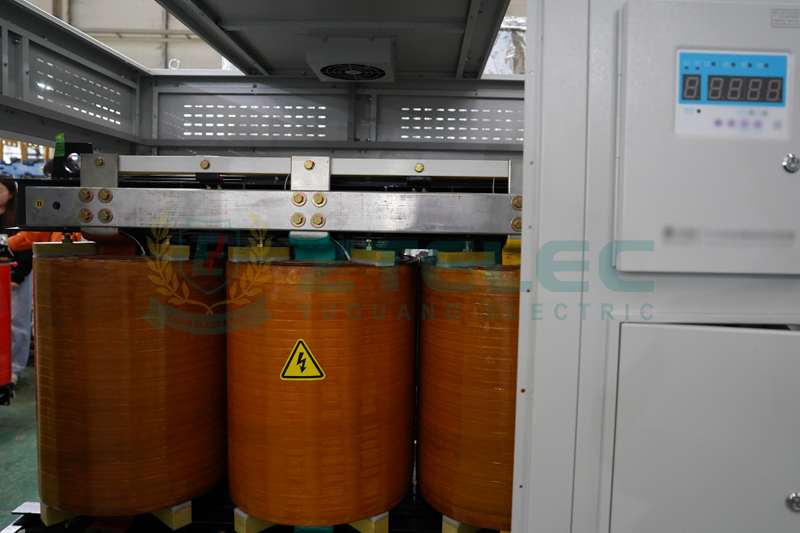
Why Data Centers Choose Dry-Type Transformers
A dry-type transformer uses air, rather than mineral oil, as its cooling medium. The windings are insulated with resin, varnish or similar solid materials. This simple difference solves several problems that matter greatly inside a data hall or electrical room.
Superior Fire Safety
Oil-filled units carry a fire and leakage risk. A dry-type transformer contains no flammable liquid, so it can be installed close to the load without fire-containment pits, deluge systems or oil barriers. Many insurers and local codes favor dry designs for indoor locations, and a cast-resin transformer is typically self-extinguishing.
Installation Close to the Load
Placing the transformer near the IT load shortens low-voltage cable runs. Shorter runs reduce copper cost, voltage drop and energy loss. Because dry units are safe indoors, designers can place them on the same floor as the switchgear and UPS systems.
Low Maintenance and High Uptime
There is no oil to sample, filter or replace. Routine maintenance is limited to inspection, cleaning and thermal checks. For operators chasing Tier III or Tier IV availability, fewer maintenance interventions mean fewer opportunities for human error.
Environmental Benefits
With no oil, there is no risk of soil or water contamination. This simplifies permitting and supports corporate sustainability goals that many hyperscale and colocation operators now publish.
Cast-Resin Transformer vs. Other Dry-Type Designs
Not every dry-type transformer is built the same way. Two construction methods dominate the market, and the difference affects durability, size and cost.
Cast-Resin Transformers
A cast-resin transformer has its high-voltage windings encapsulated in epoxy resin under vacuum. The resin is usually filled with quartz powder, which improves mechanical strength and flame resistance. The result is a winding that resists moisture, dust and chemical contamination very well.
Because the windings are fully sealed, a cast resin dry type transformer performs reliably in humid or dusty environments, and it handles frequent load changes without insulation fatigue. These traits suit data centers where loads fluctuate throughout the day.
VPI Dry-Type Transformers
Vacuum pressure impregnated (VPI) units dip the windings in varnish and cure them in an oven. They are lighter and often cheaper, and they are common in North American markets. However, the winding surface is less sealed than cast resin, so they need a cleaner, drier environment.
Quick Comparison
| Feature | Cast-Resin Transformer | VPI Dry-Type Transformer |
|---|---|---|
| Winding protection | Fully encapsulated in epoxy | Varnish coating |
| Moisture and dust resistance | Excellent | Moderate |
| Fire behavior | Self-extinguishing | Good, flame retardant |
| Weight | Heavier | Lighter |
| Typical upfront cost | Higher | Lower |
| Short-circuit strength | Very high | High |
For most mission-critical facilities, especially those in humid, coastal or high-altitude regions, the cast-resin transformer offers the best balance of safety and longevity.
Key Specifications to Evaluate
A purchase order should never say only "1600 kVA dry type." The details below determine whether the unit will meet your reliability and efficiency targets.
Capacity and Load Profile
Size the transformer for the real load, plus growth. Data centers rarely run at full capacity on day one, but they expand quickly. Many designers choose a rating that keeps normal loading near 60 to 70 percent, leaving headroom for expansion and for N+1 failover events.
Ask about forced-air cooling options too. Adding fans to a dry-type transformer can raise its short-term capacity significantly, which is useful for peak demand or when a redundant unit is offline.
Voltage Ratings and Vector Group
Match the primary voltage to your utility or medium-voltage switchgear, such as 11 kV, 13.8 kV, 22 kV or 33 kV. Secondary voltage is typically 400/415 V or 480 V depending on region. The Dyn11 vector group is widely used for its harmonic and grounding benefits, but always confirm with your electrical engineer.
Efficiency and Losses
Data centers run around the clock, so even a small improvement in efficiency saves a great deal of energy over a 25-year service life. Look for compliance with regional efficiency rules, such as the US DOE 2016 standard or the EU Ecodesign Tier 2 requirement. Low-loss cores made from high-grade grain-oriented silicon steel reduce no-load losses, which are present every hour the transformer is energized.
Request guaranteed no-load and load loss figures in writing, and consider evaluating total cost of ownership rather than purchase price alone.
Insulation Class and Temperature Rise
Most cast-resin units use Class F (155 °C) insulation, and some use Class H (180 °C). A lower temperature rise, such as 80 K or 100 K, extends insulation life and creates more overload margin. In hot climates or poorly ventilated rooms, choosing a conservative temperature rise is a smart investment.
Impedance and Short-Circuit Withstand
Impedance controls fault current and voltage regulation. Higher impedance limits fault current but increases voltage drop. Coordinate this value with your switchgear ratings. A well-built cast-resin transformer should also come with short-circuit test reports to demonstrate mechanical strength.
Harmonics and K-Factor
Servers, UPS systems and variable-speed cooling drives create non-linear loads with significant harmonic currents. These currents cause extra heating in windings and cores. If harmonic content is high, specify a K-factor rated transformer or ask the manufacturer to derate and design the unit for harmonic duty.
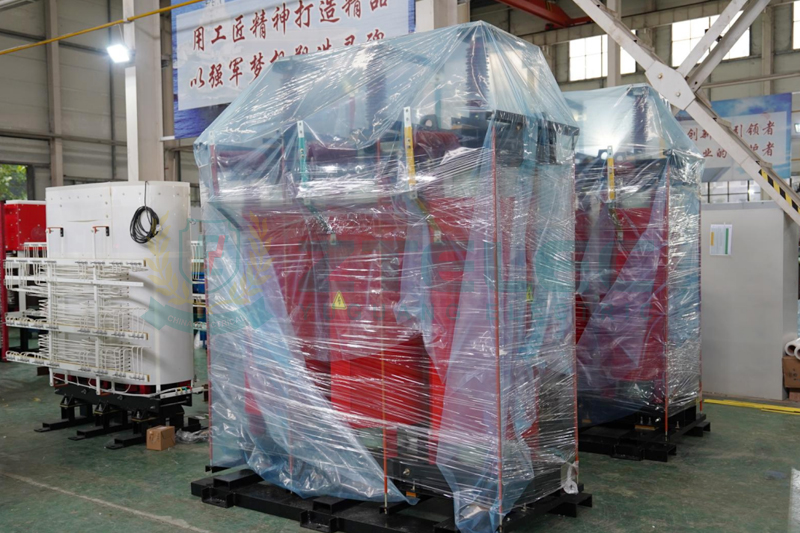
Cooling, Enclosure and Room Design
A dry-type transformer depends on airflow, so room design matters as much as the unit itself. Poor ventilation raises winding temperature, shortens insulation life and can trigger thermal alarms.
Plan for enough fresh-air intake and exhaust, and keep clearances to walls and other equipment as the manufacturer specifies. Temperature sensors, such as PT100 probes in the windings, should connect to a controller that drives fans and sends alarms to your building management system.
Choose an enclosure rating that fits the environment. IP20 is common for clean electrical rooms, while IP23 or higher offers better protection against dripping water and solid objects. Also check the sound level. Transformers placed near office space or occupied areas may require low-noise designs.
Redundancy and Power Architecture
Transformers are rarely installed alone. In a typical Tier III or Tier IV design, two or more transformers feed redundant distribution paths, so that the loss of one unit does not interrupt IT load.
Common configurations include N+1, 2N and distributed redundancy. Each approach influences how you size individual transformers. A 2N design, for example, may require each unit to carry the full load for a period, which makes overload capability and forced-air cooling especially valuable.
Also consider how quickly you can replace a unit. Lead times for large transformers can stretch for months, so many operators keep a spare or agree on a stock arrangement with the supplier.
Standards and Certifications
Insist on products tested to recognized standards. For a dry-type transformer, IEC 60076-11 is the main international reference, while IEEE C57.12.01 and UL 1561 or UL 5085 apply in many North American projects.
For a cast-resin transformer, ask for the climatic class (C2), environmental class (E2) and fire behavior class (F1) as defined in IEC 60076-11. These ratings prove that the product can withstand condensation, pollution and fire exposure. Quality management certificates such as ISO 9001, along with type-test and routine-test reports, are also essential.
How to Evaluate a Transformer Supplier
The best product still fails if the manufacturer cannot support it. Start with proven experience: ask for data center or industrial references and contact them if possible.
Review factory capabilities such as vacuum casting equipment, core cutting lines and in-house testing labs. Confirm that each unit undergoes routine tests, including ratio, winding resistance, no-load loss, load loss, impedance, induced voltage and partial discharge. For cast-resin units, a low partial discharge level is a strong indicator of casting quality.
Finally, compare warranty terms, spare parts availability, delivery schedules and after-sales support. A supplier that offers clear documentation, drawings and responsive engineering communication will save you time during commissioning.
Common Buying Mistakes to Avoid
The first mistake is choosing on price alone. A cheaper unit with higher losses can cost far more over its lifetime in electricity bills and cooling load.
The second is ignoring harmonics. An unrated transformer in a harmonic-rich environment may overheat even when the nameplate load looks safe.
The third is underestimating room conditions. Dust, humidity and poor airflow all shorten service life, so match the transformer design and enclosure to the real installation site.
The fourth is forgetting future expansion. Leaving physical space, cable capacity and cooling margin for additional units avoids expensive rework later.
Frequently Asked Questions
Is a dry-type transformer better than an oil-filled transformer for data centers?
For indoor installations, yes in most cases. A dry-type transformer removes fire and oil leakage concerns, requires less maintenance and can sit close to the load. Oil-filled units may still make sense outdoors or at very high capacities.
How long does a cast-resin transformer last?
With proper loading and ventilation, a quality cast-resin transformer commonly serves for 25 to 30 years or more. Lower operating temperatures and clean air extend life further.
Can dry-type transformers handle overload?
Yes, within limits. Fan cooling can provide a meaningful short-term increase in capacity, but continuous overload shortens insulation life. Always agree on overload conditions with the manufacturer.
What size dry-type transformer do I need?
It depends on the connected load, growth plans and redundancy scheme. A qualified electrical engineer should calculate demand, apply a safety margin and confirm the rating with the supplier.
Selecting a dry-type transformer for a data center is a balance of safety, efficiency, reliability and long-term cost. A cast-resin transformer is often the strongest option for indoor, mission-critical environments thanks to its sealed windings, fire performance and tolerance for load changes.
Define your load, voltage, efficiency and harmonic requirements early, verify standards and test reports, and choose a supplier that can support you from design through commissioning. Do this well, and your transformers will quietly deliver dependable power for decades.
data center transformer
cast-resin transformer
dry type transformer for data centers
cast resin dry type transformer
dry-type transformer
- more+releated article
- 2026-11-26Dry Type Transformers for Data Centers: Buyer
- 2026-11-251500 kVA Oil Filled Transformer Buying Guide |
- 2026-11-24500kVA Substation Buying Guide for 2026
- 2026-11-23Top Dry Type Transformer Manufacturers in Chin
- 2026-11-21750 kVA Oil Filled Transformer: Specs and Pric
- 2026-11-20Prefab Substation vs Traditional Build: Cost C
- 2026-11-19Dry Type Transformer Price List 2026: What to
- 2026-11-18Oil Filled Self Cooled Transformer: ONAN Basic
- 2026-11-17What Is a Prefabricated Substation? Types and
- 2026-11-16Cast Resin vs VPI Dry Type Transformers: Key D
- ELECTRICAL INSULATION BOARD MATERIALS
- ELECTRICAL INSULATION MATERIALS
- POWER TRANSFORMER
- ENAMELED WIRE
- SWITCHGEAR

FR-4 Copper-Free Laminate | High-Performance Insulation Material

FR-4 Copper Clad Laminate Manufacturer & Supplier
cast-resin transformer
dry-type transformer
cast resin dry type transformer
dry type transformer for data centers
data center transformer
1500 kVA oil filled transformer
1500 kVA transformer buying guide
oil immersed transformers
500kVA substation buying guide
500kVA substation
prefabricated substation
compact substation
dry type transformer manufacturers China
top transformer manufacturers China 2026
750 KVA oil filled transformer
750 kVA oil immersed transformer
750 kVA transformer price
prefab substation
packaged substation
dry type transformer price list 2026
cast-resin transformer price
dry-type transformer price
dry-type transformers
1250kVA epoxy resin cast dry-type transformer price
1250kVA transformer price