
1000 kVA Oil Filled Transformer Selection Guide
A 1000 kVA oil filled transformer is one of the most common ratings in industrial plants, commercial buildings, solar farms and utility distribution networks. It is large enough to feed a factory floor or a shopping mall, yet compact enough to ship, install and maintain without special equipment.
Picking the wrong specification, however, can lead to overheating, high energy bills or costly rework. This guide walks you through every key decision, so you can choose the right 1000 kVA oil immersed transformer the first time.
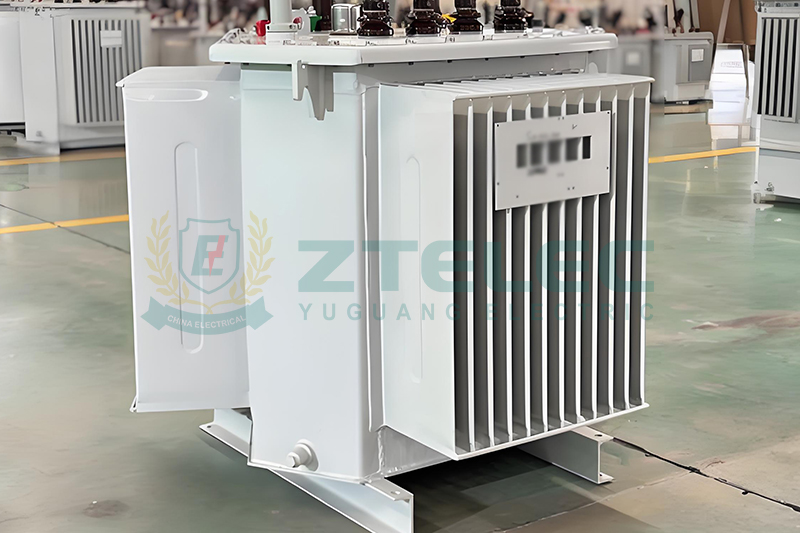
What Is a 1000 kVA Oil Filled Transformer?
An oil filled transformer uses insulating liquid, usually mineral oil, to insulate the windings and carry heat away from the core. The oil circulates naturally inside a sealed steel tank and releases heat through radiators or corrugated fins.
At 1000 kVA (1 MVA), the unit is classed as a medium-size oil filled distribution transformer. It steps medium voltage such as 11 kV, 13.8 kV, 22 kV or 33 kV down to a usable low voltage such as 400 V, 415 V or 480 V.
Compared with a dry type transformer, an oil immersed design offers better cooling, higher overload tolerance and a lower purchase price at this capacity. That is why it remains the default choice for outdoor substations.
1000 kVA Oil Filled Transformer: Key Specifications at a Glance
The table below summarizes typical parameters. Exact values vary by manufacturer and standard, so always confirm them against the final datasheet.
| Parameter | Typical Value |
|---|---|
| Rated capacity | 1000 kVA, three phase |
| Primary voltage | 6.6 kV to 33 kV |
| Secondary voltage | 400 V, 415 V, 433 V or 480 V |
| Frequency | 50 Hz or 60 Hz |
| Vector group | Dyn11 or Yyn0 |
| Impedance | 5% to 6% |
| Cooling | ONAN (oil natural, air natural) |
| Tap range | ±2 x 2.5% off-circuit |
Step-by-Step Selection Guide
1. Confirm Your Load and Capacity
Start with the real load, not the nameplate of the equipment. Add up the connected load, apply a demand factor, and include motor starting currents and any planned expansion.
A good rule is to size the transformer so normal loading sits between 60% and 80% of rated capacity. That range gives the best balance of efficiency, thermal life and spare capacity.
For reference, a 1000 kVA unit delivers about 1443 A at 400 V, 1203 A at 480 V, and draws roughly 52 A at 11 kV. Use these figures to size cables, busbars and breakers.
2. Match Voltage and Vector Group
Check the grid voltage at your site, then specify the primary and secondary voltages clearly. Typical combinations include 11/0.4 kV, 13.8/0.48 kV, 22/0.4 kV and 33/0.4 kV.
The vector group affects grounding and harmonic behavior. Dyn11 is the most popular choice for distribution because the delta winding traps triplen harmonics and the star secondary provides a neutral for single phase loads.
Yyn0 is still used in some regions, but it handles unbalanced loads less well. Follow your utility rules before you finalize this detail.
3. Choose the Cooling Method and Oil Type
At 1000 kVA, ONAN cooling is almost always sufficient. Fans (ONAF) can add roughly 20% to 30% of short-term capacity, but they add cost and maintenance, so they suit only special cases.
Mineral oil is the standard insulating liquid and is the most economical. If the site is indoors, near people, or has strict fire codes, consider natural ester fluid. It has a fire point above 300 °C and is biodegradable.
Ester-filled units cost more upfront, but they can lower insurance premiums and reduce environmental risk.
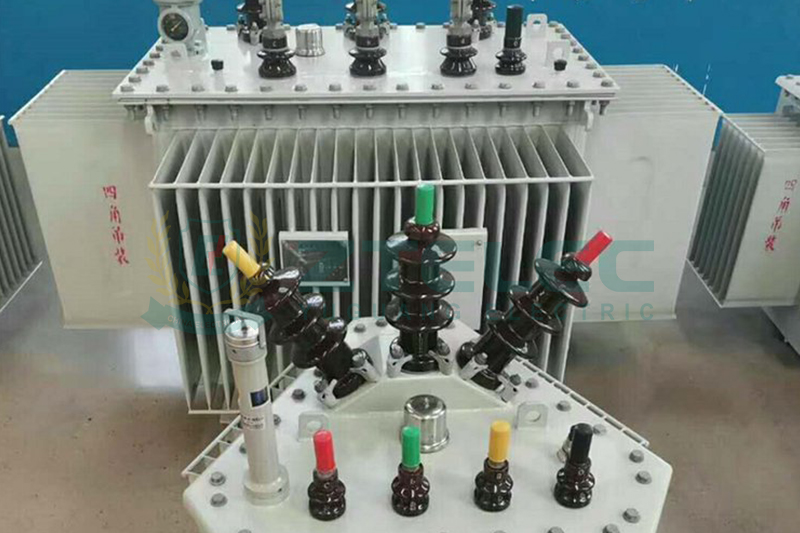
4. Compare Core Materials: Silicon Steel vs. Amorphous Alloy
Core material drives no-load loss, which is present 24 hours a day. A standard grain-oriented silicon steel core is reliable and cost effective.
An amorphous alloy transformer cuts no-load loss by about 60% to 70%. For lightly loaded or always-energized sites, such as solar plants and rural networks, the energy savings can repay the higher price within a few years.
5. Check Impedance and Short-Circuit Withstand
Impedance controls the fault current. A 1000 kVA transformer at 5% impedance on a 400 V system allows a secondary fault current of about 29 kA.
Higher impedance limits fault current but increases voltage drop. Make sure your downstream breakers can interrupt the available fault level, and ask the supplier for short-circuit test evidence.
6. Select the Tank Design: Conservator or Hermetically Sealed
A conservator type has an expansion tank on top and a breather to dry incoming air. It suits larger units and sites with regular maintenance crews.
A hermetically sealed transformer uses a fully closed corrugated tank. The oil never touches air, so moisture and oxidation are almost eliminated. For 1000 kVA, this design is popular because it is nearly maintenance free and has a smaller footprint.
7. Review Tap Changer, Accessories and Protection
Most units use an off-circuit tap changer with a ±2 x 2.5% range. If voltage varies a lot, such as on weak grids, ask for an on-load tap changer instead.
Useful accessories include an oil temperature indicator, oil level gauge, pressure relief device, Buchholz relay (for conservator types) and drain valve. For critical sites, add a winding temperature indicator with alarm and trip contacts.
Indoor, Outdoor, Pad Mounted or Substation Type?
Where the transformer sits decides its enclosure. Outdoor sites usually use a standard oil filled unit on a concrete plinth with a fenced yard.
A pad mounted transformer places the high voltage and low voltage compartments in a locked, tamper-resistant cabinet. It is common in North America and in public areas where safety is essential.
If you need a complete power solution, a compact substation combines the transformer, ring main unit and low voltage panel in one factory-tested container. It saves site work and shortens commissioning time.
Standards and Compliance
Always request a transformer built and tested to a recognized standard. The main references are IEC 60076 for international projects, IEEE C57.12 for North America, and GB 1094 for China.
Energy efficiency rules also matter. The EU Ecodesign Tier 2 limits, the US DOE 2016 rules and many national programs set maximum no-load and load losses. Confirm which loss class your market requires before you place an order.
Ask for routine test reports on every unit, and type test reports (temperature rise, lightning impulse, short circuit) for the design. These documents prove the transformer will perform as promised.
Installation and Maintenance Tips
Place the transformer on a level, load-bearing foundation with an oil containment pit. Keep proper clearance around radiators so air can flow freely, and follow local fire separation distances.
Before energizing, check insulation resistance, turns ratio, winding resistance and oil dielectric strength. Confirm that the earthing connections are tight and that the tap position matches your supply voltage.
During service, inspect oil level, temperature, leaks and bushings at least once a year. Perform dissolved gas analysis (DGA) every one to three years on larger or critical units. With good care, an oil filled transformer can run for 25 to 40 years.
Common Selection Mistakes to Avoid
Oversizing the unit. A transformer running at 20% load wastes energy through no-load loss and has a poor power factor. Right-size it instead.
Ignoring harmonics. Variable frequency drives, rectifiers and LED lighting create harmonic currents that overheat windings. If these loads are significant, specify a harmonic-rated or K-factor design.
Forgetting altitude and temperature. Above 1000 m or in very hot climates, you may need derating or a different insulation level.
Choosing on price alone. A cheaper unit with higher losses can cost far more over its life. Compare total cost of ownership, not just the purchase price.
What Affects the Price of a 1000 kVA Transformer?
Four factors drive most of the cost: raw materials such as copper, aluminum and silicon steel, the chosen loss level, the oil type, and the enclosure design. Amorphous cores and ester fluid raise the price, while a standard mineral oil unit with silicon steel is the most affordable.
Shipping, packing, testing and certification also add to the final quote. Ask suppliers for a clear breakdown so you can compare offers fairly.
Frequently Asked Questions
Is a 1000 kVA oil filled transformer better than a dry type?
For outdoor use and tight budgets, yes. Oil filled units cost less, handle overloads better and are more efficient. A dry type is better for indoor locations with strict fire rules.
How long does a 1000 kVA transformer last?
With correct loading and routine maintenance, expect 25 to 40 years of service. Overloading and poor oil quality shorten this life.
Can I use a 60 Hz transformer on a 50 Hz grid?
Not safely in most cases. A transformer designed for 60 Hz may saturate at 50 Hz. Always specify the correct frequency when ordering.
Selecting a 1000 kVA oil filled transformer comes down to a clear list of decisions: load, voltage, vector group, cooling, oil, core, impedance, tank type and standards. Get each one right, and you gain a reliable, efficient asset that serves your site for decades.
If you are comparing options, share your voltage levels, loss requirements and site conditions with an experienced liquid filled transformer manufacturer. A good supplier will confirm the design, provide test reports and deliver a quotation that fits your project.
1000 kVA transformer selection guide
1000 KVA oil filled transformer
1000 kVA oil immersed transformer
prefabricated substation
compact substation
- more+releated article
- 2026-11-281000 kVA Oil Filled Transformer Selection Guid
- 2026-11-27YBM Pre-installed Substation: Structure and Be
- 2026-11-26Dry Type Transformers for Data Centers: Buyer
- 2026-11-251500 kVA Oil Filled Transformer Buying Guide |
- 2026-11-24500kVA Substation Buying Guide for 2026
- 2026-11-23Top Dry Type Transformer Manufacturers in Chin
- 2026-11-21750 kVA Oil Filled Transformer: Specs and Pric
- 2026-11-20Prefab Substation vs Traditional Build: Cost C
- 2026-11-19Dry Type Transformer Price List 2026: What to
- 2026-11-18Oil Filled Self Cooled Transformer: ONAN Basic
- ELECTRICAL INSULATION BOARD MATERIALS
- ELECTRICAL INSULATION MATERIALS
- POWER TRANSFORMER
- ENAMELED WIRE
- SWITCHGEAR

FR-4 Copper-Free Laminate | High-Performance Insulation Material

FR-4 Copper Clad Laminate Manufacturer & Supplier
1000 kVA oil immersed transformer
1000 kVA transformer selection guide
1000 KVA oil filled transformer
prefabricated substation
box type substation
compact substation
YBM pre-installed substation
pre-installed substation
33kV substation
33kV power transformer
33kV substation design
substation design basics
data center transformer
cast resin dry type transformer
dry-type transformer
cast-resin transformer
dry type transformer for data centers
1500 kVA transformer buying guide
1500 kVA oil filled transformer
oil immersed transformers
500kVA substation buying guide
500kVA substation
top transformer manufacturers China 2026
dry type transformer manufacturers China
750 KVA oil filled transformer