
Diamond Dotted Insulation Paper: Thickness, Resin Coating & Thermal Class Explained
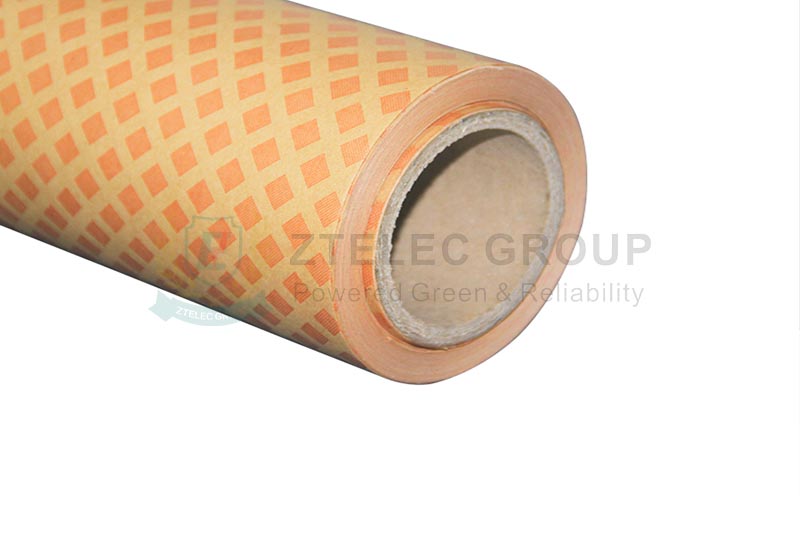
In the transformer and motor manufacturing industry, diamond dotted insulation paper is an important solid insulating material. It consists of uniformly coated insulating paper with diamond-shaped thermosetting resin dots, integrating winding bonding, fixation, and insulation functions.
With numerous specifications and parameters available on the market, how do you select the appropriate dotted paper based on actual operating conditions? This article will provide a detailed analysis of the three core indicators of diamond dotted insulation paper: thickness, resin coating characteristics, and temperature resistance rating, helping you make accurate technology selections.
Overview of Diamond Dotted Insulation Paper
Diamond dotted insulating paper is a composite insulating material. It uses high-purity insulating paper (such as cable paper) as the base material, and through a precision coating process, forms a regularly arranged diamond-shaped dot coating on the paper surface.
This "dotted" design provides strong adhesion during hot-press curing, while also reserving venting channels for coil impregnation. This solves the problem of bubbles and partial discharge that easily occur with fully coated materials.
Detailed Explanation of Diamond Dotted Insulation Paper Thickness Specifications
DDP thickness affects insulation performance and mechanical support capacity. Common specifications and applications are as follows:
|
Thickness (mm) |
Common Applications |
|
0.08 - 0.13 |
Small transformers, low-voltage windings |
|
0.15 - 0.20 |
Medium-sized transformer windings |
|
0.23 - 0.30 |
Large-capacity power transformers |
|
0.35 and above |
Special reinforced insulation structures |
Selection Recommendations:
For high-voltage environments (>1kV), prioritize substrates with a thickness ≥0.18mm to ensure sufficient breakdown voltage margin. If the equipment has high heat dissipation requirements, choose a thinner substrate while meeting insulation withstand voltage requirements.
Diamond-Shaped Dotted Insulation Paper Resin Coating: Diamond Arrangement Process
The resin coating is crucial for diamond-shaped dispensing paper, as its quality affects bond strength and production efficiency.
Resin Types
Epoxy Resin (EP):
Advantages: High bond strength, good chemical resistance, low shrinkage after curing.
Applications: Oil-immersed transformers, motors requiring high mechanical strength.
Polyester Resin (PET):
Advantages: Fast curing speed, relatively low price, good hydrolysis resistance.
Applications: Dry-type transformers, small and medium-sized motors, Class B/F insulation systems.
Quantitative Standards for Diamond Design
High-quality DDP insulation paper should possess the following characteristics:
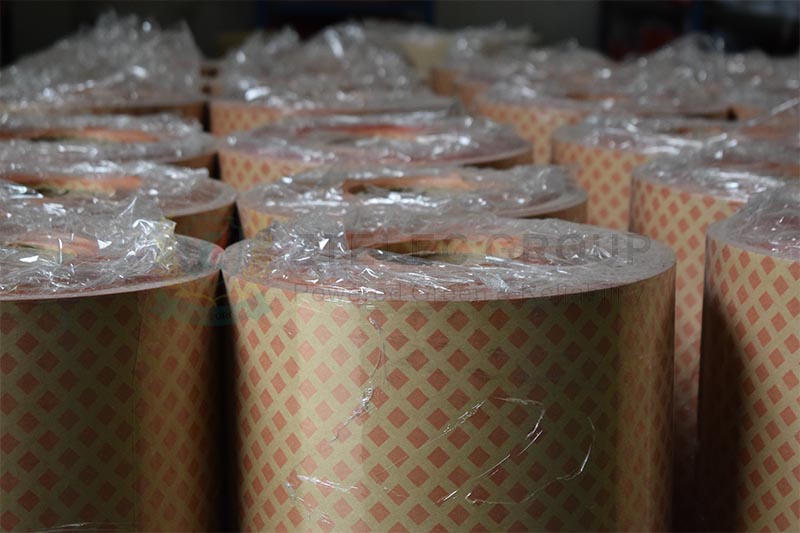
Dotted Diameter: Typically 2mm - 5mm.
Spacing: The spacing between dots affects the bonding area (typically accounting for approximately 30% - 50%). Too large a spacing results in insufficient adhesion. Too small a spacing affects venting efficiency.
Coating Thickness Uniformity: A high-quality coating process requires full dots with clear edges, free of runs or missed areas. Purchasers can use an optical microscope or coating thickness gauge for precise evaluation.
Analysis of Temperature Resistance Ratings for Diamond Dotted Insulating Paper
Temperature resistance rating is one of the core indicators for DDP selection, determining its long-term operational stability.
Common Temperature Resistance Ratings and Applications:
|
Grade |
Temperature Range |
Applications |
|
Class B (130℃) |
≤130℃ |
Mainstream transformers |
|
Class F (155℃) |
≤155℃ |
High-end equipment |
|
Class H (180℃) |
≤180℃ |
Special high-temperature scenarios |
Purchase Tips: When purchasing, be sure to verify the product's temperature resistance rating test report. Currently, F-grade (155℃) and H-grade (180℃) are the standard configuration for most industrial equipment due to their good thermal stability and large safety margin.
Diamond Dotted Insulation Paper Selection and Procurement Recommendations
When purchasing DDP, it is recommended to pay attention to the following key parameters:
Stable thickness tolerance
Resin uniformity (consistent dispensing)
Curing temperature and time
Temperature resistance rating certification (IEC standard)
Paper purity (whether it is 100% insulating wood pulp)
High-quality DDP can improve transformer reliability and service life.
Although small, diamond dotted insulation paper is an important guarantee for the safe operation of electrical equipment. Precise control of the three key factors—thickness, resin coating process, and temperature resistance rating—can improve product insulation reliability, optimize bonding processes, and increase production efficiency.
If you are looking for a high-performance diamond dotted insulation paper supplier, or have specific specifications (such as F-grade 0.2mm thickness) procurement needs, please contact us to obtain a product catalog and free samples.
oil immersed transformer lifespan
oil immersed transformer maintenance
transformer lifecycle
transformer insulation aging
dry type transformer temperature monitoring
- more+releated article
- 2026-05-11How Long Does an Oil-Immersed Transformer Last
- 2026-05-08Modern Power System Dry-Type Transformer Insta
- 2026-05-07Oil-Immersed Transformer Overheating: Causes,
- 2026-05-07Dry-Type Transformers for Data Centers: 2026 R
- 2026-04-30Air-Core Reactor vs Iron-Core Reactor: How to
- 2026-04-29Compact Enclosed Transformer for Smart Grid: T
- 2026-04-2812-Pulse and 24-Pulse Phase-Shifting Transform
- 2026-04-27Oil-Immersed Transformers for Industrial Plant
- 2026-04-25Why Dry-Type Transformers Are Preferred for Ho
- 2026-04-24Enclosed Transformer Outdoor Solutions: IP Pro
- ELECTRICAL INSULATION BOARD MATERIALS
- ELECTRICAL INSULATION MATERIALS
- POWER TRANSFORMER
- ENAMELED WIRE
- SWITCHGEAR


transformer insulation aging
transformer lifecycle
oil immersed transformer lifespan
oil immersed transformer maintenance
dry type transformer installation
dry type transformer temperature monitoring
dry type transformer maintenance
dry type transformer sizing
transformer cooling system failure
transformer overheating causes
oil immersed transformer overheating
transformer oil temperature
harmonic mitigation
dry type transformer
K factor transformer
data center transformer
Cast resin transformer
insulation oil degradation
DGA analysis transformer
transformer fault analysis
oil immersed transformer failure
smart grid transformer
compact enclosed transformer
integrated distribution transformer
compact transformer substation