
Can Aluminum Winding Dry-Type Transformers Be Used? Advantages and Disadvantages Analysis
Dry-type transformers are widely used in power systems, commercial buildings, and industrial applications due to their high safety, environmental friendliness, and low maintenance requirements. One of the most important design considerations when selecting a dry-type transformer is the winding material. Many buyers ask whether aluminum winding dry-type transformers can be used reliably. The answer is yes. Aluminum-winding dry-type transformers are not only practical but also provide clear advantages in specific applications. This article analyzes their advantages and disadvantages to help engineers and procurement professionals make informed decisions.
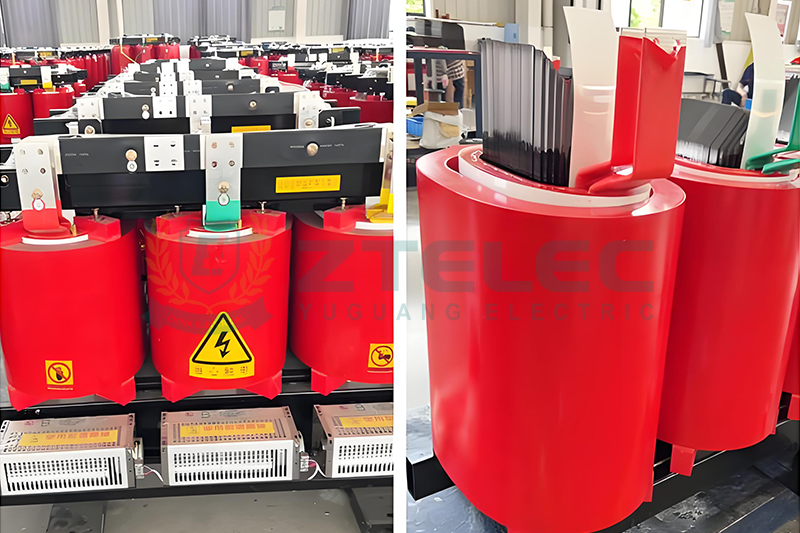
What Is an Aluminum Winding Dry-Type Transformer?
An aluminum-winding dry-type transformer uses aluminum conductors instead of copper for the primary and secondary windings. These transformers typically adopt epoxy resin cast insulation or vacuum pressure impregnation (VPI) insulation structures. Due to differences in electrical conductivity and mechanical strength between aluminum and copper, aluminum-winding transformers require optimized design to achieve reliable performance.
Advantages of Aluminum-Winding Dry-Type Transformers
Cost Advantage
Aluminum is significantly less expensive than copper. In most global markets, aluminum costs roughly one-third of copper, which allows aluminum-winding dry-type transformers to reduce overall material expenses. For the same capacity, aluminum winding designs can lower procurement costs by approximately 20% to 30%. This cost advantage becomes particularly attractive for large-scale projects such as commercial buildings, residential developments, and infrastructure distribution systems.
Lightweight Structure
The density of aluminum is about one-third that of copper. Although aluminum windings require larger cross-sectional areas to carry the same current, the overall transformer weight is typically 15% to 20% lighter. This makes aluminum-winding transformers easier to transport and install, especially in locations with strict weight limitations such as high-rise buildings, offshore platforms, and rooftop installations.
Stable Raw Material Supply
Aluminum resources are abundant worldwide, and the supply chain is relatively stable. Aluminum prices also fluctuate less dramatically compared to copper. Choosing aluminum windings helps reduce procurement risks caused by raw material price volatility, which is beneficial for long-term project budgeting.
Improved Manufacturing Technology
Modern aluminum-winding dry-type transformers use advanced welding processes and copper-aluminum transition connections. These technologies effectively address issues such as electrochemical corrosion and poor contact resistance. In addition, epoxy resin casting and vacuum pressure impregnation processes enhance insulation strength and mechanical stability, ensuring reliable operation under normal conditions.
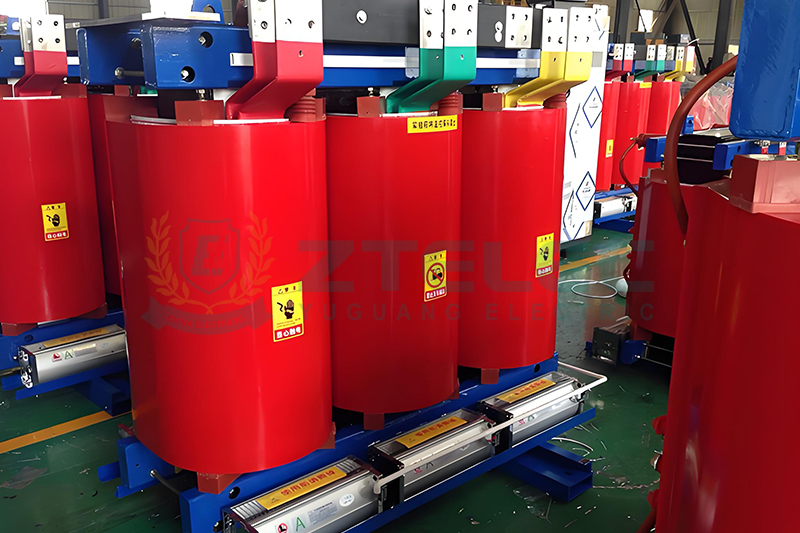
Disadvantages of Aluminum-Winding Dry-Type Transformers
Lower Electrical Conductivity
Aluminum conductivity is approximately 61% that of copper. To achieve the same current-carrying capacity, aluminum windings require about 1.6 times larger cross-sectional area. As a result, aluminum-winding transformers are usually slightly larger in size and require more installation space compared to copper-winding transformers of the same rating.
Lower Mechanical Strength
Aluminum has lower tensile and yield strength than copper. During extreme conditions such as short circuits, aluminum windings have relatively lower resistance to electrodynamic forces. However, modern designs use reinforced structures and improved clamping systems, enabling aluminum-winding transformers to meet standard short-circuit withstand requirements.
Higher Requirements for Connection Technology
An oxide layer easily forms on aluminum surfaces, which can increase contact resistance if not properly treated. Therefore, aluminum-winding transformers require copper-aluminum transition terminals or special plating processes. Reliable manufacturing and correct installation practices are essential to ensure stable long-term performance.
Thermal Design Considerations
Because aluminum has higher resistivity, it generates more heat under the same current conditions. Aluminum-winding transformers typically require larger cooling channels or lower current density designs to control temperature rise. This slightly reduces the overall material cost advantage.
Recommended Application Scenarios for Aluminum-Winding Transformers
Aluminum-winding dry-type transformers are suitable for commercial buildings, office complexes, and shopping malls where load conditions are relatively stable. They are also ideal for real estate power distribution systems and general industrial plants with moderate load variation. Temporary power supply installations and cost-sensitive projects can benefit from the lower initial investment of aluminum windings.
However, copper windings are generally preferred in applications involving high-impact loads such as steel mills, electric furnaces, and heavy manufacturing. Facilities requiring extremely high reliability, including hospitals and data centers, often choose copper-winding transformers. Equipment with frequent start-stop cycles or large load fluctuations may also benefit from copper windings.
Aluminum-winding dry-type transformers are reliable and widely used in many power distribution applications. They provide clear advantages in terms of cost savings, lighter weight, and stable material supply. Although they have certain limitations in conductivity and mechanical strength, modern manufacturing technologies have significantly improved their performance. The choice between aluminum and copper windings should be based on project budget, load characteristics, installation conditions, and reliability requirements. Selecting products from reputable manufacturers ensures safe and stable long-term operation.
oil immersed transformer lifespan
oil immersed transformer maintenance
transformer lifecycle
transformer insulation aging
dry type transformer temperature monitoring
- more+releated article
- 2026-05-11How Long Does an Oil-Immersed Transformer Last
- 2026-05-08Modern Power System Dry-Type Transformer Insta
- 2026-05-07Oil-Immersed Transformer Overheating: Causes,
- 2026-05-07Dry-Type Transformers for Data Centers: 2026 R
- 2026-04-30Air-Core Reactor vs Iron-Core Reactor: How to
- 2026-04-29Compact Enclosed Transformer for Smart Grid: T
- 2026-04-2812-Pulse and 24-Pulse Phase-Shifting Transform
- 2026-04-27Oil-Immersed Transformers for Industrial Plant
- 2026-04-25Why Dry-Type Transformers Are Preferred for Ho
- 2026-04-24Enclosed Transformer Outdoor Solutions: IP Pro
- ELECTRICAL INSULATION BOARD MATERIALS
- ELECTRICAL INSULATION MATERIALS
- POWER TRANSFORMER
- ENAMELED WIRE
- SWITCHGEAR
transformer insulation aging
transformer lifecycle
oil immersed transformer lifespan
oil immersed transformer maintenance
dry type transformer installation
dry type transformer temperature monitoring
dry type transformer maintenance
dry type transformer sizing
transformer cooling system failure
transformer overheating causes
oil immersed transformer overheating
transformer oil temperature
harmonic mitigation
dry type transformer
K factor transformer
data center transformer
Cast resin transformer
insulation oil degradation
DGA analysis transformer
transformer fault analysis
oil immersed transformer failure
smart grid transformer
compact enclosed transformer
integrated distribution transformer
compact transformer substation