
High-Performance Class F Epoxy Laminate G11 | IEC EPGC203 Insulating Board
In the fields of electrical insulation and mechanical manufacturing, the service life and operational safety of equipment depend largely on the judicious selection of insulating materials. The high-performance Class F epoxy laminate G11 (corresponding to the international standard IEC EPGC203) is widely utilized in demanding industrial environments due to its excellent heat resistance and mechanical strength.
G11 is a rigid laminate manufactured by impregnating continuous glass fiber cloth—serving as the base material—with epoxy resin, followed by compression under high temperature and high pressure. According to the IEC 60893 standard, it is designated as model EPGC203.
Compared to conventional epoxy laminates (such as FR4 and G10), G11 retains a significantly higher level of mechanical strength even in high-temperature environments. As a Class F insulating material, it is capable of stable, long-term operation at temperatures up to 155°C, while also exhibiting excellent weather resistance and chemical corrosion resistance.
G11 | EPGC203 Epoxy Board: Key Performance Advantages
Engineers typically select G11 for engineering projects based primarily on the following performance characteristics:
High-Temperature Resistance:
As a Class F insulating material, EPGC203 exhibits minimal deformation under high-temperature conditions. During prolonged operation at 155°C, its mechanical strength does not undergo the significant degradation observed in materials such as G10.
High Mechanical Strength:
Flexural Strength: The composite structure—formed by the combination of glass fiber cloth and epoxy resin—endows the material with excellent flexural capabilities.
Impact Resistance: Compared to paper-based laminates, G11 possesses superior impact resistance and is less prone to cracking during use.
Electrical Insulation Properties:
Whether in dry or humid environments, EPGC203 maintains high dielectric strength and insulation resistance. It is ideally suited for use as insulating components in high-voltage equipment, such as transformers and circuit breakers.
Low Water Absorption and Good Chemical Stability:
G11 features a low water absorption rate, resulting in minimal dimensional change in humid environments and ensuring stable insulation performance. Furthermore, it demonstrates excellent resistance to oils, thinners, and various solvents.
Key Differences Between G11 and G10/EPGC202
G10 and G11 are often confused,and the primary differences between the two lie in the following areas:
High-Temperature Performance:
G10 (EPGC202) experiences a relatively rapid decline in strength at elevated temperatures.
G11 (EPGC203) retains more than 50% of its room-temperature strength even at high temperatures.
Application Scenarios:
G10 is predominantly used for structural components operating at ambient temperatures.
G11 is specifically engineered for high-temperature and high-stress environments. It is frequently utilized for applications such as motor slot wedges, high-voltage generator components, and similar parts.
Appearance and Color:
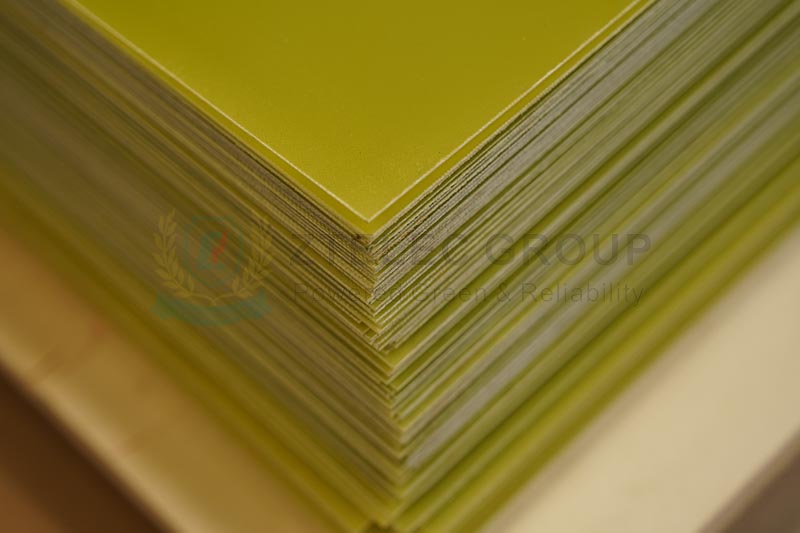
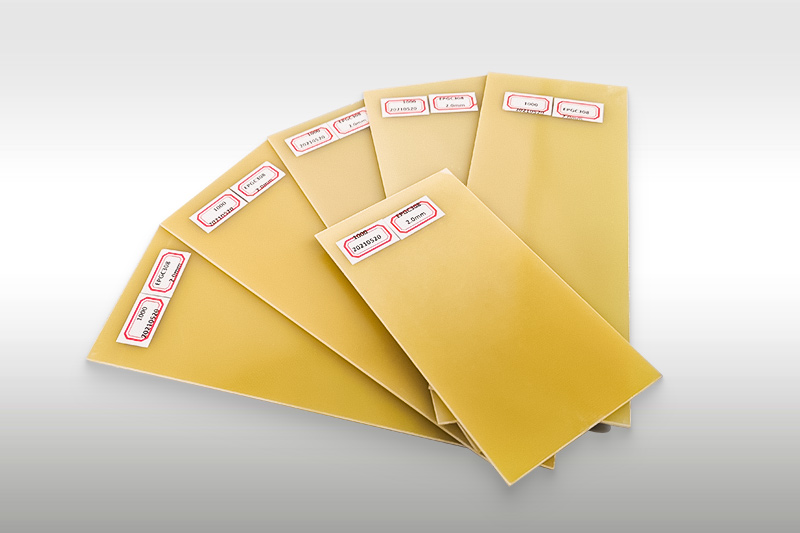
G11 typically appears in a yellowish-green or dark green hue. Brown variants are also available, and colors can be customized according to specific requirements.
G11 | EPGC203 Epoxy Sheet Selection and Procurement
When procuring Class F G11/EPGC203 insulating sheets, it is advisable to consider the following key factors:
Temperature Rating: Verify that the material meets or exceeds Class F standards (certain products may even reach Class H standards).
Compliance Standards and Test Reports: Confirm that the product complies with relevant NEMA and IEC standards, and request the provision of comprehensive test data.
Base Material Quality: The quality of the fiberglass fabric and epoxy resin directly impacts the stability and consistency of the material's performance.
Processing Capabilities: Verify whether the supplier possesses the capability to support both mass production and precision machining requirements.
Lead Time: Ascertain whether it can be delivered on time to meet the project schedule requirements.
G11 | EPGC203 Epoxy Sheet: Key Application Areas
Motors & Generators: Motor slot wedges, end support structural components, insulation spacers.
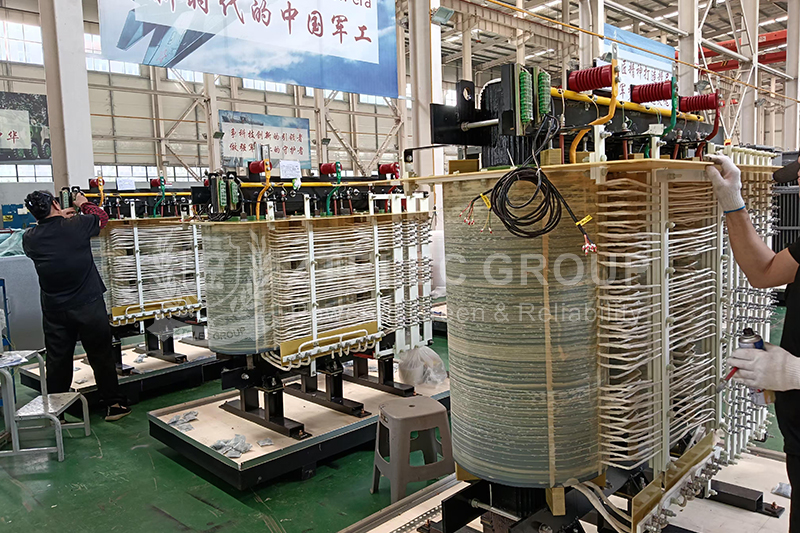
Power Equipment: Transformer insulation supports, switchgear partitions, internal insulation components for circuit breakers.
New Energy Sector: Structural insulation components for PV inverters, insulation parts for wind power systems, insulation supports for energy storage equipment.
Industrial Equipment: Insulation components for automation equipment, mechanical structural parts for high-temperature operating environments.
G11 | EPGC203 Epoxy Sheet: Processing and Usage Instructions
The high-performance Class F epoxy laminate G11 features high hardness while simultaneously offering excellent machinability:
Cutting:
Use carbide saw blades or laser cutting.
Ensure proper dust collection during processing.
Drilling:
Use high-speed steel drill bits.
Pay attention to heat dissipation during processing to prevent internal cracking of the material.
Stamping:
Stamping at room temperature may result in micro-cracks.
Preheating the material prior to stamping is recommended.
Storage:
The storage environment should be kept dry and well-ventilated.
The sheets should be stored flat to prevent deformation.
If you require an insulation material with stable performance for use in environments characterized by high temperatures, high humidity, or high mechanical stress, the high-performance Class F epoxy laminate G11 (IEC EPGC203) is a reliable choice. This material complies with Class F insulation standards and retains excellent mechanical strength at elevated temperatures, thereby helping to ensure the safe and stable operation of high-end electrical equipment.
You are welcome to contact us at any time to request free samples and a customized quotation.
oil immersed transformer lifespan
oil immersed transformer maintenance
transformer lifecycle
transformer insulation aging
dry type transformer temperature monitoring
- more+releated article
- 2026-05-11How Long Does an Oil-Immersed Transformer Last
- 2026-05-08Modern Power System Dry-Type Transformer Insta
- 2026-05-07Oil-Immersed Transformer Overheating: Causes,
- 2026-05-07Dry-Type Transformers for Data Centers: 2026 R
- 2026-04-30Air-Core Reactor vs Iron-Core Reactor: How to
- 2026-04-29Compact Enclosed Transformer for Smart Grid: T
- 2026-04-2812-Pulse and 24-Pulse Phase-Shifting Transform
- 2026-04-27Oil-Immersed Transformers for Industrial Plant
- 2026-04-25Why Dry-Type Transformers Are Preferred for Ho
- 2026-04-24Enclosed Transformer Outdoor Solutions: IP Pro
- ELECTRICAL INSULATION BOARD MATERIALS
- ELECTRICAL INSULATION MATERIALS
- POWER TRANSFORMER
- ENAMELED WIRE
- SWITCHGEAR
transformer insulation aging
transformer lifecycle
oil immersed transformer lifespan
oil immersed transformer maintenance
dry type transformer installation
dry type transformer temperature monitoring
dry type transformer maintenance
dry type transformer sizing
transformer cooling system failure
transformer overheating causes
oil immersed transformer overheating
transformer oil temperature
harmonic mitigation
dry type transformer
K factor transformer
data center transformer
Cast resin transformer
insulation oil degradation
DGA analysis transformer
transformer fault analysis
oil immersed transformer failure
smart grid transformer
compact enclosed transformer
integrated distribution transformer
compact transformer substation